Australia, UK ministers rap Iran over human rights violations
An Iranian police force stands on a street during the revival of morality police in Tehran, Iran, July 16, 2023
The defense and foreign ministers of Australia and Britain hit out on Friday at what they called Iran's rising use of the death penalty and ongoing repression of women, girls and human rights defenders.
“Ministers condemned Iran’s unjust detention of foreign nationals and raised ongoing concerns over the human rights situation in Iran,” said the joint statement by the four ministers, who met for consultations in Sydney on Friday.
It cited “the escalation of the use of the death penalty as a political tool during the 12-day conflict, and the ongoing repression of women, girls, and human rights defenders.”
Their broad remarks also covered shared policy toward many other countries.
Iran’s judiciary chief announced on Wednesday that around 2,000 people were arrested during and after the 12-day war with Israel. Some detainees, accused of collaborating with Israel, could face the death penalty.
“Some of these individuals face severe punishments, including the death penalty, while others may receive lighter sentences,” Judiciary Chief Gholamhossein Mohseni Ejei said in an interview with state TV.
The UN Special Rapporteur on human rights in Iran Mai Sato urged Tehran last month to end what they described as a “post-ceasefire crackdown.”
Australia and the UK also called on Iran to fully cooperate with the International Atomic Energy Agency (IAEA) and “refrain from actions that would compromise efforts to address the security situation in the Middle East.”
Iranian Foreign Ministry spokesperson Esmail Baqaei said a senior IAEA official is expected to visit Tehran in the coming weeks to discuss a new cooperation framework.
“Ministers stated their determination that Iran must never develop a nuclear weapon,” the UK-Australia joint statement added.
Sogand Pakdel, an Iranian trans woman, killed by her uncle in Iran.
A 25-year-old transgender woman, Sogand Pakdel, was shot in the head by her own uncle in an alleged honor killing at a family wedding near Shiraz in southern Iran last month.
Her death was the latest in a series of murders of queer Iranians by their own relatives, according to human rights groups, and testament to the grim practice's persistence in the Islamic theocracy.
Pakdel, a well-known trans activist in Iran, attended her cousin’s wedding despite threats from her family.
Upon arrival, her uncle allegedly fired a warning shot into the air before killing her, according to the Human Rights Activists News Agency (HRANA). The murder took place just days before the start of the 12-day war between Israel and Iran last month.
Pakdel had faced years of abuse, including beatings, abduction and death threats from family members.
The Norway-based Hengaw Organization for Human Rights cited a source saying she had been living in a Shiraz guesthouse after being ostracized yet remained active in Iran’s trans community.
“She never stayed silent,” the source told Hengaw, noting that Pakdel frequently used social media to advocate for trans rights and speak out against discrimination.
"As a transgender woman with lived experience in Iran, hearing this news is not only deeply distressing for me, but also traumatizing," said Shaya Goldoust, an Iranian trans activist now living in Vancouver, told Iran International. "It brings back the pain and fear I endured throughout three decades of life in that country."
Goldoust, who had gender affirmation surgery in 2012, said she feared for her life in Iran. She fled to Turkey in 2016, where she also faced discrimination, before eventually seeking refuge in Vancouver in 2020.
"Iran is a country where being different can cost you your life, and where even death is met with celebration by some," Goldoust added. "The reactions on social media, where many users justified or even welcomed her death simply because of her identity, are a chilling reminder of that truth."
Pakdel was a member of the Qashqai tribe known as “Galleh Zan.” Her killing was reportedly aimed to restore so-called family honor, a term used to justify such murders where they occur in traditional, socially conservative communities.
HRANA reported that her funeral was held in near-secrecy under family pressure, with only a small number in attendance. Her uncle later confessed and turned himself in.
No protection under the law
Shadi Amin, director of the Iranian LGBTQ+ rights group 6Rang, said Pakdel’s killing highlights how vulnerable trans people remain under Iran’s legal system.
Her murder occurred in a legal vacuum in which queer Iranians lack any formal protections and remain vulnerable to systemic abuse and lethal violence.
"As a trans person, Sogand should have been protected by the law—but they weren’t. Their murder by their uncle exemplifies the deadly intersection of patriarchy, heteronormativity, and systemic violence against the LGBT+ community," she told Iran International.
"To prevent such tragedies, we need profound political, cultural, and legal transformation."
Arsham Parsi, a queer Iranian-Canadian activist, was resigned.
“This is yet another heartbreaking and tragic incident from Iran. Sadly, it is not the first time a member of the LGBTQ+ community has been killed by their own family simply for being different — and tragically, it may not be the last,” he told Iran International.
Parsi, who founded Iran’s first underground LGBTQ+ support group in 2001, now lives in Toronto, where he leads the International Railroad for Queer Refugees (IRQR) and the Marjan Foundation, both of which support LGBTQ+ communities across the Middle East.
While being transgender is not criminalized under Iranian law, trans and queer Iranians face widespread violence, exclusion, and discrimination. Homosexuality, by contrast, is punishable by death under the Islamic Republic’s penal code.
In September 2022, two women — Zahra Sedighi-Hamadani and Elham Choubdar — were sentenced to death by the Islamic Revolution Court of Urumieh for defending LGBTQ+ rights online.
Amnesty International said the verdicts were based on their “perceived sexual orientation and gender identity.” Despite international outcry, Iranian authorities stood by the sentences.
Such honor-based killings continue to surface. In February 2024, a man in Tabriz murdered his 17-year-old queer child, Parsa, and was released after serving only six months. In May 2021, Alireza Fazeli Monfared, 20, was killed by male relatives in Ahvaz for being gay—one of the few publicly acknowledged cases.
These murders typically go unpunished and underreported, ignored by the judiciary and state-run media. Activists warn that only international pressure and public scrutiny can disrupt the cycle.
“We know the Iranian regime consistently fails to take meaningful action to prevent such violence or protect LGBTQ+ individuals," Parsi told Iran International.
That’s why the responsibility falls on us — activists, human rights defenders, and allies — to raise awareness, challenge harmful norms, and advocate for change."
But with threats continuing to grow at home, many queer Iranians seek to flee the country in search of safety abroad.
Iran’s President Masoud Pezeshkian is facing an intense backlash over his government’s endorsement of a fast-tracked bill that critics say threatens freedom of expression and targets dissent.
The proposed legislation, titled “Combating the Dissemination of False Content in Cyberspace,” was originally drafted by the judiciary but reviewed and submitted to Parliament by Pezeshkian’s cabinet on July 20.
Widespread internet restrictions imposed during the country’s 12-day conflict with Israel remain largely in place.
Given Iran's parliament is dominated by hardliners, the bill is expected to face little resistance. Some lawmakers are reportedly pushing to make it even stricter.
Vague language, severe penalties
Many have sounded the alarm over the broad and ambiguous language of what they call the cyber censorship bill.
Legal expert Mohammad-Hossein Jafari told the moderate outlet Entekhab that its lack of clear definitions could empower security agencies to arbitrarily prosecute critics.
The bill includes harsh penalties, such as steep fines, bans on media activity, and prison terms ranging from 10 to 15 years if content deemed false is posted during a “crisis”—a sentence harsher than that for armed robbery under Iranian law.
The timing has drawn further scrutiny, coming just days after a fragile ceasefire between Iran and Israel and amid fresh arrests of citizens accused of spreading falsehoods on social media.
“The bill … is not designed to fight lies, but rather to eliminate independent narratives, restrict freedom of expression, and legally target journalists and critical users,” wrote journalist Alireza Rajaei.
Critics say the legislation will stoke public mistrust, entrench self-censorship, and undermine civil liberties. Former lawmaker Mahmoud Sadeghi argued the administration could have revised or blocked the judiciary’s draft instead of submitting it.
Legal expert Kambiz Norouzi and Reform Front head Azar Mansouri also called on Pezeshkian to withdraw the bill.
“This contradicts your stated principles and Chapter Three of the Constitution,” Mansouri wrote on X, referencing sections that guarantee citizens’ rights and the free flow of information.
Mounting personal criticism
An increasing number of critics are holding Pezeshkian personally responsible.
“The bill you submitted is a final blow to freedom of expression,” wrote IT professor and activist Ali Sharifi-Zarchi, noting that state media spreading false claims—such as the supposed downing of Israeli F-35s—remains untouched, while ordinary users are punished.
Lawyer Ali Mojtahedzadeh described the bill as “shameful and frightening,” adding in a pointed jab at the president:
“Even [ultra-hardliner Saeed] Jalili couldn’t have done more harm to free speech,” he posted on X.
Others have highlighted contradictions in Pezeshkian’s own rhetoric—including some who campaigned for him in last year’s election.
“How can you talk about dialogue,” journalist Ehsan Bodaghi asked on X, “when your government just backed legislation that silences citizens? Why didn’t you stand up to the Judiciary and protect what little freedom remains?”
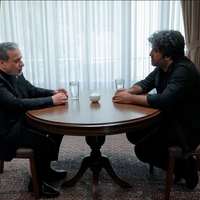
Iran challenged European powers over their threat to renew UN sanctions during nuclear talks in Istanbul on Friday, Deputy Foreign Minister Kazem Gharibabadi said, in the first negotiations since Israeli and US attacks last month.
Gharibabadi said he and Deputy Foreign Minister Majid Takht Ravanchi led what he called “serious, frank, and detailed” discussions with Britain, France and Germany. The meeting focused on sanctions relief and the future of the 2015 nuclear deal, with both sides presenting specific proposals and agreeing to continue consultations.
“We explained our principled positions, including on the so-called snapback mechanism,” Gharibabadi wrote on X, adding that Tehran strongly criticized the E3’s stance on last month’s military strikes.
Iran’s Foreign Ministry spokesman Esmail Baghaei said earlier in the day that the talks were a “test of realism” for the E3 and warned against any effort to extend UN Security Council Resolution 2231, which expires in October.
Baghaei said the three powers had “no legal standing” to pursue such a move and accused them of aligning with the United States and Israel and Israel.
Iran did not reject a European offer to extend the UN resolution tied to the 2015 nuclear deal during talks in Istanbul on Friday, The Wall Street Journal’s Laurence Norman reported citing a European diplomat.
Norman said the meeting produced no breakthrough or breakdown and involved meaningful discussion as the E3 and EU offered a clear diplomatic proposal, with the European side prepared to pursue snapback sanctions but also expressed openness to an extension if Iran takes certain steps.
“There was a sense until recently that Iran seemed uninterested in any extension. Today that seems to have shifted,” Norman said on X, describing the talks as a potential turning point ahead of a decision expected by the end of August.
The Financial Times cited Western diplomats as saying that the E3 is considering offering Iran a delay in reimposing sanctions if Tehran resumes cooperation with the International Atomic Energy Agency and engages with Washington. Without progress, the snapback could be triggered by mid-September.
Gharibabadi said a technical IAEA team will travel to Tehran in the coming weeks, but inspections of nuclear facilities are not planned. Any future cooperation, he added, will depend on Iran’s Supreme National Security Council and laws passed in response to the June strikes.
The triggering of international sanctions on Iran threatened by Europe could unleash a cascade of new challenges on the country's energy sector, from shrinking oil exports, blocked payments, halted infrastructure upgrades and deeper isolation from global markets.
Originally designed as a safeguard within the 2015 Joint Comprehensive Plan of Action (JCPOA), so-called snapback allows any member of the United Nations Security Council to unilaterally reimpose sanctions if Iran is found to be in serious noncompliance.
The mechanism cannot be blocked by a Security Council veto.
What’s at risk?
If activated, snapback would reintroduce bans on Iran’s banking, insurance, shipping, and, most crucially, oil and gas sectors.
Iran’s already limited energy exports would be further squeezed, particularly as China—the country’s top customer—faces its own pressure from US secondary sanctions.
The blow wouldn’t stop at exports. Renewed sanctions would also block access to international banking systems, complicating payments and deterring investment.
With infrastructure already aging, efforts to modernize production facilities or increase capacity would stall. Crucial imports of equipment, spare parts, and technology would dry up, making basic maintenance difficult—let alone expansion.
Ripple effects
The reimposition of sanctions wouldn’t just hit Iran—it would ripple across global energy markets. A sharp decline in Iranian exports could tighten supply and drive up oil prices, especially in Asia and Europe.
Investors and insurers are already wary. A full snapback would only raise the stakes.
More concerning is Tehran’s potential response.
Iranian officials have warned that reactivating the snapback mechanism could trigger a shift in military posture, an exit from the Non-Proliferation Treaty (NPT), or an acceleration of its nuclear program.
The risk isn’t just economic—it’s strategic.
A more isolated Iran might double down on asymmetric tactics, expand regional proxy activities, or escalate maritime disruption in the Gulf.
The symbolic weight of snapback could also undercut any remaining diplomatic channels and push Tehran further from the negotiating table.
Iran’s energy goals on the brink
Despite sanctions, Iran has managed to modestly expand oil production—targeting an increase of 600,000 barrels per day by 2025—and made incremental gains in natural gas output, including at South Pars Phase 11.
But snapback could freeze or reverse this progress.
Refinery upgrades are already underway, but vulnerable to supply chain disruptions. Without access to critical technology or parts, domestic fuel production could falter, forcing greater reliance on crude exports just as export channels are closing.
Meanwhile, renewable energy remains marginal, and any growth in that sector would likely be stifled by sanctions-induced isolation.
Endurance and limits of pressure
Iran’s shadow export network has proven resilient.
Since 2022, an estimated 42 million barrels have moved via sanctioned tankers. Strategic ties with China have helped cushion the impact, and Tehran’s evasion playbook is growing more sophisticated.
Still, the economic toll is real.
Iran loses billions of dollars annually due to reduced crude sales. And snapback could widen that gap—though it may not deliver the decisive blow some expect.
Fragmented global enforcement, selective compliance by neighboring states, and geopolitical shifts toward multipolarity all chip away at the tool’s practical effect.
Reactivating the snapback mechanism would undoubtedly raise pressure on Iran’s economy, particularly its energy sector. But it may also entrench defiance, destabilize the Persian Gulf and weaken the very diplomatic leverage it’s meant to reinforce.
Whether it isolates Iran or backfires will depend not only on Tehran’s response, but on how fractured and fatigued the global sanctions consensus has become.
IAEA Director General Rafael Grossi delivers a lecture on “Energy and Development: Working Towards the Safe, Secure and Peaceful Uses of Nuclear Science and Technology in Southeast Asia” in Singapore on 25 July 2025.
Iran has signaled readiness to resume technical-level discussions with the UN nuclear watchdog, though IAEA chief Rafael Grossi said Friday that any planned visit would not yet involve inspectors.
Speaking in Singapore, Grossi said the agency had proposed talks with Tehran on “the modalities as to how to restart or begin [inspections] again,” beginning with procedural issues and potentially moving to high-level consultations later.
Grossi emphasized the urgency of re-engagement, warning that the agency still lacks updated information on Iran’s stockpile of highly enriched uranium. “This is why it is so important that we engage as soon as possible and that we can start our inspection,” he said.
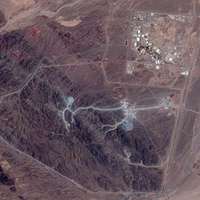
Iran suspended cooperation with the IAEA following last month’s Israeli and US airstrikes on its nuclear facilities, accusing agency chief Rafael Grossi of bias and failing to condemn the attacks.
Iran says IAEA visit will not include nuclear site inspections
On Friday, Iranian Foreign Ministry spokesperson Esmail Baghaei said a senior IAEA official is expected to visit Tehran in the coming weeks for talks on a new cooperation framework, but emphasized that there are no plans for the delegation to inspect nuclear facilities damaged in the strikes. He said the visit will focus on procedural coordination, and any further cooperation will depend on decisions by Iran’s Supreme National Security Council.
Deputy Foreign Minister Kazem Gharibabadi had earlier confirmed that a technical IAEA delegation would travel to Tehran, reiterating that site inspections were not on the agenda. He said Iran’s engagement with the agency is being guided by legislation passed after the June attacks.