• العربية
  • فارسی
Brand
  • Iran Insight
  • Politics
  • Economy
  • Analysis
  • Special Report
  • Opinion
  • Podcast
  • Iran Insight
  • Politics
  • Economy
  • Analysis
  • Special Report
  • Opinion
  • Podcast
  • Theme
  • Language
    • العربية
    • فارسی
  • Iran Insight
  • Politics
  • Economy
  • Analysis
  • Special Report
  • Opinion
  • Podcast
All rights reserved for Volant Media UK Limited
volant media logo
INSIGHT

Khamenei aide steps back into spotlight with surprise Moscow visit

Behrouz Turani
Behrouz Turani

Iran International

Jul 22, 2025, 15:50 GMT+1Updated: 06:29 GMT+0
Senior adviser Ali Larijani standing next to supreme leader Ali Khamenei

A surprise Moscow visit by a senior adviser to Iran’s supreme leader on the eve of a joint military drill has stoked discussion about Tehran’s internal calculations and shifting foreign policy posture.

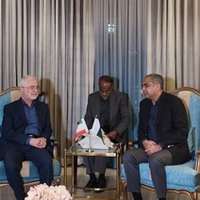
Images of former nuclear negotiator Ali Larijani meeting Russia’s President Vladimir Putin emerged without prior notice on Sunday, shortly after a separate encounter between Putin and Iran’s Foreign Minister Abbas Araghchi.

The hardline daily Javan, affiliated with the Revolutionary Guards, reported the visit on Monday and questioned its goals and timing.

“It may have been a force majeure meeting—urgent and unpredictable,” an editorial read. “The urgency could stem from last-minute coordination on US and Israeli aggression against Iran, the nuclear dossier, the Gaza crisis and the faltering talks with the European troika.”

Javan dismissed the possibility that arms deals were on the agenda, noting that Moscow has offered only tepid support in recent conflicts despite being “indebted to Iran for undermining American hegemony.”

Foreign Ministry spokesman Esmaeil Baqaei asserted on Monday that Larijani met Putin as a representative of Iran’s president, Masoud Pezeshkian.

But the very need for clarification may be seen as confirmation of what many in Tehran already believe: Pezeshkian is not a key player in foreign policy, and important messages are conveyed by Khamenei’s aides rather than diplomats.

Signs of a comeback?

Larijani’s sudden appearance alongside Putin was seen by some pundits as a signal that the former parliament speaker might be “back” after a spell out of spotlight.

Vahideh Karimi, political editor of the reformist Sharq, analyzed Larijani’s evolving role. She noted he seized the 12-day war with Israel as an opportunity to reposition himself.

“Larijani knows the corridors of power in Tehran and is widely regarded as a moderate figure well-versed in negotiation,” she wrote.

Once a staunch conservative, Larijani aligned with former President Hassan Rouhani to tap into reformist popularity—a shift reportedly frowned upon by Khamenei, who later barred him from the presidential race.

Since the war, Larijani has returned to more conservative positions. Karimi argues that his Revolutionary Guard background, pragmatic ambiguity and rhetorical agility make him uniquely suited to the current moment.

‘Calculated ambiguity’

The timing of Larijani’s visit to Russia appears strategic. With high-stakes negotiations underway over Tehran’s nuclear program, Iran may have sought counsel from Moscow—its most powerful regional ally.

Karimi also pointed to Larijani’s increased engagement in religious circles as a calculated move to court conservative backing. Still, she warned that Iran’s hardliners—suspicious of independent operators—could once again block his ascent.

Yet Larijani’s key asset, she added, lies in his ambiguity: neither fully beholden to any faction nor entirely obedient, a trait that resonates with many Iranians.

Karimi said the Moscow meeting reflects both Khamenei’s trust in Larijani and possible backing for a future leadership role.

Most Viewed

Iran diplomacy wobbles as factions compete to avoid looking soft on US
1
INSIGHT

Iran diplomacy wobbles as factions compete to avoid looking soft on US

2
ANALYSIS

The politics of pink: how Iran uses cuteness to rebrand violence

3

Scam messages seek crypto for ships’ safe passage through Hormuz, firm warns

4
EXCLUSIVE

Family told missing teen was alive, then received his body 60 days later

5
INSIGHT

Is Iran entering its Gorbachev moment?

Banner
Banner

Spotlight

  • Diplomacy tolls at Hormuz as conflict returns to its doorstep
    OPINION

    Diplomacy tolls at Hormuz as conflict returns to its doorstep

  • Opposition to US talks grows in Tehran as ceasefire deadline nears
    INSIGHT

    Opposition to US talks grows in Tehran as ceasefire deadline nears

  • Tehran moderates see ‘no deal–no war’ limbo as worst outcome
    INSIGHT

    Tehran moderates see ‘no deal–no war’ limbo as worst outcome

  • The future has been switched off here
    TEHRAN INSIDER

    The future has been switched off here

  • Lights out, then gunfire: Witnesses recount Mashhad protest crackdown
    VOICES FROM IRAN

    Lights out, then gunfire: Witnesses recount Mashhad protest crackdown

  • Is Iran entering its Gorbachev moment?
    INSIGHT

    Is Iran entering its Gorbachev moment?

•
•
•

More Stories

Revolutionary Guards media slams Araghchi over Fox interview

Jul 22, 2025, 11:10 GMT+1

Foreign Minister Abbas Araghchi’s interview with Fox News contained strategic errors that could damage Iran’s position in future nuclear talks, the IRGC-affiliated Fars News Agency said on Tuesday.

The outlet said Araghchi’s acknowledgment that the US strikes caused “serious damage” to nuclear facilities and led to a halt in enrichment signaled weakness.

“Our facilities have been damaged – seriously damaged,” Araghchi said. “The extent of which is now under evaluation … enrichment has currently ceased.”

Fars called the remarks exaggerated and warned that such statements could be viewed as a sign of excessive flexibility, encouraging the West to increase pressure on Iran.

The agency linked the remarks to a recent comment by US President Donald Trump, who said, “If necessary, we will strike again.”

Araghchi downplays fatwa targeting Trump

Fars also criticized Araghchi for dismissing a clerical fatwa calling for the killing of Trump as a move by “radical groups.” The decree, issued by two senior Iranian clerics, has drawn support from others and sparked online fundraising.

Fox News anchor Bret Baier asked Araghchi directly about the fundraising activity. In response, Araghchi distanced the government from the fatwa, a stance Fars said signaled weakness and undermined Iran’s unified position against what it called foreign aggression.

In the same interview, Araghchi also addressed the slogan “Death to America,” saying it is aimed at US foreign policy, not the American people. “It means death to US foreign policy, not death to the people,” he said.

A statement from Iran’s parliament last week said the slogan means “death to Trump” and “those who rule America,” directly targeting US leaders.

Iran denies seeking Israel’s destruction

The interview also drew attention for Araghchi’s comments about Iran’s position on Israel. When asked about threats from Iran-backed groups to wipe Israel off the map, he said: “That is up to them… but this has never been Iran’s policy to wipe out Israel from the map.”

Fars did not directly reference that part of the exchange, but the remarks contrast with statements made by Supreme Leader Ali Khamenei and other Iranian officials over the years expressing support for Israel’s elimination.

Despite affirming Iran’s right to nuclear enrichment, Iran's top diplomat failed to maintain the right balance between diplomacy and deterrence, Fars said.

The interview aired ahead of renewed nuclear talks with Britain, France and Germany, as Tehran faces threats of a UN snapback mechanism and possible reimposition of international sanctions.

Trump says US will attack Iran again if necessary

Jul 22, 2025, 03:50 GMT+1

The United States will strike Iran again if necessary, President Donald Trump said on Monday night, responding to recent remarks by Iran’s foreign minister about the severe damage caused by Washington’s June strikes on Iran’s nuclear sites.

“Iran’s Foreign Minister, Abbas Araghchi, on the Iran Nuclear Sites, ‘Damages are very severe, they are destroyed.’ Of course they are, just like I said — and we will do it again, if necessary!” Trump said in a post on Truth Social.

Trump also attacked CNN for reporting — based on preliminary intelligence — that Iran’s nuclear program had not been fully dismantled by last month’s US strikes.

“As interviewed by Bret Baier. Fake News CNN should immediately fire their phony ‘reporter’ and apologize to me and the great pilots who ‘OBLITERATED’ Iran’s nuclear sites. CNN is a major ratings loser, as is MSDNC!” Trump wrote.

The US Operation Midnight Hammer targeted three major Iranian nuclear sites using B-2 stealth bombers equipped with 30,000-pound “bunker buster” bombs.

In an interview with Fox News anchor Bret Baier, Iranian Foreign Minister Abbas Araghchi confirmed the extent of the destruction caused by the operation.

“Our facilities have been damaged, seriously damaged... as far as I know they are seriously damaged,” Araghchi added.

Despite the strikes, he insisted Iran would not abandon its uranium enrichment program, calling it a matter of national pride.

“Our enrichment is so dear to us,” he said. “Obviously we cannot give up our enrichment, because it is an achievement of our own scientists and now more than that, it is a question of national pride.”

Iran maintains its nuclear program is for peaceful purposes, but the UN’s nuclear watchdog has warned that the levels of uranium enrichment Tehran is pursuing have no civilian justification.

At a White House press briefing Monday, Press Secretary Karoline Leavitt said the administration remains open to diplomacy.

“The president has been very clear when it comes to his priorities for Iran — he obliterated their nuclear capability, and I understand that the administration continues to be open to talks with Iran if we deem them necessary,” Leavitt said.

Iran is expected to meet with European powers for nuclear talks on Friday, but the United States will not be participating.

US still open to talks with Iran, White House says

Jul 21, 2025, 22:10 GMT+1

The Trump administration remains open to talks with Tehran, the White House said on Monday, as Iran and Washington’s European allies prepare for a new round of nuclear negotiations on Friday — without the United States.

“I understand that the administration continues to be open to talks with Iran if we deem them necessary,” White House Press Secretary Karoline Leavitt told reporters.

Leavitt also said that the US airstrikes on Iran's atomic sites last month "obliterated their nuclear capability."

On June 22, the US carried out airstrikes on Iran’s key nuclear sites at Fordow, Natanz, and Isfahan. The full extent of the damage remains unclear. Assessments continue to conflict, and Iranian authorities have not released a comprehensive evaluation.

Speaking to Fox News anchor Bret Baier, Iranian Foreign Minister Abbas Araghchi said multiple enrichment sites had been “severely and seriously damaged,” though he said the extent of the impact is still being assessed by Iran’s Atomic Energy Organization.

The US operation, dubbed Operation Midnight Hammer by President Trump, involved B-2 stealth bombers armed with 30,000-pound Massive Ordnance Penetrators—so-called “bunker busters” designed to penetrate fortified underground facilities. The US strikes followed an earlier Israeli offensive known as Operation Rising Lion.

Iran won't give up enrichment

Araghchi told Fox News that the country will not abandon its uranium enrichment program, calling it both a scientific achievement and a matter of national pride.

“Our enrichment is so dear to us,” he said. “Obviously we cannot give up our enrichment, because it is an achievement of our own scientists and now more than that, it is a question of national pride.”

Iran’s uranium enrichment program has long been a source of international tension. While Tehran maintains that the program is for peaceful purposes, the UN nuclear watchdog argues that enriching uranium to high levels of purity lacks any civilian justification.

Rampant electricity outages take toll on frustrated Iranians

Jul 21, 2025, 21:12 GMT+1

A surge in electricity outages across Iran has caused severe disruption to daily life and economic activity, leaving Iranians frustrated and businesses paralyzed, videos and voice memos sent to Iran International's submissions line show.

In a display of outrage, a poultry farmer dumped dead chickens in front of the Electric Distribution Management Center in Kohgiluyeh and Boyer-Ahmad province, blaming the power outage for their deaths.

"Since this morning, there has been no electricity. At least inform us so we can use generators," the farmer says.

A baker also posted a video showing spoiled bread dough, saying that three separate outages in a single day caused the dough to go bad, forcing him to throw it all away.

A construction worker shared footage of cement bags hanging midair on a stalled hoist, explaining that the outage had brought their work to a halt.

"It’s been less than an hour since we started, and already we can’t continue. We can’t access the cement, and the entire operation is stopped — not just for us but for others too," he said in the video.

Sanctions, age and mismanagement have taxed Iran's energy infrastructure, and the country has long faced blackouts especially in summer months when water and electricity demand surge.

However, conditions appear to have worsened following the 12-day war with Israel, with Iranians reporting more frequent and severe blackouts.

Businesses and services are also struggling, with one factory worker filmed a halted production line saying: "We can’t do anything — there’s no electricity."

In another video, a shop in the Tabriz bazaar was shown operating on a generator during an outage.

Disrupted daily life

The blackouts are affecting not only businesses but also social and domestic life.

A student filmed herself using a kettle heated on a gas burner to iron her scarf, saying, "There’s no electricity, but since we still have gas, we find ways to manage."

"It’s 2025 — while most countries have stable electricity, I’m heating a kettle to iron my scarf before heading to university," she added ruefully.

Another video from the city of Ahvaz shows a man standing in 122-degree heat, complaining about the power outage and turning on a faucet to show that the lack of running water.

A member of the Iran's Electricity Market and Exchange Commission warned that if current trends in electricity supply and consumption continue, Iran will face managed blackouts for at least four more years.

"The total nominal capacity of the national power grid is 94,500 megawatts, but actual production is just over 63,400 megawatts," Ali Shahmohammadi told Shargh daily in June.

"Over the past five years, electricity demand has grown by about 5.5 percent, while power generation capacity has increased by only 2.2 percent up to 2024 — a figure that highlights the severity of the crisis," Shahmohammadi added.

Not even daily commutes to and from affected homes and workplaces provide a respite from the blackouts, with a video from the city of Mashhad showing heavy traffic caused by disabled traffic lights.

Backlash grows over move toward 'class-based' internet in Iran

Jul 21, 2025, 20:54 GMT+1
•
Maryam Sinaiee

A government directive that may grant preferential internet access to certain groups is facing a fierce backlash from Iranians who say it institutionalizes privileges for well-connected insiders and deepens censorship for everyone else.

The uproar began after the quiet release of a vaguely worded by-law from the Supreme Council of Cyberspace (SCC), calling for a committee be established to protect online businesses from “unlawful or arbitrary interference.”

Many Iranians interpreted it as a gateway to grant faster, less filtered internet to favored groups—especially those linked to the government or commercial sectors.

“Tiered internet—no matter what deceptive name it hides behind—is a clear injustice against the Iranian people,” outspoken IT professor Ali Sharifi Zarchi posted on X.

The skepticism stems from years of worsening digital repression: Iran consistently ranks among the lowest in the world for internet freedom, and a de facto tiered system already exists, with officials and state insiders enjoying full access to platforms like X that are officially banned for the general public.

“Accepting class-based internet means accepting a worse internet for ‘the other’, said digital educator and influencer Amir Emad Mirmirani - widely known as Jadi.

"It means one day they’ll say: ‘You work for that publication? Then you don’t qualify.’ Or ‘You took that position back then? Then you’re excluded,’” Jadi posted on X.

'Actions not words'

President Masoud Pezeshkian, who had pledged to expand digital access during his campaign, sought to calm public anger.

“Access to free information is a right for all citizens, not a privilege for a select few. The government is obligated and determined to provide free, high-quality, and inclusive internet,” he posted on X on July 16.

But his statement—delivered via a presumably unrestricted connection—was met with skepticism.

“The president and his spokesperson came on Twitter using the unfiltered internet reserved for officials to say they’re against class-based internet,” Jadi quipped in another post.

University lecturer Shiva Arashteh was more direct: “You can’t oppose (unequal access) and sign a by-law that grants privileges to certain groups. Your words and actions are far apart.”

Facilitating repression?

The authority issuing the controversial directive, the SCC, is formally chaired by the president but is dominated by personnel appointed by Supreme Leader Ali Khamenei and officials from conservative institutions, including the Revolutionary Guards and the Organization for Islamic Propagation.

As a result, the president and his cabinet hold little sway in shaping internet policy, despite chairing the body on paper.

Entrepreneurs and educators warn of deeper consequences.

“The survival of a business depends on customer acquisition, and a very large portion of our marketing activities and traffic are conducted on filtered or restricted platforms,” said entrepreneur Alireza Ghanadan.

Civil society groups and technologists say the infrastructure for discriminatory access is already in place.

During prior state-imposed shutdowns, government agencies, state media and affiliated users reportedly maintained access to platforms like WhatsApp, Instagram and Google, while the broader population went dark.