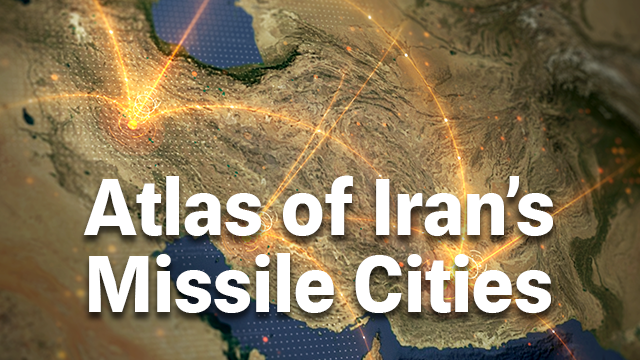
"Iran has officially responded to our Obliteration of their Nuclear Facilities with a very weak response, which we expected, and have very effectively countered," US President Donald Trump said in a post on Truth Social.
"There have been 14 missiles fired — 13 were knocked down, and 1 was “set free,” because it was headed in a nonthreatening direction. I am pleased to report that NO Americans were harmed, and hardly any damage was done."
Trump said "they’ve gotten it all out of their “system,” and there will, hopefully, be no further HATE."
"I want to thank Iran for giving us early notice, which made it possible for no lives to be lost, and nobody to be injured. Perhaps Iran can now proceed to Peace and Harmony in the Region, and I will enthusiastically encourage Israel to do the same!"
"Congratulations world, it's time for peace," Trump said in another Truth Social post.
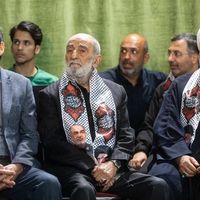

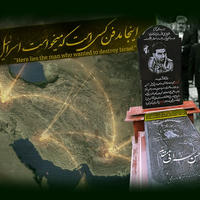

At least sixteen people including staff members at Tehran’s Evin Prison were killed on Monday after Israeli strikes hit the jail's buildings as well as other arms of the Islamic Republic’s security apparatus, according to sources familiar with the matter.
Among the dead were Vahid Heidarpour and Rouhollah Tavassoli, who oversaw wards 4, 7 and 8 at various times and were known for managing inmates accused in financial and political cases, sources said.
“They had a reputation for exploiting detainees linked to powerful networks,” a source familiar with the prison told Iran International.
The pair died in the prison’s administrative block, where they were present during the strike alongside the deputy health chief and several guards.
Some inmates were also injured by shattered glass and blast waves, though authorities have not confirmed any prisoner fatalities.
“I saw 16 prison employees in body bags being loaded into ambulances,” a witness inside the facility said. “They plan to move political detainees to Fashafuyeh or to Saheli prison in Qom. The death toll is high. No debris has been cleared yet. Many soldiers were also killed, and female staff are among the dead.”
Twenty buses transported Evin Prison inmates to Fashafuyeh prison on Monday, eyewitnesses told Iran International.
Detainees from Ward 209, who include recent protest arrestees, were moved out after the strike.
Prisoners from Ward 4 were relocated by bus to Fashafuyeh without their belongings, according to a second source who confirmed reports of gunfire inside the prison following the Israeli strike.
The families were being held back from the scene, which was taken over by Basij and plainclothes agents, the source added.
Damage was concentrated in the visitors’ hall, the infirmary, and the intelligence wing of the prison, where electricity is now limited to emergency supply and water has been cut off.
Call for prisoners' release
Families of political prisoners have repeatedly called for their release following the onset of Israeli airstrikes.
Reza Valizadeh, an American-Iranian journalist held at Evin, said in a message on June 16 that political prisoners had petitioned for conditional release, which is permitted under wartime laws passed in 1986.
The rules exclude so-called dangerous criminals but allow temporary release for others whose lives may be at risk during emergencies.
The Monday strikes, carried out under the direct orders of Israeli Prime Minister Benjamin Netanyahu and Defense Minister Israel Katz, focused on “regime targets and government repression bodies,” according to the Israeli Ministry of Defense.
Command centers of the Tharallah base, the Seyyed al-Shohada Corps, and the intelligence directorate of Iran’s police force were also struck in what Israeli officials called the most extensive operation of its kind.
"We did not assault anyone, and we absolutely do not accept being assaulted by anyone, nor will we submit to any aggression. This is the logic of the Iranian nation. #Herald_of_Victory," read a new post on Supreme Leader Ali Khamenei's X account, referring to Iran's attack on US forces in Qatar.
There was no impact on the US Al Udeid airbase in Qatar, Reuters reported citing a US military official.
The official was quoted as saying there was no Iranian attack detected at any US military base other than in Qatar.
Air defense systems were activated in the US Ain al-Asad airbase in Iraq for fear of a potential attack, the report added citing military sources.
Ten days of Israeli attacks and a heavy US bombardment, has dealt the Islamic Republic its greatest challenge in its nearly 50-year history. Washington and Tel Aviv openly hint at assassinating Supreme Leader Ali Khamenei.
The shock events have Iranians watching the fast unfolding events in awe and disbelief. Inured to decades of stagnation and dashed hopes, they try to envision their country’s future with both ambition and fear. Many shudder at the prospect of a disintegrated country. Some are worried that after the war, Iran could fall into a failed state for decades, with neighbors Iraq and Afghanistan standing out as cautionary tales.
A hallmark of authoritarian states like the Islamic Republic is the dichotomy they promote to warn of such disasters: it’s either us or chaos. But Iran’s path forward could potentially buck the false dilemma.
Three scenarios
If the current theocracy were to end amid the current conflict, several scenarios could play out:
The rise of a state more hardline than Khamenei as a fourth scenario is highly unlikely but not impossible. It would likely be short-lived, as it would immediately provoke harsher US and Israeli blows and find a populace that was already terminally fed up with the ageing leader’s hardline rule.
For all their differences, these three potential successor systems would share commonalities: they would be more secular and progress-oriented, and would be all but certain to eschew the Islamic Republic’s anti-Western stance.
The system founded by Ayatollah Ruhollah Khomeini and his successor is defined by religious rule, violent repression, reactionary mentality, corruption, waste and mismanagement.
In the history of Iran - and indeed that of the modern world - few governments have concentrated so many pernicious traits within a single system.
Whichever of the three governance scenarios ultimately takes shape, it is highly unlikely that any will rival the Islamic Republic in such failings.
Even the least democratic scenario - the rise of a military authoritarian government - could potentially offer social freedoms and economic development.
Will Iran become the next Syria, Iraq?
In recent years, many opponents of the Islamic Republic resisted calls for radical change, fearing Iran could descend into chaos like war-torn Syria. Yet in recent months, Syria’s rehabilitation at least on the international scene has cheered some.
Despite his past ties to hardline Islamist militant groups, new Syrian leader Ahmed al-Sharaa aligned the country with the West and set it on a path to potential development.
US sanctions were lifted, and Syria now stands on the brink of rejoining the global SWIFT banking system. American firms have moved quickly to tap into the country’s market. The situation, however, is still fragile and US Secretary of State Marco Rubio mooted last month that Syria could promptly descend into civil war.
By welcoming Syria, the United States may be telegraphing that countries renouncing their hostility toward the West can rapidly reenter the global fold and enjoy a chance at prosperity.
A version of this model was tested in the second half of the 20th century on the Korean Peninsula, with US support for South Korea against the North. South Korea, after the Korean War, embraced Western alliances and democratic institutions - transforming it from a poor, authoritarian state into a modern, prosperous democracy.
To pull Iran out of the Chinese and Russian orbits, Washington and its allies could implement a similar approach. With Western support, Iran’s path to progress could be far smoother than the long and stifling five decades it has had under the Islamic Republic.
This model of development also resonates deeply with the aspirations of many Iranians. Weary of ideological fights, they yearn for prosperity, and seek normalcy and dignity. The credo of “a normal life” was oft repeated in the nationwide Woman, Life, Freedom protests which gripped the country in 2022.
Iran’s young generation, the main driver behind the movement, represents a major part of this potential.
Since 1979, it has been the only group to successfully force the clerical establishment into a concession - over the enforcement of hijab law - thwarting one of the system’s main social agendas. This same generation is unlikely to submit to another dictatorship seeking to replace the Islamic Republic.
Forerunner, not a follower
Some Iranians worriedly caution against potential instability in Iran’s future, citing Iraq’s turmoil after the U.S. invasion in 2003. Yet Iran itself fomented much of that strife. It is unclear who would have such an interest in undermining a future Iranian society. In recent decades, some of Iran’s neighbors in the Persian Gulf have put development over ideology.
While in Saudi Arabia and the United Arab Emirates, rulers have sought to modernize their hidebound societies, in Iran under the Islamic Republic, the logic of religious rule at home and confrontation abroad reigns still prevails.
The 1979 Islamic Revolution marked a pivotal moment in the region, steering many nations toward Islamism and religious extremism. The wave took over Saudi Arabia and cascaded to other nations.
“What happened in the last 30 years is not Saudi Arabia. What happened in the region in the last 30 years is not the Middle East,” said Saudi Arabia’s crown prince, Mohammed bin Salman in 2017 as he pushed through modernization efforts.
A democratic Iran can serve as a powerful new model for the region, inspiring other nations to move toward more open and accountable governance.
In a statement on Monday, Iran gave Qatar an assurance that the US base attacked by Iranian missiles was far away from residential areas, and that it did not cause any danger to the "brotherly and friendly country of Qatar and its people."
"Iran is committed to maintaining its warm ties with Qatar," Iran's Supreme National Security Council said in a statement.
It added that the operation against US forces in Qatar's Al-Udeid base was successful, and that "the number of missiles used equaled the number of bombs the US employed in its attack on Iran's nuclear facilities."