Iran has formally requested an emergency meeting of the United Nations Security Council in response to Israeli airstrikes on its territory, according to a letter sent by Iran’s UN ambassador, Amir Saeed Iravani.
In the letter, Iran condemned the attacks, which it said were carried out with US support and targeted both peaceful nuclear facilities and senior military officials.
The ambassador described the strikes as “deliberate, unlawful, and premeditated,” saying they violated international law and posed a serious threat to regional and global security.
One of the principal targets, according to the letter, was the Natanz enrichment site, which Iran emphasized is under IAEA safeguards.
Iran’s First Vice President Mohammad Mokhber issued a statement Friday denouncing Israel’s airstrikes on Iranian territory, calling the attack a “criminal act” and declaring that “restraint in the face of a bloodthirsty regime has no meaning.”
In the message, Mokhber, a top adviser to Supreme Leader Ali Khamenei, referred to the deaths of Iranian commanders, nuclear scientists, and civilians as “another bitter event” added to a turbulent month. “The child-killing regime once again showed that crime is in its nature,” he said.
Mokhber added that Israel’s actions, and what he described as the West’s silence, proved that “dialogue and logic are just a deceptive surface".
“Their assumption that martyring our scientists will stop Iran’s progress is a grave mistake,” he wrote. “Martyrdom does not weaken our resolve—it clarifies the path and brings the goal closer.”
“Our weapon is faith and trust in God—no missile shield can counter that,” Mokhber said, vowing that Iran would press forward under the leadership of the Supreme Leader and national unity.


The Israeli military said on Friday that it had carried out a large-scale strike against Iran’s air defense infrastructure in the country’s west.
In a post on X, the Israel Defense Forces (IDF) said its fighter jets, guided by intelligence from the military’s Intelligence Branch, “completed an extensive attack against the Iranian regime's air defense system in western Iran.”
The IDF said “dozens of radars and surface-to-air missile launchers” were destroyed in the operation, which it described as part of a broader effort during the ongoing conflict to degrade Iranian and allied air defense capabilities in the region.
“These strikes improve the Air Force's freedom of aerial action,” the IDF added.
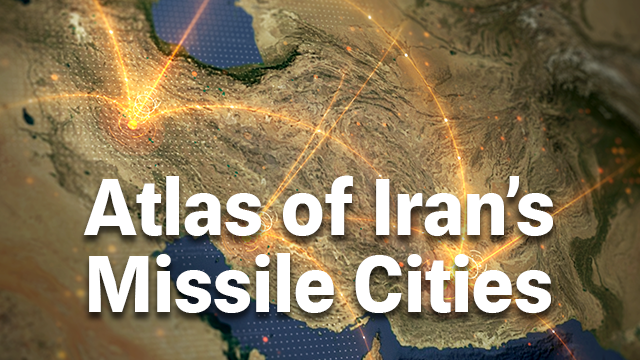
Mossad and the Israeli military carried out a series of covert operations against Iran’s strategic missile infrastructure ahead of this week’s airstrikes, according to Israeli media and security sources cited by Reuters.
Military correspondent Itay Blumental of Israel’s Kan News, citing a security source, reported that Mossad operatives secretly smuggled large volumes of precision-guided weaponry into Iran and deployed them across various locations.
The weapons were used to target Iranian surface-to-air missile systems and long-range missile launchers during the strikes.
According to the same report, Mossad:
A separate Israeli security source told Reuters that Mossad and the Israeli military jointly led these operations, focusing specifically on degrading Iran’s strategic missile array.
Iran’s National Security and Foreign Policy Committee will hold an emergency session on Friday following Israeli airstrikes, a senior lawmaker said.
Ebrahim Rezaei, spokesperson for the committee, said the meeting would take place later in the day to review what he called “the Zionist regime’s crime.”
“The Zionist regime must now expect a harsh, instructive, regret-inducing, and devastating response from the armed forces of the Islamic Republic of Iran,” Rezaei said, according to ILNA.
He added that lawmakers demand an “immediate and decisive” reaction and retribution for the blood of “innocent Iranian citizens.”
German airline Lufthansa on Friday announced it had suspended all flights to and from Tehran, citing the evolving security situation following Israeli strikes on Iranian territory.
“Lufthansa Group flights to and from Tehran will be suspended until further notice due to the current situation,” the company said in a statement, adding it would also avoid Iranian, Iraqi and Israeli airspace for overflights.
Russia’s Aeroflot also said it had canceled flights between Moscow and Tehran and made adjustments to other routes in the Middle East, while Qatar Airways announced the suspension of flights to and from both Iraq and Iran.