Gas tank explosion at Iran's Natanz steel complex kills one, injures seven
An Afghan worker was killed and seven others injured following the explosion of a gas tank at the Sharif Khaledabad Steel Complex in Natanz, a city in central Iran which houses the country's main uranium enrichment facility.
Local emergency officials confirmed the incident occurred on Sunday, resulting in the immediate death of one worker who was a national of Afghanistan.
The seven others who were wounded in the blast were promptly transferred to a nearby medical facility for treatment. No further details were released regarding the extent of their injuries.
The acting head of the Natanz Emergency Services said the precise cause of the explosion remains under investigation. Authorities are continuing their inquiry into the circumstances surrounding the incident.
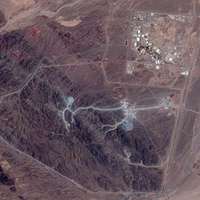
Natanz is primarily known as the site of Iran's main uranium enrichment facility. The facility, officially known as the Shahid Ahmadi Roshan Nuclear Facility, is a key component of Iran's nuclear program.
Democratic lawmakers on the sidelines of the Trump administration's high-stakes nuclear talks with Iran largely hope for their success but lament being cut out of a process playing out behind closed doors.
While hawkish Republicans and a lone Democratic Senator John Fetterman have vocally questioned Iran's nuclear intentions as Trump has pushed for harsher terms, mainstream members of the caucus have mostly kept mum.
Trump in 2018 exited an international deal inked under Democratic President Barack Obama, much to the party's consternation, but its leadership has signaled cautious backing for a new stronger deal.
House Minority Leader Hakeem Jeffries last week blessed the diplomatic effort but questioned why Congress was not being briefed.
"With respect, we don't have a great deal of visibility into what President Trump is trying to accomplish in terms of the current negotiations with Iran," the New York representative said.
"Iran should never be allowed to become nuclear capable, and ... (a deal) should be longer and stronger than what had previously existed, and should be done in a manner that is verifiable and resilient."
Jeffries told Iran International "that a future agreement must be stronger than its predecessor—enforceable in a lasting way, with real consequences for violations.”
The crux of the dispute in talks appears to center around enrichment. While Obama's deal allowed limited uranium enrichment on Iranian soil, a toughened line by Trump's negotiators demands a total halt - a scenario Tehran has repeatedly rejected.
Senator Chris Murphy, a Connecticut Democrat who sits on the Senate Foreign Relations Committee, was more critical of the administration's handling of the key foreign policy issue.
"As far as I know the administration has provided zero briefing to this committee on the negotiations, so they seem to be happening totally in secret," Murphy told Iran International.
"I think that's pretty dangerous for the American people to be kept in the dark about these negotiations, especially really sensitive negotiations that involve a potential nuclear war," he added.
Democrat maverick
Republicans, by contrast, who appear to have no more formal briefing than their counterparts across the aisle have consistently expressed in news interviews and social media posts a reticence to trust Iran in a new agreement.
Perhaps the harshest line on Iran has been taken not by Republican but by Democratic Senator John Fetterman of Pennsylvania, a strident advocate of Israel who suggested on X last week that Washington should bomb its way out of the Iran impasse.
His remarks hinted that Iran's highly enriched uranium stockpile should be hit with a US bunker-buster bomb.
While bellicose Republican rhetoric toward Iran is familiar territory, a sitting Democrat openly advocating for preemptive military action is almost unprecedented in the post-Iraq invasion era.
According to an aide close to Fetterman who spoke to Iran International on condition of anonymity, he views Iran’s nuclear program as a “ticking time bomb.”
Fetterman, the aide added, believes any delay in confronting Iran militarily could leave both the United States and Israel with fewer and riskier options in the future.
An Israeli preemptive strike would be a “once-in-a-generation opportunity” to, in his words, “obliterate” the Islamic Republic’s nuclear ambitions.
The emergence of Fetterman’s hawkish line has intensified long-standing tensions within Democratic ranks over the use of military power and America’s strategic posture in the Middle East.
For Democrats, Fetterman’s rhetoric adds a new layer of complexity as the party seeks to re-establish a distinct foreign policy identity in opposition.
While they seek to articulate a position that contrasts meaningfully with the Trump administration, avoiding internal fragmentation or policy incoherence will be key.
IAEA Director General Rafael Grossi holds a news conference after the first day of the agency's quarterly Board of Governors meeting at the IAEA headquarters in Vienna, Austria, June 9, 2025.
The head of the UN nuclear watchdog said on Monday that a draft resolution put forward by Western powers censuring Iran for its nuclear non-compliance is separate from the indirect talks between Tehran and Washington.
“There is no formal link between one thing and the other,” said Rafael Grossi, Director General of the International Atomic Energy Agency (IAEA), at a press conference after the agency’s Board of Governors opening meeting in Vienna.
“But it is obvious, I think for all of us, that there is an interrelation and perhaps a mutual influence. Not perhaps—for sure. It is a mutual influence.”
Grossi emphasized that the draft resolution—tabled by the United States, France, Germany, and the United Kingdom—should be viewed as part of the agency’s technical oversight role, not as a political manoeuvre aimed at pressuring Iran as Tehran alleges.
Earlier in the day, Mohammad Eslami, head of the Atomic Energy Organization of Iran (AEOI), accused the IAEA of acting under American influence and said the agency had lost its credibility.“We have no hidden program and no deviation from our obligations.”
AEOI spokesman Behrouz Kamalvandi also warned of specific countermeasures. “Last time we warned them and they didn’t listen, so we increased 60 percent enrichment sevenfold. Now again, we’ve told them what actions we may take,” he said in a broadcast. “The agency shouldn’t expect continued constructive cooperation.”
Iran views the potential censure resolution at the IAEA Board of Governors as a politically motivated step that could be exploited by the E3 to push for a Security Council move triggering the snapback mechanism, which would reimpose UN sanctions lifted under the 2015 nuclear accord.
JCPOA no longer sufficient as Iran advances program, IAEA chief says
Grossi said that even if revived, the 2015 deal—formally known as the Joint Comprehensive Plan of Action (JCPOA)—would no longer be enough to address the scale and complexity of Iran’s nuclear activities.
“The JCPOA was designed to be applied to a very specific type of Iran program, which is completely different now,” he said. “Even if you wanted to revive it, it would not be enough because now they have new technologies.”
He added that the agency’s technical work must continue regardless of the political track. “We cannot wait for negotiations. We are an independent technical body. But if diplomacy succeeds, it will help reinforce cooperation.”
Highly enriched uranium ‘cannot be ignored’
Grossi stressed that while uranium enrichment is not prohibited under international law, the levels Iran is reaching are a serious concern.
“Uranium enrichment per se is not a forbidden activity, which is something my Iranian counterparts always tell me,” he said.
“At the same time, when you accumulate and continue to accumulate, and you are the only country in the world doing this at a level very, very close to what is needed for a nuclear explosive device, then we cannot ignore it.”
“There is no medical or civilian use for it,” he said. “That is why it is important for us.”
Iran’s possession and analysis of confidential documents from the agency is a “bad” development that undermines the cooperative relationship expected between Tehran and the IAEA, Grossi said without elaborating on the documents.
A confidential IAEA report dated May 31 said that the agency had obtained “conclusive evidence of highly confidential documents belonging to the Agency having been actively collected and analyzed by Iran.”
“This dates to a few years ago, but we could determine with all clarity that documents that belong to the agency were in the hands of Iranian authorities, which is bad,” Grossi told reporters. “We believe that an action like this is not compatible with the spirit of cooperation.”
IAEA working to calm threat of Israeli military action
In response to a question about the possibility of Israeli military action on Iran’s nuclear program, Grossi said the agency is actively seeking to de-escalate the situation.
“We are trying to solve this without the use of violence or force,” he said. “If it’s done correctly, thoroughly, with a very strong verification and monitoring chapter from us, it would give the necessary assurance for Israel and for the world that there is nothing to be feared coming from there.”
Grossi said Israeli concerns were not new, but said the IAEA's focus remains technical. “We are trying to get to a solution in a diplomatic way, trying to clarify and solve this.”
No communication on Iran’s claim of seized Israeli documents
Responding to a question about reports that Iran has obtained sensitive data on Israeli nuclear activities, Grossi said the agency had received no official communication regarding the claims.
Grossi added that "This seems to refer to Soreq [nuclear center] which is research facility which we inspect by the way,” —suggesting that the documents Iran says to have accessed may relate to this site.
Contrary to popular belief, Grossi emphasized that the IAEA does inspect certain parts of Israel’s nuclear program.
“Normally people tell me, ‘you don’t inspect Israel.’ Yes, we do... We don’t inspect other strategic parts of the program, but we do inspect Soreq,” he said.
Iran’s state broadcaster IRIB reported on Saturday that Iranian intelligence services had obtained a significant volume of classified material from Israel, including documents concerning the country’s nuclear and strategic infrastructure.
Israeli security analysts have dismissed the claims as exaggerated or psychological warfare, while Iran’s intelligence minister said that the documents would soon be made public.
Head of Atomic Energy Organization of Iran Mohammad Eslami and International Atomic Energy Agency Director General Rafael Grossi attend the opening of the IAEA General Conference at their headquarters in Vienna, Austria, September 26, 2022.
Iran has warned it will take retaliatory steps if the International Atomic Energy Agency (IAEA) proceeds with a resolution censuring its nuclear activities, following the publication of a detailed report alleging undeclared nuclear work across multiple covert sites.
Mohammad Eslami, head of the Atomic Energy Organization of Iran, said the agency had “lost its credibility” by acting under “unilateral American influence.”
“We have no hidden program and no deviation from our obligations,” Eslami said in an interview with Al-Arabi TV of Qatar ahead of the IAEA Board of Governors meeting this week. “We will not endanger the health of our people by surrendering to political pressure.”
Behrouz Kamalvandi, spokesperson for the agency, also said in a separate broadcast that Iran had already conveyed a list of possible countermeasures if censured.
“Last time we warned them and they didn’t listen, so we increased 60 percent enrichment sevenfold. Now again, we’ve told them what actions we may take. The agency shouldn’t expect continued constructive cooperation.”
ISIS analysis: IAEA findings show coordinated nuclear program
In an analysis of the IAEA’s May 31 report, the Institute for Science and International Security (ISIS) said the agency had presented “new details from its assessments about Iran’s activities involving undeclared nuclear materials, related equipment, as well as their nuclear weapons relevance, at four sites in Iran.”
The analysis said the IAEA now concludes that Lavizan-Shian, Marivan, Varamin, and Turquz-Abad were “part of an undeclared structured nuclear program.”
The ISIS report highlights Iran’s production of uranium deuteride (UD3) neutron initiators at Lavizan-Shian during 2003, saying these were “integrated into scaled implosion systems and explosively tested.” These initiators play a central role in triggering the chain reaction in a nuclear weapon.
At Marivan, the IAEA assessed that Iran conducted four explosive tests involving “full-scale hemispherical implosion systems,” consistent with preparation for a cold test of a nuclear weapon device.
The analysis said the IAEA found indications that “equipment was developed and tested at Lavizan-Shian that included neutron detectors and housings,” and that “identical housing for neutron detectors was deployed in an explosive test at Marivan.”
The Varamin site, also referred to as the Tehran Plant in Iran’s nuclear archive, was identified as a pilot-scale uranium conversion facility. According to the analysis, the IAEA reported that the site housed “small but heavily contaminated (and possibly full) UF6 cylinders,” along with fluorine-based chemicals and radiation monitoring equipment.
Five containers of equipment were deemed essential by Iranian operators and were later moved to Turquz-Abad.
The ISIS review emphasized the connection between these sites and Turquz-Abad, which the IAEA concluded served as a storage site for nuclear materials and contaminated equipment from Lavizan-Shian, Varamin, and the Jaber Ibn Hayan Laboratory.
The agency detected “processed natural uranium particles” and isotopically altered uranium, including material enriched up to 19 percent, though it noted it has “no assessment regarding the source” of these particles.
ISIS noted that the findings warrant an IAEA Board of Governors censure resolution and referral of Iran’s case to the UN Security Council. It also urged the E3 to trigger a snapback of UN sanctions through the Joint Comprehensive Plan of Action mechanism.
Iran points to ‘sabotage,’ questions IAEA process
Iran’s semi-official news agency ISNA reported Monday that officials had presented what they described as evidence of sabotage at Varamin and Turquz-Abad during the recent visit by IAEA Deputy Director General Massimo Aparo. According to ISNA, Iran shared physical traces of tampering and indicated it would provide further documentation when appropriate.
Iran said it had not been previously informed of key allegations contained in the IAEA’s report and rejected the agency’s linkage between uranium particles found at Turquz-Abad and activities at JHL. Officials insisted no intact containers were removed from Turquz-Abad in the period referenced by the agency and characterized the site as an industrial waste depot.
On Varamin, Tehran denied the existence of a pilot-scale conversion plant and accused the IAEA of basing its assessment on “fabricated documents” submitted by adversarial actors. Officials also dismissed satellite imagery cited by the agency as insufficient evidence of material transfer to Turquz-Abad.
While Iranian authorities expressed their willingness to cooperate within the safeguards framework, they questioned the IAEA’s transparency and impartiality. They also expressed concern that the agency’s recent conduct indicates “no intention to resolve these matters through technical channels.”
Kazem Sedighi (right) and Supreme Leader Ali Khamenei
Prominent Iranian cleric Kazem Sedighi's son and daughter-in-law have been arrested on corruption charges, Iranian state media reported on Sunday, more than a year after the hardline cleric himself was implicated in a land grab scandal.
The two were detained by the Revolutionary Guard's Intelligence Organization two weeks ago on charges of misconduct and collusion, the IRGC-affiliated Fars News Agency reported.
"The case of the accused is being pursued with great care and sensitivity, and the judiciary will handle the case in a fully professional and independent manner," the report said citing an informed source. "The violators will receive a firm response, and the final results will be officially announced after the completion of legal procedures."
Sedighi, known to critics as “the weeping sheikh,” was accused last year of illegally appropriating public land in northern Tehran.
Leaked documents indicated that he and his associates had seized a 4,200-square-meter garden originally owned by a seminary. The property, estimated to be worth $20 million, was reportedly transferred to an entity controlled by Sedighi and his family.
After initially denying the allegations and claiming that his signature on the documents had been forged, Sedighi’s defense unraveled as more evidence emerged.
Eventually, he issued a public apology addressed to Supreme Leader Ali Khamenei, revealing that the land had been returned to the seminary. Despite the scandal, Sedighi continued serving as the interim Friday Prayer Imam of Tehran.
In the case of Sedighi's son and daughter-in-law, "have the collusions taken place independently of their father's position as the Friday Prayer Leader appointed by the Supreme Leader and head of the Promotion of Virtue Headquarters"? asked BBC Persian journalist Hossein Bastani.
"What happened to Kazem Sedighi’s own 1,000-billion-toman land grab case?" Bastani added in a post on X.
Sedighi’s case has triggered widespread backlash, particularly on Iranian social media platforms. Many Iranians have expressed frustration over what they see as a lack of accountability and transparency among high-ranking officials and clerics.
People walk through a park in Tehran, Iran, March 30, 2021.
Iranian prosecutors have expanded a ban on dog walking to more than 20 cities across the country, building on similar restrictions first introduced in the capital Tehran in 2019.
The ban has now spread to at least 25 cities, including Kermanshah, Ilam, Hamadan, Kerman, Boroujerd, Robat Karim, Lavasanat, and Golestan, according to a report by Tehran-based reformist-leaning outlet Faraz News on Sunday.
While no national legislation has been passed, judicial authorities are enforcing the ban through local directives and police orders, citing various articles of Iran’s Penal Code and Constitution.
These include Article 638 on public morality, Article 688 on threats to public health, and Article 40 of the Constitution, which prohibits harm to others.
Several prosecutors across various provinces announced the new bans over the weekend.
Kashmar, a city in northeastern Iran’s Razavi Khorasan province, is among the latest to implement the ban.
“Dog walking has been prohibited in this county in order to safeguard public hygiene and the physical and psychological safety of the public,” the city’s public prosecutor said on Sunday.
Khalkhal’s public prosecutor Mozaffar Rezaei in northwest Iran’s Ardabil province announced the ban came into effect on June 6. “Offenders will face consequences if they are seen walking dogs in parks, public spaces, or carrying them on their vehicles,” Rezaei said in remarks to Islamic Republic News Agency (ILNA) published Sunday.
"In addition to the financial and physical damages, religious rulings and cultural considerations must be taken into account, as this practice reflects the promotion of a Western lifestyle," he added.
In Ilam, western Iran, authorities imposed a dog walking ban on Saturday, warning that anyone seen walking dogs in parks, public areas, or transporting them in vehicles would face legal action. Police have also been instructed to impound vehicles involved in violations, according to provincial judicial chief Omran Ali Mohammadi.
In Isfahan, central Iran, the ban was announced last week by Mohammad Mousavian, the city’s public prosecutor who also ordered police to impound vehicles carrying dogs and shut down pet shops and unauthorized veterinary clinics.
A group of animal rights activists gathered outside the governor’s office in Isfahan on Sunday, calling for an end to what they described as municipal dog culling.