Tehran says 5,000 people working to expand Bushehr nuclear plant
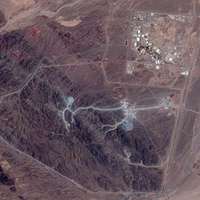
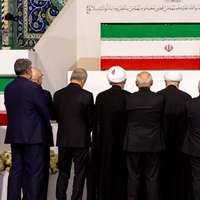
Thousands of workers are currently involved in constructing the second and third units of the Bushehr nuclear power plant in southern Iran, the country's atomic energy chief announced on Monday.
"Currently, 5,000 people are involved in the construction of the two new units," Mohammad Eslami said during a visit to the site, adding, "Their efforts are ensuring the project progresses with good discipline and speed."
Eslami claimed that lessons learned from work on the second unit have helped accelerate progress on the third.
Located in Bushehr province, Iran's first commercial nuclear energy facility sits along the Persian Gulf.
The official also asserted that the project had recently achieved a record by pouring an enormous amount of concrete in one day, specifically 22,000 cubic meters. "Next year, we aim to ramp up our daily concrete pouring to 65,000 cubic meters to keep the project's momentum going," Eslami added.
Eslami was previously sanctioned by the United Nations in 2008 while he was the head of Iran's Defense Industries Training and Research Institute, for his involvement in "Iran's proliferation of sensitive nuclear activities or for the development of nuclear weapon delivery systems."
In February last year, Ahmad Mohammadizadeh, the governor of Bushehr,disclosed that the Islamic Revolutionary Guard Corps (IRGC) was undertaking a new expansion of the Bushehr nuclear power plant. This revelation followed a day after Rafael Grossi, the head of the UN's nuclear watchdog, commented that Iran was "not entirely transparent" regarding its nuclear activities.
Speaking about the the work to expand the nuclear plant, Eslami pointed to the use of domestically manufactured equipment and detailed the technical challenges of stabilizing the reactors' foundations. "We have completed 34,000 rod injections to reinforce the foundation beneath the reactor buildings," he said.
In addition to the reactors, Eslami said work is ongoing on supporting infrastructure, including power transmission systems and water intake facilities.
An illustration of US President-elect Donald Trump (right) and Iran's Supreme Leader Ali Khamenei by the United Against Nuclear Iran (UANI)
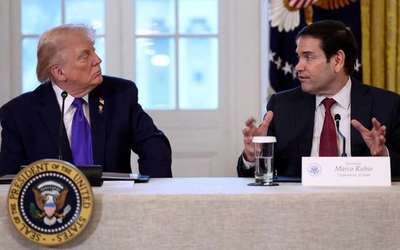
Donald Trump should threaten Iran with military force if it continues to advance its nuclear program, advocacy group United Against Nuclear Iran (UANI) said in a report on Monday.
The recommendation by the hawkish privately funded group founded by former diplomats was one of several broad policy proposals for the incoming administration to confront and weaken Washington's main adversary in the Middle East.
"President-elect Trump should use (a) policy speech to publicly outline in unambiguous terms that the U.S. will not hesitate to utilize military force to destroy Iran’s nuclear program if it takes steps to further advance its capabilities," UANI said in its report.
The UN nuclear watchdog said in December that Iran is accelerating its enrichment of uranium to up to 60% purity, closer to the roughly 90% level needed for a weapon.
Tehran has denied pursuing nuclear weapons, saying its program is peaceful.
UANI also recommended Trump empower Israel to be able to hit Iran's nuclear sites.
"Begin discussions with the Israeli government to transfer the GBU-57 Massive Ordnance Penetrator to Israel to enable it strike hardened nuclear targets like the Fordow Enrichment Plant, as well as lease it a B-2 bomber as a delivery vehicle."
Israel knocked out much of Iran's air defenses in an Oct. 26 series of air strikes as retaliation against an Iranian ballistic missile salvo, but its ability to neutralize Iran's nuclear activity in deep underground facilities is in doubt.
Citing Trump's 2020 decision to assassinate in Baghdad Qassem Soleimani, the chief of the Islamic Revolutionary Guard Corps's (IRGC) foreign arm the Quds force, UANI said Trump should target commanders inside Iran if Tehran harms US nationals.
"Strike IRGC commanders, Quds Force, and Intelligence Ministry assets inside Iran if the Islamic Republic harms US persons," it wrote.
The group sketched out further recommendations including encouraging defections from Iran's security forces, tightening sanctions including on Iran's Supreme Leader Ali Khamenei, carry out cyber-attacks and encourage allies to shutter Iranian banks.
Iran's President Masoud Pezeshkian (right) meets Venezuelan President Nicolas Maduro on the sidelines of a BRICS meeting in Russia in October 2024
Iran's president threw his weight behind what he called the legitimate government of Venezuelan President Nicolas Maduro who won re-election in a controversial vote last September.
Masoud Pezeshkian congratulated Maduro on his third term as Venezuela's president and wished him success.
"Iran supports legitimate government of Venezuela and is ready to strengthen mutual relations. We believe, any foreign interference and attempts to threaten and sanction Venezuela are doomed to failure," he said in a post on his X account.
Maduro, who has led Venezuela for nearly 12 years amidst severe economic and social turmoil, was sworn in for a third term on Friday.
His inauguration followed a contentious six-month-long electoral dispute, international pressure urging him to step down and an increased US bounty for his capture to $25 million for alleged narco-terrorism.
In office since 2013, Maduro was proclaimed the victor of July's election by Venezuela's electoral authority and supreme court, though no comprehensive vote counts validating his win have been released.
Venezuela's opposition says ballot-level results demonstrate a decisive victory for its candidate, Edmundo Gonzalez, who has been recognized as the president-elect by several nations, including the United States.
International election observers have criticized the election, saying it did not meet democratic standards.
A Kurdish Iranian woman on death row took part in a nationwide protest movement which started in 2022, an Islamic Revolutionary Guard Corps (IRGC) news outlet said, muddling the official narrative on her conviction for alleged armed separatism.
IRGC-affiliated Tasnim News Agency reported that Pakhshan Azizi allegedly entered Iran illegally in 2023 aiming to “create unrest in universities on the anniversary of the 2022 protests.”
The report added that Azizi met with the family of Hadis Najafi, a 23-year-old protestor who was fatally shot in the heart, abdomen and neck during a demonstration in Karaj on September 21, 2022.
The report said that Azizi's actions were intended to "advance the enemy's objective of stirring unrest in universities and inflaming the national mood."
The 2022 protests, which marked the largest challenge to the Islamic Republic in its nearly 50-year history, began in September when a young woman Mahsa Amini died after being arrested for allegedly failing to comply with Iran's mandatory hijab laws.
Iranian authorities responded to the protests with lethal force, with security forces killing at least 550 demonstrators, including dozens of children and arresting tens of thousands, according to rights groups.
Iran's Supreme Leader Ali Khamenei blamed the United States and Israel for the protests, calling them riots engineered by Iran's enemies and their allies in his first public remarks on the unrest.
Azizi was sentenced to death in July of last year on charges of armed rebellion against the state and sentenced to four years in prison for alleged membership in the Kurdistan Free Life Party (PJAK), which she and her lawyers have denied.
Tasnim, which is well-sourced among security forces, and other outlets linked to the establishment repeated the accusations and had not highlighted her activism.
Her lawyer announced last week that the Supreme Court upheld the death sentence, dismissing an appeal that highlighted multiple investigative flaws and the absence of credible evidence.
Rights groups have described the trial as a sham, denouncing the Supreme Court’s decision and calling for her release.
“During her detention, Ms. Azizi was denied legal counsel, subjected to severe psychological and physical torture, including five months of solitary confinement and prolonged interrogation sessions designed to extract false confessions—a routine tactic used by the Islamic Republic to convict peaceful activists of bogus national security crimes,” US-based rights group Center for Human Rights in Iran (CHRI) said in a statement.
Amnesty International condemned Iran's Supreme Court for upholding Azizi's conviction and death sentence, describing her trial and punishment as unjust.
A coalition of more than 100 Kurdish civil society and rights activists issued a statement on Monday, calling for the immediate annulment of Azizi's death sentence and a comprehensive review of her case.
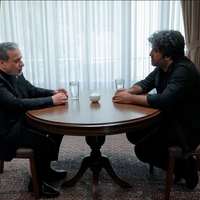
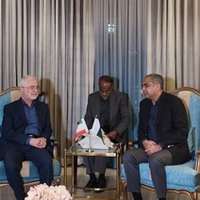
Negotiators from Iran and the European E3 countries of France, Britain and Germany convened a third round of talks on the Islamic Republic's nuclear program in Geneva on Monday, an Iranian deputy foreign minister said.
"We discussed ideas involving certain details in the sanctions-lifting and nuclear fields that are needed for a deal," Kazem Gharibabadi said in a post on X.
He described the talks as "serious, frank, and constructive", adding that the two sides agreed to continue their dialogue.
"Sides concurred that negotiations should be resumed and to reach a deal, all parties should create and maintain the appropriate atmosphere," he said.
Echoing Gharibabadi's characterization, Christian Turner, Political Director at the Foreign, Commonwealth & Development Office (FCDO), described the session in similar terms, without explicitly mentioning Tehran's nuclear program or sanctions relief.
"UK French & German Political Directors met again with our Iranian counterparts in Geneva today. Talks were serious, frank & constructive. Against a challenging context, we discussed concerns & reiterated our commitment to a diplomatic solution. We agreed to continue our dialogue," Turner's post on X read.
The German Foreign Office and France’s Director General of Political and Security Affairs at the Ministry for Europe and Foreign Affairs, Frédéric Mondoloni, also shared the same statement on their X accounts.
The talks follow meetings in November as tensions mounted following the UN nuclear watchdog's Board of Governors' resolution censuring of Iran and demanding Tehran resolve outstanding issues with the IAEA over its advancing nuclear program.
Iranian Foreign Minister Abbas Araghchi last month expressed Tehran's readiness for renewed talks with world powers aimed at breaking the long-standing deadlock over its disputed nuclear program.
The remarks were the among the clearest yet signaling that Iran, faced with a bevy of economic and military setbacks, sought to ease isolation due to intensify under a second presidency of Donald Trump through talks.
“The formula we have is the same as the previous JCPOA formula, which is building trust about Iran's nuclear program in exchange for the removal of sanctions. We are ready to negotiate on this basis," he said.
The Joint Comprehensive Plan of Action (JCPOA) is the agreement signed in July 2015 between Iran, the European Union and the five permanent members of the UN Security Council plus Germany, commonly known as the P5+1.
Trump withdrew the US from the deal in 2018 during his first term in office and reinstated sanctions on Tehran.
Iran, in turn, has accelerated uranium enrichment to levels exceeding those required for peaceful purposes, approaching the purity needed to develop a nuclear weapon.
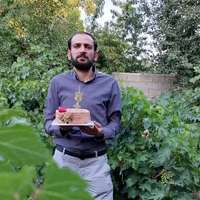
A French citizen detained in Iran for over two years on espionage charges revealed his identity and described his ordeal in a phone call aired on French radio on Monday, as Paris steps up efforts to gain his release.
In the conversation recorded in prison and aired by radio network France Inter, Olivier Grondeau, who had previously only been identified only by his first name, described his detention as arbitrary and unbearable.
The 34-year-old tourist who was arrested in Shiraz on October 12, 2022 during a world tour added that he is a victim of what he called political blackmail as France and Iran grapple over his case.
Grondeau was sentenced last February to five years in prison for "espionage and conspiracy against the Islamic Republic" and is currently held in Tehran’s Evin Prison in a wing designated for foreign and dual-national detainees.
He called on French authorities to secure his release and expressed hope that his request for parole would be granted.
The French foreign ministry, which summoned Iran’s ambassador on January 10, has demanded the immediate release of Grondeau and two other French detainees, teachers Cécile Kohler and Jacques Paris, who have been held since May 2022.
"Their situation is intolerable, with inhumane detention conditions that, in some cases, constitute torture under international law," the ministry said in a statement.
Grondeau shares a cell with 18 other detainees and has limited access to a library and books sent by the French embassy. He also highlighted the harsher conditions faced by Kohler and Paris in the same message.
"You, who have the power to influence this matter, hear this truth," Grondeau said, apparently addressing French authorities.
"Cecile's strength, Jacques' strength, Olivier's strength, it is all running out," he added.
"Your responsibility is called upon to ensure the survival of three human beings."
Grondeau is one of an unknown number of foreign or dual-nationals held by Iran in what rights groups and some foreign governments decry as hostage diplomacy.
Most recently, an Italian journalist was released in an arrest which is understood to have been leverage to force Italy to release an Iranian imprisoned on terrorism charges.