Iran says it had longstanding dialogue with Syrian opposition
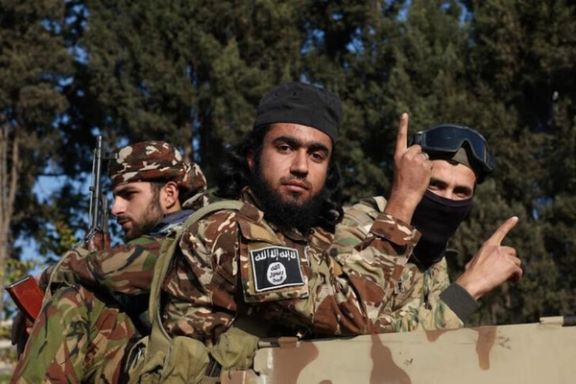
Rebel fighters gesture, after rebels seized the capital and ousted President Bashar al-Assad, in Damascus, Syria, December 9, 2024.
Iran’s Foreign Ministry said it had maintained a sustained dialogue with Syrian opposition movements, adding, however, that Tehran is not currently in contact with the forces governing Syria.
Ministry spokesperson Esmail Baghaei said that while Iran has actively engaged with opposition groups, it does not maintain direct ties with Syria’s ruling faction, responsible for the overthrow of the decades-long Assad dynasty.
“Our involvement has always been about preventing ISIS's advance and the spread of terrorism to regional countries,” Baghaei said during a press briefing in Tehran on Monday.
“The issue of various terrorist groups operating in Syria has been a major concern since the beginning of developments in Syria 13 years ago,” he said.
Iran has long had a military presence in Syria, as has its armed allies such as Lebanese Hezbollah, designated as a terrorist group by nations such as the UK and US.
Responding to speculation about a message from Syria’s leadership via Turkey, Baghaei said that regional concerns, including Syria, are often addressed during multilateral discussions.
“Our stance is to preserve Syria’s sovereignty and territorial integrity while ensuring that the Syrian people determine their fate without foreign interference,” he added.
After the storming of the embassy
Baghaei described a coordinated effort involving Iran’s embassies in Damascus and Beirut to evacuate nationals.
“At present, no non-resident Iranian nationals remain in Syria,” he said, adding that Iranians, including military advisors and diplomatic staff, were successfully evacuated during the recent unrest which saw the Iranian embassy ransacked.
Prospects for nuclear negotiations
Turning to nuclear negotiations, Baghaei said Iran is committed to dialogue. “The Islamic Republic of Iran has never shut the door on negotiations. We have always participated in good faith, despite many concerns being unfounded,” he said.
Referencing the Joint Comprehensive Plan of Action (JCPOA), Baghaei said that Iran’s cooperation had yielded agreements in the past but criticized the lack of follow-through by other parties.
The Joint Comprehensive Plan of Action (JCPOA), commonly known as the Iran nuclear deal, was signed in 2015 between Iran and the P5+1 group of countries (the United States, United Kingdom, France, Russia, China, and Germany).
The agreement aimed to ensure the peaceful nature of Iran's nuclear program by imposing strict limits on its uranium enrichment activities and granting extensive access to international inspectors in exchange for the lifting of economic sanctions.
Despite its initial success in curbing Iran's nuclear advancements, the deal faced challenges, particularly after the United States unilaterally withdrew in 2018 under the Trump administration and re-imposed sanctions on Iran.
This withdrawal led to a gradual erosion of the agreement, with Iran scaling back its commitments in response and since, escalating its nuclear program beyond international limits.
Efforts to revive the JCPOA have been ongoing, reflecting its significance in promoting regional stability and preventing nuclear proliferation. However, negotiations remain complex, with both sides expressing concerns over compliance and mutual trust.
Baghaei denied reports of a message being sent from US President-elect Donald Trump.
Reporters ask questions during foreign ministry briefing on December 23, 2024 in Tehran.
Iran-Turkey relations and broader goals
Baghaei also highlighted the importance of maintaining strong ties with Turkey, describing it as a significant regional neighbor.
“We are committed to good-neighborly relations with Turkey, which benefit both nations,” he said. While acknowledging occasional differences, Baghaei expressed confidence in ongoing dialogue to resolve disputes.
Recent tensions between Iran and Turkey over Syria have highlighted the complexities of their regional relationship. While both nations have historically cooperated on various issues, their conflicting interests in Syria have created friction as each vies for power.
Iran, a staunch supporter of Syria's government under Bashar al-Assad, has expressed concerns over Turkey's help to the ruling group in Syria which ousted Assad after 13 years.
Turkey, on the other hand, justifies its actions as necessary to combat Kurdish militias, which it considers terrorists.
“The region’s security depends on collective adherence to international obligations and the rejection of foreign interference,” Baghaei added, Syria having played a critical role in Iran's regional foreign policy since the outbreak of Syria's civil war, with multiple bases spread out across Syria and forces in place.
Iranian President Masoud Pezeshkian (center-right) during a meeting with Russian Deputy Prime Minister Vitaly Savelyev (center-left) in Tehran on December 23, 2024
A Russian delegation arrived in Tehran on Monday for a visit that includes a meeting with Iranian President Masoud Pezeshkian as the allies prepare to sign a comprehensive cooperation agreement.
The Russian delegation is headed by deputy prime ministers Alexei Overchuk and Vitaly Savelev, Russia's Interfax news agency said, adding, “The parties are expected to discuss the joint work of Iran and the countries of the Eurasian Economic Union (EAEU) within the framework of a full-fledged agreement on a free trade zone.”
Iran's Foreign Ministry Spokesperson Esmail Baghaei also said Monday that Iran and Russia have been working on setting a date to complete an agreement, which was announced a few years ago. He said the deal is set to be finalized in January.
Tehran and Moscow initially signed a long-term agreement in March 2001. Officially known as the Treaty of the Foundation of Mutual Relations and the Principles of Cooperation between the Islamic Republic of Iran and the Russian Federation Act, it was initially set for ten years but was extended twice for five-year terms.
According to Iran’s ambassador to Russia, the countries agreed to extend the agreement for another five years in 2021, setting its expiration date to 2026.
In 2023, reports emerged of possible difficulties in developing the new agreement with Russia, though very few details have been made public on what the new agreement would include.
Russia has bolstered closer ties with Iran and other countries hostile towards the United States such as North Korea since the start of the war on Ukraine.
Russian Foreign Minister Sergei Lavrov said in October that Moscow and Tehran intended to sign a deal which would include closer defense cooperation. The two countries have participated in regular military drills together and have been working closely on drone and missile technology.
The United States accused Tehran in September of delivering close-range ballistic missiles to Russia for use against Ukraine, and imposed sanctions on ships and companies it said were involved in delivering Iranian weapons. Tehran denies providing Moscow with the missiles.
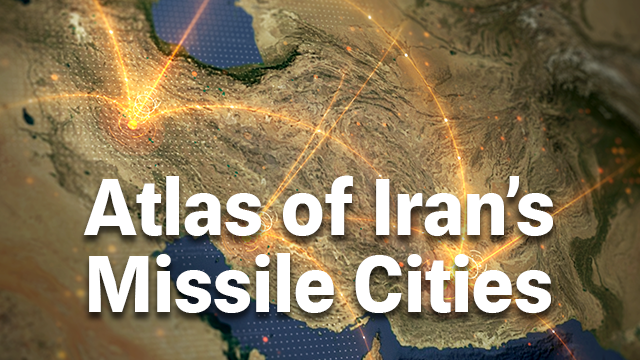
A US-based rights group has unveiled an interactive map detailing 45 years of state violence by Iran domestically and internationally, with records of 862 extrajudicial executions and 124 cases of death threats, attempted kidnappings and assassinations.
Titled "Iran: State Violence Beyond Borders," the report by the Washington-based Abdorrahman Boroumand Foundation for Human Rights in Iran (ABC) details state violence carried out in countries across the Middle East, Europe, North America, and Africa.
The foundation noted that at least 452 cases occurred outside Iran in countries including Germany, the United States, the United Kingdom, Pakistan, Turkey, Iraq, France, and Canada. They often involved Iranian officials, diplomats, and agents who have largely escaped accountability.
“This interactive map represents a critical tool to advance efforts to document and expose incidents of extrajudicial violence carried out by the Islamic Republic of Iran,” said Roya Boroumand, the foundation’s executive director.
“We hope this project moves the international community to systematically monitor and investigate these violations, prioritizing transparency and justice for the victims who have been left in the dark for far too long.”
Prominent cases include multiple kidnapping plots targeting journalist Masih Alinejad, alleged assassination attempts against Donald Trump, Mike Pompeo, and John Bolton, and efforts to surveil Iranian dissidents abroad.
The map also highlights incidents and threats documented in London, including those targeting Iran International presenters Fardad Farahzad and Sima Sabet, Iranian dissident rapper Hichkas, and women’s rights activist Fariba Baluch.
"The Abdorrahman Boroumand Center's map demonstrates, for the first time, the extent of Iran's global assassinations, kidnapping, and hostage-taking,” said Pulitzer-prize winning historian, Anne Applebaum "The Iranian regime has turned the world into a chessboard for its own deadly game, the silencing of dissent."
The foundation said that perpetrators often evade justice due to weak responses by host governments. In some cases, suspects were allowed to flee, received early releases, or faced downgraded charges unrelated to the political nature of their crimes. Such failures, ABC warned, embolden Iranian authorities.
"The perpetrators behind these crimes cannot be allowed to continue to benefit from impunity, and governments and international institutions must urgently ensure effective remedy and reparation to victims," said Nazanin Boniadi, actress and human rights advocate.
Last week, the US State Department, in its annual Country Reports on Terrorism (CRT), denounced Iran for orchestrating or supporting plots against dissidents and other perceived enemies abroad.
The report also detailed threats against Iran International, highlighting a 2023 conviction by a British court of a man who attempted to gather information for “terrorist purposes.”
Despite Iran's allied militias facing major losses across the region, the IRGC's commander spoke of their victory, while implying that Iran does provide weapons to its armed allies in the Middle East.
Hossein Salami on Monday channeled remarks by the Supreme Leader Ali Khamenei’s comments from the previous day asserting that Iran does not operate a proxy network in the region but rather has ideological allies.
“The enemies aim to burden the Iranian people with events that are far from victories and claim that Iran has lost its regional allies," Salami said.
“Iran has not lost its arms [in the region]—are the sons of Lebanon not still standing? Has Palestine surrendered? We share the same ideals, beliefs, and convictions with the Lebanese and Yemenis.”
Huge swathes of Hezbollah's leadership and military infrastructure, as well as its operatives, have been wiped out since September, including assassinated leader Hassan Nasrallah.
Reiterating a statement made on Sunday by the Supreme Leader, the commander also denied that Iran supported arming the groups, which include the Houthis in Yemen and Shia militias in Syria and Iraq.
"Everyone fights with their own capabilities; no one relies on anyone else. While we provide maximum spiritual and political support to the resistance front, they procure their own weapons just as we do," he said.
Just four days ago, the US issued more sanctions against Iran for what it called "support of proxies", referring to armed groups it deems terrorists such as the Houthis in Yemen.
It dates back years. In 2018, the US said that "In Iraq, credible reports indicate that Iran is transferring ballistic missiles to Shia militia groups. This comes as these militias carried out highly provocative attacks on U.S. diplomatic facilities in Baghdad and Basra in September, which we know that Iran did nothing to stop."
Since the collapse of Tehran’s ally, Bashar al-Assad, in Syria earlier this month, Tehran is scrambling to explain the loss, which many see as a strategic defeat.
In a speech on Sunday, Khamenei attempted to downplay the weakening and defeats of Tehran’s regional allies and proxies. "They constantly say that the Islamic Republic has lost its proxy forces in the region! This is another mistake! The Islamic Republic does not have proxy forces. Yemen fights because of its faith; Hezbollah fights because its faith gives it strength to fight; Hamas and Jihad fight because their beliefs compel them to do so."
Iran has invested tens of billions of dollars and thousands of forces into Syria for years, with bases across the country and a heavy military presence. Iranian officials have acknowledged that Tehran has spent at least $50 billion in Syria sine 2011, when it began to send military advisers and, later, a mix of Iranian forces along with Afghan, Pakistani and Iraqi militias to defend Assad’s embattled rule.
At the end of his remarks, Salami once again denied arming the Palestinian group in Gaza, Hamas, despite multiple reports over the years of training, funding and weapons provision.
In January, the Associated Press published an investigation of more than 150 videos and photos taken in the three months of combat since Hamas launched its October 7 attack on Israel, showing the militant group had amassed a diverse patchwork arsenal of weapons from around the world, including Iranian sniper rifles.
After October 7, the Israeli military recovered Iranian-made AZ111 mortar round fuses and M112 demolition charges which it said were used in the invasion which led to the deaths of at least 1,100.
As far back as 2014's Gaza war, the Israeli military has been intercepting weapons smuggled from Iran.
One shipment contained 40 long-range M-302 rockets, 181 mortar shells, and approximately 400,000 7.62 caliber rounds.
“Palestine is alive; have they surrendered? They are still fighting. The pillars of the resistance act based on their own motivations, and everyone fights with their own capabilities, relying on no one. We support the resistance front, but they produce their own weapons.”
Just before the October 7 attacks, hundreds of Hamas militia had traveled to Iran for combat training, according to intelligence seen by the Wall Street Journal. The report said around 500 had had been led by officers of the Quds Force.
New information reveals that a commander in the Quds Force of Iran's Islamic Revolutionary Guard Corps (IRGC) was killed by a Syrian officer serving in the army of embattled leader Bashar al-Assad in late November.
Iranian state media had previously attributed Kiumars Pourhashemi’s death to Assad's armed opposition forces.
On Sunday, December 22, the Chinese state-run CGTN's correspondent in Ankara reported, citing an Iranian security official, that Pourhashemi died after being shot by a Syrian officer during a meeting in a joint operations room in Aleppo.
According to the report by Yakup Aslan, the meeting included Iranian military advisors and Syrian army commanders and took place amid advances by rebel forces in the outskirts of Aleppo.
Earlier, on November 28, Iranian media had reported that Pourhashemi, also known as "Haj Hashem," was killed during attacks by Assad's opposition forces in Aleppo. The outlets referred to him as a senior advisor to Assad’s forces.
Aslan, a Turkish journalist whose reports are frequently cited by Turkish media, added in his report that IRGC commanders in the Aleppo operations room were pressuring Syrian army commanders to resist Assad's opponents and repel their attacks.
The report noted that IRGC commanders believed a counteroffensive against Assad’s opposition, supported by Russian airpower, was possible at the time. However, Syrian commanders hesitated to issue the necessary orders.
The Turkish journalist described the atmosphere in the Aleppo joint operations room as "tense." He added that during the meeting, "a Syrian general entered the room and opened fire," resulting in Pourhashemi’s death.
He characterized the incident as a reflection of "the deep collapse within the Syrian army" following the advances made by Assad’s opposition forces.
Armed opposition forces, in a surprise 11-day operation that began in Idlib and Aleppo, reached Damascus on December 9, bringing an end to five decades of Assad family rule in Syria.
Aslan quoted an Islamic Republic security official saying that the shooter who killed Pourhashemi belonged to a tribe that had withdrawn its support for Assad.
The official added that two months earlier, the Islamic Republic had provided the Syrian government with information and documents about the Syrian officer's connections to groups opposing Assad.
Tehran was one of Assad’s primary backers. Previously, two former members of Iran's parliament separately confirmed that the Iranian government spent at least $30 billion to keep Assad in power. By other estimates, Iran has spent upwards of $50 billion in the Syrian civil war.
On December 22, Supreme Leader Ali Khamenei vowed to reclaim Syria from Assad’s successors and urged the nation’s youth to resist the newly established government.
Observers view the recent developments in Syria as a blow to the Islamic Republic’s regional influence, believing that the end of Assad’s rule will shift the balance of power in the Middle East.
Barbara Leaf, the US Assistant Secretary of State for Near Eastern Affairs, emphasized on December 20, in response to an Iran International reporter's question, that the Islamic Republic should have no role in Syria’s future.
The outgoing Biden administration is briefing President-elect Donald Trump's team on the growing risk of Tehran pursuing the development of a nuclear weapon, US National Security Advisor Jake Sullivan said on Sunday.
There is now a "real risk" that Iran will revise its position that "we're not going for a nuke," Sullivan told CNN.
"It's a risk we are trying to be vigilant about now. It's a risk that I'm personally briefing the incoming team on," Sullivan added.
Since May, top Iranian officials including Supreme Leader Ali Khamenei's adviser, Kamal Kharrazi, have warned that if Iran's nuclear installations are attacked, the Islamic Republic will shift its nuclear doctrine. So far, Tehran has been insisting that its nuclear program is entirely peaceful, in spite of having exceeded international limits on uranium enrichment and accelerating its nuclear program.
In October, 39 lawmakers called for changing the nuclear doctrine without mentioning an attack on nuclear facilities but citing tensions with Israel.
The calls for the pursuit of nuclear weapons have grown in Iran following the Israeli airstrikes destroying the Islamic Republic's air defense batteries.
"It's no wonder there are voices (in Iran) saying 'Hey, maybe we need to go for a nuclear weapon right now... Maybe we have to revisit our nuclear doctrine'," Sullivan told CNN, referring to the decrease in Tehran's "conventional capabilities" following Israeli air raids.
"The Israeli military believes that Iran — isolated after the fall of the Bashar al-Assad regime and the weakening of its main proxy group Hezbollah in Lebanon — may push ahead further with its nuclear program and develop a bomb as it scrambles to replace its deterrence," The Times of Israel reported earlier this month citing military officials.
Following the weakening of Iran's proxy groups in the Middle East and the dramatic fall of the Assad government in Syria, the IDF believes there is an opportunity to strike Iran’s nuclear facilities, and the Israeli Air Force has therefore continued to increase its readiness and preparations for such potential strikes in Iran, the report said.