• العربية
  • فارسی
Brand
  • Iran Insight
  • Politics
  • Economy
  • Analysis
  • Special Report
  • Opinion
  • Podcast
  • Iran Insight
  • Politics
  • Economy
  • Analysis
  • Special Report
  • Opinion
  • Podcast
  • Theme
  • Language
    • العربية
    • فارسی
  • Iran Insight
  • Politics
  • Economy
  • Analysis
  • Special Report
  • Opinion
  • Podcast
All rights reserved for Volant Media UK Limited
volant media logo

Iran and EU hold 'frank exchange' on nuclear and other issues

Nov 29, 2024, 08:23 GMT+0Updated: 12:17 GMT+0
Enrique Mora, Deputy Secretary General/Political Director. European External Action Service.  .
Enrique Mora, Deputy Secretary General/Political Director. European External Action Service. .

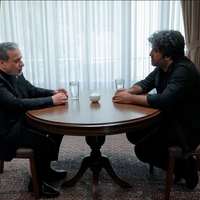
Iranian negotiators held talks with the deputy head of the EU’s External Action Service on Thursday, setting the stage for Friday’s negotiations between the Islamic Republic and the three European nations collectively known as the E3.

A meeting is scheduled for Friday between the three European signatories of the 2015 JCPOA nuclear accord—the United Kingdom, France, and Germany (E3)—and the Islamic Republic, with the participation of EU representative Enrique Mora, who met with the Iranian envoys.

Both sides issued posts on X briefly describing the discussions, with widely different accounts, except calling the exchange as frank.

The EU official, Mora, enumerated the issues he brought to the attention of Majid Takht-Ravanchi and Kazem Gharibabadi, both Iran’s deputy foreign ministers.

“Frank exchange with Iran Deputy FM @TakhtRavanchi and @Gharibabadi on Iran’s military support to Russia that has to stop, the nuclear issue that needs a diplomatic solution, regional tensions (important to avoid further escalation from all sides) and human rights,” Mora tweeted.

Gharibabadi, tweeting on behalf of the Iranian side, detailed a lengthy list of alleged mistakes and missteps by the European Union and European powers.

“It was reaffirmed to him [Mora] that EU should abandon its self-centered and irresponsible behaviour towards issues and challenges of this continent and international matters,” he said.

The Iranian diplomat accused the European side of deflecting its own problems and mistakes onto others, particularly regarding the war in Ukraine. European nations have strongly condemned Iran’s role as a weapons supplier to Russia and have imposed sanctions on numerous companies and individuals linked to Tehran’s government.

Gharibabadi also strongly criticized Europe’s stance on Iran’s nuclear program, as Paris, London and Berlin have adopted a tougher position, backing a recent censure against Tehran at a meeting of UN’s nuclear watchdog, the International Atomic Energy Agency.

“Similarly, with regard to the nuclear issue of Iran, Europe has failed to be a serious player due to lack of self-confidence and responsibility. Europe is in need of self-recovery,” the Iranian diplomat said.

Iran’s government-controlled media has projected a positive tone regarding the talks with the Europeans, as US sanctions pose increasingly difficult challenges for Tehran. However, Gharibabadi’s tweet does not reflect a more flexible Iranian position.

Most Viewed

Ghalibaf defends Iran-US talks amid hardline backlash
1
INSIGHT

Ghalibaf defends Iran-US talks amid hardline backlash

2
INSIGHT

Iran diplomacy wobbles as factions compete to avoid looking soft on US

3
VOICES FROM IRAN

Bread shortages, soaring prices strain households in Iran, residents say

4
ANALYSIS

The politics of pink: how Iran uses cuteness to rebrand violence

5

Scam messages seek crypto for ships’ safe passage through Hormuz, firm warns

Banner
Banner

Spotlight

  • Opposition to US talks grows in Tehran as ceasefire deadline nears
    INSIGHT

    Opposition to US talks grows in Tehran as ceasefire deadline nears

  • Tehran moderates see ‘no deal–no war’ limbo as worst outcome
    INSIGHT

    Tehran moderates see ‘no deal–no war’ limbo as worst outcome

  • The future has been switched off here
    TEHRAN INSIDER

    The future has been switched off here

  • Lights out, then gunfire: Witnesses recount Mashhad protest crackdown
    VOICES FROM IRAN

    Lights out, then gunfire: Witnesses recount Mashhad protest crackdown

  • Family told missing teen was alive, then received his body 60 days later
    EXCLUSIVE

    Family told missing teen was alive, then received his body 60 days later

  • Is Iran entering its Gorbachev moment?
    INSIGHT

    Is Iran entering its Gorbachev moment?

•
•
•

More Stories

EU ramps up pressure on Iran over women's rights

Nov 29, 2024, 07:06 GMT+0
•
Azadeh Akbari

The European Parliament on Thursday approved a resolution denouncing human rights violations in Iran, particularly the growing and systematic repression of women, with 562 votes in favor, 2 against, and 30 abstentions.

The EU resolution called on the Islamic Republic to end systematic discrimination against women and girls, including mandatory hijab laws, and to repeal the Hijab and Chastity Law and other gender-discriminatory legislation.

The resolution also highlighted rights violations, including “the murders of Mahsa Amini, Armita Geravand,” and over 811 executions in the past year, many targeting political prisoners.

It urged member states to extend sanctions under the EU Global Human Rights Sanctions Regime to include Iranian officials responsible for these violations. It also calls for the designation of the Iran’s Revolutionary Guards (IRGC) as a terrorist organization, citing the group’s role in suppressing dissent and its involvement in international acts of violence.

German MEP Hannah Neumann, in a plenary debate at the European Parliament, highlighted the case of Iranian student Ahoo Daryaie, who removed her clothing in protest after security forces allegedly assaulted her at Tehran's Islamic Azad University over her hijab. Authorities later labeled Daryaie as mentally ill, sparking outrage amongst activists and human rights advocates.

"The only one who is sick here is the Islamic regime. Sick with paranoia, terrified of women who dare to show their hair or sing a song. And the only thing that Iranian women are suffering from is being sick of this regime. Ahoo Daryaie is not a patient. She's a remedy. A symbol of courage and resistance against repression, like so many others, whose names we don't even know," Neumann said.

Earlier this month, an Iranian state Islamic body announced plans to open a clinic in Tehran to treat women defying mandatory hijab laws, in what activists see as another instance of authorities labeling dissent as a mental health issue.

Neumann criticized these actions, describing them as "repression disguised as care," and drew parallels to historical misogyny.

The EU resolution comes a day after Mohammad Bagher Ghalibaf, speaker of Iran’s parliament announced that the Hijab and Chastity law would be officially enacted next month.

Iran hints at weaponization ahead of nuclear talks with Europe

Nov 28, 2024, 21:38 GMT+0

Iran raised the stakes ahead of nuclear talks with European powers on Friday, unveiling plans to expand uranium enrichment capabilities and hinting at a potential shift in policy toward weaponization.

The talks –set to take place in Geneva between Iran and the E3 (France, Britain and Germany)– aim to restore dialogue and foster cooperation, while both sides remain poised for confrontation.

Speaking in Lisbon ahead of the negotiations, Iran’s foreign minister Abbas Araghchi suggested that any move by Western powers to reimpose UN sanctions could push Tehran over the edge.

“There is this debate going on in Iran, and mostly among the elites – even among the ordinary people – whether we should change our nuclear doctrine…because it has proved insufficient in practice,” Araghchi said in an interview carried by the Guardian on Thursday.

“This is the result after 10 to 12 years of negotiation, and after 10 years of implementation and homework and all these things, now, Iran is back under chapter seven [of the UN charter], what for,” he said, adding that UN sanctions would convince everybody in Iran that cooperation has been wrong.

This is not the first time Iranian officials hint at a possible revision of the country’s defense doctrine. It follows months of direct confrontation with Israel, including Israeli airstrikes on Iran's nuclear sites, and long-held frustration with what Tehran views as European failures to deliver on their commitments under the 2015 nuclear deal.

The nuclear deal, formally known as the Joint Comprehensive Plan of Action (JCPoA), was intended to limit Iran’s nuclear activities in exchange for sanctions relief. The deal unraveled in all but name when Donald Trump withdrew the United States from it in 2018.

A confidential report by the UN's nuclear watchdog revealed Iran’s plans to significantly enhance its uranium enrichment infrastructure. The report, shared with member states and seen by Reuters on Thursday, detailed Tehran’s intention to install 32 new cascades of centrifuges, including an array of 1,152 advanced IR-6 machines, at its Fordow and Natanz sites.

"Iran has informed the IAEA that it intends to feed uranium feedstock into the eight IR-6 centrifuge cascades recently installed at Fordow to enrich to up to 5% purity,"
Reuters reported citing the IAEA report.

The report said Tehran informed the IAEA that it intends to test intermediate and full cascades of up to 174 IR-4, IR-6, or IR-2M centrifuges in 15 R&D production lines at its above-ground pilot fuel enrichment plant (PFEP) at Natanz.

Iran already has more than 10,000 centrifuges operating across its underground and above-ground sites. The new move is part of Iran's response to a recent censure resolution passed by the IAEA Board of Governors, urging Tehran's cooperation with the UN nuclear watchdog.

Hours after hanging 12 people, Tehran urges Singapore to halt Iranian's execution

Nov 28, 2024, 21:00 GMT+0

Iran's foreign ministry called on Singapore not to proceed with the execution of an Iranian convict, hours after twelve Iranians were hanged in prisons across Iran.

Iran's Foreign Minister Abbas Araghchi in a phone call with his Singaporean counterpart Vivian Balakrishnan urged the southeast Asian country to reconsider the execution of Masoud Rahimi Mehrzad for "humanitarian considerations".

Rahimi, a Singaporean-Iranian citizen who is expected to be executed on Friday, was arrested 14 years ago in Singapore on charges of drug trafficking. He was 20 when arrested for possessing 31 grams of diamorphine in Singapore and sentenced to death, the Norway-based Iran Human Rights (IHR) organization said.

"Executions have never prevented drug-related crimes, and we hope that Mr. Tharman Shanmugaratnam, the President of Singapore, will issue a pardon to save Masoud's life," Mahmood Amiry-Moghaddam, the IHR director, said on Thursday in an effort to save Masoud.

Born in Singapore to a Singaporean mother and an Iranian father, he was taken to Iran as a child following his parents’ divorce. He returned to Singapore at the age of 17 to complete his mandatory military service, three years before his arrest.

Preaching what not practiced at home

The Iranian foreign minister's call for the reconsideration of Rahimi's execution came hours after Iran executed at least 12 people on illicit drug and murder charges.

Four prisoners were executed in Qazvin Central Prison, four in the prisons of Yazd, Qom and Shahre Kord, three in Shiraz, and one in Nahavand, according to reports by human rights organizations. The 12 prisoners were hanged on Thursday morning for illicit drug and murder charges.

In recent months, Iranian authorities have increasingly resorted to the death penalty despite global outcry. In its November 21 report, HRANA documented at least 133 executions since the past month, averaging more than four per day. This surge follows another statistic from the IHR, which recorded at least 166 executions in October​​.

HRANA’s reports indicate an average of 811 executions occurred between October 2023 and October 2024, encompassing both political detainees and ordinary prisoners.

IRGC commander killed in Syria amid largest rebel offensive since 2020

Nov 28, 2024, 16:43 GMT+0
•
Azadeh Akbari

A senior commander of Iran's Revolutionary Guards (IRGC) was killed in Syria's Aleppo province during an overnight attack by Islamist forces opposed to the Syrian government, Iranian media reported Thursday.

Brigadier General Kioumars Pourhashemi, also known as Haji Hashem, was a senior military advisor in Syria, the IRGC-affiliated Tasnim News reported, adding that he was killed by “Takfiri terrorists,” a term widely used in Shiite-majority Iran to refer to jihadists or supporters of radical Sunni Islam.

Islamist militants from US-designated Hayat Tahrir al-Sham (HTS) and allied rebel groups launched an offensive on Wednesday, seizing control of several towns and villages in northwest Aleppo province, a region under the control of Iran-backed supporters of the Bashar al-Assad government.

The attack marks the most significant operation since March 2020, when a ceasefire negotiated by Russia, a key ally of Assad, and Turkey, a supporter of the rebels, brought an end to years of fighting that had uprooted millions of Syrians opposed to Assad's rule.

The Syrian army reported heavy losses among the attackers, whom it described as "terrorists" operating across a broad front. The army also said it was working with Russia and unnamed "friendly forces" to regain territory and reestablish previous lines of control.

The UK-based Syrian Observatory for Human Rights reported that at least 130 people have been killed in the fighting, including 65 members of the HTS, 18 allied fighters, and 49 Syrian government soldiers.

Referring to the Wednesday attack, Iran's Foreign Minister Abbas Araghchi said the unrest in Syria was part of a US-Israeli design aimed at destabilizing the region’s security, during a phone call with his Lebanese counterpart Abdullah Bou Habib, Iran's Foreign Ministry quoted him as saying.

Russian warplanes, alongside Syrian fighter jets, have bombarded opposition positions near the Turkish border as part of efforts to repel the attack, Reuters reported on Thursday.

Syrian opposition forces are said to be operating near Aleppo within the boundaries of the Idlib de-escalation zone established in a 2019 agreement between Russia, Iran, and Turkey, the Reuters report added citing Turkish security sources.

Six Iranian protesters sentenced to death prepare to appeal

Nov 28, 2024, 13:05 GMT+0

Attorneys representing six young protesters sentenced to death for allegedly killing a Basij militia member are preparing to appeal the verdicts, according to one of the lawyers.

The defendants' attorneys are also collectively preparing to lodge a complaint with judicial authorities about the anomalies in the trial and sentencing process, lawyer Payam Derafshan announced on X on Tuesday.

The anomalies included returning the defendants to prison while on bail only a few days before the sentencing and abruptly assigning the two investigating judges who issued the arrest warrants to the case.

The six young men were among 50 residents of the Shahrak-e Ekbatan housing complex in western Tehran, arrested in connection with the severe beating of Arman Aliverdi, a pro-establishment seminary student and a Basij militia member, at the height of the Woman, Life, Freedom protests of 2022.

Aliverdi was attacked by enraged protesters who suspected him of infiltrating their ranks. He succumbed to his injuries in the hospital two days later. Authorities have labeled Aliverdi a "martyr" and have heavily leveraged his death in state propaganda against the protesters.

The Basij maintain four bases within the five square kilometer complex which has been a hotbed of protests since 2022, heavily manned by plainclothes security agents. They often fired their guns at windows, raided apartment lobbies, and destroyed property to intimidate residents.

Dissident activist Hossein Ronaghi protesting the death sentences in Shahrak-e Ekbatan with sewn lips

In the wake of the announcement of the death sentences, security forces have increased their presence in the neighborhood. A popular dissident X account, reported on Tuesday that plainclothes agents on motorbikes were patrolling the area doing random searches of residents and their phones.

Hossein Ronaghi, a dissident activist who sewed his lips in protest last week and has been holding daily protests in various areas of Tehran since then, staged a brief one-man sit-in on Friday in the area, protesting the death sentences.

The defendants, Milad Armoon, Alireza Kafa’i, Amir Mohammad Khosh Eqbal, Navid Najaran, Hossein Nemati, and Alireza Barmarzpournak, were sentenced to death on November 13 by the magistrates of Branch 13 of the Criminal Court One.

Four of the defendants sentenced to death have also been indicted for "muhariba" (waging war against God), which also bears a death sentence. All of the accused have also been charged with “propaganda against the system” and similar charges for which they will be tried separately.

Two of the three magistrates of Branch 13 of Criminal Court One voted for a death sentence. The presiding magistrate, Babak Paknia, however, opposed it.

Paknia maintains that confessions in custody, on which the death sentences were based, are not valid unless repeated in court. During the trial, the accused denied involvement in the beatings that led to Aliverdi’s death.