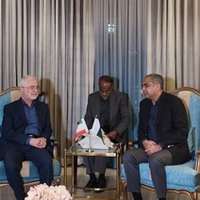
Iran’s state media maintained their optimistic forecasts about talks Tehran says are forthcoming with Europe on November 29, despite the lack of confirmation from the EU or the countries involved.
News websites in Tehran continued heralding talks, as the EU foreign policy officials remained silent, with repeated requests for confirmation by Iran International on Monday remaining unanswered. On Sunday, Iran’s foreign ministry announced that the two sides will meet in Geneva to continue diplomatic efforts for resolving differences.
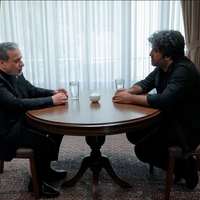
According to spokesman Esmail Baghaei, the upcoming talks with Germany, France, Britain (E3) and EU officials are seen as a follow-up to meetings held with them on the sidelines of the United Nations General Assembly in New York.
“In this round of talks, which were planned in New York, a range of regional and international issues, including Palestine and Lebanon, as well as nuclear issues, will be discussed.”
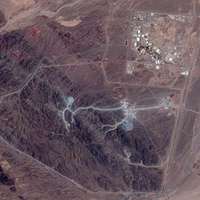
Tehran finds itself in a difficult situation as the United States and the E3 sponsored a censure resolution last week at the Board of Governors meeting of the UN watchdog, the International Atomic Energy Agency (IAEA). The resolution condemned Iran’s lack of cooperation with the agency, signaling perhaps more punitive measures in the future.
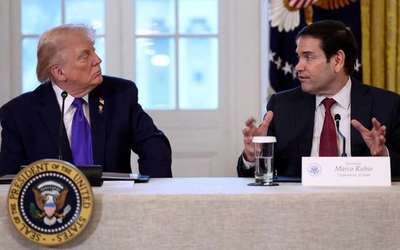
As pressure on the nuclear dispute ramps up, Tehran also faces the specter of Donald Trump’s return to office and an expected intensification of economic sanctions.
The conservative Farhikhtegan website in Tehran reported on Monday that Iran initiated the request for a meeting with European counterparts, highlighting its eagerness for diplomatic progress ahead of Trump’s return.
At the same time, contradictory signals persisted from Tehran. Hardline politicians continued to demand a move toward production of nuclear weapons in the face of the IAEA censure.
Parliament Speaker Mohammad Bagher Ghalibaf announced on Sunday that Iran has begun deploying advanced centrifuges which enrich uranium for the country’s nuclear program. He said, "The Islamic Republic of Iran's reciprocal response to this political misuse of the Board of Governors was immediately put into action, and the deployment of a set of new and advanced centrifuges has begun".
However, it remains unclear what Iran aims to achieve with the European powers, given that the primary actor is the United States, which will usher in a fundamentally different administration in just two months. Even the Biden administration, which tried to reach an accommodation in 2021 and 2022, has become skeptical of Tehran’s true intentions.
Media in Tehran quoted an Iran-based analyst on Monday as saying, “The Islamic Republic of Iran will not hesitate to engage in direct contact or negotiations with the new US administration if it concludes that doing so benefits the country's national interests.”
The optimistic tone from Iranian media and politicians about the prospects of diplomatic progress may also be an effort to counter the widespread pessimism gripping the country. Since September, the Iranian rial has significantly depreciated, driven by Israeli attacks on Tehran’s proxies, a direct airstrike on Iran, and mounting Western pressure over the nuclear issue. This currency devaluation has exacerbated inflation, which already stands at around 40%, further straining the economy.
However, not all commentators and analysts in Iran echo the official optimism. Some point out that Europe, much like the US has given up on a viable agreement with Iran, partly because of Tehran’s military support for Russia.
Hassan Beheshtipour, a well-known analyst told Rouydad 24 website in Tehran that he believes the European are more inclined to pursue punitive measures, such as resurrecting UN sanctions that were suspended by the 2015 JCPOA nuclear agreement.
"The Europeans prefer to move toward activating the snapback mechanism unless Iran, along with the UK, France, and Germany, changes its approach. If Iran adjusts its stance, a potential agreement might be reached to avoid triggering the snapback mechanism. However, for now, they are strongly pursuing its activation," he argued.
Images of the three suspects released by UAE. Nov. 25, 2024
The United Arab Emirates has named the three suspects arrested in the case of the murdered Moldovan-Israeli rabbi, Zvi Kogan, which Israel has branded a terror attack.
The country’s Interior Ministry statement identified the three men as Olimpi Tohirovic, 28, Mahmoud John Abdul Rahim 28, and Azizi Kamilovic, 33.
The state-run WAM news agency carried images of the three men, their faces blurred, and did not mention charges filed against them.
Israel was quick to vow revenge for the killing of the 28-year-old who has been at the heart of building the UAE’s nascent Jewish community, which has thrived since the 2020 Abraham Accords brought peace between Israel and Arab nations including the UAE.
On Sunday, following the discovery of Kogan’s body, after he had been missing since Thursday, Israel’s prime minister Benjamin Netanyahu said: “The murder of Zvi Kogan is a criminal anti-Semitic terrorist incident. The State of Israel will act in all of its abilities to bring to justice the criminals responsible for his death."
Israeli security officials were quick to point the blame at Iran, which has carried out missions in the UAE before. In 2020, a German-Iranian was abducted from Dubai and in 2013, a British-Iranian is believed to have been murdered by Iranian agents in Dubai.
Kogan ran the kosher supermarket in Dubai, where hundreds of Jews and Israelis live, and hundreds of thousands more have flocked for tourism since 2020.
Speaking to The Telegraph, Oded Ailam, former head of counter-intelligence at Israel’s Mossad, said: "The case raises a wave of questions and speculation about what happened, with Iran immediately suspected of being behind the incident.
“The pattern of action attributed to the Iranians is well known: recruiting local or foreign criminals to carry out acts of sabotage, kidnapping or assassination. This pattern has been observed in failed operations in Mumbai, Thailand, Turkey and even Israel, but Iranian determination, along with the principle of the "law of large numbers", meaning that eventually one day the attempts will succeed, continues to pose a real threat.”
Reuters reported that since 2020, court documents and public statements by government officials have shown at least 33 assassination or abduction attempts in the West in which local or Israeli authorities allege an Iran link.
There has been no formal mention of Iran from either Israel or the UAE in relation to the case, but earlier this year, the IRGC had plotted to attack key Jewish centers in Uzbekistan and Kazakhstan, using a Tajik national.
If the incident is proven to be Iran-backed, it will indeed risk ties between the two countries which are already at odds amid a battle over sovereignty over three disputed islands in the Persian Gulf.
Between 2016 and 2022, the two countries had no diplomatic ties, the UAE aligning with Saudi which cut links after the storming of the Saudi embassy in Tehran in 2016 following Riyadh's execution of a prominent Shia Muslim cleric.
Only last year did Saudi resume ties with its regional rival.
Mr Ailam told The Telegraph: “It is not surprising that at this stage the authorities in the UAE are refraining from public statements attacking Iran, and are devoting their efforts to clandestine activity.”
Kogan will be buried in Jerusalem, where he was born, on Tuesday.
Ali Khamenei speaking to a group of Basij militia members, November 25, 2024.
Supreme Leader Ali Khamenei said on Monday that the world's top court should have sentenced Israeli Prime Minister Benjamin Netanyahu to death for war crimes, ramping up his rhetoric against Iran's arch-foe.
“Issuing an arrest warrant is not enough; a death sentence for Netanyahu should be issued,” Khamenei said in a speech to members of the Basij militia.
The ICC’s chief prosecutor, Karim Khan, issued arrest warrants on November 21 for Netanyahu, former Israeli Defense Minister Yoav Gallant, and Mohammed Deif, the Hamas military leader who is presumed dead.
These warrants allege war crimes and crimes against humanity stemming from the Gaza conflict triggered by Hamas’s attacks on Israeli civilians on October 7, 2023. However, Khamenei demanded harsher penalties for Israeli officials, accusing them of criminality in their military operations against Gaza and Lebanon.
The Gaza conflict led to direct military confrontation between Israel and Iran this year, and can still turn into a more serious war in the region. Iran also faces more potential sanctions and pressure by the incoming Trump administration.
Khamenei’s demand comes as international legal bodies, including the ICC, stand firmly opposed to capital punishment. Human rights organizations have repeatedly criticized Iran for its extensive use of the death penalty, labeling it a violation of international norms.
This contradiction underscores the disparity between Khamenei’s calls for justice abroad and the practices of his system at home, where capital punishment is frequently employed against political dissidents and protesters.
Khamenei justified his remarks by referencing Israel’s military response to Hamas’s October 7 attacks, which killed approximately 1,200 Israelis, including 46 Americans, and led to the abduction of nearly 250 hostages.
Hamas, classified as a terrorist organization by the European Union and the United States, receives significant support from Tehran.
Khamenei’s criticism of Israel comes as the Islamic Republic has cracked down on domestic dissent. Groups like Iran Human Rights have documented systematic killings and repression since protests erupted in 2022. Hundreds of protesters have been killed, and thousands more injured or imprisoned, with these actions widely condemned by international human rights organizations.
Khamenei also hailed the growth of the so-called Resistance Front, a term used by Iranian officials to describe Tehran-backed armed groups in the region, including Hamas, Hezbollah, and other militias.
“Today, the Resistance Front has grown significantly; tomorrow, this growth will multiply,” Khamenei said, emphasizing his commitment to supporting anti-Israel factions despite international criticism.
Two Iranian political prisoners have been sentenced to death by the Revolutionary Court in Urmia in separate cases.
The sentences for Mehran Hasanzadeh and Hamid Abdollahzadeh add to growing concerns over the escalating use of capital punishment against political dissidents in the country.
Hasanzadeh, a resident of Oshnavieh, was convicted on charges of rebellion (Baghi), a capital offense under Iran's Islamic law.
According to HRANA human rights organization, the charge stemmed from an accusation of killing a member of the Basij paramilitary force.
“Mehran has been accused of killing a Basij member, which ultimately led to the charge of rebellion and the issuance of the death sentence against him,” a source familiar with the case told HRANA.
Hasanzadeh was previously detained during the 2022 protests, released on bail, and later rearrested before being transferred to Urmia Prison.
In a separate case, Abdollahzadeh, a resident of Urmia, received a death sentence on suspicion of "membership in an opposition party."
Arrested by security forces in late 2023, he was taken to Urmia Prison following interrogation.
The sentencing of Hasanzadeh and Abdollahzadeh reflects a broader trend of intensifying repression since nationwide protests erupted in September 2022. Sparked by the death of Mahsa Amini while in custody of the morality police, the demonstrations have been met with severe crackdowns, including mass arrests and the targeting of civil and political activists.
HRANA’s reports indicate an average of 811 executions occurred between October 2023 and October 2024, encompassing both political detainees and ordinary prisoners.
The heightened execution rate coincides with rising tensions between Iran and Israel, and some suggest that the government uses the cover of geopolitical crises to deflect attention from internal repression.
Zvi Kogan, a Chabad rabbi who was murdered in the UAE in November 2024
Iran has denied involvement in the murder of an Israeli rabbi in the United Arab Emirates, after Hebrew media pointed fingers pointed at Tehran and the Israeli prime minister promised to punish those who ordered the murder.
Emirati authorities on Sunday identified the body of missing Chabad emissary Rabbi Zvi Kogan. They later announced that three suspects had been arrested in connection with the murder, which is being investigated by Israel's intelligence service and the UAE.
Senior Israeli officials told Walla News on Saturday that the focus of investigations was "a terrorist squad of Uzbek origin that operated in Dubai on behalf of Iran and allegedly carried out the abduction and then fled to Turkey."
However, the Iranian embassy in the UAE told Reuters on Sunday that it "categorically rejects the allegations of Iran’s involvement in the murder of this individual."
The statement came hours after Israeli prime minister Benjamin Netanyahu called the murder "an antisemitic terror attack" and vowed that "Israel will act with all means to bring justice to the murderers and those who sent them."
Over the past two days, Israeli media have been reporting that the rabbi's murder may be related to Tehran's plan to avenge Israel's October 26 air strikes on Iranian military targets.
Israel has not yet accused Iran of involvement in the murder. However, the country has in the past alleged Iran's involvement in numerous attempts to kidnap Israelis abroad. Iran has also been involved in the kidnapping and killing of foreign nationals in the UAE, according to the Emirati and Western officials.
Iran suspected in hoax targeting Israeli ministers
In one of the latest cases, several Israeli government ministers recently received an invitation to an event hosted by Chabad in New York. Upon further investigation, it turned out that the invitation was signed in the name of a fictitious figure, raising suspicions the message was an Iranian attempt to lure government ministers, Israel's Ynet website reported.
Estimations now suggest the Iranians, or whoever orchestrated the attempt, used artificial intelligence to fabricate the identity of a rabbi, the report added, shortly after the murder of the Chabad emissary to the UAE.
In a similar case in May 2020, Israel’s security agency Shin Bet uncovered an alleged plot by Iranian intelligence to lure Israeli academics and former defense officials to travel abroad in order to kidnap them.
The agency said Iranians contacted the Israelis while posing as academics, journalists, businesspeople and philanthropists, using spoofed emails with the identities of real people living overseas who were unaware their names were being used.
Iran's intelligence targets thousands of Israelis
Israel Hayom reported on Sunday that Iranian intelligence agencies have compiled detailed profiles on thousands of Israelis, identifying them as potential targets for operations both within Iran and abroad.
Citing security sources, the report said hundreds of these individuals are classified as "high-risk," with some reportedly receiving direct threats from Iranian agents. The targets include current and former defense officials, scientists, and academics.
This effort, ongoing for over a decade, is viewed as Iran's strategic retaliation against the alleged Mossad-orchestrated assassinations of Iranian officials and scientists. In response, Tehran has reportedly established cells in various countries, aiming to target Israelis living or traveling in these regions, the report said.
Mossad Director David Barnea warned in September 2023 that Iran's leaders would pay a direct price at "the highest echelon" if Israelis or Jews are harmed in what he said was an ongoing, significantly stepped-up, state-organized Iranian "terror effort" worldwide.
Iran's Supreme Leader Ali Khamenei and his advisor Ali Larijani
Iranian authorities are preparing to respond to Israel's October 26 attack on the Islamic Republic's military sites, an advisor to Iran's Supreme Leader Ali Khamenei said on Sunday.
"Military officials are planning various strategies to respond to Israel," Ali Larijani said in an interview with the IRGC-affiliated Tasnim News.
Iran has been threatening to retaliate against Israel over the air strikes, which according to Israeli and US officials, knocked out Iran's last three Russian-provided S-300 air defense missile systems and left the country "naked".
Larijani's remarks came shortly after the body of an Israeli rabbi was found in the United Arab Emirates following his abduction by an allegedly Iran-linked cell, giving rise to suspicions that his assassination may be related to Tehran's plan to avenge the Israeli attacks.
Washington's 'shadow war' against Iran
In his Sunday interview, Larijani accused the United States of orchestrating the Israeli actions in the Middle East, including its operations against Iran.
"Israel was counting on the United States' support when planning its operation against Iran, with many US resources and aircraft operating in the region to assist them," he said.
"It can be said with certainty that the Americans are orchestrating events here. But why are they doing this? Because they prefer to engage in a "shadow war," staying out of sight while pushing others into the forefront," the senior advisor to Khamenei said.
He also called on the incoming administration of Donald Trump to stop its support for Israel and prevent what he called the tarnishing of the US image in the region.
"It seems that the United States and its current leadership, which has undergone changes, need to gain a proper understanding of the situation. The officials of the Zionist regime (Israel) are drowning themselves and dragging the Americans down with them, tarnishing the US's reputation in the region," he said.
Trump’s incoming administration plans to revive its “maximum pressure” policy to “bankrupt” Iran’s capacity to support its so-called Axis of Resistance and pursue nuclear development, The Financial Times reported last week.
Trump’s team is preparing executive orders for his first day in office that would tighten existing sanctions and introduce new ones on Iran’s oil exports, the FT report said citing unnamed sources.