The Iranian police's plan to gain unrestricted access to business CCTV footage has raised serious concerns about potential further restrictions on individual and social freedoms.
The plan, as announced earlier this weekby the spokesman of Iran’s union of trade organizations (Chamber of Traders), obliges a large array of businesses to use only police-approved CCTV cameras from now and to register their cameras on a specially created portal called Saptam.
The information released so far reveals that these “police-approved” cameras must be installed under authorities’ supervision and linked to a cloud-based database.
Many in Iran are worried that the police intend to use the footage from security cameras for tighter control of businesses that serve women who refuse to abide by hijab laws in the name of ensuring the security of large and small businesses.
Security cameras, they say, will be used in the same way that traffic cameras have been to levy cash fines on owners of vehicles who allow passengers not to wear the hijab and women who drive “bare-headed”.
Some also suspect that police access to the footage can help security forces to suppress dissent at times of anti-government protests and unrest much more effectively.
The police began implementing the plan a few months ago by requiring businesses such as money exchange bureaus, goldsmiths, and jewelry shops to install approved security cameras to prevent theft and robberies. Some other businesses now required to use the police-approved cameras include retail shops, cafes and restaurants, hotels, and wedding venues.
Considering that authorities cannot monitor hundreds of thousands of small businesses in real-time, the argument that these cameras are meant to prevent theft seems more like an excuse than a feasible solution.
“It won’t be long before they make the installation of such security systems, or rather tools of state control, in all companies, for the sake of hijab enforcement,” Alireza, the director of a small company in Tehran told Iran International.
“My female staff don't have to wear the hijab in our offices, but this will have to change if we provide the police access to our cameras or they can shut us down,” he added.
The plan is to be implemented by Polis-e Amaken, a dedicated branch of the Police authorized to ensure all business venues comply with Islamic regulations and “values” such as hijab. They also ensure that men and women do not mingle beyond the ‘accepted norms’ and that alcohol is not sold or served in restaurants and event halls.
Wedding halls, for instance, must provide separate sections for men and women if they want to remove their hijab, sing, or dance. Bribing the police to close their eyes to what happens at such a venue has been quite common practice for decades.
According to the Saptam portal, businesses with “low-security requirements” such as dry cleaners must store the footage from their cameras on cloud for at least one month for police reference. Some other businesses such as cafes and restaurants must store their security footage for six months or longer. Whether live police access to the cameras is included or planned is not clear yet.
Experts say creating such a massive database for security cameras on the cloud requires extensive telecommunication infrastructures, huge investments, and vast security measures to prevent hackers from accessing the footage and private data of the users.
Some netizens took to social media after the announcement to voice their concerns over the new plan.
Mandatory registration of security cameras is not the final goal, Saeed Souzangar, an internet access activist, contended in a tweet Thursday. “The next step will be installing cameras in our houses. Businesses must resist such abominable plans instead of surrendering to it,” he wrote.
“This is like the Chinese model [of controlling citizens]. They will deprive people from all their social rights,” another netizen tweeted.
Israel's retaliation options after Iran's largest missile barrage may include "regime symbols" like Supreme Leader Ali Khamenei's residence and targeting officials, which, while risky, are not off the table, according to a former IDF spokesperson.
Retired Lt. Colonel Jonathan Conricus, a senior fellow at Foundation for Defense of Democracies (FDD), on this week's episode of Eye for Iran , said Israel will likely retaliate in a strong way but there are a lot of factors to consider.
"Israel will retaliate strongly in a way that will be painful for the regime," he said.
In order to understand what Israel's next move will be, Conricus said first one must determine what Israel's end game and strategy are, and what it hopes to achieve.
He believes Israel will start by stripping away the defensive capabilities of the Islamic Republic like its air defenses and some of its offensive capabilities like its missile bases.
Iran possesses various missile systems, among them are ballistic missiles, which reportedly have a range of up to 2,000 kilometers. That includes the Ghadr-110, a ballistic missile with a range of 1,800 kilometers, and the Emad, which Iranian officials said is capable of precision strikes.
The key, the former IDF spokesperson believes, is to cut Iran off from its access to external funds to prevent it from funding proxies in the region like Hezbollah, Hamas and the Houthis.
Conricus foresees multiple strikes across Iran that are both economic-related and also represent the core of the Islamic government.
When asked what he meant by "regime-related symbols," he responded anything that symbolizes the Islamic Republic, including Basij headquarters or the Supreme Leader's official residence in Tehran.
"There's a lot of targets in Tehran itself, but also all around the country that are symbols of Iran's military establishment, of the IRGC and of the regime. I don't think that Israel will strike any religious targets, but I think that they will strike targets that are of significant symbolic value."
When it comes to the big question over striking Iran's nuclear capabilities, Conricus remains unsure and weary of the consequences.
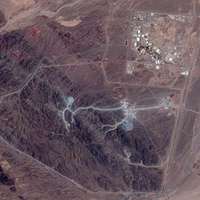
On one hand, he said, Israel's time is now in terms of opportunity but Iran has allegedly 15 nuclear sites, and striking them, may actually push the Iranian government towards a quicker breakout and enrichment. Conricus believes anything nuclear related must be strategic and well planned out. He suggested the possibility of targeting the top 5 locations where weaponization and high-level enrichment are conducted.
US President Joe Biden said on Wednesday he would not support any Israeli strike on Iran's nuclear sites in response to its ballistic missile attack and urged Israel to act "proportionally."
After opposing a strike on nuclear facilities, Biden suggested on Friday during a press briefing in Washington DC that Israel not hit Iran's oil fields either.
Just how much support the US will provide Israel, will also factor into their decision-making on how to retaliate against Iran, he said.
Conricus admits there are many Israelis who believe striking Iran should be done in a way to give the Iranian people a message.
"The Iranians, obviously, undoubtedly are very brave. They've taken to the streets and confronted a ruthless and cruel and oppressive regime, trying to shake free from this oppression. But sadly, they never got any external help. in terms of funding, not in terms of weapons, not in terms of political structure. And eventually, sadly, the regime was able to kill, jail, or otherwise torture and silence people," he added.
He found the timing and messaging of Israeli Prime Minister Benjamin Netanyahu's video to the address to the Iranian people in the midst of fighting a telling and revealing moment.
On Monday the Israeli Prime Minister directly addressed the Iranian people to predict the nigh downfall of their rulers.
Stopping short of pledging any direct action by the Jewish state itself, Netanyahu said the Iranian theocratic system that his country was confronting would soon end.
Conricus told Iran International that these days are "historic" and that he hopes "Israel will change 20 years of failed policy towards the Islamic Republic of Iran."
It was Khamenei's first major public appearance in nearly five years at Friday Prayers. His presence was announced days in advance and reiterated after Israel's threat to retaliate for Iran's October 1 missile attack.
The mood
On Thursday night, Khamenei's special security brigade cordoned off the entire area between Hemmat Expressway and Abbasabad Avenue, bordered by Modarres Highway to the east and Pakistan Avenue to the west, where Tehran's Mosalla (prayer ground) is located. The IRGC's sniffing dogs and anti-bomb unitschecked every tree and all the bushes, not to mention parked vehicles and the roads.
Iran watchers who analyzed Khamenei's speech and reviewed videos of the event largely concluded that it was staged as a show of support for Khamenei and to demonstrate Tehran’s security. The event also aimed to dispel rumors suggesting Khamenei had been hiding in a secret bunker following the death of Lebanese Hezbollah leader Hasan Nasrallah in Beirut on September 28.
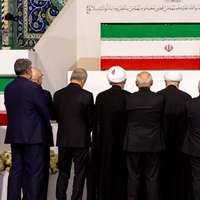
Apart from top IRGC commanders and intelligence chiefs, nearly all members of the current and previous governments were present. Notably absent were three former presidents, who are typically not invited to such events, as they are not among Khamenei’s favored figures.
Although Iranian media praised the Supreme Leader’s "bravery" for appearing at a high-profile public event despite Israeli threats, several callers to foreign-based Persian media outlets noted that both Khamenei and the public were well aware that Israel was highly unlikely to target a Friday prayer gathering.
The man
Khamenei entered the prayer area hours after everyone else, including dignitaries, military units, and organized groups like Afghan and Pakistani students from the Qom Seminary, as noted by Iran analysts.
Despite rumors that his wife had recently passed away, Khamenei showed no signs of mourning during his appearance, suggesting the rumors were likely false. Known for openly displaying emotion, as he did during the death of Qasem Soleimani, Khamenei appeared composed, standing firm and tall with a neutral expression.
Upon his arrival, he briefly acknowledged the President, the Majles Speaker, and the Judiciary Chief with nods and waves. Later, as a eulogist recited somber stories from Shia history, Khamenei showed the usual signs of his deep thoughtfulness. He called the eulogist who ran and knelt before him, and he was seen offering some advice or kind words to the eulogist.
Khamenei's defiant character was as evident as ever. He reaffirmed that any aggressive move by Israel would be met with a decisive response, neither rushed nor delayed. However, it was clear he aimed to avoid a prolonged, large-scale conflict. As one Iran analyst observed, Khamenei seems to be buying time, waiting for the outcome of the US elections before making any significant strategic decisions.
The content, foul language
There was nothing new in what he said. Everything including his hatred of Israel and the United States was consistent with the ideological master narrative that applied to everything since 1979.
Although many observers noted that Khamenei’s speech in both Persian and Arabic was tightly controlled, he couldn't resist using inflammatory language, referring to Israel as the United States' "mad dog."
Khamenei also disappointed analysts who had predicted he might announce a shift in Iran's nuclear doctrine toward weaponization or name his son as his successor during the event. His silence on these matters served as an implicit reminder that analysts are often wrong when they venture into predictions.
World vision
His world vision was also according to the master narrative. He saw himself as the leader of the Muslim world and addressed the Muslims of Lebanon and Gaza in Arabic reading out from his notes.
He defined the "Muslim world" and the axis of resistance in his own terms, stretching "from Afghanistan to Yemen, and from Iran to Lebanon." In doing so, he glossed over the Shia-Sunni divide by praising the Shiite 12 Imams at the start of his Arabic speech. Notably, he also included Afghanistan as part of the axis of resistance, despite its historical absence from this coalition. Perhaps, he hinted at something not yet publicly known.
Show of support and security
Overall, the display of support appeared highly stage-managed, with long lines of buses ready to transport the organized participants back to their headquarters. The extensive security measures would have been impressive—if today marked the end of the world.
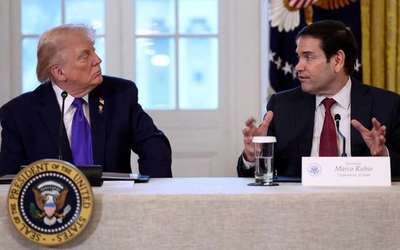
President Joe Biden was wrong to say the United States would not back an Israeli strike on Iran's nuclear program, his predecessor and potential successor Donald Trump told Fox News on Thursday.
The remarks highlight the difference between a dovish Democrat administration that has sought to tamp down on Mideast tensions and Trump who has repeatedly hit at Iran during his tenure.
Asked following Iran's biggest ever attack on Israel on Tuesday, which involved nearly 200 ballistic missiles but was largely repelled with US help, whether Israel should hit back and Iranian nuclear sites, Biden said "no."
That was “not the right answer,” Trump told Fox News.
“I mean, that’s the craziest thing I’ve ever heard. That’s the biggest risk we have. The biggest risk we have is nuclear ... Soon they’re going to have nuclear weapons. And then you’re going to have problems.”
Trump earned the ire of the Islamic Republic when he unilaterally withdrew from an international deal over Iran's nuclear program in 2018 and by ordering the assassination of one of its top commanders Qassem Soleimani in a drone strike in Baghdad in 2020.
Iranian Foreign Minister Abbas Araghchi speaks to the media, in Beirut, Lebanon, October 4, 2024.
Iran backs a ceasefire in Lebanon, but only if it has Hezbollah's support and occurs simultaneously with a ceasefire in Gaza, Iranian Foreign Minister Abbas Araghchi said on Friday during a press conference in Beirut.
"We support efforts for a ceasefire on the condition that it would be acceptable to the Lebanese people, acceptable to the resistance, and thirdly, it would be synchronized with a ceasefire in Gaza," he said.
Araghchi's Friday visit to Lebanon comes amid heightened tensions in the region, with airstrikes hitting near Beirut's airport overnight and ongoing Israeli ground operations in southern Lebanon.
Marking his first official visit to Lebanon since assuming office, Araghchi stressed Iran's unwavering support for Hezbollah, stating that his presence in Beirut, despite the bombings, reflects this commitment. "Iran will always stand with the people of Lebanon," he tweeted.
Esmaeil Baghaei, Iran’s Foreign Ministry spokesperson, also announced via Twitter that the delegation would deliver 10 tons of food and medicine as humanitarian assistance to Lebanon.
Iranian Foreign Minister Abbas Araghchi meets with Lebanon's caretaker Prime Minister Najib Mikati in Beirut, Lebanon, October 4, 2024.
Iranian state media reported that the visit has a dual purpose: to support the Resistance—Tehran’s term for militias it backs in the region—and to preserve political and diplomatic processes. "Araghchi's visit to Beirut, following the change in government and his participation in the UN General Assembly with a firm anti-Israel stance, signals that the Islamic Republic of Iran's policy will remain steadfast, even in the face of new circumstances," Fararu wrote.
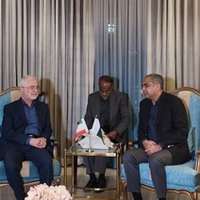
During his trip, Araghchi met with Lebanon's caretaker Prime Minister Najib Mikati and Parliament Speaker Nabih Berri, a close ally of Hezbollah. In meetings with Lebanese officials, Araghchi emphasized the need for global unity to prevent the region from falling into an "imposed and unwanted war," warning against the repetition of "Israel’s heinous crimes in Gaza" in Lebanon, according to Iran's Foreign Ministry Spokesperson.
Tensions in the region have sharply escalated since September when Israeli Defense Minister Yoav Gallant announced an expansion of military operations targeting Hezbollah in northern Israel and Lebanon. Gallant said the action was necessary for the safe return of civilians displaced by Hezbollah attacks since October 8.
On September 17 and 18, around 1,500 Hezbollah fighters were severely injured by explosions caused by tampered pagers and walkie-talkies. This added to the growing conflict.
The situation worsened earlier this week when Iran entered the arena again to launch missile strikes on Israel in retaliation for the deaths of Hezbollah leader Hassan Nasrallah and Iranian commander Abbas Nilforoushan, both killed in an Israeli airstrike in Lebanon. As tensions continue to rise, Israel has promised further retaliation, sparking fears of potential strikes on Iran’s oil or nuclear facilities.
Iran's Supreme Leader Ali Khamenei waves during the Friday Prayers and a commemoration ceremony of late Lebanon's Hezbollah leader, Sayyed Hassan Nasrallah, in Tehran, Iran, October 4, 2024.
Iran’s Supreme Leader Ali Khamenei led Tehran’s Friday prayers for the first time in five years, delivering a sermon in Persian and Arabic where he reiterated his support for Arab groups fighting Israel.
Khamenei's speech came amid expectations of an imminent Israeli retaliation following Iran's large missile strike on Israel on Tuesday. While many anticipated that he would address either Israel’s expected response or Tehran’s nuclear program, Khamenei avoided both topics during his sermon.
The cleric instead praised his state’s missile attack, calling Israel the "rabid dog" of America with the character of a wolf, saying, "the brilliant work of our forces just a few nights ago was also completely within their rights”.
Khamenei called for unity among Muslim nations, stating “We have to tighten the belt of defense, ... from Afghanistan to Yemen, Iran to Gaza and Lebanon, in all Islamic countries. That’s the first issue I wanted to discuss.”
The 85-year-old leader’s rare appearance at the Friday Prayers came amid a recent wave of assassinations targeting his key allies, including Hezbollah leader Hassan Nasrallah, who was killed in an Israeli strike. Seated in one of the prominent seats next to Khamenei, was Abdullah Safieddine, Hezbollah's representative in Iran and brother of Hashem Safieddine, who was targeted by Israel the previous night.
The second part of Khamenei's sermon, delivered in Arabic, solicited mockery from Iranian social media users, who noted that the cleric read from a script, made several errors, and spoke with an accent that many Arabic speakers found difficult to understand.
The lengthy message in Arabic largely criticized the involvement of the US and its allies in the Middle East, regarding their support for what he referred to as the "occupying regime" (a term typically used by Iranian state leadership to refer to Israel).
Repeating his assertion that US and Western support for Israel is aimed at "seizing all the resources of this region," particularly its oil wealth, the Supreme Leader stated, "In this scenario, any blow, by any individual or group, against this regime [Israel] is a service not only to the region but to all of humanity."
These strikes followed the high-profile Israeli assassinations of Hezbollah's Nasrallah and a senior IRGC commander in Lebanon. Additionally, a purported Israeli strike in July killed Hamas political leader Ismail Haniyeh in Tehran.
While Khamenei and other Iranian officials have maintained that their missile retaliation against Israel was within their legal rights, experts told Iran International that this justification is questionable. Haniyeh was not Iranian official, and the Iranian figures who were assassinated were not killed on Iranian territory. Therefore, some experts have argued, Iran lacks a valid legal basis for its retaliatory attack on Israel under international law.
Throughout his speech, Khamenei spoke about the rights of the Palestinian people and defended Hezbollah, asserting that no one should criticize the militant group for supporting and defending the Palestinian cause.
Addressing the people of Lebanon, Khamenei said they should not lose hope or purpose in the face of the loss of key figures, alluding to Nasrallah and other prominent Hezbollah leaders.
Earlier this week, Iranian President Masoud Pezeshkian warned that Tehran would deliver a strong response to any further Israeli actions, reiterating Iran’s capability to defend itself.
Pezeshkian also emphasized that Tehran is not seeking an all-out war with Israel, stressing the importance of regional stability and cautioning against further provocations. The diplomatic balance remains precarious, with Iran signaling both readiness for defense and restraint in avoiding a broader regional conflict.