Iranian Official Says All Involved In Deadly Bomb Attack Arrested

Iranian authorities announced on Saturday that all individuals with possible links to the recent twin bombings in Kerman, claimed by ISIS, have been detained.

Iranian authorities announced on Saturday that all individuals with possible links to the recent twin bombings in Kerman, claimed by ISIS, have been detained.
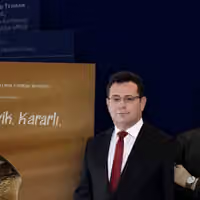
Mehdi Bakhshi, the prosecutor in Kerman, stated that "In recent months, 32 people related to the case have been arrested and are currently in the interrogation phase." He also claimed that many explosive devices were found in Kerman province prior to the deadly bombing.
Bakhsi's remarks raise questions as to why a terror group was able to pull off the January 3 attack, if security forces were so successful in arresting people before the incident.
The explosions on January 3 in a cemetery in Kerman, coincided with the fourth anniversary of the killing of the former IRGC commander Qasem Soleimani. The blasts were described as "two suicide explosions," resulting in conflicting casualty figures from Islamic Republic officials, ranging from 83-103.
The government faces criticism for failing to anticipate and prevent the attack, and officials scramble to offer all sorts of explanations.
The Islamic State group claimed responsibility for the attacks on Thursday, stating that two individuals with explosive belts orchestrated the explosions. Bakhshi, in a special news interview, disclosed that one of the suicide bombers was from Tajikistan, while the identities of the other individuals are still under investigation.
Addressing the status of the detainees, Bakhshi specified that those arrested are currently "under interrogation and in preliminary stages." He further added that "two other suicide attackers" had planned to carry out operations during the funeral procession of the victims of the Kerman explosions, and their information was discovered "before the assignment of tasks in the ceremony."
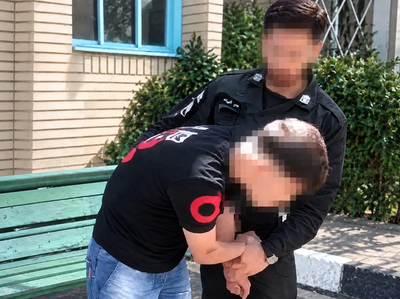
A former intelligence minister has revealed Iran's strategy of pursuing and repatriating dissidents through elaborate operations.
"Our strategy was to bring anti-security elements back into the country, using intricate intelligence tactics, to the extent possible," Mahmoud Alavi, a cleric who served as intelligence minister under President Hassan Rouhani, told the official new agency IRNA on Saturday.
Alavi mentioned the examples of Habib Asyud (also known as Habib Chaab) – an Iranian-Arab leading separatist, and Jamshid Sharmahd, a 68-year-old software developer and California resident, who was an anti-regime activist. He was abducted during a trip to the United Arab Emirates and now faces the death penalty in Iran. Asyud, who was a Swedish dual national, was put on trial in secrecy, like in most political cases, and was hanged in May 2023.
In addition to mentioning these abduction cases, the former intelligence minister also implicitly admitted of killing opponents in exile, such as another Iranian Arab separatist in Holland.

Alavi also divulged some information on how Sharmahd was abducted. From his brief remarks it can be surmised that the monarchist opposition activist was tricked into believing that he would be taken from the UAE to Pakistan.
"When he opened his eyes in [the Iranian port of] Chabahar, he realized that he was in the Islamic Republic, and the guys told him, 'Welcome to the Islamic Republic, Mr. Sharmehd,'" Alavi described.
The abducted man was put on trial on charges of plotting terror attacks in Iran and given the death sentence. In 2023, as the Biden administration was negotiating a hostage release deal with Tehran, there were high hopes that Sharmahd would be one of the prisoners to be released. However, five other individuals who were US citizens were exchanged for $6 billion of Iran’s blocked funds, and he remains in Iran facing the death penalty.
Another famous dissident who was abducted and taken to Iran where he was hanged, was Ruhollah Zam, who lived in France and engaged in media work, exposing corruption among Iranian regime officials. He was lured to travel to Iraq in 2019, where Iranian security and intelligence networks have a strong presence. Upon his arrival he was abducted and taken across the border to Iran, where after a year he was hanged.
During his incarceration, he was interviewed on the state TV and calmly and courageously stood his ground. He is remembered by his famous line during the interview when in response to the government interviewer and referring to anti-regime protests, he said, “You call them riots, we call them protests.”
The timing of Alavi’s “interview” with IRNA could be related to the internal and external pressures the Iranian regime is faced with. The public bragging about abductions could be an attempt to intimidate opponents that the regime is strong and has a long arm to reach them.
It is noteworthy that a former minister from a relatively “pragmatic” administration spoke about the intelligence operations, and not one of the hardliners who currently control the parliament and the presidency.
President Hassan Rouhani was an advocate of negotiations with the West and his government was presented as a “reformist” administration.
However, intelligence, military and nuclear matters in Iran are controlled by the core of the regime, under the direct control of Supreme Leader Ali Khamenei’s office. Changes in presidential administrations and rotation of specific officials make little difference in security matters.

ISIS has claimed responsibility for the twin bombings in Kerman, but Iranian politicians and officials continue their allegations about Israel’s involvement.
Ahmad Bakhshayesh, a former member of the parliament’s National Security and Foreign Policy Committee told Rouydad 24 news website Saturday that “seven or eight missiles must be fired” towards Syria or Iraq, if terrorists came from there, or “Iran should at least ask its allies and proxies to make a proper response [to whoever perpetrated the attack]”.
“Israel was the main instigator, the hypocrites [Mujahedin-e Khalq Organization] provided the means, and the fanatical ISIS who think they will go to heaven if they kill seven Shias were the executive agents [of the attack],” he said.
Also commenting on Iran's role in the war between Hamas and Israel, Bakhshayesh said the war is “Iran's war” but by providing technology and missiles to Hamas, the Lebanese Hezbollah, and Ansarullah of Yemen, they are indirectly fighting the war.
In a statement posted on its affiliate Telegram channels on Thursday, a branch of the Islamic State (ISIS or Daesh) in Afghanistan claimed responsibility for the explosions. The statement said two suicide bombers had detonated their explosive belts in the middle of the crowd, “resulting in the death and injury of more than 300 polytheists [Shiites]”.

US sources familiar with the intelligence told Reuters that communications intercepts indicate that Islamic State’s Afghanistan-based branch, known as Daesh of Khorasan, was responsible for the Kerman attack that killed around ninety and wounded over 200 people.
Iran's intelligence ministry says it has arrested eleven individuals who were involved in the logistics of the attack and identified one of the two suicide bombers as a Tajik national.
Former government spokesman and reformist politician Ali Rabiei has also commented that Israel’s Mossad may have infiltrated the group, and encouraged it to conduct an attack in Iran to draw Iran into the regional conflicts and the Gaza war.
Some military experts have also said it is possible that ISIS opportunistically took responsibility for an attack that others did not claim.
“There is high chance that ISIS's claim about being involved in the attack is false,” Babak Taghvaee, a defense expert, told Iran International Friday.
“They have done the same in the past. There have been other terror attacks around the world and whenever the attackers didn't take responsibility and didn't publish any statement it was ISIS that hijacked it,” he added.
The Daesh of Khorasan (ISIS-K) emerged in Afghanistan in late 2014 and officially announced its existence in 2015.
The group takes its name from Greater Khorasan, the eastern provinces of Iran in Sassanid times which encompassed most southern Central Asia, including today’s Afghanistan and Tajikistan. The members of the group were recruited from the Afghan and Pakistani Taliban and the Haqqani network.
The group seeks to establish the eastern branch of the Islamic State, the Khorasan Province of an Islamic emirate in Afghan territories and beyond. The Taliban government in Afghanistan considers ISIS-K as an insurgent group.
Like other branches of the Islamic State in the Middle East, the Daesh of Khorasan has conducted many terrorist attacks including suicide bombings in Afghanistan and Pakistan.
The Kerman bombing is the first attack in Iran that the Daesh of Khorasan has taken responsibility for.
Iranian authorities have also taken legal action against those who have ruled out Israel’s responsibility for the attack, including prominent political commentator Sadegh Zibakalam who has been indicted by Tehran Public and Revolutionary Prosecutor.
In an interview with the Voice of America’s Persian television Zibakalam had said that Israel could not be held responsible for the Kerman bombings because it “does not attack innocent people”.

The Coordination Council of Teachers Associations in Iran expressed concern over the deaths of over 20 school students in a deadly bomb attack in the city of Kerman this week.
The council pointed out that a number of students attended the event without the presence of their families, attributing it to the planning of the ministry of education. The students are considered victims of what the council described as “the propaganda policies of the education system.”
On the fourth anniversary of IRGC General Qasem Soleimani's death, a twin bombing occurred at his gravesite on Wednesday, resulting in the death of about 90 people. Iranians are now questioning the ongoing impact of the commander's legacy, especially considering that during Soleimani’s burial procession in 2020, about 60 people were crushed to death in a stampede.
In the aftermath of the targeted killing of Qasem Soleimani in January 2020, former US President Donald Trump referred to him as "the number-one terrorist anywhere in the world."
Following Hamas' actions in Israel on October 7, Soleimani's name resurfaced in Iran's state-affiliated media. While many officials hailed the attack as a fulfillment of Soleimani's efforts, they simultaneously denied any direct involvement in the planning or execution of the operation.
Abdollah Naseri, a former CEO of state news agency IRNA, criticized the Iranian authorities for an extensive propaganda campaign, portraying Soleimani as a national hero. Naseri stated that Soleimani has been a 30-year burden on the nation without making any substantial contributions to the people's wellbeing.

Being married will give Iranian academics an advantage in securing a teaching position, in line with the clerical government’s ideology, an Iranian official disclosed.
On Saturday, Mohammad-Ali Keinezhad, the head of the Supreme Council of the Cultural Revolution's recruitment department outlined a scoring system where “having one child is worth 5 points, two children accumulate 11 points, and being married adds 5 points.”
The revelation follows an October announcement by an Iranian member of parliament regarding plans to allocate thousands of hectares of land to families for building houses, as an incentive for childbirth. As part of a broader population growth initiative, 200,000 domestically produced cars were distributed to “eligible individuals,” prompting questions about the fairness of distribution.
Iran is grappling with a demographic shift from a youthful to an aging population, presenting challenges for the nation. The decline in childbirth rates in recent decades has worried the ruling regime. Supreme Leader Ali Khamenei has called for efforts to increase the population from 85 million to as high as 150 million. In response, the parliament passed a law encouraging marriage and childbirth while prohibiting family planning options in public health services.
Critics argue that the population policy falls short of addressing economic hardships, with nearly 50% of the population living below the poverty line. Despite holding multiple jobs, many Iranians face ongoing challenges, raising concerns about the broader impact of the initiatives on the country's socio-economic landscape.

Former football star, Ali Karimi, is now a social heavyweight in Iran, with 15 million Instagram followers - no longer as a soccer hero but as a political influencer.
Living in exile in Europe, Karimi became one of the influential voices during anti-regime protests in 2022, using his influence on social media to defend young women and men, who were facing heavily armed vigilante and security forces.
For years, soccer spectators have been loudly chanting his name in stadiums, despite the authorities' disdain for him. His messages prove remarkably effective and influential during critical moments, to the extent that state television hosts have officially insulted him, labeling him as dishonorable and unworthy.
As an example of his style, on January 3, Karimi posted a twelve-word Persian tweet and received 103,000 likes, more than most famous Western politicians can ever dream of. It simply said, “Have you ever seen an honorable and decent person support this regime? I haven’t seen one.”
Ali Karimi, as a social phenomenon, prompts three questions for observers of Iran: How did a soccer player emerge as the voice of opposition in a country where professional soccer is state-owned? Why can't the government simply ignore him? And what are the underlying themes of Karimi's messages that have elevated him to a position of greater influence than even the most renowned artists, politicians, and religious authorities in the country?

Message: expressing the feelings of the main streets
Let's begin with the last question. Ali Karimi has attained an intuitive grasp of conveying the sentiments of ordinary people on the streets, in bazaars, taxis, shops, barbershops, gatherings, and even at funerals. His messages mirror the conversations that take place among people in these everyday settings, resonating like precious gems in their hands. Millions of individuals share and transmit his messages among themselves. He adeptly seizes the moment, creating opportunities for dialogue or progression, and hands the metaphorical ball to the people, allowing them to take shots at the government's policies.
Karimi transmits his messages, often in very brief format, vis social media to people in Iran. The impact that his messages and posts by other activists have among the people is the reason why Iran had blocked almost all global social media platforms. Islamic Republic’s leaders, including its 84-year-old ruler Ali Khamenei detest the Internet and messaging apps mainly for this reason.
Upgrade to the voice of the voiceless
Over a span of 15 years, Ali Karimi evolved into a prominent advocate for the non-elite population in opposition to the government. During the waves of the Green Movement protests in 2009, he was among the players who sported green wristbands during a match against South Korea. Renowned for his dazzling dribbling skills, Karimi enjoys popularity among Iranians and stands as an emblematic figure in Asian soccer. He has harnessed his popularity to engage in charitable endeavors and express his political dissent.

Karimi gradually transformed from a national soccer star into an influential figure in the national public spotlight. His open criticism of Mohammad Javad Zarif's anti-Israel positions, the ban on women entering stadiums, the role of IRGC commanders in managing soccer in the country, the downing of the Ukrainian airliner in 2020, and the nationwide protests in 2019 gradually made him a civil and political activist.
Government’s concern
The substantial number of followers, reposts, and likes garnered by Karimi's messages in the digital realm, coupled with the fact that there are over 60 million smartphones in the hands of Iranians, has granted him a platform that the government cannot disregard. With the official state radio and television news website receiving approximately just 124,000 monthly visitors, it is evident that authorities are apprehensive about Ali Karimi's influence, and they cannot afford to overlook him. His exceptional reach has prompted the propaganda machinery and government officials to issue threats against him.
Reza Naqipour, deputy head of the presidential office and the former Head of Security of the Football Federation threatened Ali Karimi with the hashtag of "Ruhullah Zam" (journalist, kidnapped in 2019 by IRGC intelligence and executed in 2020). "One day you will return the way that we like, not the way you like!" which means the threat of kidnapping and execution.
This week, Iran’s state television tried to discredit Karimi for a tweet he posted on January 3, following a deadly twin bombing in Kerman, where around 90 people visiting the gravesite of Qasem Soleimani were killed. Karimi said, "Go for free food and drink, but you will get a hard revenge," referring to regime’s policy of feeding people who attend its events. But what officials do not understand is that people receive Karimi's messages directly from him and pay little attention to the government television. Tens of thousands on social media came to his support by posting comments or liking and re-posting other messages.