Iran Among Worst In Governance, Claims World Bank

A new report by the World Bank has put Iran among the worst countries in the world in terms of Worldwide Governance Indicators.
A new report by the World Bank has put Iran among the worst countries in the world in terms of Worldwide Governance Indicators.
The international financial institution collected data from over 30 think tanks, international organizations, non-governmental organizations, and private firms worldwide to encompass a wide range of perspectives on governance. However, in Iran's secretive regime, even its latest ranking, though low, begs questions as to the accuracy of the data provided, scoring suspiciously in areas such as rule of law.
Governance, defined as the traditions and institutions through which authority in a country is exercised, encompasses aspects such as the process of government selection, monitoring, and replacement, the government's ability to formulate and implement effective policies and the level of respect shown by citizens and the state towards the institutions that oversee economic and social interactions among them.
The Worldwide Governance Indicators (WGI) feature six aggregate governance indicators for over 200 countries and territories from 1996 to 2022: Voice and Accountability, Political Stability and Absence of Violence/Terrorism, Government Effectiveness, Regulatory Quality, Rule of Law, and Control of Corruption. The composite measures of governance are on a standard normal distribution scale, ranging from approximately -2.5 to 2.5, with higher values corresponding to better governance.
In none of the categories did the Islamic Republic regime even come close to zero, which represents the mean or average of the dataset.
The Voice and Accountability index measures the extent to which a country's citizens can participate in selecting their government, as well as the freedom of expression, freedom of association, and a free media. In 2022, Iran scored -1.45, placing the Islamic Republic among the lowest on the list. Since last year's uprising alone, hundreds of journalists have been imprisoned, and Iranian journalists abroad harassed and threatened, including Iran International journalists in London, who were temporarily forced to relocate to Washington.
The Political Stability and Absence of Violence/Terrorism index assesses the likelihood of political instability and/or politically motivated violence, including terrorism. In this category, Iran scored -1.59 in 2022. In addition to its being home to the Islamic Revolutionary Guards Corp, Iran has militia proxies across the region from Syria and Lebanon to Yemen and Iraq.
Having extremely limited freedom of expression and the media, Iran holds one of the world's worst track records for human rights violations, with numerous international bodies and activists calling for the regime's accountability. Tehran does not allow UN rapporteurs to enter and dismisses reports by the United Nations or any other organization seeking to hold it responsible for its heavy-handed crackdown on dissent. Since last year's uprising, thousands of dissidents including stars of sport and entertainment, have been subject to brutal punishments ranging from imprisonment to travel bans and bank account freezes.
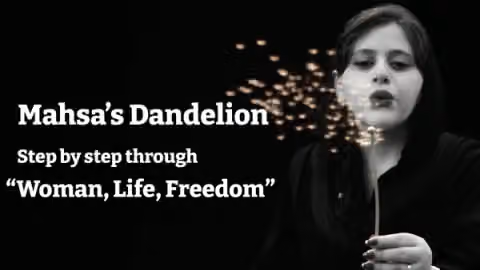
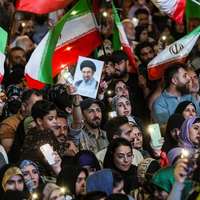
The country witnessed its biggest uprising against the ruling power in 2022 when protests erupted nationwide following the death of Mahsa Amini in morality police custody last September. The Iranian government temporarily relaxed its strict enforcement of hijab rules, with more women appearing in public wearing ordinary attire. However, since March, hardliners have intensified their rhetoric and actions to suppress women's defiance of hijab and regain lost ground. According to UN experts, the new measures amount to “gender apartheid.”
Iran scored -0.88 in government effectiveness, which reflects perceptions of the quality of public services, the quality of the civil service and its independence from political pressures, the quality of policy formulation and implementation, and the government's commitment to such policies.
Regulatory quality concerns the government's ability to formulate and implement sound policies and regulations that facilitate and promote private sector development. The Islamic Republic received a score of -1.59 in this category as well, placing it among the bottom 10 countries.
Ironically, in the Rule of Law index, Iran received a score of -1.02, which measures the extent of confidence in societal rules, including contract enforcement, property rights, the police, and the courts, as well as the likelihood of crime and violence. Surprisingly high, this is in spite of brutal crackdowns including mass arrests of journalists and academics, state-sanctioned violence against protesters, and widespread sexual abuse of women in the hands of security forces.
The Control of Corruption index evaluates the extent to which public power is exercised for private gain, and Iran received a score of -1.13. According to Transparency International, which measures Corruption Perceptions Index (CPI), Iran ranked 150 out of 180 countries in 2021, one stop lower than a year earlier.
Critics of President Ebrahim Raisi's administration point to his poor and nepotistic appointments as contributing factors to an ineffective and inefficient government, as well as systemic corruption.
Good governance is not limited to affluent nations. In fact, more than a dozen developing and emerging countries, including Slovenia, Chile, Botswana, Estonia, Uruguay, Czech Republic, Hungary, Latvia, Lithuania, Mauritius, and Costa Rica, achieve governance scores that surpass those of industrialized countries like Italy or Greece.