A Handful Of Lawmakers Decide Tough Hijab Restrictions In Iran

Controversy still surrounds Iran’s new hijab law, with a reformist daily calling it a decision made by 10 parliamentarians for a population of 85 million.
Controversy still surrounds Iran’s new hijab law, with a reformist daily calling it a decision made by 10 parliamentarians for a population of 85 million.
In an article published on Monday, Ham-Mihan newspaper stated, “Only 10 members of the parliament, with a certain political inclination, passed a bill in a week that is expected to impact the lives of 85 million Iranians, including dissidents.”
The paper added that the law will lead to accusations against a significant portion of society over issues related to women's dress code and hijab. Details about the enactment of the new bill are still unknown, as parliament moved earlier in August to make the new hijab regulations even more opaque by approving the regulations without an open session, fearing further backlash.
Iranian lawmakers voted that the bill can be considered under Article 85 of the constitution, which allows the parliament to delegate the bill's approval to an internal committee, effectively sidelining any opposition.
According to Ham-Mihan, the internal committee consists of the same lawmakers who added about 55 articles to the original "Hijab and Chastity" bill, which initially comprised only 15 articles when submitted by the administration of Ebrahim Raisi.
The paper quoted Parliament Speaker Mohammad-Bagher Ghalibaf as saying that discussing a bill with 70 articles in an open session would take a lot of time, especially because about 1,500 points have been suggested by lawmakers to be considered during the discussions. “Some say the parliament is reviewing the bill under Article 85 of the Constitution so that no one understands what is being approved, but this is not true,” Ghalibaf said.
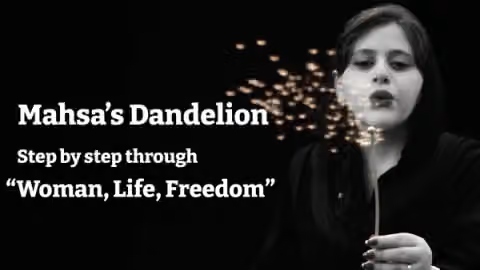
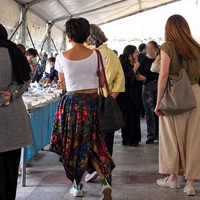
The uprising sparked by the death in police custody of Mahsa Amini in September 2022 has made it increasingly difficult for the clerical regime to enforce the mandatory Islamic dress code. Since the beginning of the ‘Women, Life, Freedom’ movement, tens of thousands of girls and women have shed their compulsory hijab. The regime seeks to criminalize hijab defiance, but no branch of government wants to be solely responsible for the complications of such a provocative and risky action in society.
The fate of the hijab bill, which legal experts claim is against the Iranian Constitution and not practical to implement due to the government's limited means, is still in limbo as conflicting reports circulate about the process. But what is clear is that the government has to devote extensive police and other resources to monitor millions of women, stop those who appear without hijab, issue fines or summon them to court.
This means thousands of confrontations in the streets every day between ordinary women and teenage girls with police and special hijab enforcement agents. It was one such confrontation and arrest that led to Mahsa Amini's death and the most serious antigovernment unrest in 44 years.
Some wonder why the regime has chosen to go the extra mile to force hijab on women, risking another round of protests. Hardliners have answered the question, insisting that the clerical regime cannot retreat from the hijab issue, otherwise it will lose its authority to control the society.
Lawmakers are still voicing opinions and disagreements about how the bill should receive its final seal of approval. Apparently, once the committee approves a bill under the particular constitutional provision, the full chamber has no right to alter it. The Guardian Council, which has the right to review all legislation, will probably review the hijab law too.