• العربية
  • فارسی
Brand
  • Iran Insight
  • Politics
  • Economy
  • Analysis
  • Special Report
  • Opinion
  • Podcast
  • Iran Insight
  • Politics
  • Economy
  • Analysis
  • Special Report
  • Opinion
  • Podcast
  • Theme
  • Language
    • العربية
    • فارسی
  • Iran Insight
  • Politics
  • Economy
  • Analysis
  • Special Report
  • Opinion
  • Podcast
All rights reserved for Volant Media UK Limited
volant media logo

Conservative Daily in Iran Urges Government To Clinch A Nuclear Deal

Iran International Newsroom
Jul 31, 2022, 08:45 GMT+1Updated: 17:39 GMT+1
Iran's negotiating team representing the hardliner administration at the Vienna nuclear talk, Nov. 29, 2021

A conservative newspaper in Iran has criticized officals for claiming they could nullify US sanctions by resistance rather than by reaching a nuclear deal.

Jomhouri Eslami (Islamic Republic), was launched in 1979 by current Supreme Leader Ali Khamenei as the mouthpiece of the fundamentalist Islamic Republic Party but has increasingly adopted a critical stance against hardliners who have established full control over the state.

The newspaper wrote on Saturday, July 30 in an editorial by its editor Massih Mohajeri, , a cleric who maintains his own independent views regardless of the paper's former political affiliation, that the Raisi administration has visible weaknesses in the area of foreign policy and nuclear negotiations."

During the past year, Jomhouri Eslami has opposed the Iranian government's official views on foreign policy issues including relations with the Taliban in Afghanistan, Russia's invasion of Ukraine, and the nuclear talks and domestic political issues including the violent crackdown on what Iranian hardliners call "bad hijab" women.

Diplomats negotiating to revive the 2015 nuclear deal, JCPOA, have repeatedly said that an agreement has almost been completed in 11 months of talks in Vienna, but Tehran demands more sanctions be lifted than Washington is willing to waive.

The daily wrote that many Iranians ask in political circles, family gatherings and government and private business office meetings "Where are we standing in the talks about [reviving] the nuclear deal and where are we headed? Will the negotiations result in an agreement or remain futile?"

Masih Mohajeri, chief editor of Jomhuriyeh Eslami newspaper. FILE PHOTO
100%
Masih Mohajeri, chief editor of Jomhuriyeh Eslami newspaper

According to the daily, the question arises by the fact that contrary to slogans by Iranian officials, a major part of the economy and the people's livelihoods are tied to the sanctions. The newspaper stressed that slogans about nullifying sanctions without doing any harm to the people have led to no tangible results.

"Those who chanted that slogan have been in charge of the country's executive affairs for a year now, and they have reached the conclusion that Iran's economic problems cannot be solved without lifting the sanctions," Mohajeri wrote.However, he acknowledged that part of the country's problems are the outcome of the inefficiency of Raisi's economic ministers and Raisi has so far refused to replace them.

"The paper said there is now an opportunity to reach a fair deal. “While officials on both side agree that an agreement is within reach, and some regional players have talked about a golden opportunity to reach a deal, Iranian officials are expected to realize that no better situation is going to emerge for an agreement," stressed the Jomhouri Eslami, adding that the Iranian nation will be happy with the achievement that was within reach in May 2021 on the final days of Iran's previous government, and suggested that Iranian negotiators should strive to finalize that agreement.

During the past weeks, many Iranian observers including commentators and lawmakers criticized President Ebrahim Raisi for claiming that the people wish to resist rather than reach an agreement that would lift the sanctions and bring about a breakthrough in Iran's economy.

Some former Iranian diplomats suggested that Raisi and other ultraconservatives take advantage of the current foreign policy impasse over the revival of the JCPOA for their own personal or factional political gains to strengthen their foothold in Iran's domestic politics.

This comes while several Iranian politicians including former vice President Mostafa Hashemi Taba have said that the current foreign policy impasse perpetuates the country's paralyzing economic crisis, one of the worst in Iran's modern history.
Most Viewed

Ghalibaf defends Iran-US talks amid hardline backlash
1
INSIGHT

Ghalibaf defends Iran-US talks amid hardline backlash

2
INSIGHT

Iran diplomacy wobbles as factions compete to avoid looking soft on US

3
VOICES FROM IRAN

Bread shortages, soaring prices strain households in Iran, residents say

4
ANALYSIS

The politics of pink: how Iran uses cuteness to rebrand violence

5

Scam messages seek crypto for ships’ safe passage through Hormuz, firm warns

Banner
Banner

Spotlight

  • Opposition to US talks grows in Tehran as ceasefire deadline nears
    INSIGHT

    Opposition to US talks grows in Tehran as ceasefire deadline nears

  • Tehran moderates see ‘no deal–no war’ limbo as worst outcome
    INSIGHT

    Tehran moderates see ‘no deal–no war’ limbo as worst outcome

  • The future has been switched off here
    TEHRAN INSIDER

    The future has been switched off here

  • Lights out, then gunfire: Witnesses recount Mashhad protest crackdown
    VOICES FROM IRAN

    Lights out, then gunfire: Witnesses recount Mashhad protest crackdown

  • Family told missing teen was alive, then received his body 60 days later
    EXCLUSIVE

    Family told missing teen was alive, then received his body 60 days later

  • Is Iran entering its Gorbachev moment?
    INSIGHT

    Is Iran entering its Gorbachev moment?

•
•
•

More Stories

Israel, US Discuss Regional Defense Cooperation

Jul 30, 2022, 22:55 GMT+1

Israeli Defense Minister Benny Gantz and US Secretary of State Antony Blinken Friday discussed the impact of President Joe Biden’s visit to Israel and Saudi Arabia in July as well as ways to deepen regional defense cooperation.

Gantz said in a tweet that he talked with Secretary of State Antony Blinken about the need for continued pressure on Iran as well as negotiations for a nuclear agreement.

Earlier in the day, Iran's foreign minister reiterated his country’s resolve to clinch an agreement for the revival of the 2015 nuclear deal, known as the Joint Comprehensive Plan of Action (JCPOA).

Hossein Amir-Abdollahian made the remark in a late Saturday phone call with his Qatari counterpart, Sheikh Mohammed bin Abdulrahman Al Thani.

During the call, the two foreign ministers discussed the latest developments in their countries’ relations in various political, economic and consular sectors, including cooperation for the 2022 FIFA World Cup.

The top Iranian diplomat added that the US constantly claims it is in favor of an agreement, but that claim "should manifest itself [both] in the text of the agreement and in action."

On the same day, Amir-Abdollahian had phone calls with his counterparts from Kuwait, the United Arab Emirates, Qatar, Oman, and Iraq, saying Tehran is serious about reaching a durable and strong agreement on the revival of the JCPOA.

Iran Ready To Build Nukes If Attacked: IRGC-Linked Social Media

Jul 30, 2022, 21:20 GMT+1
•
Maryam Sinaiee

Two Telegram channels with links to IRGC have suggested that Iran may build nuclear warheads “in the shortest possible time” if attacked by the US or Israel.

Bisimchi Media (Radioman Media) Telegram channel on Saturday published a short video entitled “When Will Iran’s Sleeping Nuclear Warheads Awaken” in which it said the Islamic Republic will begin building nuclear bombs in the shortest possible time “if the US or the Zionist regime make any stupid mistakes.”

The video also says that uranium enrichment in secret underground facilities of Fordow, near Qom, has brought Iran to the threshold of nuclear breakout and joining the nuclear powers’ club and stresses that transforming the country’s “peaceful nuclear program to a nuclear weapons program” is possible in a very short time.

Israeli has repeatedly threatened in recent months to use all means at its disposal to prevent Iran from becoming a nuclear threat, and has said its armed forces are preparing for action if necessary.

“The nuclear facilities of Fordow have been built deep under mountains of Iran and are protected against trench-busting bombs and even nuclear explosion… all infrastructures required for nuclear breakout have been prepared in it,” the video said while adding that the facilities at Natanz may be highly vulnerable to a possible attack by Western powers and Israel but Fordow will immediately assume war footing and begin the nuclear breakout project within a short time if Natanz comes under missile attack.

The video report also suggests that Iran’s ballistic missiles have the capability of “turning New York into hellish ruins”, citing Iran’s space program, which has so far been mostly a failure.

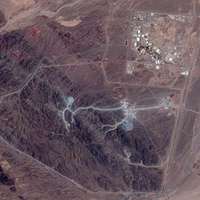
An underground uranium enrichment facility in Iran
100%
An underground uranium enrichment facility in Iran

Sepah-e Qods Telegram channel republished Bishimchi Media’s video with the caption “Iran Prepared To Carry Out Top Secret EMAD Project: Building First Nuclear Warhead If Natanz Comes Under Attack”.

EMAD, another form of an earlier weapons program, AMAD, refers to Iran’s purported secret nuclear effort, which started in 1989 under the leadership of Mohsen Fakhrizadeh and according to the UN nuclear watchdog IAEA, stopped in 2003. According to a IAEA director general’s report in 2015, Iran specifically denied the existence of the AMAD Plan and the ‘Orchid Office’ as elements of such a program.

Iran has now enriched enough uranium to 60 percent that if further enriched to 90 percent, the fissile material will be sufficient for a nuclear bomb within a few weeks.

Some Iranian officials, including Kamal Kharrazi, a senior adviser to Supreme Leader Ali Khamenei, have suggested that Iran is a nuclear threshold country but does not want or need a nuclear weapon and is only enriching uranium for energy and other civilian uses. They often add that Iran's supreme leader has declared that the production, stockpiling and use of nuclear weapons are all forbidden under Islam (haram).

Khamenei’s fatwa, or religious edict, against the acquisition or manufacture of nuclear weapons was first revealed in a statement from Iran to the International Atomic Agency (IAEA) in Vienna in August 2005.

Then-Intelligence Minister Mahmoud Alavi in February 2021 hinted that the fatwa could change. Former Iranian diplomat and IRGC brigadier-general Amir Mousavi also in an interview with Lebanon’s al-Mayadeen television in January 2021 had said fatwas are not permanent and are issued in accordance with developing circumstances. “Therefore, I believe that if the Americans and Zionists act in a dangerous manner, the [Khamenei] fatwa might change.”

The US and Israel agreed in July to take a joint stance against Iran's nuclear program and involvement in regional conflicts and said they would work together to prevent Tehran from obtaining a nuclear weapon.

Khomeini’s Bodyguard Says He Was Assassinated By Poison

Jul 30, 2022, 17:20 GMT+1

One of the bodyguards of the founder of the Islamic Republic Ruhollah Khomeini claimed on Saturday that the former Supreme Leader was assassinated by poisoning.

Hamidreza Naghashian (Naqqashian) said in an interview that Khomeini was admitted to hospital with a heart problem, but later it was found that his stomach had upper gastrointestinal bleeding.

Naghashian claimed that medications to treat Khomeini were bought through several connections from a pharmacy in London, which had not existed before and was only established for providing Khomeini’s drugs and immediately shut down afterwards.

He did not elaborate on who had prescribed the medicines and who had provided them, but said the intelligence ministry has the script of the buyers’ interrogation, adding that former president Akbar Hashemi Rafsanjani did not allow the ministry to follow up the case.

The former bodyguard also called on the authorities to increase measures to protect the current Supreme Leader Ali Khamenei because of the suspected infiltration in his office.

Since mid-2020 a series of high-profile mysterious attacks have hit Iran’s nuclear and military installations around the country, widely believed to have been Israeli sabotage operations.

In May, several IRGC officials were killed or died in suspicious circumstances, prompting Tehran to blame Israel -- which has never officially taken credit for these operations – and a major reshuffling of IRGC intelligence and counter-intelligence leadership in the following month.

Schrodinger’s Cat? Is The Iran Nuclear Deal Dead Or Alive?

Jul 30, 2022, 15:55 GMT+1
•
Iran International Newsroom

Two days after State Department spokesman Ned Price said the US was mulling European Union proposals over Iran’s nuclear program, there are no signs of progress.

The English-language Tehran Times warned the “western media” Friday against “early judgment” on the fate of the 2015 nuclear deal, the JCPOA (Joint Comprehensive Plan of Action). EU foreign policy chief Josep Borrell recently produced new ideas to bridge differences between the United States and Iran and allow both to return to the agreement.

The Tehran Times highlighted the Wall Street Journal, which July 25 ran an opinion piece by Walter Russell Mead, Professor of Foreign Affairs at Bard College, New York, comparing the JCPOA to Schrodinger’s cat, a hypothetical feline in an indeterminate state that is neither alive nor dead.

Some analysts believe that agreement remains likely to revive the JCPOA, which the US left in 2018, with Iran by 2019 expanding its nuclear program beyond the deal’s limits. This remains the assessment of Mossad, Israel’s extraterritorial intelligence agency, Al-Monitor’s Israel correspondent Ben Caspit reported Friday.

But some European diplomats have this week privately expressed pessimism to journalists, arguing Borrell’s proposals will not achieve the necessary concessions from either Iran or the US, each of whom blames the other for the failure of seven-party talks in Vienna paused in March and June’s bilateral US-Iran two-day round in Qatar.

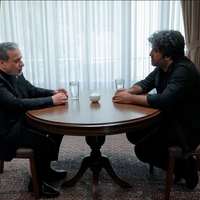
EU coordinator Enrique Mora meeting Iranian negotiator Ali Bagheri-Kani in Qatar, June 28, 2022
100%
EU coordinator Enrique Mora (L) meeting Iranian negotiator Ali Bagheri-Kani in Qatar, June 28, 2022

The basic challenges remain agreeing which US sanctions breach the JCPOA, what guarantees Washington offers over respecting a revived deal, and exactly how Iran’s expanded and refined nuclear program should be brought back within JCPOA limits. There have also been reports that Iran has demanded that the International Atomic Energy Agency (IAEA) drop enquiries into nuclear work Iran conducted before 2003, although Tehran’s explanations deemed unsatisfactory by the agency led to a critical resolution passed by the IAEA board in June.

Russian, Chinese calculations

Analysts also suggest that wider factors, including the Ukraine crisis, have come to play a growing role in calculations made by all parties. Ali Vaez, director of the Iran project at the International Crisis Group, said this week that Iran might judge that Europe’s need for oil and gas come the winter would lead it to put pressure on the US to compromise, while Washington continues to think its ‘maximum pressure’ sanctions will put Iran under growing economic strain.

Vaez also noted that Moscow and Beijing, which is buying nearly all Iran’s oil exports, might both judge that as long as Iran did not ‘weaponize’ its nuclear program, the current drift would “bog down” the US “in the Middle East and divert its attention from Russia and China.”

This was also part of Mead’s argument in the Wall Street Journal. “Whatever their long-term concerns about a nuclear Iran,” he wrote, “both Xi Jinping and Vladmir Putin seem more interested in stiffening Iran's commitment to the anti-American alliance than in facilitating an agreement that would reduce the pressure on a beleaguered American president.”

The US administration appear to believe they can manage the situation. Brett McGurk, President Joe Biden’s Middle East advisor, reportedly said recently that while it was “highly unlikely” that the JCPOA would be revived soon, the administration thought it could continue to deploy sanctions “but not needlessly escalate the situation.”

Iranian, Chinese Presidents Call For Closer Strategic Ties

Jul 29, 2022, 22:23 GMT+1

Iranian President Ebrahim Raisi and Chinese President Xi Jinping held a telephone conversation Friday in which they called for enhancing solidarity and cooperation in all spheres. 

During their hour-long phone call he two presidents underscored the importance of strategic relations between Tehran and Beijing but nothing truly new was reported in the readouts of the talk. The Chinese president had a call with US President Joe Biden the day before.

According to the Iranian readout of the call, Raisi reiterated that reviving the 2015 agreement, officially known as the Joint Comprehensive Plan of Action (JCPOA) depends on a "political decision" by Washington as it was the US that left the agreement and imposed sanctions on Tehran. There was no mention of the nuclear deal in the Chinese readout of the phone conversation. 

Somehow similar to Xi’s call with Biden, in which the “one China” policy was among the main topics, the issue of Taiwan also came up in his call with the Iranian president. 

"Support for the One China policy is a definite and principled policy of the Islamic Republic of Iran," Raisi said, criticizing the US interference in the internal affairs of countries. 

Raisi told Xi that Tehran is resolved to expand relations with Beijing in all fields regardless of international developments, especially in providing maritime security and transfer of energy.

The two also talked about the implementation of the 25-year strategic partnership agreement between Tehran and Beijing as well as regional and extra-regional arrangements such as the group of the world’s emerging economies, known as BRICS, and the Shanghai Cooperation Organization.