US Senate Foreign Relations Committee Approves ‘Stop Iranian Drones Act’
US Senate Foreign Relations Committee Chairman Senator Bob Menendez (D-N.J.)
The US Senate Foreign Relations Committee has approved the Stop Iranian Drones Act (SIDA), which seeks to prevent Iran and Iran-backed militia groups from acquiring lethal drones.
In line with efforts to stop Tehran’s flourishing drone program, “the bipartisan legislation would amend the Countering America’s Adversaries Through Sanctions Act (CAATSA) to make clear that supporting the supply, sale or transfer to or from Iran of UAVs, or providing other assistance related to UAVs, is sanctionable under US law,” the committee Chairman Senator Bob Menendez (D-N.J.) and Ranking Member Jim Risch (R-Idaho) said in a statement on Thursday.
“As evinced by Iran’s drone attacks on Israeli shipping, Houthi attacks on Saudi Arabia and the UAE, and Iran-backed militia attacks on US facilities across Iraq... Iran’s reckless use and export of lethal drones to proxies and terrorist actors across the Middle East represents a significant threat to US national security and that of our allies and partners,” Menendez said, adding that “I look forward to working with my colleagues to ensure swift passage on the Senate floor and ultimate enactment of this bipartisan legislation into law.”
“Iran’s regional terrorism continues to threaten not only the safety and security of our partners in the Middle East, but also American national security interests. Drones have rapidly become Iran’s weapon of choice,” Risch noted.
The United States’ Capitol building in Washington, DC
The US Senate and House Abraham Accords Caucus unveiled Thursday a bipartisan, bicameral effort to create a united front against what is said is Iranian aggression in the Middle East.
The legislation proposes that the Pentagon works with Israel to integrate air defenses of six GCC countries of Bahrain, Kuwait, Oman, Qatar, Saudi Arabia, and the United Arab Emirates with Egypt, Jordan, and Iraq with the aim of thwarting threats from Iran and Iranian backed-militias across the region.
The Deterring Enemy Forces and Enabling National Defenses (DEFEND) Act is a joint effort by Congress to develop a strategy for signatories of the Abraham Accords and other countries to combat Iranian destabilizing activities threatening peace and security in the Middle East.
Built on the success of previous peace agreements between Israel, Egypt, and Jordan, the Abraham Accords, signed on September 15, 2020, resulted in normalization agreements between Israel and several Arab states – namely the United Arab Emirates, Bahrain, Sudan, and Morocco.
Illinois's democratic representative Brad Schneider said, “Iran is on the one yard line in their pursuit of a nuclear weapon, and is threatening our allies in the region in numerous other ways. Strengthening our allies by building unity and enhancing shared security capabilities is critical to confronting Iranian threats to the region.”
The Iraqi parliament passed Wednesday an emergency finance bill to pay debts to Iran to ensure gas supplies and stop worsening power cuts.
The parliament, which has still not adopted its budget for 2022, approved the law relating to "food security and development" totaling 25 trillion Iraqi dinars, approximately over $17 billion.
Of that, $2.6 billion will be allocated to settling Iraq's gas and electricity debts, as well as for buying further energy supplies from abroad, and about $3.4 billion will be used to buy cereals, including large volumes of wheat supplies from both the domestic market and abroad.
Despite its immense oil and gas reserves, Iraq remains dependent on imports to meet energy needs, especially from neighboring Iran, which currently provides a third of Iraq's gas and electricity needs.
Iran had demanded Iraq pay $1.6 billion it owes for gas imports by the start of June to guarantee further supplies, as it is cutting or reducing supplies regularly due to its own shortages.
The debt to Iran, which has sharply reduced its gas exports in recent days, dates back to 2020, but payment was stalled amid sanctions against Iran by the United States, which means that Baghdad cannot pay directly for energy imports in cash.
On Tuesday, Iraqi Prime Minister Mustafa al-Kadhemi said that Iran has "promised to restore the needed supply of gas in the coming days.”
Electricity demand surges in Iraq as people seek to keep cool as the country enters the intense heat of the summer, when temperatures soar to over 50 degrees Celsius (122 Fahrenheit).
Israeli Prime Minister Naftali Bennett speaking for Davos Forum. January 18, 2022
Israeli Prime Minister Naftali Bennett arrived in the United Arab Emirates on Thursday and will meet its president, Sheikh Mohammed bin Zayed Al Nahyan.
Bennett's Abu Dhabi visit, his third in recent months, had not previously been announced, an Israeli statement said, adding that the two leaders, whose countries opened relations two years ago, would discuss "various regional issues" but provided no detail.
“Today, together, we will take the special bond that has been woven between our countries to the next level," it quoted Bennett as saying.
On Wednesday, of 35 members states on the IAEA board of governors, 30 voted in favor of the resolution sponsored by the ‘E3’ (France, Germany, the United Kingdom) and the United States.
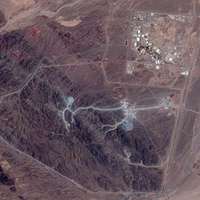
Before the vote, Iran reacted by announcing that it would turn off two monitoring devices installed by the IAEA at its nuclear installations, a decision that the US condemned. Sources say Iran will also speed up installation of advanced uranium enrichment machines.
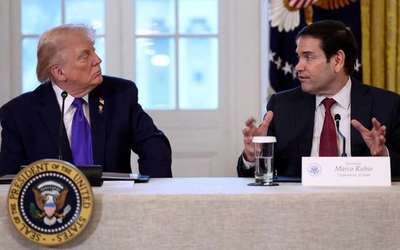
The chairman of the US Senate Foreign Relations Committee Senator Bob Menendez (D-N.J.)
The chairman of the US Senate Foreign Relations Committee has said the Biden administration must accept that a return to the 2015 nuclear deal, the JCPOA, is not in US interest.
Senator Bob Menendez (D-N.J.) said on Wednesday that “Iran now has enough uranium to produce a nuclear weapon. This latest milestone returns us to a familiar question: At what point will the Administration acknowledge that Iran’s nuclear advances make a return to the 2015 JCPOA not in the United States’ strategic interest?” The Politico reporter who quoted Menendez did not say where he made the remarks.
He also commended the UN’s “International Atomic Energy Agency (IAEA) Board of Governors’ approval – by an overwhelming majority – of a resolution condemning Iran, saying, “It is high time the board of governors publicly hold Iran to account for its failure to provide credible and timely cooperation with the IAEA’s inquiry into undeclared nuclear materials, which are in contravention of Iran’s safeguard agreement.”
Of 35 member states on the board, 30 voted in favor of the resolution sponsored by the ‘E3’ (France, Germany, the United Kingdom) and the United States. India, Libya and Pakistan abstained, while Russia and China voted against.
Menendez reiterated that it is time for a comprehensive strategy to address Iran and the threat it poses, “Iran as it is, not the Iran we might hope for.”
“I commend the Biden administration, and France, Germany, and the United Kingdom for introducing this resolution as a first step to realizing such a strategy,” he added.
Iran’s says it expects an oil cargo earlier seized by Greece to be returned in full following a Greek court overruling the original decision to confiscate.
The Greek court overturned an earlier court ruling that had allowed the confiscation in May by the United States of part of a cargo of Iranian oil on an Iranian-flagged tanker off the Greek coast, Reuters reported on Wednesday.
The court ruling has not yet been made public, but Iranian officials and state media confirmed the news on Thursday.
The United States has imposed oil export sanction on Iran since 2018 when Washington withdrew from the Obama-era nuclear agreement with Tehran known as the JCPOA.
"Following intensive follow-up, the Greek Court of Appeals will overturn the initial court ruling on the confiscation of Iranian oil and, by God's grace, the entire oil shipment will be returned," Iran's ambassador Ahmad Naderi said on the embassy's Twitter account.
The confiscation of the cargo prompted an angry response from Iran, with Iranian forces last month seizing two Greek tankers in the Gulf after Tehran warned it would take "punitive action" against Athens.
"The issue will remain on the agenda of intensive consultations between the two countries until the full implementation of the ruling is certain," Naderi added.