Al-Jazeera Iran Correction: Khamenei Didn’t Say Nuclear ‘Compromise’

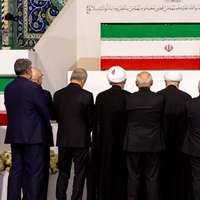
Al-Jazeera television has altered remarks attributed to Iran Supreme Leader Ali Khamenei over nuclear talks, after criticism from spokesman Saeed Khatibzadeh.

Al-Jazeera television has altered remarks attributed to Iran Supreme Leader Ali Khamenei over nuclear talks, after criticism from spokesman Saeed Khatibzadeh.
A report on the Doha-based channel citing Qatari foreign minister Mohammed bin Abdul Rahman Al-Thani’s account of Qatar emir Sheikh Tamim bin Hamad Al-Thani’s May 12 meeting with Khamenei had mentioned the word “compromise, attributing it to Supreme Leader Ali Khamenei.
Both Al-Jazeera and Reuters news agency have dropped the word ‘compromise’ from their reports, now citing the Qatari foreign minister saying that Doha had been informed by Iran that the JCPOA negotiations matters were "under review."
Iran’s foreign affairs spokesman Saeed Khatibzadeh, quickly responded Saturday, telling Tasnim news agency that Foreign Minister Al-Thani’s remarks had been deliberately misinterpreted by some media outlets and in any case falsely attributed to Khamenei.
The leader “never spoke of any compromise over the issue” during the meeting, Khatibzadeh said. "The Supreme Leader … told the Emir of Qatar: 'We have always said that negotiations should be productive and not a waste of time. The Americans know what to do regarding this.’"
Khatibzadeh insisted that the Qatari foreign minister had referred to Iranian officials rather than Khamenei, and that the translation of ‘compromise’ in Persian-language media had given a misleading sense of Iran making concessions rather than resolving disagreements.
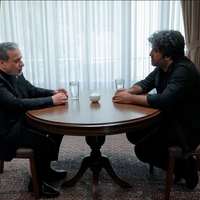
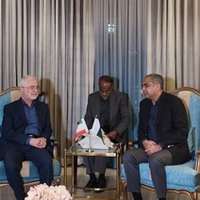
Iranian President Ebrahim Raisi arrived in Oman on Monday for a one-day visit to meet Omani sultan and senior officials to discuss ways to bolster bilateral cooperation.
Upon arrival at the Royal Special Airport in Muscat, Raisi was welcomed by Sultan Haitham bin Tariq Al Said. His official reception is expected to be held in Al-Alam Palace.
He is also scheduled to hold meetings with Oman’s prime minister and foreign minister, Iranians residing in Oman, and Omani businesspeople.
Before Raisi’s visit, Iranian Oil Minister Javad Owji visited Muscat and held a meeting with his counterpart Mohammed Al Rumhi, where the two agreed to revive an offshore gas pipeline project that dates back to about two decades ago.
Iran and Oman signed a memorandum of understanding (MoU) in 2003 to construct a 200-km pipeline from Iran’s Kuh-e Mobarak to Oman’s Sohar port, estimated at the time to cost about $1.2 billion. Based on the deal, Iran was expected to start delivering 10 billion cubic meters per year (bcm/yr) to Oman in 2008 for 25 years. But the deal never materialized due to increasing tensions between Iran and the West, resulting in international sanctions imposed gradually around 2010 to restrict Tehran’s nuclear program.
Neither Iran nor Oman has the technology to lay a pipeline in the deep waters of the Sea of Oman that in some spots reach the depth of one kilometer. Iran has capacity only to construct offshore pipelines in less than 150-meter depth.
As long as American sanctions against Iran remain, no major global company will be willing to get involved in the pipeline project.
Muscat has traditionally played a mediating role between Tehran and Washington.

Following the death of the second of three Asiatic cheetah cubs born in captivity in Iran and widespread criticism, the Department of Environment says no one was at fault in the process.
Ali Salajegheh representing the department said on Sunday that a fact-finding taskforce will assess and announce any shortcomings and negligence in dealing with the reproduction process.
Shifting the blame to the country’s lack of experts or veterinarians with experience in breeding carnivores in captivity, he said on Friday an Indonesian veterinarian will arrive in Iran to help keep the third cub alive.
"The cause of death of the cubs is being investigated and the result will be announced after the post mortem," said deputy environment minister Hassan Akbari on Wednesday after the death of the second cub, which was a blow to conservation efforts for the critically endangered subspecies.
Akbari said initial speculations of veterinarians suggest that poor quality milk has caused the death of the second cub.
The second offspring of the Asiatic cheetah, called Iran, happened just two weeks after the first cub from the litter died, purportedly due to “congenital malformation of the left lung”.
Iran’s cubs were born in the Touran Wildlife Refuge by caesarean section on May 1, in what the department said was the first birth of an Asiatic cheetah in captivity.
Iran is the last country in the world where the critically endangered Asiatic cheetah can be found in the wild, and authorities launched a United Nations-supported protection program in 2001. In January, Akbari said only a dozen individuals were left in the wild -- down from an estimated 100 in 2010.

Iran’s official news agency IRNA reported that during oil minister Javad Owji’s visit to Oman the two countries agreed to revive an offshore gas pipeline project.
Neither Oman’s oil ministry nor Omani media have confirmed this agreement after the Saturday meeting.
Iran and Oman signed a memorandum of understanding (MoU) in 2003 to construct a 200-km pipeline from Iran’s Kuh-e Mobarak to Oman’s Sohar port, estimated at the time to cost about $1.2 billion. Based on the deal, Iran was expected to start delivering 10 billion cubic meters per year (bcm/yr) to Oman in 2008 for 25 years. But the deal never materialized due to increasing tensions between Iran and the West, resulting in international sanctions imposed gradually around 2010 to restrict Tehran’s nuclear program.
Neither Iran nor Oman has the technology to lay a pipeline in the deep waters of the Sea of Oman that in some spots reach the depth of one kilometer. As long as American sanctions against Iran remain, no major global company will be willing to get involved in the pipeline project.
Iran has capacity only to construct offshore pipelines in less than 150-meter depth.

During the last two decades, Iran and Oman had tens of meetings to keep the deal alive, without any progress. Last time, several months before the US withdrawal from the nuclear deal with Iran (JCPOA) in May 2018, Iran and Oman had agreed to revive the project.
Why Oman needs Iranian gas?
During last decade, Oman’s annual gas production growth stood at 4.4% in average, but its annual demand grew by 6.3%. The country then began facing gas shortage for its LNG plants with 10.7 million tons (about 15 bcm/yr) capacity to liquefy the gas and export to the international markets.
According to British Petroleum’s statistics, Oman’s LNG exports broke a 14.8 bcm record in 2019 but declined to 14 bcm in 2020.
Iran plans to use the idle capacity of Oman’s LNG plants (2 bcm/yr in future) to liquefy its gas and export to international markets. The rest of Iranian gas is projected to be delivered to Oman for domestic use.
BP has been developing Oman’s Khazzan gas field to boost its production capacity and Oman’s LNG plants’ capacity is also expected to increase to around 16 bcm/yr in 2022.
But, Oman’s gas reserves are only 700 bcm and regarding its 50 bcm/yr domestic annual demand (including 13 bcm/yr gas injection to oil fields to enhance their productivity) as well as 16 bcm/yr LNG plant capacity, it needs to import gas in the long term.
Iran with 33 trillion cubic meters of gas reserves ranks second globally after Russia, but it faces a huge amount of gas shortage in winters, when domestic demand soars to peak level. Iran is deprived of foreign expertise and an estimated $40 billion investment needed to boost its gas output.
On the other hand, Iran’s gas demand increased by 6 bcm to 238 bcm last year. Its annual gas demand growth was 5.2% in average during last decade, while its gas production growth is very low due to sanctions.
Mohsen Khojastepur, former general director of the Iranian national oil company said in November 2021 that if new investments are not made in the natural gas industry, the country will become a net importer in the next few years.

A member of the Quds Force of Iran’s Revolutionary Guards was killed Sunday afternoon after being shot five times by unknown gunmen riding a motorcycle in downtown Tehran.
According to Tasnim news agency, affiliated with the IRGC, the slain officer was a colonel who had earlier fought in Syria. He was assassinated while he was in his car in front of his home.
In a statement, the IRGC blamed "counterrevolutionaries and elements affiliated with the global arrogance" for the assassination of the colonel, identified as Hassan Sayyad-Khodayari. Global arrogance is a term used by the Islamic Republic to refer to the United States.
In another statement that seemed like an attempt to compensate for the security lapse in Tehran, the IRGC and Iran's Intelligence Ministry announced they had discovered and captured a team of "thugs" linked with Israel's Mossad.
The statement said the Israeli intelligence networks "were engaged in stealing and damaging public and private properties, kidnapping and getting forced confessions".
Earlier this month, a man who had confessed to planning assassinations on behalf of Iran’s Revolutionary Guards in an audio tape claimed he was coerced by unknown people into making the confession.

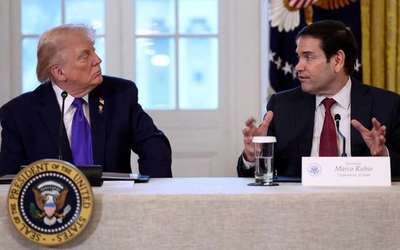
Saudi Deputy Defense Minister Prince Khalid bin Salman Al Saud and US State Secretary Antony Blinken have affirmed their countries’ common vision to confront Iran’s destabilizing policies in the region.
The two, who met in Washington on Saturday, reviewed the strategic relations between the Kingdom of Saudi Arabia and the United States and ways to strengthen them, the Saudi Press Agency reported on Sunday.
Blinken reiterated the US commitment to strengthen Saudi Arabia’s defenses, efforts to counter Iranian threats, and the importance of maintaining strong international support for Ukraine. They also discussed managing pressures in global energy markets stemming from Russia’s invasion.
They discussed the latest developments in Yemen and expressed strong support for the UN-negotiated truce, with Prince Khalid reaffirming Riyadh’s aspirations for the Yemenis “to reach a comprehensive political solution that would move Yemen to peace and development.”
On Thursday, the new United States military commander in the Middle East said that Iran remains the most destabilizing force in the region, calling for coordinated efforts to confront the threats by Iran.
General Erik Kurilla of CENTCOM said that Iran’s uranium enrichment, ballistic missile development, and regional proxies, particularly the Houthis in Yemen, had repeatedly been central to his conversations with America’s strategic partners during his recent tour of Egypt, the United Arab Emirates and Saudi Arabia.