Iran Exempts Armed Forces, Intel Ministry, Nuclear Organization From Transparency
The Iranian parliament
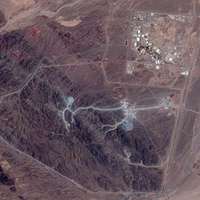
The Iranian parliament has exempted the Armed Forces, the Intelligence Ministry and the nuclear organization from a plan aimed at augmenting transparency of the executive, legislative and judicial branches of the government.
According to IRNA on Sunday, the National Security Council as well as the provincial and city security councils are also excluded from the plan that is expected to obligate members of parliament and state officials to make their votes and decisions available to the public. The details of the negotiations in various parliamentary committees will also be available to the public.
The parliament also makes the publication of final rulings of the general and revolutionary courts conditional upon "observance of security standards".
Moreover, the Guardian Council and the Assembly of Experts are not included in the plan in the first place.
However, according to the bill, all private institutions in charge of public services, including Iran Central Bar Association, Medical Council of the Islamic Republic, and Justice Experts' Association, as well as non-governmental organizations and charities will be included in the transparency plan and will be fined for non-compliance.
The measure also makes it mandatory for the entities as well as municipalities of cities with over one million population to register and regularly update data about their financial statements, budgetary performance, project investments, and number of employees.
According to the annual ranking of countries released by Transparency International earlier this year, Iran ranks 150 out of 180 countries in the 2021 Corruption Perceptions Index.
President Ebrahim Raisi speaking about the economy on May 21, 2022
President Ebrahim Raisi spoke at length about the economy first time after protests rocked parts of the country in response to government raising food prices.
Speaking at the event, Raisi did not mention last week’s protests or the security forces violent treatment of protesters particularly in Iran’s western provinces. However, as economic journalist Maryam Shokrani has observed, he emphasized “hard decisions to be made which some people may not agree with.”
Raisi also focused on the controversial issue of privatization in Iran and opined that “Privatization does not mean abandoning industrial units. It is the beginning of the government’s supervision on privatized companies.”
The Islamic Republic’s government, religious institutions and the Revolutionary Guard (IRGC) directly or indirectly own 80 percent of the economy, amid nepotism and corruption which has led to paralyzing mismanagement.
For the past 15 years successive governments have talked about privatization, but with a fearsome security apparatus and with power concentrated in the hands of insiders, only they have been able to benefit from the sell-off of government assets.
During the past years, hundreds of workers of privatized companies, particularly in Khuzestan and in the Central Province, protested to the privatization process that has handed over many government companies to well-connected but often disinterested and non-expert individuals who only used the assets to take hefty loans from government banks with no intention to pay back.
Many of these companies including the Sugar Mill at Haft Tappeh and the Heavy Equipment Factory in Arak which used to be profitable in the past, are currently on the verge of bankruptcy according to their workers.
Post-revolution privatization during the past four decades has been criticized by the people, workers and businesses alike. Many believe that profitable businesses have been handed over to the IRGC which effectively owns the lion’s share of productive companies in Iran.
While Raisi said on Saturday that privatization empowers the private sector, many have often charged that the IRGC’s acquisition of companies has left little room for the private sector in Iran.
However, Raisi called for looking back and reviewing the privatization process that has taken place. He said, “fair and critical review of the past is essential and inevitable,” so that lessons could be learned, and corruption could be prevented.
Raisi spoke about motivating “non-government businesses” while the government’s intervention in the market has led to an increase in the price of essential commodities and inflation in Iran that led to protests, during which people called on Raisi and Supreme Leader Ali Khamenei to step down and chanted slogan in favor of a secular government.
In an interview published by Didban Iran website, Iranian sociologist Mohammad Reza Mahboobfar warned that the current economic situation, particularly the policy and eliminating food and fuel subsidies has already led to social problems such as an increase in crime including stealing food.
He said the protests last week raised the alarm for the statesmen that Iranian society is being divided into a majority of extremely poor people and a minority of super-rich individuals. Mahboobfar warned that what has been characterized by government officials as an “economic surgery” should be stopped at once as the widening gap between socio-economic classes has become cause for concern.
Mahboobfar warned: “Making the masses apprehensive is dangerous.”
Swedish-Iranian scientist Ahmadreza Djalali and his wife Vida Mehrannia
The wife of the Swedish-Iranian scientist Ahmadreza Djalali, whose execution was planned for May 21, has appealed to the EU for help, saying the Islamic Republic is considering postponing the sentence.
Vida Mehrannia said in an interview with Germany’s ZDF channel Saturday evening that her husband is not executed yet, expressing hope “that the EU can really act decisively in order to bring Ahmadreza home”.
She said that the EU must “not allow an innocent man to be killed in such an inhuman way".
Djalali was arrested while visiting Iran on an invitation by a university in 2016 and consequently sentenced to death on unsubstantiated charges of espionage for Israel. Espionage is a charge Iran often uses against foreigners and dual nationals that they want to hold as a bargaining chip.
Amnesty provided a detailed research and analysis to prove that Iranian authorities are threatening to execute Djalali to compel Belgium and Sweden to hand over two imprisoned former officials, and “to deter them and others from future prosecutions of Iranian officials”.
There has been speculation that the announcement of Djalali’s execution was intended to influence the trial in Sweden of Hamid Nouri, a former Iranian official, over his alleged role in a wave of prison executions in Iran in 1988.
Iranian Oil Minister Javad Owji (left) and his Omani counterpart Mohammed Al Rumhi during a meeting in the Omani capital Muscat on May 21, 2022
Iran and Oman have agreed to revive a gas supply deal that dates back to two decades ago while Oil Minister Javad Owji is on a visit to Muscat.
According to a report by Iran’s official news agency IRNA on Saturday, Owji and his Omani counterpart Mohammed Al Rumhi agreed in a meeting to start laying the gas pipeline that will enable Iran to pump natural gas to the Arab Sultanate.
Describing the project as one of the biggest regional energy projects, the report said the initial agreement was signed in 2004 between their oil ministers but has been stalled since then.
According to the contract, Iran committed to start supplying 30 million cubic meters (mcm) per day of natural gas to Oman by 2008 and then increase the volume to 70 mcm per day by 2012.
The two countries also reached another agreement in 2013 according to which Iran was expected to pump 28 mcm a day of gas to Oman for 15 years through a pipeline laid on the bed of the Persian Gulf. The project, which had been estimated to earn Iran more than $1 billion annually, never became operational.
The report said that Owji and Rumhi also reached agreements on the joint development project for the shared Hengam oil and gas field, located within their maritime boundaries in the Strait of Hormuz.
Iran’s Ministry of Sports has rejected reports that athletes have to provide a property deed to be allowed to leave the country for international competitions.
The ministry’s public relations manager Mohsen Motamedkia denied the news that the ministry takes collateral from athletes for foreign travel in a tweet on Friday, saying he enquired about the issue and the ministry’s authorities denied the claims.
Replying to the journalist, a member of Iran’s national rowing team, Ahmad Ahmadi, said the property must be at least 5 billion rials (about $20,000) and owned by the athlete or a family member, adding that if the athlete does not return to the country, it will be transferred to the relevant sport federation's treasury.
Ahmadi said a notarized pledge to transfer the property is signed before the trip, adding that the federation also gets two guarantee-of-return undated checks of about $500 and $1,000 from the athletes.
Earlier in the month, Yekta Jamali, the first Iranian female weightlifter who won medals in international tournaments, sought asylum in Germany after she left Iran’s team at the World Junior Weightlifting Championship in Greece.
About 30 Iranian athletes in recent years have defected from national teams and sought asylum in other countries, due to alleged threats and corruption in sports federations as well as Iran’s policy of not allowing athletes to compete against Israeli peers. For women mandatory hijab is also an issue.
Children brought to a gathering to hear "hello Commander". May 19, 2022
Critics say promoting ‘Hello Commander’, a pop genre religious and ideological song among Iranian children is reminiscent of Hitler Youth in Nazi Germany.
State propaganda organizations and the ministry of education have been promoting ‘Hello Commander’ in schools since it was broadcast from state television for the first time this year after Supreme Leader Ali Khamenei’s Iranian New Year speech on March 20.
Teaching the song to children has apparently become compulsory in schools. In the past two months it has been performed at huge gatherings of school childrenin city squares and stadiums and broadcast by the state television (IRIB) in news and other programs.
‘Hello Commander’ is a song dedicated to Mahdi, the 12th Imam of Shiites who has been in occultation since the 9th century according to believers. The song and its promotion are unusual as the music is in the often frowned upon pop genre which has no place on Iran’s state media.
“Me, the little me, will become your general,” children sing to the Imam, promising him to rise up, to sacrifice everything to him, and to become his Ghasem Soleimani, the Revolutionary Guard’s Qods Force commander who was killed by the United States in Baghdad in 2020.
The song also mentions 313, the number of the Imam’s helpers when he returns to earth, and is full of words such as “soldier, general, commander, and “uprising” as well as other religious terminology and notions.
‘Hello Commander’ also mentions Supreme Leader Ali Khamenei who is believed by his devotees to be the Imam’s representative on earth and has to be obeyed as the Imam would be if he were present among believers. “Hello Commander! Sayyid Ali [Khamenei] has called his children [to mobilize]!” children sing.
The education ministry is now planning a 100,000-strong gathering at Tehran’s Azadi Stadium to perform the song at a special ceremony next Thursday (May 26) although a football match this week at the same stadium was held with no spectators “to prevent the spread of Covid.” Many alleged that the decision to hold the match without spectators was a measure against eruption of an anti-government protest during or after the match
The promotion of the song by the state media is meant to indoctrinate children and brainwash them, critics allege. They also say the promotion of the song by state media and the Islamic Republic’s propaganda organizations is reminiscent of Nazi propaganda methods which included teaching children and the youth songs in praise of the Führer.
Many social media users have seen the song as propaganda for Khamenei as the Imam’s deputy, and commander-in-chief of Iran’s Armed Forces, and drawn a parallel between him and Hitler by sharing a video of Nazi Youth gatherings with the original audio replaced with ‘Hello Commander’.
“In his last years, like all other dictators, Hitler resorted to performance of a ‘Hello Commander’ song in schools to reassure his supporters but this didn’t save him from defeat because it was too late,” one of the many such tweetsby critics said.
London-based Iranian journalist Morteza Kazemian also shared photos of Nazi Germany’s huge gatherings in Hitler’s support on Twitter with the ‘Hello Commander’ hashtag and said dictators are destined to fall, even if they are as powerful as Hitler.