US Advocacy Group Exposes Two More Tankers Transferring Iran’s Oil
An Iranian tanker in the Persian Gulf on its way to delver oil to Hezbollah and Syria in August 2021.
Advocacy group United Against Nuclear Iran (UANI) has released a satellite photo of two oil tankers during ship-to-ship transfer of Iranian crude reiterating calls for sanctioning them.
UANI Chief of Staff Claire Jungman said on Saturday that after clouds cleared in the South China Sea they managed to spot the vessels that were transferring Iran’s crude oil east of Singapore.
“TIFANI and VORAS, two vessels we've repeatedly called for sanctions on, are feeding vessels that are spoofing their automatic identification system (AIS) transponders”, she said in a tweet with the image.
TIFANI is currently sailing under the flag of Tanzania and VORAS is Guyana-flagged and owned by Malaysia International Shipping Corporation Berhad.
The news came just a day after Reuters reported that a US safety firm has cancelled environmental and safety classification of two tankers after UANI alerted the classification company that they had carried cargoes of Iranian oil.
Without the certification -- the so-called class cover that includes vessel safety inspections -- vessels are unable to secure insurance cover or call at most international ports.
UANI that tracks Iran-related tanker traffic through ship and satellite data, informed the American Bureau of Shipping, the company that provides such certifications services, about the breach of US sanctions in December.
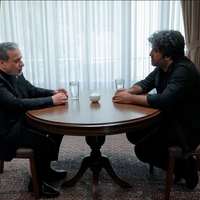
Iran's envoy in nuclear talks Ali Bagheri-Kani met with Korean Vice Foreign Minister Choi Jong-Kun on January 5, 2022
South Korea has paid part of Iran’s delinquent dues to the United Nations from funds frozen at its banks because of American sanctions, Seoul announced Sunday.
Seoul "on Friday completed the payment of Iran's UN dues of about $18 million through the Iranian frozen funds in South Korea, in active cooperation with related agencies such as US Treasury's Office of Foreign Assets Control and the United Nations Secretariat," the finance ministry said in a statement.
This was the second time South Korea, with approval of the United States has paid Iran’s debts to the UN. A similar payment was made last June but Tehran lost its right to vote once again according to membership rules demanding a minimum amount of arrears to be paid.
Questions were raised in the first week of January when South Korean Vice Foreign Minister Choi Jong-Kun visited Vienna where Iran and world powers are negotiating over the revival of the 2015 nuclear deal. The Korean diplomat met all sides and observers expected that Seoul was negotiating to find an acceptable process to begin releasing around $7 billion it holds as frozen Iranian funds.
The case might still prove to be a much wider deal with Seoul than to just pay the UN dues, but at this stage there appears to be very limited progress in the talks for the US to agree to the release of a larger amount.
Tehran is demanding that South Korea must release all the money regardless of the outcome of the Vienna negotiations. Iran’s chief negotiator Ali Bagheri-Kani met the Korean diplomat in Vienna on January 5 and demanded the unconditional release of the funds, but Washington said it would waive third-party banking sanctions for South Korea only with “everything” agreed. Meaning a final deal on the nuclear issue.
Nevertheless, many critics say that the Biden Administration is too eager to accommodate Iran’s demands as it has already reduced sanctions’ pressure on Tehran. Richard Nephew, a key member of the US negotiating team and an expert on sanctions reportedly was in disagreement with US chief negotiator Robert Malley and left the negotiations for another job at the state department.
The news about the payment of the UN dues by US agreement came just two days after Iran was the only country to reject a General Assembly vote approving a definition of the Holocaust. Critics were quick to highlight the point, saying Tehran deserves no good-faith gestures.
The funds held by two Seoul banks are Iran’s proceeds from oil exports before the Trump administration imposed sanctions on Iran after it withdrew from the 2015 Joint Comprehensive Plan of Action (JCPOA) in May 2018.
Negotiations in Vienna are progressing far too slowly according to the Biden Administration and US allies, the United Kingdom, France and Germany who are participants in the JCPOA talks as signatories of the agreement in 2015. They have told Iran it has weeks, not months, to close a deal. The reason is Iran’s high-level enrichment of uranium in violation of the JCPOA that bring it ever closer to amount of fissile material it would need to make a nuclear bomb.
A US safety firm has cancelled environmental and safety classification of two tankers following accusations that they had shipped cargoes of Iranian oil.
Reuters reported that the American Bureau of Shipping (ABS), the classification company that provides certifications services such as checking that ships are seaworthy, withdrew cover for the two tankers in the past month.
Without the certification -- the so-called class cover that includes vessel safety inspections -- vessels are unable to secure insurance cover or call at most international ports.
Advocacy group United Against Nuclear Iran (UANI) that tracks Iran-related tanker traffic through ship and satellite data, informed the American Bureau of Shipping about the breach of US sanctions in December.
According to correspondence between the UANI and ABS seen by Reuters, several vessels were involved in the transfers of Iranian oil, including the Panama-flagged Karo owned by Hong Kong-based Delta Lines and the Belize-flagged Elsa owned by India-based Karo Shipping Services.
The ABS, the only US firm among the top 12 ship classification societies that are mainly based in Europe and Asia, withdrew the cover for Elsa on December 17 and the Karo on January 13 because of their illicit transshipment operations with Iranian tankers.
"Classification societies are faced with the challenge of keeping up with Iran's tactics in order to avoid facing sanctions themselves," said UANI Claire Jungm
China, which on Thursday reported oil imports from Iran for the first time in a year, has offloaded the cargo into state reserves in the port city of Zhanjiang.
The move revealed by a trade source and ship tracking specialist Vortexa Analytics to Reuters on Thursday comes as the Biden Administration is locked in tough negotiations with Iran to revive a 2015 nuclear deal that will include the lifting of US sanctions on Iranian oil. The former Trump administration pulled out of the deal and re-imposed sanctions.
Iran, which sits on the world's fourth-largest oil reserves, relies heavily on oil revenue, but sanctions have prevented it from exporting at anywhere near capacity since 2018. Before US reimposed sanctions. Iran was selling more than 2 million barrels of crude per day.
The refilling of China's strategic petroleum reserves in the past few weeks also comes ahead of a plan to release oil from its emergency stockpile in a rare coordination with the United States to help cool global oil prices which hit a seven-year high this week. The high price of oil is helping fuel inflation around the world.
China has been importing Iranian oil under the radar which is not reflected in official customs data as buyers are fearful of invoking US sanctions. On Thursday, China's customs reported the first import of Iranian crude in a year despite ongoing sanctions.
China brought in 260,312 tons (1.9 million barrels) of Iranian crude oil in December, according to data from the General Administration of Chinese Customs, which last recorded Iranian oil inflows in December 2020 at double the volume.
A senior trade source with knowledge of the shipment told Reuters this particular cargo was offloaded into a state reserve site in Zhanjiang in late December.
This was followed by another similar-sized shipment that was discharged into the same port for the emergency stockpile, according to ship tracking specialist Vortexa Analytics.
"There were reports of importing Iranian crude earlier - but hush hush somewhat. Now I think the Chinese are testing openly to see US response," Tilak Doshi, managing director of Doshi Consulting in Singapore.
There have been no comments about the Reuters report by China or the US State Department.
"This is (China's) attempt to cool oil prices. It's basically to show the world that there's more supply even though it's only available to them," said a senior oil trader who declined to be identified as he is not authorised to speak to the media.
Unofficially, China's imports of Iranian oil picked up at the end of 2020 and have continued despite the sanctions that, if enforced, would allow Washington to cut off those who violate them from the U.S. economy.
Shipments had held above 500,000 barrels per day on average between August and October, as buyers judged that getting crude at cheap prices outweighed the risks of busting U.S. sanctions, Reuters reported in November.
To avoid the sanctions, Iranian crude has been exported to China marked as oil from Oman, the United Arab Emirates and Malaysia, squeezing out supplies from Brazil and West Africa, traders have said.
Imports from Iran have accounted for about 6% of China's crude oil imports, according to shipping data and traders' estimates.
China was expected to release some stocks from its strategic stockpile around the Lunar New Year, Reuters reported last week.
Iran's envoy in nuclear talks Ali Bagheri-Kani met with Korean Vice Foreign Minister Choi Jong-Kun on January 5, 2022
Iran and South Korea are discussing ways to use funds blocked in Seoul due to the US sanctions to settle Tehran’s overdue membership fees to the United Nations.
According to South Korean government sources on Thursday, Tehran and Seoul seek to capitalize on the assets to handle the issue of the UN dues, which have deprived Iran of its voting rights.
"Our government is in consultations with the Iranian government in that regard and is in related consultations with the US and the UN as well," sources told Yonhap News Agency on condition of anonymity.
After the Islamic Republic lost the right to vote at the UN, Foreign Ministry Spokesman Saeed Khatibzadeh said Tehran is trying to find a secure channelto pay its membership fee and end its suspension.
According to the UN charter, a member loses the right to vote when its debts equal or exceed the amount of dues it should have paid over the previous two years.
Last year, Iran managed to pay $16 million of its $65 million arrears to recover its vote after Tehran was granted an exemption from the sanctions and was allowed to access money blocked by the US Treasury. This time the minimum amount Iran must pay is over $18 million.
Two South Korea banks hold $7-9 billion of Iranian money, owed for oil imports.
President Joe Biden and Secretary of State Antony Blinken in a cabinet meeting on November 12, 2021
As President Joe Biden said Wednesday that there is some progress in Iran nuclear talks, China officially reported buying oil from Tehran, despite US sanctions.
In a press conference, Biden spoke two sentences about the Iran negotiations, but what he said was that it is not time to stop the nuclear talks, which are making “some progress.”
US officials have been saying for weeks that the multilateral negotiations in Vienna to revive the 2015 nuclear agreement, JCPOA, cannot go on forever and should reach a resolution in a matter of “weeks, not months.” But the Biden Administration has not put a clear deadline on when it would decide if the talks were productive.
Iran continues to enrich uranium at 60-percent purity and most analysts agree that it is shortening the time to having enough fissile material for a nuclear bomb. The US and its European allies have warned that with the kind of progress Iran is making the Vienna talks can become meaningless if they drag on.
“It’s not time to give up. There is some progress being made. The P5+1 is on the same page. But it remains to be seen,” was all Biden said during the press conference.
While the US President was saying that the P5, meaning permanent members of the United Nations Security Council, “is on the same page”, data released by China showed for the first time in a year that Beijing is officially importing Iranian oil in violation of US sanctions.
Reuters reported that China imported 260,312 tons of Iranian crude oil in December, according to data from the General Administration of Chinese Customs, which last recorded Iranian oil inflows in December 2020 at 520,000 tons.
Energy monitoring firms were reporting throughout 2021 that China was importing large quantities of Iranian oil indirectly, through third countries without registering the cargos as having originated in Iran. But now Beijing is officially disclosing its imports. The question is if the Biden Administration will respond in some way or prefer to have China’s support in the nuclear talks.
On the other hand, Iran has been boasting lately that it is defeating the sanctions, selling much more oil than in 2019-2020, implying that it does need to make concession at the Vienna talks. So China’s increased volume imports of Iranian oil and its official admission in customs data provides diplomatic leverage to Tehran.
Estimates are that oil exports have topped 600,000 barrels per day in 2021 compared with around 200,000 in 2019 and the first nine months of 2020. Imports from Iran have accounted for about 6% of China's crude oil imports, according to shipping data and trader estimates.
Secretary of State Antony Blinken on Wednesday argued that the Administration cannot provide guarantees to Tehran that the United States will never pull out of the nuclear deal, like former president Donald trump did in 2018.
“In our system you can’t give that kind of quick and serious guarantee. President Biden can certainly say what he will or won’t do as president as long as Iran remains committed to the deal, but we can’t bind future presidents. And that’s one of the things we’re talking about,” he said referring to the Vienna negotiations.