IRGC Official Says Media In Iran Should Extol The Supreme Leader

The new head of the Revolutionary Guard’s Media Basij Organization, a propaganda outfit, says Supreme Leader Ali Khamenei is not happy with the media in Iran.
The new head of the Revolutionary Guard’s Media Basij Organization, a propaganda outfit, says Supreme Leader Ali Khamenei is not happy with the media in Iran.
Abbas Mohammadian, who was appointed to the post by IRGC Commander Hossein Salami earlier this week, has told the media in Tehran on Friday that his organization, the Media Basij, will strive to direct the media in a way that they would explain the Islamic Republic's underlying theme of Velayat-e Faqih, (Guardianship of the Jurisconsult), or the principle of Supreme Leader’s legitimacy to the people.
Basij is IRGC's paramilitary force, and its members are embedded in all government offices, industrial entities and social institutions to uphold and reinforce the regime's authority. The organization maintains 144 battalions whose job is to help shore up the regime’s authority among the public.
Mohammadian explained that Khamenei believes "the media have forgotten spirituality," and is unhappy because they have not met his expectations. Mohammadian reiterated that the media have done very little in explaining the virtues of the Supreme Leader to the people.
He went on to say that this is a matter to be followed up by the Culture Ministry. Recently, Culture MinisterMohammad Mehdi Esmaili announced an extensive plan to restructure the state media system to make it more consistent with the hardline nature of the governing Islamic system.
Morteza Kazemain, a journalist in London, told Iran International TV Friday morning that Khamenei's unhappiness about the media reflects his interest in consolidating his authoritarian rule. Kazemian added that the IRGC uses the Media Basij to convince the people about the regime's authority and to spread disinformation to serve the regime's interests.
Kazemian further said that thousands of Media Basij members all over Iran create content on social media to counter news and information dissemination by other traditional and social media outlets including foreign-based news organizations.
An indication of Khamenei's unhappiness with the media is that he did not extend the mandate of former state TV chief Abdolali Ali Askari after his first five years, and the director before him, Mohammad Sarafraz wrote in his memoir that he had to resign his post after only two years as the IRGC intervened in his responsibilities.
Meanwhile, as Kazemian pointed out, Khamenei has always had a negative attitude toward the media. He has not had any interviews with the press or his own state TV during the 32 years he has been Iran's Supreme Leader.
According to several polls conducted by state-owned polling agencies, the state television's popularity has been constantly dropping during the past years, particularly in the past three years when the state TV lost another 15 percent of its viewers.
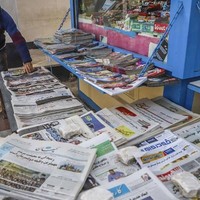
At the same time, as Ensaf News website observed, the daily readership of Iranian newspapers has plummeted dramatically during the past two years, declining to as little as 1,000-3,000 copies for flagship dailies. The papers contested the website's report not because it was not true, but because they keep pretending to have a high readership to get more subsidies from the government.
Censorship and government control has not left anything interesting in the press. Readers, instead turn to social media where some of the platforms are highly popular. Instagram has over 22 million users and Telegram has more than 45 million users according to government officials. This is probably the reason why the Iranian government is so adamant to block access to social media such as Facebook and You Tube.