Why 'locked and loaded’ US is still holding back on Iran
US President Donald Trump’s dramatic naval buildup in the Middle East appears to have generated more strategic uncertainty than clarity both in Tehran and in Washington.

US President Donald Trump’s dramatic naval buildup in the Middle East appears to have generated more strategic uncertainty than clarity both in Tehran and in Washington.

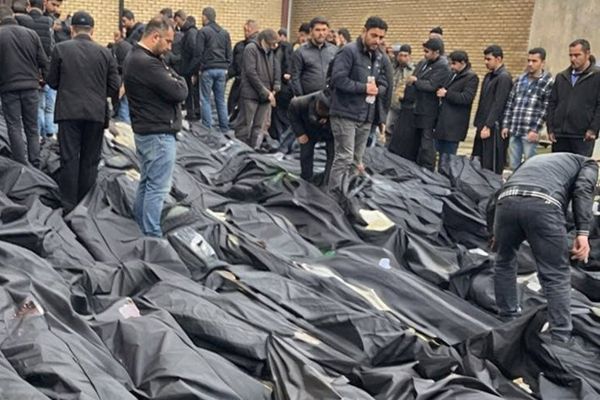
After killing thousands across Iran in just days, Iran’s government is denying families the right to mourn by blocking burials and seizing bodies in its push stamp on the embers of unrest.

Iran cannot simply rewind to the weeks before the protests began. The crackdown hardened public anger, while an already overstretched economy and energy system lost what little room they had to absorb another shock.

An independent research group said on Saturday it had identified a large, coordinated social media influence operation it linked to the Islamic Republic, aimed at shaping global narratives and suppressing dissent during the country’s uprising.

Ali Ansari, an Iranian businessman under UK sanctions for allegedly financing Iran’s Islamic Revolutionary Guards, built a European property portfolio worth about €400 million, according to a Financial Times investigation based on corporate filings.

Cryptocurrency is a rare tool embraced by both Iran’s rulers and its citizens—used at the top to enrich elites to dodge sanctions and at the bottom to survive the economic devastation wrought by their policies.

Iran said about 40 Iranian citizens will be returned from the United States to Iran on Sunday, after being held for months in US immigration detention centers.

With tens of thousands killed and society still reeling, the Islamic Republic has turned to sport to project normalcy as matches return, but players’ muted celebrations and empty stadiums show how little of the script still holds.

More than 36,500 Iranians were killed by security forces during the January 8-9 crackdown on nationwide protests, making it the deadliest two-day protest massacre in history, according to documents reviewed by Iran International's Editorial Board.

Iran’s state broadcaster has reached a point where control no longer translates into attention, exposing how years of manipulation, omission and distrust have hollowed out its authority and left a system that still fills airtime but is no longer watched.

As Iran’s authorities impose silence through violence and disconnection, what the world is witnessing is not unrest but defiance at its most basic—people refusing to disappear, to be reduced to numbers, or to surrender their names.

Emory University has dismissed Fatemeh Ardeshir Larijani, the daughter of the US-sanctioned security chief of the Islamic Republic, the university confirmed to Iran International on Saturday, following growing calls for her removal.

Iran’s near-total internet blackout since January 8 did not only shut down social media but collapsed the country’s last channels to the outside world, isolating families and sharply limiting what evidence of the crackdown could escape.

After unprecedented mass killings of protestors whose full scope lies concealed behind Iran's internet iron curtain, the Washington-based pro-Israel think tank JINSA urges Donald Trump to seize the moment to destroy the mutual foe of Israel and the United States.

Iran’s Supreme Leader Ali Khamenei ordered state media and security bodies to adopt a militarized approach toward controlling information, according to a new report by media freedom advocacy group DeFFI.

Tehran’s increasingly combative official statements suggest its leaders may be taking US military deployments more seriously than Washington’s signals of diplomacy.

US officials told Iraqi leaders Washington would starve Baghdad of oil revenue if it kept up economic links with Iran and would suspend ties if politicians deemed close to Iran became ministers, Reuters reported on Friday citing sources.

Iranian security forces deployed unknown chemical substances amid deadly crackdowns on protestors in several cities earlier this month, eyewitnesses told Iran International, causing severe breathing problems and burning pain.

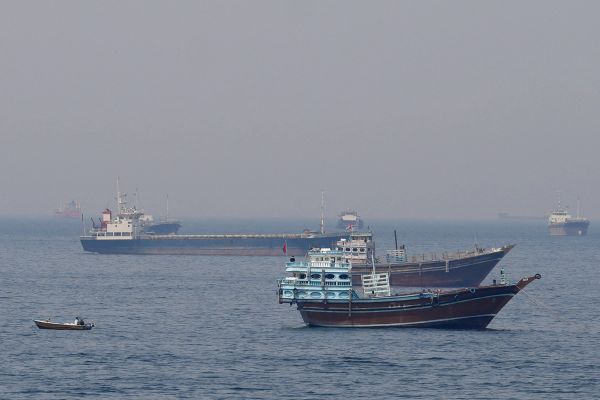
The US Treasury on Friday slapped new sanctions on ships and their owners it accuses of enriching the Iranian state and fueling its repression following mass killings of protestors earlier this month.

Iran has deployed a nationwide militarized crackdown to scotch dissent and obscure the scale of its mass killings of protestors earlier this month, rights watchdog Amnesty International said in a report on Friday.

Iran’s Supreme National Security Council instructed newspaper editors and online media managers to stop publishing independent reporting on protest deaths and to avoid interviewing bereaved families, according to information shared with Iran International.