• العربية
  • فارسی
Brand
  • Iran Insight
  • Politics
  • Economy
  • Analysis
  • Special Report
  • Opinion
  • Podcast
  • Live TV
  • Iran Insight
  • Politics
  • Economy
  • Analysis
  • Special Report
  • Opinion
  • Podcast
  • Live TV
  • Theme
  • Language
    • العربية
    • فارسی
  • Iran Insight
  • Politics
  • Economy
  • Analysis
  • Special Report
  • Opinion
  • Podcast
  • Live TV
All rights reserved for Volant Media UK Limited
volant media logo
ANALYSIS

Tehran sees ‌Beijing as potential bridge to Washington

Maryam Sinaiee
Maryam Sinaiee

Iran International

Sep 19, 2026, 00:00 GMT+1
Iranian Foreign Minister Abbas Araghchi meets with China's Foreign Minister Wang Yi, in Beijing, China, September 16, 2026.

Iranian officials and media are increasingly looking to China as a possible diplomatic bridge to Washington, as Foreign Minister Abbas Araghchi’s second wartime visit to Beijing coincides with preparations for President Xi Jinping’s talks with Donald Trump next week.

Chinese Foreign Minister Wang Yi told Araghchi on Wednesday that Beijing was ready to play a “constructive role” in resolving international disputes and urged Iran and the United States to rebuild their negotiating mechanism and hold substantive consultations on unresolved issues.

Araghchi appeared to attach considerable weight to the talks, writing on X afterwards that decisions made in consultation with Chinese partners would “decide future strategic balance in the region, with immeasurable knock-on effects.”

His visit came ahead of Xi’s planned meeting with Trump in Washington on September 24, where the Iran war and China’s economic ties with Tehran are expected to be among the issues discussed.

China has not publicly offered to mediate directly between Tehran and Washington. But its diplomatic weight, relations with both countries and ties across the Middle East have prompted growing speculation in Iran that Beijing could assume a larger role.

China also has experience mediating between Iran and a major regional rival. In 2023, Beijing brokered an agreement that restored diplomatic relations between Iran and Saudi Arabia after years of hostility.

Ahmad Bakhshayesh-Ardestani, a member of parliament’s National Security Committee, told Fararu that previous mediators such as Qatar and Pakistan had not been completely neutral and had been influenced by Washington. China, he argued, carried greater political weight and could provide stronger guarantees.

Beijing, he said, “can play a different role from previous mediators.”

Moderate daily Shargh made a similar argument, pointing to China’s position as a permanent member of the UN Security Council and its extensive economic relations with Arab states as well as close ties with Tehran.

“This multilayered network of relations allows Beijing to pursue the Hormuz issue on two levels: dialogue with Tehran on the one hand, and engagement with the United States and other powers influencing regional security on the other,” Shargh wrote. “This is the difference that separates Araghchi’s visit to Beijing from an ordinary diplomatic trip.”

Nour News, which is close to Iran’s Supreme National Security Council, said Tehran supported regional peace initiatives involving countries ranging from Pakistan and Qatar to China and Russia, while insisting that such diplomacy did not mean abandoning what it described as Iran’s right to defend itself.

The outlet argued that Beijing, conscious of the Strait of Hormuz’s geopolitical importance, was seeking to improve conditions for diplomacy rather than pressing Tehran to abandon its positions.

Some Iranian media and analysts have suggested China could also help bring Iran and Arab states into a broader regional arrangement rather than confining its role to US-Iran diplomacy.

Wang said Wednesday that China supported dialogue between Iran and regional countries based on respect for territorial sovereignty and national security. He also said the existing Middle East security architecture needed to be reformed and strengthened.

Farda News, which is close to parliament speaker Mohammad-Bagher Ghalibaf, interpreted Wang’s remarks as an attempt to link the immediate security crisis to a broader mechanism for dialogue between Iran and the Gulf Cooperation Council.

Jalal Sadatian, a former director general of the Foreign Ministry’s East Asia Department, told Khabar Online that Tehran should seek Beijing’s help in persuading Saudi Arabia and other Arab states to participate in a wider regional agreement involving the Strait of Hormuz.

International affairs analyst Sabah Zanganeh similarly told ILNA that China could broaden existing diplomatic efforts to include Iran, Iraq and GCC states, rather than limiting them to temporary arrangements between individual countries.

“Such an action is necessary and must certainly go beyond a temporary action between two countries,” he said.

Beijing’s diplomatic backing for Tehran was also visible at the United Nations on Thursday, when China and Russia vetoed a US-backed resolution that would have extended the mandate of a panel of experts monitoring sanctions on Iran. The resolution received 11 votes in favour, two against and two abstentions.

Iranian conservatives portrayed the veto as evidence of a changing international order. Rouydad24, however, cautioned against equating the end of the monitoring mechanism with the lifting of sanctions, noting that Washington retains extensive economic pressure tools outside the UN framework.

For now, Beijing’s public position remains more cautious than some of the expectations being voiced in Iran: China has offered to play a constructive role in diplomacy, but has stopped short of announcing itself as a mediator between Tehran and Washington.

Banner

Most Viewed

Trump weighs major Iran escalation as China steps up diplomatic push
1

Trump weighs major Iran escalation as China steps up diplomatic push

2

Iran executes man it accused of spying for Israel on missile sites

3

Tehran ‘ashamed’ as Iranians struggle to make ends meet

4
INSIGHT

Iran’s nightly pro-state rallies become factional battleground

5

Iran's Guards stage show of force two days after protest anniversary

Banner

Spotlight

  • Will shutdowns forced by US blockade damage Iran’s oil wells?
    ANALYSIS

    Will shutdowns forced by US blockade damage Iran’s oil wells?

  • Tehran ‘ashamed’ as Iranians struggle to make ends meet

    Tehran ‘ashamed’ as Iranians struggle to make ends meet

  • Iran faces postwar winter with a third of gas capacity lost
    ANALYSIS

    Iran faces postwar winter with a third of gas capacity lost

  • Iran’s nightly pro-state rallies become factional battleground
    INSIGHT

    Iran’s nightly pro-state rallies become factional battleground

  • Woman, Life, Freedom and the Iran that cannot go back
    OPINION

    Woman, Life, Freedom and the Iran that cannot go back

  • From Halkbank to Golden Global: Turkey’s Iran banking ties under US scrutiny

    From Halkbank to Golden Global: Turkey’s Iran banking ties under US scrutiny

Banner
Banner
•
•
•

More Stories

Iran faces postwar winter with a third of gas capacity lost

Sep 18, 2026, 11:49 GMT+1
•
Umud Shokri
100%
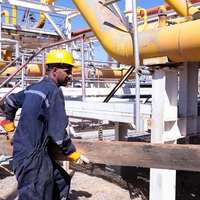
A worker during maintenance operations at facilities in Iran's northeastern Khangiran gas field, September 13, 2026

Iran is racing to restore gas infrastructure before winter after losing about a third of its pre-war production capacity, a reconstruction challenge that could force Tehran into difficult choices between keeping homes warm, power plants running and industry supplied.

Iranian officials say attacks have knocked out about 230 million cubic metres a day of gas-production capacity, compared with pre-war output of roughly 650 million cubic metres a day. That is just over a third of pre-war production.

Tehran has begun trying to claw some of that capacity back. Officials have said roughly 100 million cubic metres a day could be restored in the coming months, still less than half the capacity reported lost.

But restoring production is only part of the problem. Rystad Energy estimated in April that repairing damage to Iran’s energy infrastructure could cost as much as $19 billion, affecting gas processing, refining and export facilities.

That figure covers physical repairs rather than the wider economic consequences of lost production, disrupted exports and industrial shutdowns. Rystad has also identified shortages of critical equipment and workers as major obstacles to recovery.

Winter could provide the first major test of whether Iran can repair enough of its energy system quickly enough to prevent wartime damage from developing into a broader economic crisis.

A system already under pressure

Iran entered the war with an energy system already struggling to match supply with demand.

The US Energy Information Administration has said sanctions slowed development of the country’s natural-gas infrastructure and that limited storage capacity left Iran poorly equipped to manage seasonal swings in consumption.

In 2022, residential and commercial consumers accounted for 33% of Iran’s gas consumption, industry including petrochemicals for 27%, and electricity generation for another 28%, according to the EIA.

Household and commercial gas consumption rises during winter, while demand from the electricity sector is highest during summer.

The loss of production capacity therefore leaves Tehran having to allocate a reduced supply among households, power stations, petrochemical plants and other industrial users.

The problem is not simply how much gas Iran has underground. Gas reserves alone do not guarantee reliable supply: the country also needs functioning processing plants, pipelines and storage facilities, as well as electricity, maintenance, equipment and skilled workers to keep the system operating.

Damage beyond gas

Reduced gas supplies to power plants could constrain electricity generation, while restrictions on industrial users could hit petrochemicals and energy-intensive sectors such as steel, aluminium and cement.

That means the eventual cost of the damage cannot be measured solely by the reconstruction bill. Lower production can also translate into weaker industrial output and exports at a time when Tehran needs resources to finance repairs.

Iran's broader energy sector is already under severe financial pressure. The war and US naval blockade have sharply curtailed Iranian oil exports, leaving tens of millions of barrels stranded in storage and depriving Tehran of crude export revenue.

The combination creates the risk of a cycle in which energy shortages constrain economic activity while reduced revenues make restoring the energy system more difficult.

A longer-term problem

The war has also magnified structural weaknesses that predate the conflict.

South Pars, which Iran shares with Qatar, is the country's largest non-associated natural-gas field and the centre of its gas industry. But the EIA had already warned before the war that without additional investment Iran could struggle to satisfy domestic demand while meeting its export commitments.

Sanctions have restricted access to foreign investment, technology and specialised equipment, leaving Tehran with an existing infrastructure challenge before US and Israeli attacks added an urgent reconstruction burden.

Rystad said delays in procuring critical equipment were likely to determine how quickly damaged energy infrastructure could be restored, while shortages of workers were another major obstacle.

The winter test

For Tehran, the immediate question is how much of the reported 230 million cubic metres a day of lost gas capacity can be restored before colder weather drives household demand higher. How severe the remaining deficit becomes will depend on demand, further repairs and whether additional infrastructure is damaged.

Tehran may have to balance household heating against industrial production and electricity generation while trying to rebuild infrastructure under sanctions.

Rystad's $19 billion estimate gives a sense of the potential physical repair bill. The larger test is whether Iran can restore enough of the system to prevent damaged gas infrastructure from feeding through into electricity shortages, industrial disruption and further economic pressure.

The coming winter should provide the clearest indication yet.

Iran’s nightly pro-state rallies become factional battleground

Sep 18, 2026, 09:45 GMT+1
•
Maryam Sinaiee
100%
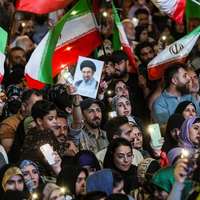
Supporters of the Islamic Republic wave Iranian flags during the 200th consecutive night of pro-state rallies in Tehran, September 17, 2026.

Iran’s nightly pro-government rallies have become an increasingly visible show of political force, occupying streets and squares for 200 consecutive nights and, more recently, turning their fire on rivals within the Islamic Republic itself.

For critics of the government, the gatherings have long carried a message beyond support for Iran during the war: that the street belongs to supporters of the Islamic Republic.

Coming after the mass protests of January, critics have viewed their nightly presence as a form of intimidation and a way of denying public space to potential dissent. For many, the effect is more mundane but relentless: late-night loudspeakers, road closures and disruption to daily life.

But the rallies have increasingly taken on another function. Participants have chanted against Parliament Speaker Mohammad-Bagher Ghalibaf, Foreign Minister Abbas Araghchi, President Masoud Pezeshkian and former presidents Hassan Rouhani and Mohammad Khatami.

Some gatherings have also featured demands for strict enforcement of Iran’s controversial hijab law, whose implementation has been held back following a decision by the Supreme National Security Council amid concerns over public backlash.

The shift has prompted warnings that gatherings promoted as demonstrations of national unity are becoming arenas for political score-settling.

The Supreme National Security Council-linked Nour News website described videos showing increasingly harsh slogans at recent gatherings as a “worrying shift in Iran’s political scene.”

“When street gatherings become a place for ‘death to’ and ‘down with’ slogans against domestic political figures, the first sign of a shift in the direction of popular reactions—from the foreign enemy to the domestic rival—becomes apparent,” Nour News wrote.

That shift is particularly significant because hardline media have portrayed the nightly gatherings as a measure of national opinion.

The hardline Hamshahri newspaper marked the 200th night with an article titled “200 Nights of Referendum,” presenting continued participation as an answer to politicians who have called for the public to be consulted over the country’s direction.

“Two hundred nights of participation in nighttime gatherings are a completely clear response to the doubts of some politicians who believe that the people should be consulted and a referendum held in order to continue the resistance,” it wrote.

The article was referring to Rouhani’s recent suggestion that continuing the war and confrontation with the United States and Western countries should be subject to consultation with the public.

The reformist Shargh newspaper warned that a social gathering that began in the name of “patriotism” could acquire a different meaning if it became a place for deciding “who has the right to speak about the country’s policies and who does not.”

Even the conservative daily Khorasan, considered close to Ghalibaf, called for a review of how the gatherings are organised in an article titled “200 Nights of Taking the Field.”

It questioned the use of the gatherings to promote hijab-related demands that it said exacerbate social divisions. It also highlighted complaints about the disruption the gatherings cause to residents and traffic.

“What image of these gatherings forms in citizens’ minds when the sound of loudspeakers keeps a sick person in a nearby home awake late into the night, or when hastily organized vehicle convoys create severe traffic jams and leave a driver exhausted after a day’s work stuck in traffic?” the newspaper asked.

Similar complaints have appeared on social media.

One X user urged supporters of the rallies to ask shopkeepers, residents and taxi drivers what they thought of the disruption, asking: “What has that taxi driver done to deserve sitting in traffic because of 30 government supporters?”

Another user, Morteza Rezazadeh, pointed to the changing targets of the slogans: from Israel and the United States to Iran’s president and parliament speaker. Mossad can “rest easy,” he quipped, because those chanting were doing its work for it.

After 200 consecutive nights, the dispute over the gatherings is therefore no longer simply about noise, traffic or even demonstrations of support for the state. It has become a dispute over who controls the street, who can claim to speak for the public and who inside the Islamic Republic is considered a legitimate political voice.

Why Iran’s hardliners keep talking of ousting Pezeshkian

Sep 17, 2026, 17:29 GMT+1
•
Behrouz Turani
100%
Iran's president Masoud Pezeshkian attends an event celebrating pensioners in Tehran, Iran, September 14, 2026

Renewed talk among Iranian hardliners of removing President Masoud Pezeshkian has revived comparisons with Iran’s only presidential impeachment, but there is little evidence so far of a coordinated effort capable of unseating him.

Instead, the latest speculation fits a pattern that has followed Pezeshkian since taking office in 2024: recurring calls for resignation or impeachment that intensify during periods of political, economic or geopolitical pressure.

The latest round was partly triggered by cryptic comments from Qom MP Mojtaba Zarei referring to a possible “coup” or coordinated political move against Pezeshkian.

Rouydad24 examined whether hardline networks, particularly Sharyan—the Persian acronym for the Strategic Network of Islamic Revolution Supporters—and allies of Saeed Jalili, Pezeshkian’s rival in the 2024 presidential election, were seeking early presidential elections.

The outlet presented no formal evidence of such a plan but pointed to repeated calls by radical lawmakers to invoke Article 89 of the Constitution, under which parliament can declare a president politically incompetent.

Mohsen Gharavian, a seminary and university lecturer, described the campaign to portray Pezeshkian as politically incompetent as a “targeted political conspiracy” and a soft “coup.”

Writing for Khabar Online, he argued that ultra-conservatives angered by their 2024 electoral defeat were using political networks and sustained media pressure to weaken the government.

In a separate Khabar Online report, moderate politician Hassan Rasouli criticised proposals to impeach Pezeshkian or transfer executive authority to First Vice President Mohammad Reza Aref.

Rasouli said such moves, particularly amid heightened national security pressures, amounted to “a direct attack on high-level governance cohesion.” He dismissed comparisons with the 1981 removal of Iran’s first president, Abolhassan Banisadr, as political theatre rather than a serious legal pathway.

Threats to use parliament against sitting presidents have a long history in the Islamic Republic.

During Akbar Hashemi Rafsanjani’s second term from 1993 to 1997, conservative opponents mounted sustained pressure on his government, including the impeachment of cabinet ministers.

Hassan Rouhani also faced repeated impeachment threats during his presidency, particularly from opponents of his diplomatic engagement with Washington.

The only successful precedent remains Banisadr in 1981. Parliament declared him politically incompetent during the Iran-Iraq war, after which Ayatollah Ruhollah Khomeini formally dismissed him.

Banisadr’s removal has since become a recurring reference point in disputes over presidential authority. Hardline lawmakers have invoked his case in attacks on Pezeshkian, particularly over diplomacy, economic policy and the conduct of the war.

But invoking Article 89 and successfully removing a president are different things. There is currently no indication that Pezeshkian’s opponents have assembled the parliamentary support required to declare him politically incompetent.

Opposition to Pezeshkian has nevertheless persisted since he took office following Ebrahim Raisi’s death in 2024. Calls for his resignation, comparisons with Banisadr and threats to invoke Article 89 have resurfaced during periods of economic turmoil, currency volatility and war.

The repeated threat of impeachment can serve a political purpose even without enough votes to remove the president: keeping his competence under question and constraining his room for manoeuvre on economic and diplomatic policy.

This week’s talk of a “coup” and renewed debate over presidential competence therefore appears less a new escalation than the latest iteration of a political struggle that has accompanied Pezeshkian for much of his presidency.

Iran cancer patients sell household goods to pay for treatment

Sep 17, 2026, 11:27 GMT+1
100%
A cancer patient receives treatment at a hospital in Iran.

Some cancer patients in Iran are selling essential household goods or abandoning medication as soaring drug prices and gaps in insurance coverage put treatment beyond the reach of low-income families, a charity director said on Thursday.

Families have sold refrigerators and televisions to buy cancer drugs, while some patients have stopped taking medication because they can no longer afford it, Hossein Zehtaban, the head of a cancer support charity in the western province of Kermanshah, told Iran's ILNA news agency.

“We are facing patients who explicitly say they cannot afford their medication, that they are no longer taking it and are waiting to see what happens,” he said.

The warning comes during a sharp rise in pharmaceutical costs across Iran. Producer inflation in the pharmaceutical, chemical and herbal products sector reached 114% year-on-year, according to Iranian economic outlet Zooman.

A recently published price list from Iranian pharmaceutical manufacturer Loghman showed increases of more than 500% for some medicines. Donepezil, used to treat symptoms of Alzheimer's disease, rose 543% for a 10-milligram dose, while the price of clarithromycin increased 308%.

Workers struggle with treatment bills

Zehtaban cited one family with three cancer patients whose main breadwinner is a worker. Medication for each patient can cost 400 million to 500 million rials ($174-$217 at an exchange rate of 2.3 million rials to the dollar) a month, he said.

100%
A healthcare worker tends to a patient in an intensive care unit at a hospital in Iran.

Iran’s minimum base wage for workers is about 166 million rials a month, meaning the medication for just one of the three patients could cost roughly two-and-a-half to three times a minimum-wage worker’s monthly pay.

The charity has about 1,700 cancer patients registered for support, though the charity director said the figure does not represent the total number of cancer patients in Kermanshah province because other organizations also provide assistance.

Insurance problems are adding to the financial pressure, he said. Pharmacies facing unpaid insurance reimbursements have reduced provision of some medicines, forcing cancer patients to search multiple pharmacies for prescribed drugs, he added.

Drug prices surge

The financial strain described by Zehtaban extends beyond cancer treatment.

Loghman's published price changes show increases across dozens of medicines, with 23 products rising by at least 100%. Donepezil rose by 427% for the five-milligram dose and 543% for the 10-milligram dose, while Tadalafil, which is used to treat erectile dysfunction, enlarged prostates and pulmonary arterial hypertension, had the largest increase at about 706%, according to reports citing the company's regulatory disclosure.

100%

Rising medicine costs have combined with food and other household expenses to make supporting cancer patients increasingly difficult, Zehtaban said. Vitamins and nutritional supplements recommended during treatment are also often excluded from insurance coverage.

The charity provides financial assistance as well as weekly psychological and physical rehabilitation sessions, but he said its resources cannot cover the mounting treatment costs.

Calls to quit NPT grow in Iran as critics warn of strategic trap

Sep 17, 2026, 00:30 GMT+1
•
Maryam Sinaiee
100%
Demonstrators hold Iranian flags and a banner reading “Zero enrichment we do not have a deal” during a rally outside the Atomic Energy Organization of Iran in Tehran, May 2025

Calls for Iran to withdraw from the Nuclear Non-Proliferation Treaty are gaining ground among hardliners after the IAEA referred the country to the UN Security Council and its nuclear chief was barred from attending the agency’s annual conference in Vienna.

The growing debate has exposed a divide within Iran’s political establishment between those who see NPT membership as offering little protection and others who warn that withdrawal would surrender one of Tehran’s remaining diplomatic and legal advantages.

Mohsen Rezaei, secretary of Iran’s Supreme National Security Council, appeared to threaten withdrawal from the treaty on Sunday, saying that “political and destructive actions” by the International Atomic Energy Agency would “push countries toward leaving the Nuclear Non-Proliferation Treaty.”

But President Masoud Pezeshkian reiterated the same day, during a visit to India, that Iran was not seeking nuclear weapons. “If we were seeking nuclear weapons, we would not have become a member of the NPT,” he said.

The debate intensified after Mohammad Eslami, head of Iran’s Atomic Energy Organization, was prevented from attending the IAEA General Conference in Vienna.

Austria had sought an exemption from a UN travel ban to allow Eslami to attend, but the sanctions committee did not approve it after a US objection.

Calls for immediate withdrawal

Supporters of immediate withdrawal say NPT membership has failed to protect Iran from international pressure or attacks on its nuclear facilities.

Continued membership, they argue, only makes sense if members’ nuclear rights are given equal weight alongside their obligations.

Sepehr Khalaji, who headed the Government Information Council under former President Ebrahim Raisi, questioned why Iran remained in the treaty.

“They bombed the nuclear facilities, martyred the scientists, sanctioned nuclear technology and say they will strike the remaining nuclear facilities. They referred Iran’s case to the Security Council, and they do not allow the head of the Atomic Energy Organization to enter the IAEA. So why are we still in the IAEA? Why don’t we withdraw from the NPT?” he wrote on X.

Parliamentary push

The debate has also reached parliament, where lawmakers are preparing a proposal for Iran to withdraw from the NPT.

Hassan-Ali Akhlaghi, a member of parliament, told the Fars news agency on Wednesday that lawmakers had prepared a triple-urgency bill that would be put to a vote if approved by the parliamentary leadership.

Given what he called the IAEA’s “entirely hostile and illogical” resolution, Akhlaghi said Iran should leave the treaty as soon as possible.

The proposal, however, has not yet formally reached parliament’s National Security and Foreign Policy Committee and is not currently on the parliamentary agenda.

Warnings of a trap

The conservative Khorasan newspaper on Wednesday warned that leaving the treaty could increase political and diplomatic pressure on Iran without producing significant security gains.

“On the surface, these positions may appear to be a revolutionary and deterrent response to the enemy; but when the pieces of the situation are put together, another worrying picture emerges,” it wrote.

Khorasan argued that the United States and Israel were deliberately trying to push Iran’s political debate toward more radical positions, including testing a nuclear weapon, changing its nuclear doctrine and immediately withdrawing from the NPT.

The newspaper said leaving the treaty before Iran had achieved deterrence could reveal Tehran’s intentions rather than demonstrate strength, potentially giving its opponents an opportunity to act.

“Iran has obtained an important part of the practical outcome without making an official and costly withdrawal: the IAEA no longer has its previous access, while Tehran continues to benefit from the legal protection of NPT membership and the political support of Russia and China,” Khorasan wrote.

“Official withdrawal would destroy this useful grey zone without creating a new strategic advantage.”

Reformist politician Rasoul Montajab-Nia made a similar argument.

“If the agency has not acted impartially toward Iran, we should not resort to disrupting the framework, because this would mean fuelling disputes and war with other countries.”

Montajab-Nia said withdrawal would not benefit Iran and would be “in line with Israel’s objectives.”

The nuclear threshold

At the outer edge of the debate, some advocates of developing nuclear weapons have argued that Iran should remain in the NPT unless it decides to change its nuclear doctrine — and then coordinate withdrawal with a nuclear test.

Foad Izadi, a hardline political commentator, told the Moj news agency that Iran had no need to leave the NPT while its current nuclear doctrine remained in place.

But if Tehran decided to change that doctrine, he said, Iran could withdraw from the treaty after a nuclear test or simultaneously with one.