• العربية
  • فارسی
Brand
  • Iran Insight
  • Politics
  • Economy
  • Analysis
  • Special Report
  • Opinion
  • Podcast
  • Live TV
  • Iran Insight
  • Politics
  • Economy
  • Analysis
  • Special Report
  • Opinion
  • Podcast
  • Live TV
  • Theme
  • Language
    • العربية
    • فارسی
  • Iran Insight
  • Politics
  • Economy
  • Analysis
  • Special Report
  • Opinion
  • Podcast
  • Live TV
All rights reserved for Volant Media UK Limited
volant media logo
PODCAST

Will Iran bend or escalate as US launches economic war?

Negar Mojtahedi
Negar Mojtahedi

Iran International

Aug 24, 2026, 01:16 GMT+1
A participant holds a sign reading “Kill Trump” at a state-backed event in central Tehran, as a giant billboard depicting an avenging  warrior looms over the crowd, August 21, 2026
A participant holds a sign reading “Kill Trump” at a state-backed event in central Tehran, as a giant billboard depicting an avenging warrior looms over the crowd, August 21, 2026

Iran’s leadership may see an end to the war as necessary under mounting US economic pressure, but that does not mean Tehran will heed Washington’s demands, experts say, warning that the pressure could instead drive it toward further escalation.

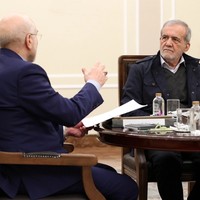
President Masoud Pezeshkian said Friday that it would be better to end the war now, while Iran remains in what he called a position of “power and dignity.” Parliament Speaker Mohammad Baqer Ghalibaf was more blunt about the stakes of a deteriorating economy.

“No matter how much military power we have, we won't survive if people are hungry and we don't have financial turnover, economic growth and national production,” Ghalibaf said, according to Iran’s official news agency IRNA.

Raz Zimmt, director of the Iran and Shiite Axis Research Program at Israel’s Institute for National Security Studies, believes the statements reflect growing recognition in Tehran that the current situation is unsustainable.

But he says there is a potentially dangerous gap between recognizing that reality and deciding to compromise.

“If they have to make a choice between taking the risk for a new round of war with the United States or making concessions which they consider to be full capitulation to the United States... I think it’s very clear that they are not going to give up,” Zimmt told Iran International’s Eye for Iran podcast.

The dilemma comes as Washington prepares to intensify the pressure. US Treasury Secretary Scott Bessent has promised the “toughest sanctions in history,” alongside a naval blockade already squeezing Iranian trade.

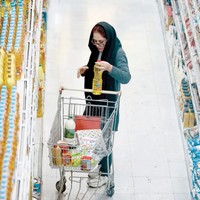
Iran entered the war with high inflation and a weakened currency. By July, annual inflation had reached 66 percent and food prices were 128 percent higher than a year earlier, according to official data.

‘Reasons to resist’

Zimmt says Iran’s ability to use Hormuz as leverage could also erode as the United States makes military gains in opening a corridor through the strait. But he sees no evidence yet of a consensus in Tehran for a change of course.

Iran’s calculation, he argues, is shaped by what happens after any agreement as much as by what happens now. Its leaders do not appear convinced that concessions would guarantee a permanent end to the war.

Instead, they may fear reopening Hormuz and surrendering leverage in exchange for a ceasefire that Washington could abandon after the US midterm elections in November.

Washington’s own messaging may be reinforcing that distrust.

Bessent said Thursday that the combination of the blockade and new sanctions could “collapse this regime,” even as he argued that successful economic pressure could reduce the likelihood of another large-scale military campaign.

From Tehran’s perspective, Zimmt argues, such statements can strengthen those who ask why Iran should make concessions to an administration that is simultaneously talking about its collapse.

The war itself may have given Tehran another reason to resist concessions.

“The conclusion in Iran is that the United States and Israel don’t have the capability to force Iran into major concessions,” Zimmt said.

‘Escalation before negotiations’

Hormuz provides Tehran with another source of leverage. After decades of threatening to close the strategic waterway, Iran has demonstrated its ability to severely disrupt it. Only seven commodity vessels passed through on Thursday, compared with more than 130 a day before the war, according to Kpler data.

Zimmt believes Iran’s leadership may therefore calculate that it can inflict enough economic pain on its Persian Gulf neighbors and the global economy to improve its position before negotiating.

He points to Iran’s behavior after Trump withdrew from the nuclear deal during his first presidency. Tehran initially responded to maximum pressure with what it called “strategic patience” but escalated as the economic damage mounted, including through attacks on Persian Gulf shipping and the downing of a US drone.

He sees the possibility of the same logic asserting itself again.

“If the Iranians reach the conclusion that they can’t resist or they can’t handle the growing economic pressure,” Zimmt said, “their decision would actually be to escalate things even further before returning to negotiations.”

The pressure may be working. The unanswered question is what Tehran chooses to do because of it.

You can watch Eye for Iran on YouTube or listen on any podcast platform.

Most Viewed

Iran's central bank says it is not hyperinflation. Economists are not convinced
1
INSIGHT

Iran's central bank says it is not hyperinflation. Economists are not convinced

2

IRGC chief backs state broadcaster amid clashes with Pezeshkian, Ghalibaf

3
PODCAST

The hidden toll of Iran crackdown: disability, chronic pain, opioid dependence

4
VOICES FROM IRAN

Iranians voice economic despair as dollar hits 2 million rials

5

Iran executes another January protest detainee

Banner
Banner

Spotlight

  • Will Iran bend or escalate as US launches economic war?
    PODCAST

    Will Iran bend or escalate as US launches economic war?

  • Iran leader’s absence gives war camp room to shape policy
    ANALYSIS

    Iran leader’s absence gives war camp room to shape policy

  • Iran's central bank says it is not hyperinflation. Economists are not convinced
    INSIGHT

    Iran's central bank says it is not hyperinflation. Economists are not convinced

  • Ghalibaf's hunger warning sparks hardline backlash over showing weakness
    INSIGHT

    Ghalibaf's hunger warning sparks hardline backlash over showing weakness

  • Iran crude loadings plunge to one-seventh of pre-war level as blockade bites
    ANALYSIS

    Iran crude loadings plunge to one-seventh of pre-war level as blockade bites

Banner
•
•
•

More Stories

Iran security chief hints at nuclear doctrine shift after US attacks

Aug 23, 2026, 21:32 GMT+1
100%
File photo shows former IRGC chief-commander Mohsen Rezaei (right) attending a conference in Kerman on November 26, 2025.

Iran’s top security official has suggested Tehran could reconsider its longstanding rejection of nuclear weapons, arguing that US attacks on Iran have strengthened the case for acquiring an atomic bomb as a deterrent.

Mohsen Rezaei, secretary of Iran’s Supreme National Security Council, said Washington had demonstrated that adherence to the global nuclear non-proliferation system offered countries little protection from military attack.

“The whole world is saying, ‘Wait a minute. So the NPT has no effect?’” Rezaei said in an interview broadcast by Iranian state television.

“When America is waging such a war, people naturally ask: Why shouldn’t we pursue nuclear weapons ourselves?”

Rezaei, a former commander-in-chief of the Revolutionary Guards, stopped short of saying Iran had decided to build a nuclear weapon. But his remarks were unusually explicit for one of the Islamic Republic’s most senior security officials.

Iran has long maintained that its nuclear program is peaceful and has rejected the development and use of atomic weapons.

Rezaei argued that Iran had subjected itself to extensive international monitoring, joined the Nuclear Non-Proliferation Treaty and ultimately accepted the 2015 nuclear agreement, known as the JCPOA.

“The level of safeguards and inspections carried out in Iran over the past two decades has been unprecedented anywhere else in the world,” he said.

Yet Iran and its nuclear facilities were ultimately attacked, Rezaei said, arguing that this had changed the calculation around nuclear deterrence.

“Why shouldn’t we develop a nuclear weapon so that nobody can attack us?” he said, describing the question he said countries were now asking.

The comments come at an especially volatile moment in the US-Iran confrontation, with diplomacy following the war and subsequent ceasefire largely stalled and Washington shifting its focus towards intensified economic pressure.

Trump has announced what he described as a sweeping new economic campaign against Iran, while Treasury Secretary Scott Bessent said Washington would impose the “toughest sanctions in history.”

US officials have presented the pressure campaign as a way of forcing Tehran towards an agreement while reducing the need for another large-scale military offensive.

Iranian officials have rejected the threats, while maintaining that Tehran remains open to diplomacy.

The 60-day negotiating period associated with the US-Iran memorandum expired last week without a breakthrough, leaving the two sides at odds over sanctions, Iran’s nuclear program and the Strait of Hormuz.

Rezaei, who recently took over as secretary of the Supreme National Security Council, has adopted an increasingly confrontational posture, saying Iran would move towards a “fully offensive” military strategy if diplomacy failed.

In the TV interview, he went further, explicitly contrasting the cost of a nuclear deterrent with conventional military power.

“If a country possesses a nuclear weapon, it can be cheaper and more effective than having hundreds of F-35s and spending enormous amounts of money on other military capabilities,” he said.

Rezaei blamed Trump for undermining the wider non-proliferation system.

“Trump has made a mistake by attacking Iran … Many countries are now looking for ways to reconsider the international nuclear order,” he said. “Wasn’t that foolish?”

Iranians voice economic despair as dollar hits 2 million rials

Aug 23, 2026, 09:33 GMT+1
•
Hooman Abedi
100%
Iranian rials and US dollars are exchanged in Tehran. (File photo)

Iranians described deepening financial hardship and questioned whether economic pressure can change government policy as the dollar hit a historic 2 million rials, extending the currency's sharp decline on Sunday.

The US dollar reached 2 million rials on Iran's open market, crossing a threshold it had approached rapidly in recent days.

“We saw revolution, war, sanctions, rising prices and hardship,” one person told Iran International. “Now that we are over 50, we worry about our children, their jobs, their future, education, university and marriage costs. Pressure from outside, pressure from inside. How much can one endure?”

The dollar stood at around 1.865 million rials at the beginning of last week, putting its rise at more than 7% in less than a week. It has more than doubled from around 958,000 rials during the same period last year.

The British pound climbed above 2.72 million rials, while the euro approached 2.34 million rials. Rates can vary between sources because open-market trading is informal and fragmented.

Iranians describe pressure from all sides

The currency's latest fall comes days after US President Donald Trump announced what he called the “most crushing economic operation ever taken against any country,” warning of unprecedented economic isolation and consequences for countries whose financial institutions, businesses or government entities continue providing Tehran with an economic lifeline.

  • Can Iran's fragile economy survive Trump's 'Economic D-Day'?

    Can Iran's fragile economy survive Trump's 'Economic D-Day'?

“Oil smuggling, swap lines, cash transfers, exchange houses, ship registries, front companies – it all needs to stop NOW,” Trump wrote on Truth Social, calling on US allies to join the campaign.

Messages sent to Iran International in response to a question about US economic pressure largely focused on the burden borne by ordinary people rather than its effect on the Islamic Republic.

“Iran has been under sanctions for nearly 50 years and the Islamic Republic is still governing,” one person said. “These measures do not work. They only leave the Iranian people poorer and hungrier, without medicine, healthcare or housing.”

Others questioned whether greater economic pressure could force authorities to change course.

“I don't think the government will come under pressure because it covers its budget deficit from people's pockets,” another respondent said. “The tip of the sanctions spear is aimed directly at the people; healthcare, nutrition, education and sports are all at risk.”

Rial's decline compounds daily hardship

Market participants point to high inflation, growing demand for foreign currency, declining foreign-exchange revenues and concern over sanctions as factors driving demand for dollars.

Political uncertainty, disruption to regional oil exports and the deadlock between the Islamic Republic and the United States have added to inflation expectations.

The currency slide comes alongside electricity and water shortages that have disrupted production and daily life. Further rial depreciation can raise the cost of imported raw materials and essential goods, adding to pressure on household budgets.

  • Iran leaders sound economic alarms under Trump’s Economic D-Day

    Iran leaders sound economic alarms under Trump’s Economic D-Day

Some Iranians who contacted Iran International argued that economic pressure would be more effective if directed at assets held abroad by officials and their relatives.

“When they can freeze the foreign accounts of officials and their children, then you can call it pressure on the government,” one respondent said. “Seize their assets.”

IRGC chief backs state broadcaster amid clashes with Pezeshkian, Ghalibaf

Aug 22, 2026, 15:21 GMT+1
100%

IRGC commander-in-chief Ahmad Vahidi praised Iran’s state broadcaster for its performance during the war with the US, throwing his weight behind an institution that has clashed with President Masoud Pezeshkian and drawn criticism from Parliament Speaker Mohammad Bagher Ghalibaf.

In a message to IRIB chief Peyman Jebelli, Vahidi described the broadcaster’s performance as a “valuable effort” and “effective role-playing,” saying it had made an important contribution to strengthening the Islamic Republic’s “media front” during the conflict.

Vahidi’s endorsement comes against the backdrop of a broader power struggle between Pezeshkian and senior Guards commanders. Iran International reported in April, citing sources close to the presidential office, that Pezeshkian had accused Vahidi and other senior IRGC commanders of acting unilaterally during the war, undermining ceasefire prospects and pushing Iran toward economic disaster.

Pezeshkian has also repeatedly criticized IRIB. In May, he said the broadcaster presented an unrealistic picture of conditions in the country and needed a serious overhaul.

The confrontation escalated in July when Pezeshkian’s office accused IRIB of censoring part of a televised interview in which the president said the late Supreme Leader Ali Khamenei had privately instructed officials to negotiate with the United States despite publicly ruling out talks. The broadcaster did not publicly explain why the remarks were omitted.

  • Iran parliament cries censorship after Ghalibaf interview cut short

    Iran parliament cries censorship after Ghalibaf interview cut short

Ghalibaf interview also cut

Ghalibaf has had his own clashes with the broadcaster. In July, parliament accused IRIB of censorship after it abruptly cut short a pre-recorded interview with the speaker as he discussed the release of Iranian assets abroad.

Parliament said roughly 20 minutes covering politically sensitive issues had not been aired, including possible IAEA inspections, frozen Iranian assets, the reported $300 billion reconstruction credit in the US-Iran memorandum of understanding and Ghalibaf’s response to President Donald Trump.

IRIB said the interview had been divided into two installments, but parliament said it had received no advance notice that parts would be withheld.

This week, Ghalibaf renewed his criticism, saying IRIB had failed to achieve the necessary results in “cognitive warfare” and referring to what he called the broadcaster’s “structural, approach and performance inefficiencies.”

Iran's central bank says it is not hyperinflation. Economists are not convinced

Aug 22, 2026, 12:59 GMT+1
•
Behrouz Turani
100%

Iran's central bank governor says hyperinflation has not happened. A leading Tehran economist says it already has. Whatever it is called, the shelves tell the same story.

Abdolnasser Hemmati, governor of the Central Bank of Iran, used a special broadcast on Wednesday to argue that the country's monetary crisis remains under control. "Some thought hyperinflation would happen," he said. "For now, it has not."

Later in the same program, describing how the government has kept the country running, he offered a defense that its critics will find more revealing than reassuring. Go into the market, he said, and you will see that basic goods are there. "I know it's expensive, but it's there."

The rebuttal arrived the same day. In an interview with Khabar Online, Farshad Momeni, professor of economics at Allameh Tabatabai University in Tehran, was asked whether Iran stands on the threshold of hyperinflation. "Hyperinflation has already happened," he answered.

  • Can Iran's fragile economy survive Trump's 'Economic D-Day'?

    Can Iran's fragile economy survive Trump's 'Economic D-Day'?

While the two men argued over the name, Hemmati was proposing to raise the state food coupon by 23 percent, to 12.3 million rials a month. At market exchange rates, that is about $6.40.

An argument about a word

Both men are, in a narrow sense, right, and the gap between them is a definition.

The standard economists use, set out by Phillip Cagan in 1956, puts hyperinflation at 50 percent a month. By that measure Iran is nowhere near it: monthly inflation in the month of Tir (ended on July 22) was 3.1 percent. Looser conventions treat triple-digit annual rates as hyperinflation, and by that measure parts of the Iranian economy have already crossed the line.

Which is where Momeni takes his stand. He cites the statistics center's own reports showing that inflation lands hardest on low-income groups and deprived provinces. "Triple-digit inflation has already turned up in some regions in these official reports," he said, "and if we look at unofficial reports, the picture is far worse."

  • First red meat, now dairy: Iran’s household diet keeps shrinking

    First red meat, now dairy: Iran’s household diet keeps shrinking

The dispute is not academic point-scoring. "Hyperinflation" has become one of the most heavily used words in Iranian economic discourse, deployed by lawmakers, newspapers and economists with increasing frequency and decreasing precision.

Iranians have lived with double-digit inflation for the better part of five decades, which is Momeni's own point: with one or two exceptions, he says, Iran's economy has been held captive by inflationary policies for 55 years.

A word that has described the ordinary condition of Iranian life for half a century stops carrying information. The reaching for a bigger one is a sign that the old word has stopped working, and that people are trying to name something they have not felt before.

  • War or government failure? Record inflation fuels political battle in Iran

    War or government failure? Record inflation fuels political battle in Iran

  • Iran faces region’s harshest mix of wartime contraction and inflation

    Iran faces region’s harshest mix of wartime contraction and inflation

The official figures give the reaching some grounding. Point-to-point inflation in Tir stood at 87.9 percent, and for food and drink at 128.1 percent. Those rates sit on top of a minimum wage of about 166 million rials a month, roughly $87 at market rates, and typical earnings of 200 to 300 million rials, about $105 to $157. Against food prices that have more than doubled in a year, a $6.40 coupon covers a fraction of a week.

What inflation does to a country

Momeni's larger argument is that inflation of this duration is not an economic problem that also has social effects; it is a solvent.

He points to John Maynard Keynes in The Economic Consequences of the Peace, who wrote that inflation beyond a certain point makes every contract unstable.

"That includes all contracts," Momeni said: "the constitution, ordinary laws, even the rules governing family life. In that atmosphere, kleptocracy takes the place of cooperation and trust." He notes that even Lionel Robbins, a market fundamentalist by his description, warned that phenomena such as Nazism and fascism were born of high inflation.

He also reaches for a historical case that carries an unmistakable warning for the government he is addressing. Analysts asking why the Chinese public accepted the fall of the nationalist government, he said, tend to answer that Mao and his allies controlled inflation in each province they took, while the nationalists could not.

Momeni's sharpest criticism is reserved for how officials talk about all this. They warn about the dangers of inflation as though they were bystanders.

"They play the role of the opposition themselves," he said. "They perform these deadly tricks and then hold a funeral for the consequences." Officials, he argued, should be reporting their remedies, not their alarm.

  • Iran’s 7% unemployment rate masks deeper jobs crisis, experts say

    Iran’s 7% unemployment rate masks deeper jobs crisis, experts say

  • Iranian workers report  layoffs, months of unpaid wages

    Iranian workers report layoffs, months of unpaid wages

  • Why so few Iranians have jobs despite low unemployment

    Why so few Iranians have jobs despite low unemployment

He extends the same skepticism to the labor figures. Official unemployment stands at 7.6 percent, which he called one of the most astonishing claims available, given a Plan and Budget Organization report showing that only one third of the working-age population is employed, with two thirds playing no part in national production.

Inflation and joblessness compound, he said, and "when inflation and unemployment come together, we have entered the abyss of misery."

The governor's toolkit

Hemmati's account of the government's response is a catalogue of technical interventions carried out under severe constraint.

He said oil exports have almost entirely stopped, that Iran's foreign reserves are blocked by the United States while neighbors in the same position can still draw on theirs, and that about $12 billion of Iranian funds in Qatar, which was to have been made accessible under earlier understandings, remains frozen. Preliminary banking agreements had been signed, he said, but nothing operational has followed.

On Iraq, he said Baghdad had promised to address its outstanding debts, while noting that Iraq's own oil revenues had slowed and that its payments to its own employees had been delayed.

He said a meeting with Iraq's prime minister had produced agreement to use Iranian funds held at the Trade Bank of Iraq as backing for guarantees to Iranian contractors. At the BRICS summit he proposed what he called a financial corridor among member states, using their digital assets to reduce dependence on other countries' currencies.

Hemmati's own figures show the strain behind the reassurance. Foreign currency allocated for basic goods and agriculture over five months was about 8 percent lower than a year earlier, and currency available to manufacturers fell roughly 30 percent.

The coupon program alone requires about 870 trillion rials a month, some $455 million, and the government drew $2.5 billion from the National Development Fund before the new year (March 20) to keep it running for four months. He said the government does not want to fund it by printing money.

He was blunt about the limits. Purchasing power has fallen, he said, and while Turkey raised wages in step when its inflation reached 60 to 70 percent, Iran's fixed-income earners, teachers, workers, civil servants, the bottom three income deciles, receive increases of 20 to 25 percent that leave them further behind each year.

The end of the chain

Whatever the argument is called at the top, its shape at the bottom is not in dispute.

Mostafa Pourdehghan, a member of parliament's industries and mines committee, has warned that Iran is heading towards hyperinflation, putting liquidity at a record 170 quadrillion rials and citing Hemmati for a figure of minus three percent economic growth over five months. He has called for an emergency committee on inflation and prices.

Below that, according to reporting by the ILNA news agency, companies that laid workers off and later recalled them have not paid wages since late May, and the returning workers have lost both the substitute income they found and their entitlement to unemployment insurance.

Akbar Shokat, executive secretary of the Workers' House in Qom province, said most of the workforce lives below the poverty line after years of wage suppression and has almost no resilience left, warning that workers could not endure more than another two months. In July, about 1,600 workers at the Tabriz Machine Manufacturing group struck over unpaid wages.

Hemmati and Momeni are arguing about which word describes the Iranian economy. In the shops, where a month's wages no longer reach the end of the month, the argument was settled some time ago.

The hidden toll of Iran crackdown: disability, chronic pain, opioid dependence

Aug 22, 2026, 04:28 GMT+1
•
Negar Mojtahedi
100%
Three young women hold up red-painted artwork representing the blood of innocent protestors, including handprints and Persian script, while one raises a victory sign.

The Islamic Republic may want the world to forget what happened in January, but the bodies of those who survived make that difficult.

Much of the attention since Iran’s bloody crackdown has rightly focused on those who were killed. Far less has been paid to those who lived.

They went into the streets hoping this time would be different. For many, it was, but not in the way they had hoped.

They survived being shot with metal pellets, beaten and, in some cases, slashed with machete-like weapons. Now doctors warn that some could spend the rest of their lives with permanent disabilities, chronic pain and dependent on opioids simply to manage it.

“You’re creating a generation of people in chronic pain and potentially creating a generation of opiate dependence,” Dr. Sarah Raza, a trauma and vascular interventional radiologist in Los Angeles, told Iran International’s English-language podcast Eye for Iran.

Raza is accustomed to catastrophic injuries. She works across multiple Level I trauma centers, treating adults and children with gunshot wounds, severe bleeding and injuries from vehicle crashes. But she says nothing in her medical career prepared her for the scale of what she has seen among those wounded in Iran.

“I have never seen this scale,” she said.

Working with Physicians for Human Rights, Raza has remotely assessed hundreds of injured Iranians, often through secure communications because patients fear seeking treatment inside the country. She says every patient she assessed spoke to medical teams from a home, a neighbor’s home or a relative’s home rather than a medical facility.

What she found was a pattern of injuries that could follow survivors for decades.

Hundreds of tiny metal pellets can remain embedded in a single person, lodged in skin, tendons and joints and near major nerves and blood vessels. Raza says more than 95 percent cannot safely be removed because surgery itself could damage arteries, nerves and other surrounding structures.

For some survivors, even ordinary movement may become a source of pain.

“Every time you bend your finger, you’re going to feel that pellet and it’s going to cause pain,” Raza said. “You’re going to have chronic inflammation. You’re going to need to be on steroids to manage the chronic inflammation. You’re going to need to be on opioids.”

The consequences, she warns, can include blindness, nerve damage, chronic inflammation, disfigurement and permanent disability, with some survivors unable to work or even walk.

“These will cause chronic disability, chronic nerve issues, chronic pain to the point of disfigurement, to the point of people being unable to work, walk,” Raza said.

Among the patients she described was a six-year-old boy.

Metal pellets struck his face during the protests and remain embedded in his skull, face and near his eye socket. Because of the concentration of nerves and blood vessels in the area, Raza says they cannot safely be removed.

“He’s going to live his whole life with pellets embedded in his skull, in his face, near his orbit,” she said.

He was six years old when he was wounded. The crackdown could remain physically inside his body for the rest of his life.

For Raza, his injuries represented something even more disturbing.

“This is their way of inflicting lifelong torture,” she said. “This is making someone’s body a prison.”

She described another patient, a 16-year-old construction worker whose mother had died and whose father, in his 70s, has cancer. The teenager was the family’s sole breadwinner.

In addition to pellet wounds, Raza said he suffered a deep laceration across his hand after people entered the crowds striking protesters with what she described as “machete-like objects.” The wound cut down to his tendons.

But his greatest concern was not his own pain.

“How am I going to feed my family?” Raza recalled him asking.

He wanted to know whether he could return to work so he could continue supporting his father and buying his chemotherapy medication.

“What can I do so I can go back to work? I need to feed my father. I need to buy him medicine, chemotherapy medicine,” Raza recalled him saying.

For Raza, his case shows how permanent injury to one protester can ripple through an entire family.

“This is the multi-generational physical, psychological trauma that they have inflicted,” she said.

Raza also believes the location and pattern of the pellet injuries are significant. She says she repeatedly saw pellets concentrated around areas rich in nerves and blood vessels, including the eyes, neck, torso and genitalia.

“This is not crowd control,” she said. “This is an intentional use of this weapon to inflict maximum pain, not only in the moment, but for years on.”

She makes an even more explicit assessment of the injuries she documented.

“This pattern is not coincidental,” Raza said. “It is intentionally inflicted to cause maximum amount of pain, injury throughout your life.”

There is another consequence.

The pellets that injure protesters may also identify them.

Because the fragments are metal and often cannot be removed, Raza says they can remain visible on X-rays and potentially detectable years later. Patients told her they feared their injuries could effectively mark them as people who had participated in the protests.

“Their wounds, their injuries have now become identifying markers for attack and targeted persecution later,” she said.

For survivors, then, the injury can become both punishment and evidence: a source of chronic pain that may never leave their bodies, and a physical record of what happened to them.

The dead can be counted.

The lifetime carried by those who survived is much harder to measure.