• العربية
  • فارسی
Brand
  • Iran Insight
  • Politics
  • Economy
  • Analysis
  • Special Report
  • Opinion
  • Podcast
  • Iran Insight
  • Politics
  • Economy
  • Analysis
  • Special Report
  • Opinion
  • Podcast
  • Theme
  • Language
    • العربية
    • فارسی
  • Iran Insight
  • Politics
  • Economy
  • Analysis
  • Special Report
  • Opinion
  • Podcast
All rights reserved for Volant Media UK Limited
volant media logo

Iranian women being shut out of engineering fields, official warns

Jul 20, 2026, 16:50 GMT+1
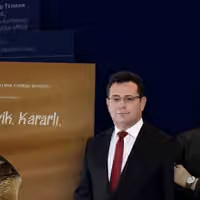
A man and woman attend the International Conference on Artificial Intelligence and Software Engineering in Shiraz, Iran, on November 24, 2024.

Women dominate Iran’s universities but remain sharply underrepresented in engineering and other technical fields, Iran’s vice president for women’s affairs said on Monday, calling for a review of admissions and the social barriers shaping their choices.

Zahra Behrouz-Azar said women account for more than 64% of applicants seeking university admission and more than 52% of the country’s university students.

However, she said the overall figures conceal a pronounced gender divide between academic disciplines.

Speaking at the unveiling of Iran’s annual statistical report on women, she said the gap is quite wide in technical and engineering subjects, where approximately 573,000 men graduated, compared with about 180,000 women, during the latest year covered by the report.

The imbalance reflects a wider international pattern. Women account for around 35% of graduates in science, technology, engineering and mathematics worldwide, a proportion that UNESCO says has remained largely unchanged for a decade.

Behrouz Azar said, however, that Iran’s gender gap appeared more pronounced and required closer research into the cultural, social and institutional forces shaping students’ choices.

“Which beliefs and cultural and social factors cause girls to gravitate less toward fields such as electrical engineering, computer science and some other technical disciplines?” she asked.

Behrouz-Azar said the disparity was particularly striking because Iranian women had established a strong presence in content production, the digital economy and freelance work, but were less likely to enter programming, coding and specialist areas of artificial intelligence.

She warned against the assumption that some disciplines were inherently “male” or that women did not need to enter them. Her office had raised the matter with the science minister and requested a detailed review of university admission procedures and other factors contributing to the disparity, she said.

The vice president did not allege that formal admissions rules explicitly excluded women from those subjects. She instead called on academics and researchers to examine the “hidden layers” behind the statistics, including whether social attitudes, education and career expectations discourage girls from pursuing technical fields.

Behrouz-Azar also linked women’s representation in technology to the development of artificial intelligence, saying researchers in AI ethics had argued that greater participation by women could contribute to systems that placed more emphasis on ethics and care.

Iran’s expansion of women’s access to university has not produced comparable participation in the labor market. World Bank data put the female labor-force participation rate at about 14% in 2025, while an International Labor Organization assessment reported a large and persistent divide between women and men in access to paid work.

That reflects not only personal choice but also decades of bureaucratic and social barriers limiting women's employment.

That disconnect means many highly educated Iranian women remain outside formal employment even as they make up a majority of the university population. International labor bodies have previously pointed to restrictions on women’s access to formal employment despite major advances in education.

Most Viewed

Rubio signals diplomacy as US-Iran war escalates
1

Rubio signals diplomacy as US-Iran war escalates

2
INSIGHT

Qatar, Pakistan push Iran-US diplomacy as war escalates

3
ANALYSIS

Beyond espionage: Araghchi says spies seek to shape Iran's decisions

4

Pahlavi backs US-led war as ‘necessary’ to prevent further bloodshed in Iran

5

Iranian women being shut out of engineering fields, official warns

Banner
Banner
Banner

Spotlight

  • Beyond espionage: Araghchi says spies seek to shape Iran's decisions
    ANALYSIS

    Beyond espionage: Araghchi says spies seek to shape Iran's decisions

  • Qatar, Pakistan push Iran-US diplomacy as war escalates
    INSIGHT

    Qatar, Pakistan push Iran-US diplomacy as war escalates

  • Family of executed protester says he was tortured into false confession

    Family of executed protester says he was tortured into false confession

  • Iran hardliners blamed as cost of US strikes mounts
    INSIGHT

    Iran hardliners blamed as cost of US strikes mounts

  • Leaked presidency report shows how Iran plans to manage record public anger
    INSIGHT

    Leaked presidency report shows how Iran plans to manage record public anger

  • Why so few Iranians have jobs despite low unemployment

    Why so few Iranians have jobs despite low unemployment

•
•
•

More Stories

Rising daycare fees push Iranian families to rely on grandparents

Jul 16, 2026, 14:29 GMT+1
100%
File photo shows caregivers supervise children at a daycare center in Iran.

Rising daycare fees and mounting economic pressure are prompting more Iranian families to forgo kindergarten enrollment and rely on grandparents for childcare, raising concerns among sociologists about the long-term impact on children's social development.

The Hamshahri newspaper reported on Thursday that falling birth rates, coupled with soaring daycare costs, have reduced demand for kindergartens and preschool centers across the country.

Monthly daycare fees vary widely across Tehran, according to the report. In middle-income neighborhoods, tuition ranges from 50 million ($25) to 80 million rials (over $40), while families in wealthier districts pay between 250 million (around $130) and 300 million rials ($160).

The average monthly income in Iran is estimated at $150–$200, depending on fluctuations in the open-market exchange rate. By comparison, the minimum monthly cost of basic living expenses, including food and housing, is estimated at $385–$400, leaving many households unable to meet essential needs.

  • Only three Tehran schools meet basic safety standards, official warns

    Only three Tehran schools meet basic safety standards, official warns

Daycare operators in affluent areas attributed the higher fees to rising rents and staff wages, saying the increased costs have discouraged many parents from enrolling their children.

More than 60% of kindergarten operating costs are spent on personnel under Iran's labor law, Hamidreza Sheikholeslam, head of the National Organization for Early Childhood Education, said in June.

Sheikholeslam said staffing costs, the number of teachers and children, operating hours, rent, facilities and equipment, and other operating expenses all influence tuition fees.

100%
File photo shows an empty daycare playroom in Iran.

Many families, the report said, have responded to rising childcare costs and broader financial pressures by turning to lower-cost alternatives, most commonly asking grandparents to care for young children.

Experts warn of social consequences

Sociologists quoted by Hamshahri said removing daycare from household spending is not only an economic decision but could become a broader social challenge.

They argued that young children benefit from interacting with their peers in educational settings and warned that replacing daycare with care by relatives could undermine their social development.

  • Child labor rises as poverty deepens in Iran

    Child labor rises as poverty deepens in Iran

The concerns follow earlier reports highlighting the growing burden on extended families. In May, the Shargh newspaper reported that prolonged preschool closures following the recent war left many working parents scrambling for childcare, with some relying on grandparents and relatives.

Another report published by Haft-e Sobh daily in February warned that rising daycare costs had effectively turned many grandparents into full-time caregivers, raising concerns about the physical and psychological burden on older adults as well as differences in parenting approaches across generations.

Leaked presidency report shows how Iran plans to manage record public anger

Jul 16, 2026, 12:07 GMT+1
•
Arash Sohrabi
100%

A confidential report by Iran's presidency, leaked this week, records the highest public anger ever measured in any country and finds that nine in ten Iranians want change. Its advice to the leadership: manage the anger, not its causes.

The document, titled "What Iran Wants" and obtained by IranWire, was written by Ali Rabiei, a former intelligence ministry official and government spokesman who now advises President Masoud Pezeshkian on social affairs. It is built on a survey conducted in April and May by the ARA research center and was circulated among senior officials in June.

Its timing matters. The survey was taken in the aftermath of the January protests, in which security forces killed tens of thousands of demonstrators within days, and during a war with the United States that has already claimed the life of Supreme Leader Ali Khamenei. Through all of it, state television has filled its evenings with images of packed squares and chants of revenge.

The report is the government's private mirror, and it shows something else entirely. Given four options for the country's future, only nine percent of respondents chose keeping things as they are; the rest split between reform, deep reform, and changing the system outright.

The document discloses no methodology, and official polling in Iran is conducted among respondents who have every reason to fear giving an honest answer to a state questionnaire.

Sociologist Saeed Paivandi, who reviewed the full report for IranWire, called its findings broadly plausible despite those gaps. In practice, that means each figure below is best read as a floor, not a ceiling. Whatever the government's own instrument records, the reality is unlikely to be milder.

The angriest country ever measured

The report's starkest finding is a number without precedent. Gallup's global emotions index has never recorded a national anger rate above 47 percent, a figure that belonged to Chad. Rabiei's survey puts Iran at 63.6 percent, up twelve points since December, the month before the massacre.

The document itself acknowledges the record, placing Iran above every country Gallup has measured for both anger and grief.

Iran had appeared in those global rankings before, alongside war-scarred states like Iraq and Afghanistan. It has now left them behind.

No war, no surrender

On the confrontation with Washington, the surveyed public fits neither of the stories told about it: the nation baying for battle that state television broadcasts, or the one ready to capitulate that some in Washington count on.

Asked the best course in the current crisis, 44.3 percent chose preserving the ceasefire and continuing negotiations, roughly double the share that favored ending the talks and preparing for war.

  • As Tehran debates, Iran's south lives the war

    As Tehran debates, Iran's south lives the war

Barely one in ten would accept all American conditions, and about two-thirds oppose a complete shutdown of uranium enrichment.

Yet this is not trust in the men at the table. Fewer than a third of respondents expressed high confidence in Iran's new negotiating team, and nearly half the country reports serious fear of another round of war.

What emerges is a population that rejects both another war and a capitulation, and trusts neither the diplomats nor the generals conducting either.

A society in freefall, and the myth of the rallying nation

The emotional data reads like a casualty report. Half the country reports hopelessness, up eight points since December.

Nearly 48 percent report sadness and depression, 45 percent chronic fear and anxiety. Despair runs highest among the young and the educated, the very people a state would need to rebuild anything.

  • Hardline rallies turn Iran’s streets into pressure front against US talks

    Hardline rallies turn Iran’s streets into pressure front against US talks

The same pages quietly dismantle the leadership's central wartime claim: that the nation has closed ranks behind it.

By the government's own count, 47 percent of Iranians never attended a single one of the nightly wartime rallies that state television presents as proof of unity. In Tehran, 61 percent stayed away.

Rabiei concedes that a much-promoted volunteer registration drive for national defense underperformed, and attributes the reluctance to people's fear of being judged.

It is an official admission that even gestures of patriotism have become politically fraught. The report's own data explains why: Iranians overwhelmingly separate defending their country, which a majority say they would do if attacked again, from defending the Islamic Republic.

  • Iran faces region’s harshest mix of wartime contraction and inflation

    Iran faces region’s harshest mix of wartime contraction and inflation

Proud, secular, and packing

The most quietly radical section concerns who Iranians say they are. National pride is rising. More than 85 percent express pride in being Iranian, and the share who identify first as "Iranian" rather than "Iranian Muslim" has grown since the war, most sharply among the young.

Religious observance, the Islamic Republic's ideological foundation, is collapsing under the same roof.

In 1975, four years before the revolution, 79 percent of Iranians said they fasted through Ramadan. By 2023 it was 42 percent. This year it is roughly 30.

And the pride does not translate into staying. A third of Iranians say they would emigrate if they could, including nearly half of everyone under thirty and half of the university-educated. People are not leaving Iran, the report effectively concludes; they are leaving its future.

A manual for management

What makes the document remarkable is less its data than its purpose. Rabiei's recommendations to the leadership contain no political change at all.

Officials should do a better job convincing people that sanctions, not mismanagement, caused their misery; state television should show a more inclusive face; the ration cards should continue. This, even as the report's own respondents name official incompetence, ahead of sanctions, as the main cause of their problems.

One recommendation stands out: state bodies should avoid policies that put them in confrontation with society.

That instruction has a visible form on Iran's streets, where enforcement of the small rules of daily life has gone relatively quiet. Many Iranians read the leniency less as tolerance than as triage, a state conserving its strength for a collision it can see coming.

Independent surveys suggest the private picture is, if anything, generous. The Netherlands-based GAMAAN institute, polling Iranians beyond the reach of official questionnaires, has found large majorities opposed to the Islamic Republic's continuation altogether.

Rabiei reaches for an older vocabulary to describe what his numbers show: a society trapped in the present, unable to desire its past or picture its future. The term he borrows, "presentism," was coined by an Iranian scholar to describe the national mood in 1975.

Four years later, that society produced a revolution.

Inflation leaves Iranian pensioners unable to cover basic costs

Jul 16, 2026, 11:13 GMT+1
100%
An elderly couple walks through a public park in Iran.

Iranian pensioners say their monthly income no longer covers basic living expenses, with many forced to seek additional work as inflation continues to erode their purchasing power.

“The pension is only enough to cover the equivalent of 13 days of basic work,” one woman receiving her late husband's pension told Iran International, describing monthly payments as far below the cost of supporting her family.

Other retirees also told Iran International that decades of contributions to the social security system have left them with pensions insufficient to meet basic expenses.

Several said that after 35 years of paying into the system, they now receive around 220 million rials ($117) a month, an amount they say does not even cover rent in many parts of the country.

The average monthly income in Iran is approximately $150 to $200, depending on fluctuations in the open market currency rate. This level of income falls far short of the cost of living, which requires around $385 to $400 per month to afford basic necessities like food and housing.

  • Retirees stage nationwide protests over unpaid pensions, rising prices

    Retirees stage nationwide protests over unpaid pensions, rising prices

“Last year my husband's pension was 90 million rials ($48). This year it has increased by about 22% to 110 million rials ($58),” another woman supporting her two children told Iran International.

Many said they have turned to driving for ride-hailing services or other informal work after retirement to supplement their income.

Official data show year-on-year inflation for food and beverages has remained above 130% in recent months, placing further pressure on households already struggling with rising living costs.

Pension system under growing strain

The financial hardship described by pensioners reflects broader strains on Iran's retirement system, which has faced mounting funding shortages and growing concern over the sustainability of pension funds.

Mostafa Salari, head of the Social Security Organization, said on July 13 that the organization faces an 820 trillion rials ($436 million) funding gap to pay pension arrears for the first two months of the Iranian year and is also struggling to finance July payments.

100%
An elderly couple sits on a park bench in Iran.

The government has also moved to raise the retirement age as it seeks to ease pressure on the pension system, a step that has drawn criticism from labor advocates.

Economists have for years warned that demographic pressures, underfunding and broader economic problems have left Iran's pension funds increasingly vulnerable.

In 2022, Sajjad Padam, then director-general for social insurance at the Ministry of Labour and Social Welfare, warned that even selling three million barrels of oil a day without sanctions would not be enough to resolve Iran's pension crisis, underscoring the depth of the structural challenges facing the country's retirement system.

Two Iranians at the World Cup final – and neither represents the Islamic Republic

Jul 15, 2026, 13:27 GMT+1
•
Arash Sohrabi
100%
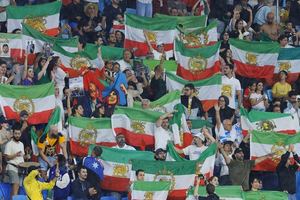
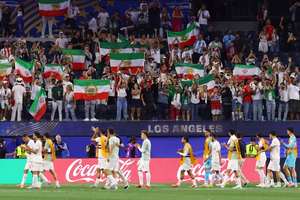
Iranian fans during the Team Melli match against New Zealand at Los Angeles Stadium, Inglewood, California, on June 15, 2026

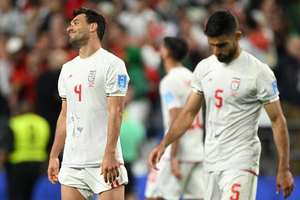
Iran's national team exited the World Cup in the group stage, yet two Iranians may still command Sunday's final: an exiled violinist on the halftime stage and the referee tipped for the whistle. Neither arrives representing the Islamic Republic.

When the whistle blows for halftime at MetLife Stadium on Sunday, July 19, football's first-ever World Cup halftime show will begin – an 11-minute spectacle curated by Coldplay's Chris Martin, headlined by Madonna, Shakira, Justin Bieber, BTS and Burna Boy, with conductor Gustavo Dudamel and the PS22 Chorus.

And if the past week's frenzy in the Persian-speaking world is to be believed, somewhere in that lineup will stand Bijan Mortazavi, the Iranian violin virtuoso, with his famous white violin.

The story first surfaced through Persian-language music outlets, which reported that FIFA had selected Mortazavi for a live performance during the final's interval.

Skepticism followed almost immediately. FIFA's official announcements listed the marquee names but made no mention of the 68-year-old Iranian, and veteran music journalists would only call it the closest rumor to reality.

Then Mortazavi himself all but ended the debate. He posted a photograph alongside Chris Martin and Gustavo Dudamel, describing an "excellent and fruitful" first rehearsal with the New York Philharmonic, an image Coldplay fan accounts quickly carried around the world.

FIFA has yet to publish his name. But artists do not rehearse with the show's musical director and its conductor by accident, and reports say he will perform one of his instrumental works, with a solo passage on the white violin that has been his visual signature for three decades.

The news set Persian social media alight. Posts declaring "It's confirmed" drew hundreds of thousands of views within hours, and the pride quickly turned pointed.

Users contrasted an artist whose albums are still denied release permits inside Iran standing on the world's biggest stage, while the officials who ban his music watch from a country at war and in crisis. Others noted the bitter symmetry: Iran's team went home; Iran's music reached the final.

That symmetry stings because the national team's bond with its own public has frayed. After the side's elimination – three draws in three games – many Iranians described the failure less as a sporting loss than as a verdict on players seen as siding with the government during the nationwide protests, with defender Ramin Rezaeian's name recurring most often.

  • Iran’s lion-and-sun flag at center of FIFA row before 2026 World Cup

    Iran’s lion-and-sun flag at center of FIFA row before 2026 World Cup

  • Iran bows out of World Cup amid flags, Pride and protest

    Iran bows out of World Cup amid flags, Pride and protest

Unlike past tournaments, the matches drew few public gatherings inside Iran, and some openly welcomed the exit. When Shoja Khalilzadeh's late goal against Egypt was ruled offside by five centimeters, users linked it mockingly to his past pledge to dedicate goals to the Supreme Leader.

For millions of Iranians, representation has quietly migrated from the federation's badge to individuals in the diaspora, and Mortazavi embodies that shift.

Born in Sari in 1957, he began violin at three, trained in Tehran under masters including Parviz Yahaghi, and – in a fitting twist – played as a youth goalkeeper, part of Iran's junior national football setup, before music won out.

He left Iran after high school, studied in England, moved to the United States in 1979 and settled in California, where his blend of Persian melody and Western pop made him the best-known Iranian violinist in the world. In 1994 he became the first Iranian artist to headline Los Angeles' Greek Theatre.

  • Can Iranians cheer Team Melli without cheering the state?

    Can Iranians cheer Team Melli without cheering the state?

  • Citizens tell Iran football team it lost the public long ago

    Citizens tell Iran football team it lost the public long ago

He may not be the only Iranian at MetLife on Sunday. Alireza Faghani – born in Kashmar and the first man to referee at four men's World Cups – is widely reported as FIFA's leading candidate to take charge of the final itself.

Faghani left Iran for Australia in 2019, a move linked to his support for the protest movement, and now officiates under the Australian flag. State media in Tehran has attacked him – even censoring footage of him receiving his 2025 Club World Cup final medal – while many Iranians claim him proudly as their own.

No World Cup has ever had a halftime show. Shakira's "Waka Waka" in 2010, Ricky Martin's "La Copa de la Vida" in 1998 and Jung Kook's Qatar 2022 performance all belonged to the ceremonies, never to the final's interval. 

Which means that if Mortazavi walks out on Sunday, he will not just be the first Iranian on a World Cup final stage. He will be part of the first such stage ever built.

  • Thumbs up: Iranian football referee's pose alongside Trump stokes ire

    Thumbs up: Iranian football referee's pose alongside Trump stokes ire

If FIFA's final appointments hold, Sunday could end with an Iranian raising a violin at halftime and another raising the whistle for kickoff – two men who left, on the one stage the country's team could not reach.

Millions inside Iran will likely watch them the way they watch most things now: on any screen but state television's.

Telegram channels turn women’s private photos into tools of extortion across Iran

Jul 14, 2026, 14:57 GMT+1
100%

Private photos of women posted on Telegram channels in Iran's western Lorestan province have triggered widespread fear and prompted more than 200 complaints, with authorities saying three people accused of running the channels have been arrested on Tuesday.

“The scope of this case is extensive, and more than 200 complaints have so far been filed with the provincial prosecutor's office,” Lorestan prosecutor Ali Hassanvand said.

Three of the channels' main operators had been identified and detained, Hassanvand said.

Police in Lorestan had announced a day earlier that Telegram channels were publishing citizens' private photos with "immoral" content to attract followers and, in some cases, extorting victims and their families by demanding cryptocurrency payments.

Fears over women's safety

Shargh newspaper reported that the channels had attracted tens of thousands of members by publishing women's photos alongside insults, defamatory content and extortion demands.

  • Beyond the hijab: discrimination against women pervades Iranian law

    Beyond the hijab: discrimination against women pervades Iranian law

The newspaper cited social media posts alleging that five girls had died by suicide and another had been killed by her father after their images were circulated. Those reports have not been officially confirmed.

An unnamed women's rights activist in Lorestan told Shargh the incident had heightened fears among women in the province.

“You have to live here and know the families to understand the consequences,” the activist said. “Some women in our province have become so frightened that they have removed their photos even from domestic and foreign messaging apps. Publishing a woman's picture in our city could cost her life.”

Women's rights advocates have long warned that weak legal protections and the persistence of so-called honor killings leave women exposed to violence in parts of Iran.

100%

Extortion spreads beyond Lorestan

Saeed Sozangar, a network security instructor, told Shargh the channels appeared to be motivated by extortion and revenge, warning that some victims' lives could be at risk.

He said similar networks had also been identified in the cities of Malayer, Bukan and Kermanshah, suggesting the activity extended beyond Lorestan.

  • At least 110 women killed in Iran over past year, rights group says

    At least 110 women killed in Iran over past year, rights group says

A citizen who contacted Iran International said the channels copied publicly available profile pictures of women without mandatory hijab from social media accounts and reposted them with highly insulting captions. The source added that anonymous submission links encouraged users to send photos of other women.

Similar channels, according to the citizen, have also appeared in Khuzestan, Kermanshah, Hamedan and Tehran provinces.