• العربية
  • فارسی
Brand
  • Iran Insight
  • Politics
  • Economy
  • Analysis
  • Special Report
  • Opinion
  • Podcast
  • Iran Insight
  • Politics
  • Economy
  • Analysis
  • Special Report
  • Opinion
  • Podcast
  • Theme
  • Language
    • العربية
    • فارسی
  • Iran Insight
  • Politics
  • Economy
  • Analysis
  • Special Report
  • Opinion
  • Podcast
All rights reserved for Volant Media UK Limited
volant media logo
PODCAST

Why US strikes are moving deeper into southern Iran

Negar Mojtahedi
Negar Mojtahedi

Iran International

Jul 18, 2026, 03:49 GMT+1
President Donald Trump observes a demonstration with U.S. Army 10th Mountain Division troops, an attack helicopter and artillery, as he visits Fort Drum, New York, in this 2018 file photo

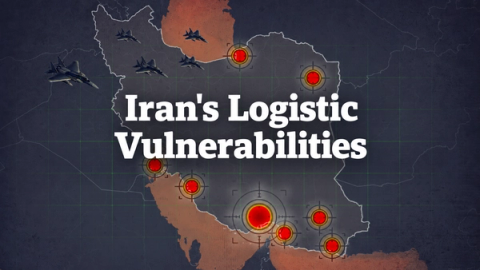
The latest US strikes on southern Iran may offer the clearest indication yet of how Washington's campaign around the Strait of Hormuz is evolving from retaliation to the systematic degradation of Iran's military infrastructure.

American forces have been striking targets along Iran’s Persian Gulf coast for almost a week.

Iranian media reported that eight people were killed as bridges, communications infrastructure and a maritime surveillance tower were hit across Hormozgan and Sistan-Baluchistan provinces.

Rebeccah Heinrichs, a senior fellow at the Hudson Institute, says the concentration of attacks along Iran’s southern coastline—and increasingly farther inland—suggests the United States is moving beyond retaliation against individual strikes and targeting the infrastructure that allows Tehran to sustain and eventually rebuild the military capabilities underpinning its operations around the Strait of Hormuz.

“Up until very recently, the United States was primarily focused on doing retaliatory strikes exclusively along the coastline of Iran,” Heinrichs told Eye for Iran. . “

‘Protecting maritime traffic’

The attacks came after President Donald Trump warned that bridges and power infrastructure could become targets if Tehran refused to return to negotiations.

Iranian military officials, meanwhile, said the conflict would “spread to new areas” if US operations continued.

“I suspect that the United States has had these targets on their list,” she said. “President Trump has gone back to Admiral Cooper and said, ‘What else do we need to hit?’”

The likely focus, she added, was Iran’s ability to replenish the military capabilities it uses around the Strait of Hormuz.

Among the sites struck was a maritime surveillance tower in Chabahar. Iran described it as a facility monitoring commercial shipping, while US Central Command said it formed part of an IRGC network used to track vessels transiting the strait and coordinate attacks against them.

CENTCOM said destroying the tower would directly reduce the Revolutionary Guards’ ability to threaten maritime traffic.

The targeting of bridges in Hormozgan province also points to an expanding set of military objectives.

Heinrichs said Washington had sought to limit civilian harm, but argued that some dual-use infrastructure could become a legitimate military target if it substantially enabled IRGC operations.

“There are some targets that the United States could legitimately hit,” she said. “They may create some harm, of course, to the civilian population, but they also primarily enable and facilitate the IRGC to repress their people and to continue their war effort.”

A limited ground role?

The widening campaign has also fuelled speculation about whether Washington could eventually deploy ground forces inside Iran.

Heinrichs dismissed the prospect of a large-scale invasion, saying any deployment would more likely involve special operations forces tasked with securing or removing nuclear material rather than occupying territory.

“If President Trump were to go with any contingency that would entail some element of US ground forces, it would almost certainly be because the United States wants to remove any nuclear material that is still inside Iran,” she said.

For now, however, Heinrichs believes the campaign remains centred on the Strait of Hormuz.

The initial phase significantly weakened Iran’s military leadership and its capacity to project power beyond its borders, she said. Washington has now moved into what she described as “the battle over the Strait of Hormuz.”

Taken together, the latest strikes point to a campaign that is evolving beyond retaliation. Rather than simply responding to Iranian attacks, Washington appears increasingly focused on preventing Tehran from regenerating the military infrastructure underpinning its operations around the Strait of Hormuz.

Most Viewed

Why US strikes are moving deeper into southern Iran
1
PODCAST

Why US strikes are moving deeper into southern Iran

2
INSIGHT

Iran hardliners blamed as cost of US strikes mounts

3

UK outlaws support for IRGC under new national security powers

4

Tehran billboard hints Trump is the 'next one' after Graham's death

5

Tehran demands media limit strike damage coverage as US widens war

Banner
Banner
Banner

Spotlight

  • Iran hardliners blamed as cost of US strikes mounts
    INSIGHT

    Iran hardliners blamed as cost of US strikes mounts

  • Vance, Ghalibaf back diplomacy as US, Iran strikes continue
    INSIGHT

    Vance, Ghalibaf back diplomacy as US, Iran strikes continue

  • Leaked presidency report shows how Iran plans to manage record public anger
    INSIGHT

    Leaked presidency report shows how Iran plans to manage record public anger

  • Wave of Iran plots drove UK action against IRGC, terror law tsar says
    EXCLUSIVE

    Wave of Iran plots drove UK action against IRGC, terror law tsar says

  • Two Iranians at the World Cup final – and neither represents the Islamic Republic

    Two Iranians at the World Cup final – and neither represents the Islamic Republic

•
•
•

More Stories

UK outlaws support for IRGC under new national security powers

Jul 17, 2026, 12:02 GMT+1
100%

Britain formally designated Iran’s Islamic Revolutionary Guard Corps as a threat to national security on Friday, making public support for the organization or assistance to it punishable by up to 14 years in prison.

The IRGC was designated alongside the Iran-linked Islamic Movement of Companions of the Right and Russia’s GRU Volunteer Corps, the first organizations placed under powers created by the National Security (State Threats) Act 2026.

The designations took effect on July 17 after Parliament approved an order submitted by Home Secretary Shabana Mahmood four days earlier.

  •  UK says support for Iran's IRGC outlawed under new state threats law

    UK says support for Iran's IRGC outlawed under new state threats law

Under the new law, it is now a criminal offence to express support for the groups, including by glorifying or encouraging activity that threatens the safety of the United Kingdom.

Providing assistance or accepting money or another material benefit from a designated organization can also lead to prosecution. Those convicted could face prison sentences of up to 14 years.

People who commit sabotage, arson or other hostile acts on behalf of the groups could be charged separately under the National Security Act 2023 and face life imprisonment.

The designation is distinct from banning an organization under Britain’s terrorism legislation. It is designed specifically to address hostile activity linked to foreign governments, including espionage, political interference, intimidation, sabotage and physical attacks.

  • Wave of Iran plots drove UK action against IRGC, terror law tsar says

    Wave of Iran plots drove UK action against IRGC, terror law tsar says

The government says the new framework will make it easier to prosecute people working for foreign organizations because prosecutors will not always have to establish a direct connection between an individual act and a foreign government.

Outgoing Prime Minister Keir Starmer said when the measures were announced that Britain would not be allowed to become “a playground for states who want to spread fear, division and violence on our streets.”

“We have already taken tough action against the Iranian regime and those linked to it, and against Russian operatives and networks targeting our country,” he said. “These new powers will make it easier to prosecute and lock up anyone carrying out their dirty work here in Britain.”

The IRGC is one of the Islamic Republic’s most powerful military and political institutions. Its overseas Quds Force oversees Tehran’s relationships with allied armed groups and has been accused by British authorities of directing operations against dissidents, journalists and Jewish or Israeli-linked targets in Europe.

The British government said the Islamic Movement of Companions of the Right had claimed responsibility for seven attacks this year against Persian-language media and locations linked to Jewish and Israeli communities in Britain.

Those incidents included an antisemitic arson attack that damaged four ambulances belonging to the Jewish emergency service Hatzola in Golders Green, north London, on March 23.

British authorities said Quds Force members were behind the organization and had “almost certainly” directed its attacks across Europe. The allegations have not been tested in court.

The government has also cited at least 20 potentially lethal Iranian-backed plots identified by the domestic intelligence agency MI5 over a one-year period.

“Iran and Russia are using proxies and thugs to do their dirty work on our shores,” Mahmood said when she announced the intended designations. “We will find you, and we will lock you up.”

The third designated organization, the GRU Volunteer Corps, is described by Britain as a network controlled by Russian military intelligence that recruits people online to carry out arson, sabotage, harassment and other hostile activity.

Foreign Secretary Yvette Cooper said the use of proxies by Iran and Russia to conduct operations on British soil was “reprehensible.”

The designation marks a significant escalation in Britain’s response to the IRGC. Rather than banning the organization as a terrorist group, the government has created a separate route to prosecute support, recruitment, financing and operational assistance linked to hostile foreign-state activity.

Australia declines timeline for delayed Iranian skilled visa cases

Jul 17, 2026, 09:01 GMT+1
•
Alireza Mohebbi
100%
An image published on social media shows Iranian applicants outside the Australian embassy in Tehran.

Australia declined to provide a timeline for resolving delayed skilled visa applications from Iranian nationals and did not directly answer whether Iranian applicants face additional security or identity checks compared with other nationalities.

“All visa applicants, regardless of nationality, must meet the eligibility requirements set out in Australia’s migration legislation before a visa can be granted,” a Department of Home Affairs spokesperson told Iran International on Friday.

The processing times, the spokesperson said, depend on factors including application complexity, completeness, demand, ministerial priorities and migration planning levels.

“Processing times can also be affected by application processing requirements, including verification of applicant information ... and the time taken to receive clearances from external agencies, particularly for health, character and national security assessments,” the spokesperson said.

The department did not directly address the question on whether Iranian citizens undergo broader or different security screening than applicants from other countries.

The response came after images emerged of protests by Iranian applicants outside the Australian embassy in Tehran, alongside letters, official correspondence with the Department of Home Affairs, documents related to pending cases and messages from applicants inside and outside Australia.

100%
Image published on social media shows Iranian applicants outside the Australian embassy in Tehran.

Documents and correspondence show some applications have remained unresolved for more than two years, and in some cases more than 30 months, despite applicants completing key requirements including skills assessments, medical examinations and biometric checks.

Protests and travel restrictions

The department also did not provide a specific explanation for delays affecting Iranian skilled visa applicants who were already inside Australia when they lodged their applications.

Officials said some applicants have faced conflict-related obstacles inside Iran, including internet disruptions that hinder access to biometric appointments, medical examinations and documents such as police certificates and passports. The extensions, the department said, may be granted in such cases but applicants must still satisfy all legal visa requirements.

In recent months, groups of Iranian applicants have staged two protests outside the Australian embassy in Tehran, calling for greater transparency over prolonged processing delays and requesting decisions on their applications.

The department also referred to temporary travel restrictions affecting holders of Australian Visitor visas linked to Iranian passports. It said the Arrival Control Determination, introduced on March 26, 2026, remains in force for six months and prevents affected visa holders outside Australia from entering the country.

Any extension beyond the initial six-month period, according to the department, would require a new legal determination and a finding that continuing the restrictions serves Australia’s national interest. The government has said the measure is intended to provide time to assess conditions in Iran and associated migration risks, leaving the future of both the travel restrictions and many pending visa applications uncert

Bridges and military sites hit as US-Iran fighting intensifies in southern Iran

Jul 17, 2026, 08:26 GMT+1
100%
US personnel stand aboard the M/T Wen Yao during a verification boarding in the Gulf of Oman on July 16, in an image released by US Central Command.

The sixth day of fighting since the collapse of the Iran-US ceasefire ended with five bridges hit in southern Iran, US forces turning back three commercial vessels near the Strait of Hormuz, and President Donald Trump declaring that Washington was “winning big in Iran.”

The developments unfolded along three parallel fronts: Iranian attacks on US facilities across the Persian Gulf, continued US strikes inside Iran and an intensifying contest over control of the Strait of Hormuz.

Iran said it launched drone attacks on US facilities in Kuwait and Bahrain early Friday, after a sixth consecutive night of American strikes on Iranian military targets.

Iran’s army said it targeted US force deployment and logistics centers in Kuwait, Iran’s IRGC-affiliated Fars news agency reported.

In Bahrain, the army said it struck US helicopters and reconnaissance aircraft at Sakhir Air Base. Sirens sounded in the country for the second time on Friday, according to the Interior Ministry.

In Qatar, several booms were heard after the government sent a second security alert to mobile phones, Reuters reported. The Defense Ministry said Qatar was intercepting several air attacks, while the Interior Ministry said a child was injured by shrapnel from an intercepted missile.

US Central Command has not confirmed the reported attacks in Kuwait or Bahrain.

At the same time, US forces continued striking targets in southern Iran.

CENTCOM said US fighter jets, drones and warships used precision munitions to hit dozens of military targets, including coastal surveillance and air defense sites, logistics infrastructure and maritime capabilities near Bandar Abbas and on Qeshm Island.

Hamshahri, a newspaper owned by Tehran Municipality, reported that five bridges in Hormozgan province were hit in the latest wave of attacks.

The death toll from strikes on bridges in Bandar Khamir rose to seven, Iran’s IRGC-affiliated Tasnim news agency reported. Iranian media also reported damage to a power substation on Kish Island and attacks on transport infrastructure in Bandar Abbas and Bandar Khamir.

The reports could not be independently verified.

Control over Strait of Hormuz

As the two sides exchanged attacks on land, their confrontation also deepened at sea.

CENTCOM said US forces redirected three commercial vessels attempting to breach the naval blockade against Iran, disabled another that failed to comply with orders and boarded the M/T Wen Yao in the Gulf of Oman to verify compliance.

US Defense Secretary Pete Hegseth shared an image from the boarding and wrote that Iran “does not control” the Strait of Hormuz.

CENTCOM said the strait and surrounding waters remained free and open, except for vessels attempting to violate what it called the US “steel wall” blockade.

Iran’s Revolutionary Guards, however, said Tehran remained in full control of the waterway and would prevent oil and gas exports through it for as long as US attacks continued.

Trump cast the military and maritime operations as signs of US momentum.

“You will see the fruits of that labor very, very shortly,” he said after declaring that Washington was “winning big in Iran.”

The possibility of a wider regional conflict emerged more clearly on Friday, when the Revolutionary Guards said they had struck a US special operations command center in Syria’s al-Tanf region, destroying a radar system and several helicopters and killing US personnel.

US Central Command has not confirmed the report.

UK police charge man over Iran-linked foreign intelligence offence

Jul 17, 2026, 08:19 GMT+1
100%
A Metropolitan Police officer stands on duty in Westminster, London, Britain.

British police charged a 39-year-old man on Friday with assisting a foreign intelligence service in a case linked to Iran, following an investigation by Counter Terrorism Policing.

Police said Vahid Aberi, of Liverpool, was charged under Section 3 of the National Security Act 2023 with assisting a foreign intelligence service. They said the foreign state to which the investigation relates is Iran.

Aberi was arrested on Wednesday in the Birmingham area and taken to a West Midlands police station. Officers also carried out searches at addresses in Birmingham and Liverpool.

He was remanded in custody and was due to appear before Westminster Magistrates' Court on Friday.

  •  UK says support for Iran's IRGC outlawed under new state threats law

    UK says support for Iran's IRGC outlawed under new state threats law

Police say no direct threat identified

Commander Helen Flanagan, head of Counter Terrorism Policing London, said the investigation reflected what she described as a sustained increase in national security casework.

"We have seen a significant and sustained increase in the tempo of our work in national security investigations in recent years," she said in a statement.

She said police had "intervened to disrupt suspected activity linked to foreign intelligence services" but declined to comment further on the allegations because criminal proceedings had begun.

Flanagan added that police had not identified any direct threat to the public, nor any threat to a community or individual, in connection with the investigation.

The charges were authorised by the Crown Prosecution Service.

  • Romanian men get combined 20 years over Iran International journalist attack

    Romanian men get combined 20 years over Iran International journalist attack

Scrutiny of alleged Iran-linked activity

The case comes as Britain has intensified efforts to counter what it says is hostile activity linked to Iran.

Earlier this month, a London court sentenced two Romanian nationals to a combined 20 years in prison for stabbing Iran International journalist Pouria Zeraati outside his home in Wimbledon in 2024. The judge accepted the prosecution's case that the attack was carried out on behalf of the Iranian state. Iran has previously rejected accusations that it has been involved in attacks or plots in Britain.

Separately, the British government announced this week that it intends to designate Iran's Revolutionary Guards under new state threats legislation. If approved by parliament, supporting or assisting the group under the new legal framework could carry a prison sentence of up to 14 years.

The government has said the designation is separate from proscription under Britain's terrorism laws and is intended to address foreign state-backed activity, including espionage, interference, sabotage and physical attacks.

British authorities have repeatedly said they have disrupted a number of alleged Iran-linked plots in recent years. Iran has previously dismissed British allegations that it has directed hostile activity in the UK.

Rising daycare fees push Iranian families to rely on grandparents

Jul 16, 2026, 14:29 GMT+1
100%
File photo shows caregivers supervise children at a daycare center in Iran.

Rising daycare fees and mounting economic pressure are prompting more Iranian families to forgo kindergarten enrollment and rely on grandparents for childcare, raising concerns among sociologists about the long-term impact on children's social development.

The Hamshahri newspaper reported on Thursday that falling birth rates, coupled with soaring daycare costs, have reduced demand for kindergartens and preschool centers across the country.

Monthly daycare fees vary widely across Tehran, according to the report. In middle-income neighborhoods, tuition ranges from 50 million ($25) to 80 million rials (over $40), while families in wealthier districts pay between 250 million (around $130) and 300 million rials ($160).

The average monthly income in Iran is estimated at $150–$200, depending on fluctuations in the open-market exchange rate. By comparison, the minimum monthly cost of basic living expenses, including food and housing, is estimated at $385–$400, leaving many households unable to meet essential needs.

  • Only three Tehran schools meet basic safety standards, official warns

    Only three Tehran schools meet basic safety standards, official warns

Daycare operators in affluent areas attributed the higher fees to rising rents and staff wages, saying the increased costs have discouraged many parents from enrolling their children.

More than 60% of kindergarten operating costs are spent on personnel under Iran's labor law, Hamidreza Sheikholeslam, head of the National Organization for Early Childhood Education, said in June.

Sheikholeslam said staffing costs, the number of teachers and children, operating hours, rent, facilities and equipment, and other operating expenses all influence tuition fees.

100%
File photo shows an empty daycare playroom in Iran.

Many families, the report said, have responded to rising childcare costs and broader financial pressures by turning to lower-cost alternatives, most commonly asking grandparents to care for young children.

Experts warn of social consequences

Sociologists quoted by Hamshahri said removing daycare from household spending is not only an economic decision but could become a broader social challenge.

They argued that young children benefit from interacting with their peers in educational settings and warned that replacing daycare with care by relatives could undermine their social development.

  • Child labor rises as poverty deepens in Iran

    Child labor rises as poverty deepens in Iran

The concerns follow earlier reports highlighting the growing burden on extended families. In May, the Shargh newspaper reported that prolonged preschool closures following the recent war left many working parents scrambling for childcare, with some relying on grandparents and relatives.

Another report published by Haft-e Sobh daily in February warned that rising daycare costs had effectively turned many grandparents into full-time caregivers, raising concerns about the physical and psychological burden on older adults as well as differences in parenting approaches across generations.