• العربية
  • فارسی
Brand
  • Iran Insight
  • Politics
  • Economy
  • Analysis
  • Special Report
  • Opinion
  • Podcast
  • Iran Insight
  • Politics
  • Economy
  • Analysis
  • Special Report
  • Opinion
  • Podcast
  • Theme
  • Language
    • العربية
    • فارسی
  • Iran Insight
  • Politics
  • Economy
  • Analysis
  • Special Report
  • Opinion
  • Podcast
All rights reserved for Volant Media UK Limited
volant media logo
INSIGHT

Tehran torn between war and deal as Khamenei is buried

Behrouz Turani
Behrouz Turani

Iran International

Jul 10, 2026, 03:30 GMT+1
A woman holds a portrait of Ali Khamenei near graffiti supporting his successor Mojtaba Khamenei during funeral ceremonies in Tehran, July 7, 2026

Iran’s media landscape is sharply split over the latest escalation, with moderate outlets warning that ordinary Iranians will pay the price and hardline voices calling for forceful retaliation against US interests and regional energy routes.

The debate comes as Ali Khamenei was buried in Mashhad after a week of funeral ceremonies, marking the symbolic beginning of a new political era for the Islamic Republic.

One headline on a leading Tehran news site captured the anxiety: “People will have to pay the price of uncalculated slogans.”

Other outlets warned of “the very high possibility of a full-fledged war,” soaring exchange rates and gold prices, and a country trapped in “a war between wars.”

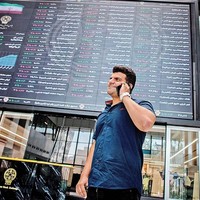
Coverage on pro-reform Fararu and other outlets reflected growing concern over security and the economy, as Iranians rushed to convert savings into gold and dollars in a volatile market reacting to every comment from Tehran or Washington.

‘Incation worse than compromise’

Economist Mehdi Pazouki warned in an interview with Fararu that continued uncertainty would deepen the damage to Iran’s economy and people’s livelihoods.

“Every single day earlier that the agreement is signed is in the country’s interest,” he said, urging Tehran to finalize an agreement with Washington and pursue deeper reforms.

“The cost of inaction is far greater than the cost of compromise,” he added.

Despite renewed military escalation, Reuters cited a US official on Thursday as saying Washington remained committed to finding a resolution with Iran and that technical talks were continuing.

The pro-Pezeshkian daily Etemad voiced concern over the growing pressure on Iran’s state institutions.

While acknowledging what it called “the necessity of a calculated defense to deter unilateral American bullying,” the paper warned that a wider regional war could overwhelm civilian systems.

It pointed to casualties reported by the Health Ministry—at least 14 killed and 78 wounded—and damage to transport corridors in Khuzestan and Golestan provinces.

Etemad urged the Supreme National Security Council to ensure that any military response does not close backchannel or third-party diplomatic efforts, arguing that preventing a broader crisis must remain the government’s priority.

Sharq warned that US strikes on bridges and the Tehran-Mashhad railway marked a shift toward what it described as efforts to isolate Iran’s domestic markets.

Sharq said Iran’s ability to withstand pressure depends not only on military power but also economic durability, urging the government to use global concerns over energy instability to push for mediation.

‘Sacrilegious and criminal’

Hardline outlets presented the same developments as evidence that Iran should abandon restraint and expand its response.

Conservative factions framed the latest strikes as an opportunity to enforce Iranian control over the Strait of Hormuz.

Kayhan, whose chief is customarily appointed by the Supreme Leader, described the targeting of the Tehran-Mashhad railway corridor ahead of the late Supreme Leader’s burial as a “sacrilegious and criminal act of desperation.”

It argued that Supreme Leader, Mojtaba Khamenei now had a mandate for defiance, warning that any attack on Iran’s infrastructure would render “the entire maritime transit apparatus of the Persian Gulf completely non-operational.”

In a commentary headlined “Shattering the Logistics of Aggression,” the municipal daily Hamshahri praised Iranian strikes on US targets, including Patriot missile infrastructure in Kuwait and fuel depots in Bahrain.

Hamshahri argued that by expanding attacks to include host nations, Tehran was weakening what it described as the American security umbrella in the region.

The paper warned that disruption of Iran’s transport networks would be answered with paralysis of the regional energy supply chain.

Most Viewed

Finnish grocery brand drawn into Khamenei funeral spectacle in Iraq
1

Finnish grocery brand drawn into Khamenei funeral spectacle in Iraq

2

Trump says Iran memorandum is over, calls Tehran leaders 'scums'

3

Khamenei funeral lays bare deep political divisions in Iran

4
ANALYSIS

Hamas gives up Gaza government, but not Iran ties

5
INSIGHT

New strikes expose Tehran’s battle between diplomacy and revenge

Banner
Banner
Banner

Spotlight

  • Tehran torn between war and deal as Khamenei is buried
    INSIGHT

    Tehran torn between war and deal as Khamenei is buried

  • A remote bridge shows how US-Iran war is expanding
    ANALYSIS

    A remote bridge shows how US-Iran war is expanding

  • US strikes, Hormuz clashes push Iran deal to brink
    INSIGHT

    US strikes, Hormuz clashes push Iran deal to brink

  • Trump's rhetoric U-turn leaves Iranians between dread, hope and memes
    VOICES FROM IRAN

    Trump's rhetoric U-turn leaves Iranians between dread, hope and memes

  • We live through decisions we don't make
    TEHRAN INSIDER

    We live through decisions we don't make

  • Hamas gives up Gaza government, but not Iran ties
    ANALYSIS

    Hamas gives up Gaza government, but not Iran ties

•
•
•

More Stories

A remote bridge shows how US-Iran war is expanding

Jul 10, 2026, 01:28 GMT+1
•
Umud Shokri
100%
An image related by Iranian media purportedly showing the damage to the Aq Takeh Khan bridge in northeastern Iran, July 9, 2026

A reported US strike on a railway bridge in northern Iran has drawn attention to a lesser-known front in the widening conflict: the battle over the transport corridors linking Iran to Central Asia, Russia and China.

Iranian state media and the IRGC said cruise missiles attributed to US forces struck the Aq Tekeh Khan railway bridge near Aqqala in Golestan province early Wednesday, damaging the Gorgan–Incheh Borun railway line.

Washington has not confirmed the strike, and the claim has not been independently verified.

The bridge is part of Iran’s northern rail connectivity with Turkmenistan and wider Central Asian networks, making it relevant to military logistics, civilian trade, sanctions resilience and alternative transit routes.

Its targeting, if confirmed, would suggest that transport nodes are becoming strategic assets in the widening conflict, where pressure on dual-use infrastructure can disrupt connectivity without focusing only on conventional military sites.

Why the bridge matters

The Aq Tekeh Khan Bridge lies on the Gorgan–Incheh Borun railway, a key segment linking Iran’s interior to its northeastern border with Turkmenistan.

Incheh Borun serves as an important rail crossing and dry port in Golestan province, connecting southward into Iran’s national railway network and northward into the Kazakhstan–Turkmenistan–Iran corridor inaugurated in 2014.

The corridor, stretching from Kazakhstan through Turkmenistan into Iran, provides an overland connection between Iran and Central Asia, with links to Russia, China and wider Eurasian markets.

It also complements the International North-South Transport Corridor (INSTC) and overlaps with China’s Belt and Road Initiative ambitions by offering alternatives to vulnerable maritime routes.

For Iran, this northern railway artery is strategically valuable because it expands access to resource-rich Central Asian states and supports transit flows less exposed to Gulf chokepoints.

Freight trains from China have also moved along related corridors, underscoring the route’s place in broader East-West Eurasian trade.

Battle of transport networks

If confirmed, targeting railway infrastructure would suggest a broadening of strike objectives beyond traditional military facilities.

Railway bridges such as Aq Tekeh Khan are dual-use assets: they support civilian commerce, military mobility, sanctions-evading trade and rapid wartime logistics.

In modern conflicts, from Ukraine to the Middle East, infrastructure warfare has become increasingly central. Railways, ports, pipelines, bridges and power grids serve as chokepoints where military pressure and economic disruption intersect.

A damaged bridge can force rerouting, increase transport costs, delay supply chains and create bottlenecks whose effects exceed the physical scale of the strike itself.

For Iran, already facing pressure on southern ports, energy infrastructure and Gulf-facing trade routes, disruption to northern rail connectivity would test the resilience of its overland alternatives.

Targeting sanctions lifelines?

Damage to the Aq Tekeh Khan Bridge and associated rail services could limit Iran’s ability to move goods, fuel, equipment and strategic materials along its northern corridor.

Iranian authorities said the damage was repaired within a day and rail traffic had resumed, a claim that could not be independently verified. Even if temporary, the disruption highlights the importance of repair speed and infrastructure resilience in a conflict increasingly focused on transport networks.

Northern rail connectivity becomes especially important when southern ports or the Strait of Hormuz face military or political pressure. In such conditions, Iran’s ability to maintain alternative land routes through Central Asia, the Caspian region and Russia becomes part of its wider strategic depth.

Iran has spent years developing land corridors with Central Asia, Russia, China and the Caspian region to reduce dependence on maritime routes exposed to sanctions, surveillance and possible interdiction.

The Kazakhstan–Turkmenistan–Iran railway and INSTC-linked routes are central to that strategy, enabling transit revenues, regional trade and access to markets where sanctions enforcement may be less direct.

Strikes on such infrastructure could therefore be intended to erode Iran’s sanctions resilience by raising operational risks for partners and discouraging use of Iranian corridors during periods of conflict.

Regional consequences

The reported strike also carries potential implications for Turkmenistan, Kazakhstan and other Central Asian states.

These countries have invested in diversified transit routes through Iran to reach Gulf ports and global markets while reducing dependence on Russian or Chinese-controlled corridors.

If Iranian routes are viewed as vulnerable during conflict, governments and commercial operators may reassess their reliability.

For China, disruption to Iranian-linked corridors adds uncertainty to longer supply chains connecting East Asia, Central Asia and the Middle East.

For Russia, which has deepened logistical ties with Tehran, damage to Iranian transport infrastructure could complicate southern access routes.

The reported strike highlights how infrastructure has become part of modern strategic competition.

For Iran, the incident reinforces the challenge of protecting trade networks built to withstand sanctions and pressure on maritime access. It also shows that corridor politics, from the BRI to the INSTC, are increasingly shaped not only by commerce but by military risks.

Whether this leads to hardened infrastructure, shifts in regional trade planning or renewed pressure for de-escalation remains uncertain, but the bridge’s symbolic and practical importance now extends well beyond Golestan province.

US strikes, Hormuz clashes push Iran deal to brink

Jul 10, 2026, 01:21 GMT+1
100%

The fragile memorandum between Tehran and Washington is facing its biggest test yet after two days of US strikes on targets along Iran’s southern coast and Iranian attacks on commercial shipping near the Strait of Hormuz raised fears of a return to full-scale war.

Iranian officials have threatened severe retaliation, while analysts warn that disputes over sanctions, maritime routes and the future of the agreement could push both sides into another major confrontation.

Mohsen Jalilvand, a professor of international relations, said the continued US military presence in the region and Tehran's insistence on controlling shipping through the Strait of Hormuz have significantly increased the risk of war.

"When both sides continue to stand by their positions, and there are no signs of retreat, it is only natural that the likelihood of a broader confrontation increases," he told the news website Fararu.

Read the full article here.

Ali Khamenei buried in Mashhad after days-long funeral

Jul 9, 2026, 23:41 GMT+1
100%
A picture of Ali Khamenei in the Iraqi city of Najaf where a funeral was held for him ahead of his burial in

Iran’s slain supreme leader, Ali Khamenei, was buried Thursday evening at the shrine of the eighth Shia imam in the northeastern city of Mashhad after days of funeral processions in Iran and Iraq, while his successor, Mojtaba Khamenei, remained absent from all public ceremonies.

Before the burial, Khamenei’s eldest son, Mostafa, led prayers over his father’s body.

Islamic Republic loyalists filled the streets and courtyards around the shrine as Khamenei’s coffin was brought through Mashhad, his hometown, at the end of a week of funeral ceremonies.

Mourners dressed in black waved Iranian flags, carried portraits of Khamenei and held placards with revolutionary slogans. Some in the crowd chanted against the United States and called for revenge on US President Donald Trump.

Videos from Khamenei’s final state-organized funeral in Mashhad on Thursday night showed loyalists of the Islamic Republic chanting “death to America” and “death to Israel” and demanding revenge for the slain supreme leader’s killing.

Iranian state media also reported plans for a symbolic public execution and burning of a Trump-like effigy in Mashhad’s Ahmadabad Square, with footage showing the effigy mounted on a truck

The burial came as renewed hostilities between Iran and the United States deepened uncertainty in the country, with Tehran presenting the funeral turnout as a show of public support and revolutionary resolve.

Khamenei’s remains, along with those of four family members killed with him, had earlier been taken through Tehran, Qom and the Iraqi shrine cities of Najaf and Karbala.

The burial marks the end of Khamenei’s 37-year rule, a period his supporters portray as one of resistance against foreign pressure, while critics point to years of repression, economic hardship and repeated waves of anti-government protests with the latest resulting in tens of thousands of protestors killed by state security forces during January’s nationwide uprising.

US strikes, Hormuz clashes push Iran deal to brink

Jul 9, 2026, 21:43 GMT+1
•
Maryam Sinaiee
100%
A US fighter jet on board a US warship in this CENTCOM handout

The fragile memorandum between Tehran and Washington is facing its biggest test yet after two days of US strikes on targets along Iran’s southern coast and Iranian attacks on commercial shipping near the Strait of Hormuz raised fears of a return to full-scale war.

Iranian officials have threatened severe retaliation, while analysts warn that disputes over sanctions, maritime routes and the future of the agreement could push both sides into another major confrontation.

Mohsen Jalilvand, a professor of international relations, said the continued US military presence in the region and Tehran's insistence on controlling shipping through the Strait of Hormuz have significantly increased the risk of war.

"When both sides continue to stand by their positions, and there are no signs of retreat, it is only natural that the likelihood of a broader confrontation increases," he told the news website Fararu.

"Overall, I see the outlook moving less toward an agreement and more toward escalating tensions and a greater possibility of a major conflict."

‘Abandon MoU’

Senior officials and hardline media reacted angrily after the latest US attacks, which the Iranian Health Ministry said killed 14 people and injured 78 others. Several senior figures demanded tougher retaliation or called for formally abandoning the memorandum with Washington.

Parliament Speaker and Iran's chief negotiator Mohammad-Bagher Ghalibaf wrote on X that "America still has not learned that bullying and breaking its commitments no longer come without a cost."

"Let me be clear: if you strike, you will be struck. Stop struggling in vain—you will only sink deeper. The Strait of Hormuz will be reopened only under Iranian arrangements, not American threats."

Alaeddin Boroujerdi, a member of parliament's National Security and Foreign Policy Committee, told state broadcaster IRIB that Iran's response would be "more severe" and warned that continued confrontation would ultimately harm the United States.

The hardline Kayhan newspaper argued that repeated US attacks, the revocation of Iran's oil export waiver and what it described as violations of the agreed shipping arrangements in Hormuz had rendered the agreement meaningless.

"When Iran's armed forces tighten their grip on the world's energy artery in the Strait of Hormuz and play the Bab al-Mandab card, the West's economic lifeline will be cut, and Trump will beg for a ceasefire more desperately than ever," the newspaper wrote.

Kayhan urged the Foreign Ministry to formally declare the memorandum void so the armed forces could "settle Trump's account once and for all."

Tensions with Oman

The latest escalation followed Iranian attacks on vessels using a route south of the Strait of Hormuz, on the Omani side, while under US naval escort rather than the shipping corridor designated by Tehran.

Deputy Foreign Minister Kazem Gharibabadi accused Washington of pressuring Oman to open an alternative southern shipping lane despite what he said was an agreement that Iran would regulate maritime traffic during the memorandum's 60-day implementation period.

"From our perspective, America's insistence on creating a parallel route disrupted implementation of the memorandum," Gharibabadi said. “The Revolutionary Guards' response was entirely lawful and legitimate."

Iran's Khatam al-Anbiya Central Headquarters warned that any party providing military support for US attacks on Iran would constitute a legitimate target.

“The only safe shipping route through the Strait of Hormuz is the one designated by the Islamic Republic," the statement said.

Oman, however, told the International Maritime Organization on Thursday that it opposed the imposition of transit charges on ships using the strait and reiterated that "the right of transit passage through straits used for international navigation is guaranteed under international law."

Gharibabadi said Iranian officials had informed Omani and Qatari authorities—and indirectly Washington—that the southern route was "completely illegal," violated Clause 5 of the memorandum and "must be closed."

Public exhaustion

Although Tehran and most major Iranian cities have not been targeted since the ceasefire, apart from areas along the southern coastline, the renewed fighting has had an immediate economic impact.

The Iranian rial weakened sharply on Thursday, with the US dollar rising from about 1.6 million rials to more than 1.8 million rials. According to the Central Bank of Iran's latest figures, point-to-point inflation has reached nearly 83 percent.

Despite growing fears of renewed conflict, many Iranians appear more subdued than during previous crises after experiencing two wars within a year. Online discussions suggest widespread exhaustion and emotional numbness rather than panic.

"Is it just my algorithm, or does nobody actually care that the war has started again?" one X user wrote.

Another user, Sina, wrote: "Do we really have to hear fighter jets and explosions over Tehran before we believe the war has resumed?"

A third user commented: "Iranian cities were bombed last night. That means we're officially at war. But our minds are so exhausted, and we've suffered so much, that we're collectively choosing denial."

A reader commenting on Khabar Online wrote: "I just came to say we're exhausted. By God, we're exhausted. How much more tension and pressure can we take? Are you really going to bring another war down on our heads?”

Iran uses Khamenei funeral in Iraq to claim regional reach

Jul 9, 2026, 11:28 GMT+1
•
Maryam Sinaiee
100%
Clerics wait for the arrival of the coffin of Iran's late Supreme Leader Ali Khamenei at the Imam Ali Shrine in Najaf, Iraq, July 8, 2026.

The Islamic Republic sought to turn Ali Khamenei’s funeral ceremonies in Iraq into a regional show of loyalty, using processions in Najaf and Karbala to suggest that his authority reached beyond Iran even as Tehran’s allied network faces growing pressure.

After funeral processions in Tehran and Qom, the coffins of Khamenei and several members of his family, who were killed in the February 28 US-Israeli attack, were taken on Tuesday to Najaf, home to the shrine of Imam Ali, one of the holiest sites in Shiite Islam.

They were transferred on Wednesday to Karbala, home to the shrine of Imam Hussein. Both cities carry deep religious symbolism for Shiites, especially in narratives of martyrdom, sacrifice and political defiance.

Political analyst Iman Aghayari told Iran International that the Islamic Republic was using the ceremonies to present Khamenei’s influence as extending beyond Iran’s borders.

He said Tehran also wanted to signal to Western governments that its influence in countries hosting allied armed groups “is not confined to those proxy forces, but is rooted among the people of those countries as well.”

A funeral staged across Shiite centers

A number of current and former Iraqi officials, including Prime Minister Ali al-Zaidi, along with Shiite and Sunni political, military and religious figures, welcomed the funeral delegation at Najaf airport.

The delegation was led by Khamenei’s eldest son, Mostafa Khamenei, and accompanied by President Masoud Pezeshkian, who cut short his visit and returned to Tehran early Wednesday following renewed US military strikes.

The Iraqi government declared Wednesday a public holiday to facilitate attendance and organized transportation for mourners traveling to Najaf and Karbala.

Iranian state media, citing Iraqi officials and the Popular Mobilization Forces, said more than two million people attended the ceremony in Najaf, while participation in Karbala was reported to be more than double that number.

The figures could not be independently verified.

100%
People attend a funeral procession for Iran's slain Supreme Leader Ali Khamenei during a funeral procession in Karbala, Iraq, July 9, 2026.

A claimed display of strength

Supporters of the Islamic Republic portrayed the ceremonies as proof of regional solidarity behind the so-called Axis of Resistance, Tehran’s network of allied governments, militias and political movements across the Middle East.

Esmail Qaani, commander of the IRGC’s Quds Force, said the funeral procession in Iraq would “make the red line of vengeance more prominent” and “further strengthen the united resolve of the Iraqi and Iranian peoples against American conspiracies.”

Defa Press, a news agency affiliated with Iran’s armed forces, described the ceremonies as “a transnational display of the Axis of Resistance’s power and confidence,” saying they showed political unity between Iran and Iraq.

Writing for the IRGC-affiliated Fars News Agency, political commentator Aghil Emami argued that the funeral proved the two nations’ loyalty to “shared ideals and the transnational leadership of the Islamic Revolution.”

100%
People attend a funeral procession for Iran's late Supreme Leader Ali Khamenei at the Imam Ali Shrine in Najaf, Iraq, July 8, 2026.

Religious symbolism and political messaging

Holding funeral ceremonies in Iraq – home to one of the world’s largest Shiite populations after Iran – carried both religious and political value for the Islamic Republic.

Iranian state media and some Iraqi Shiite politicians and outlets framed the processions through the language of Imam Hussein’s martyrdom, presenting Shiites as a unified political community confronting what they called “American arrogance” across the region.

For Tehran, the symbolism was especially important after Khamenei’s death and amid uncertainty over the future of its regional network.

The ceremonies allowed Iranian officials and supporters to link Khamenei’s legacy to the shrines of Najaf and Karbala, while also trying to reinforce the religious legitimacy of the Islamic Republic and of his successor.

The hardline X account Rah-e Deylami argued that Iraq, once Iran’s wartime enemy in the 1980s, had become “one of the pillars of the Axis of Resistance thanks to the blood of the martyred leader” and his policies.

It also pointed to mourners carrying photographs of Mojtaba Khamenei, saying the funeral had become “a ceremony of allegiance to his worthy successor” and that “Khamenei’s Iraqi followers have come to declare that they will continue this path.”

Such claims are difficult to measure against actual public sentiment in Iraq, where attitudes toward Iran and Iran-backed groups have long been mixed and politically contested.