Iran summons British ambassador after London calls in senior diplomat
Iran summoned the British ambassador in Tehran on Thursday, two days after Britain called in Iran's most senior diplomat in London following the conviction of two Romanian men over the stabbing of an Iran International journalist.
Iran's foreign ministry said it handed the ambassador a protest note rejecting what it called "groundless and false" British statements that Tehran had sought to carry out security-related activities in the United Kingdom.
Britain summoned Iran's chargé d'affaires on Tuesday after George Stana and Nandito Badea were sentenced to 12 years and eight years in prison, respectively, for their role in the 2024 attack on Pouria Zeraati, an Iranian-British journalist who works for Iran International.
Zeraati was stabbed three times in the leg near his home in southwest London in March 2024.
British prosecutors said the two Romanian nationals were acting as proxies for the Iranian government. They had pleaded not guilty to wounding with intent but were convicted at London's Woolwich Crown Court.
Judge links attack to Iranian state
The British Foreign Office said the judge had concluded that the attack was carried out "in the interests of, and on behalf of, the Iranian state."
According to a police statement, the judge ruled that the "foreign power condition" under Britain's National Security Act was met in Stana's case because of "extensive planning and his lengthy involvement in the plot", indicating that he knew, or at least should have known, of the connection to the Iranian state.
The police statement said the condition was not met in Badea's case because he was not aware of the Iran connection as the reason for the attack.
Tehran rejects British move
Iran's foreign ministry rejected Britain's statements as "groundless and false" and said they amounted to an attempt to divert attention from Britain's own conduct.
Britain's Foreign Office said the case followed "a longstanding pattern of hostile activity by the Iranian intelligence services on UK soil" and said Iran must stop such activity immediately. Iran's embassy in London has rejected what it called "unfounded, politically motivated and hostile allegations."
Iran's foreign ministry also called on Britain to stop hosting media outlets that Tehran said were "funded and directed by the Israeli regime." It said Britain should end such activity "as soon as possible."
Visitors at a book fair in Tehran pass an installation showing the faces of children killed in the Minab school attack in the early hours of US-Israeli strikes on Iran
The strangest feeling in Tehran today is not fear or even despair. It is the sense that the fate of our country is being decided everywhere except by the people who live in it.
We watch as others decide whether there will be war or peace, confrontation or diplomacy, isolation or some grand bargain. We analyse statements, follow rumours and wait for signals from politicians and commanders.
But somewhere along the way, ordinary Iranians seem to have disappeared from the conversation.
Earlier this week, the familiar cycle began again: attacks near the Strait of Hormuz, US retaliation and then President Trump declaring that the agreement meant to end the crisis was dead. The same Iranian leaders he had called reasonable enough to negotiate with were suddenly “crazy” and “dishonourable.”
Watching from Tehran, it is difficult to know what we are supposed to make of it all. We can only wait to find out what happens next.
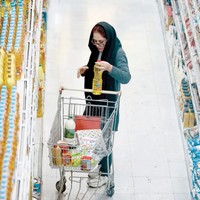
The city itself has returned to something resembling normal life. It is not the Tehran of the war, when streets emptied and every sound carried a threat. Cafes and restaurants are open again. People go to work, sit in traffic, pick up and put back fruit they can no longer afford—and, of course, curse those they blame for making life so miserable.
But beneath that return of noise is a strange numbness.
Before the war, some politicians at least spoke about listening to society. Few people believed them, but the language existed: reconciliation, reform, understanding people’s anger. Now even the performance has disappeared.
The same state that can negotiate with those it describes as enemies seems unable or unwilling to begin any meaningful conversation with its own society.
The contrast was visible after Khamenei’s death. The state showed how quickly and effectively it could mobilise when it wanted to: streets filled, ceremonies organised, a national moment of mourning created.
But many families whose children were killed during the January protests were denied something far simpler: the ability to grieve freely, to hold funerals without pressure, to mourn without fear.
It all might have been easier if the outside world offered a different answer. But it rarely does.
President Trump says his goal is denuclearisation. That’s it. Governments obviously pursue interests, not justice. But for those of us living with the consequences, it is another reminder that Iran is often discussed as a problem to solve rather than a society of millions trying to breathe.
So it can feel as if there is no one to trust and no one truly listening. The collective anger has turned into something closer to disbelief and despair. Maybe that is why Tehran looks the way it does now. Not defeated, not dead, not even quiet. Just tired.
People continue because they have no choice. They already protested in 2022. They protested again in January. They risked prison, bullets and death. There is no obvious next step that has not already been tried.
So life goes on, but with very few plans. Nobody knows what tomorrow looks like.
We have not given up on our country. We’re just coping with the realisation that everyone else seems to have a say in its future before we do.
A senior Hamas official meets Iran's parliament speaker Mohammad Bagher Ghalibaf on the sidelines of the funeral ceremonies for slain supreme leader Ali Khamenei, July 4, 2026
Hamas says it is stepping away from governing Gaza. But is it actually giving up power or turning away from its longtime backers in Tehran?
The group’s announcement that it is dissolving the governing body that administered Gaza for nearly two decades has been presented as a significant political concession under a US-backed roadmap for the enclave’s future.
But analysts who spoke to Iran International say the move is largely cosmetic, leaving Hamas’s military structure intact and doing little to alter its long-standing relationship with Iran.
Rather than abandoning Hamas, Iran has simply shifted its priorities, they argue, placing Hezbollah and Lebanon ahead of Gaza while quietly maintaining ties with the group.
"It's not even symbolic, it's a lie," said Beni Sabti, an Iran researcher at the Institute for National Security Studies (INSS). "The real thing is not even the disarmament. The ideology is still there."
The announcement dissolves Hamas’s civilian governing body, but leaves unanswered whether the group is willing to surrender its weapons and relinquish control over Gaza’s security apparatus.
For Sabti, that omission is the entire story.
"Iran is acting behind the curtains, also for Hamas," he said.
Recent developments suggest the relationship remains active despite Tehran’s muted public rhetoric.
Before the Iran-US memorandum was signed, a Hamas military spokesman said Iranian officials had pledged to help secure a ceasefire in Gaza.
Hamas representatives also traveled to Tehran for Ali Khamenei’s funeral, where they met senior Iranian officials, including Parliament Speaker Mohammad Bagher Ghalibaf.
To Sabti, those contacts suggest Tehran has not changed its long-term strategy. Instead, it has temporarily reordered its priorities.
"Hezbollah is the most important," he said, arguing Iran has historically never abandoned its proxy groups.
The timing of Hamas’s announcement also reflects mounting pressure on the group.
It comes amid a US-backed political process for Gaza’s future, sustained pressure from Egypt and Qatar, renewed political competition from Palestinian Authority President Mahmoud Abbas and growing anti-Hamas protests inside Gaza itself.
Dalia Ziada, a Middle East analyst with ISGAP, argues Hamas’s announcement was designed to respond to those pressures without making the one concession demanded by Israel and much of the international community.
"They were forced to say something, not to do something," she said.
According to Ziada, Hamas has not agreed to disarm, dismantle its military wing or remove the network of loyalists embedded throughout Gaza’s civilian institutions.
"The international community is dealing with Hamas as a political entity," she said. "But no. This is a terrorist militia."
Ziada believes Tehran’s current restraint reflects pragmatism rather than a strategic break.
"Hamas is not profitable anymore," she said, arguing the group has become more of a liability than an asset following Israel’s campaign against its leadership. "If Hamas survives this situation... of course Iran will snap back."
Former Israeli intelligence official Avi Melamed agrees Hamas’s announcement should not be mistaken for a genuine transfer of power.
"I don't think that anyone really takes it seriously," he said.
Melamed argues Iran views Hamas primarily as a strategic instrument rather than an ideological partner.
"The relationship has been always clear. Hamas is a useful servant for the Iranian regime."
For Tehran, he says, Hezbollah remains the crown jewel of its regional network, while Hamas occupies a lower place in what he describes as the "food chain."
"Hamas and Islamic Jihad know their place in the food chain," Melamed said.
That hierarchy helps explain why Lebanon featured prominently in the Iran-US memorandum while Gaza did not.
The announcement may ease diplomatic pressure and create space for negotiations over Gaza’s future. But without disarmament, analysts argue, it changes little about the balance of power on the ground.
Hamas may be stepping away from civilian administration. Its military structure remains intact. And despite Tehran’s public silence, few expect Iran’s relationship with Hamas to disappear.
Twelve protesters in Isfahan face imminent execution after Iran’s Supreme Court upheld death sentences in a case built around the alleged killing of four Basij members, a lawyer familiar with the case told Iran International.
The case stems from protests on January 8 at Alikhani Square in Isfahan, where authorities said four Basij members were killed.
According to the lawyer, 59 people were initially arrested after the incident.
The lawyer said 23 of those detained were sentenced to between five and 10 years in prison, even though they were not accused of directly taking part in the deaths and appeared to have been added to the case to strengthen the prosecution’s broader narrative.
Twelve others were sentenced to death.
The lawyer said the Supreme Court upheld the death sentences on July 5 and the case has now been sent to the sentence enforcement branch of the Isfahan Revolutionary Court, raising fears that the executions could be carried out soon.
The prosecutor in the case is Mohammad Nakhjavan, according to the information received. The judges are Mohammad Barati-Dorcheh and Mohammad Tavakoli, also known as Vakili.
Tavakoli previously served as a judge in the “Khaneh Isfahan” (Isfahan House) case, another protest-linked case in Isfahan that ended with the execution of Saleh Mirhashemi, Majid Kazemi and Saeed Yaghoubi in May 2023.
The lawyer said the defendants in the Alikhani Square case were denied access to independent lawyers during the trial stage and were represented by court-appointed attorneys.
The lawyer also said the court blocked defense lawyers from accessing the full case files.
The 12 protesters sentenced to death are mostly very young men. Three were born in 2007 and were around 17 or 18 at the time of the January 2026 protests. Several others were born between 2004 and 2006, and one is an Afghan national. Two brothers are among those facing execution.
The judiciary has not publicly responded to the allegations about denial of access to independent counsel and case files.
The case fits a pattern seen in several protest-linked capital cases in Iran, where the reported deaths of security personnel or pro-government forces have been followed by broad arrests, charges carrying the death penalty and claims by families, lawyers and rights groups that defendants were denied fair trial guarantees.
Rights groups have warned that Iran’s use of death sentences in protest cases has become a tool of intimidation, particularly after periods of unrest, with executions used to send a message far beyond the individual defendants.
Amnesty International said in February that at least 30 people were facing the death penalty over alleged offences linked to the January 2026 protests, including eight people sentenced to death after expedited and “grossly unfair” trials.
The Center for Human Rights in Iran said in April that at least 22 political prisoners had been executed in six weeks, including 10 people detained during the January protests, in cases it said were marked by secretive proceedings, torture, forced confessions and lack of due process.
Human Rights Watch said the January unrest was met with mass killings, arbitrary arrests and severe communications restrictions, with thousands of protesters and bystanders believed to have been killed after protests escalated on January 8.
The new Isfahan case raises the number of protest-linked prisoners facing imminent execution and adds to fears that Iran’s judiciary is accelerating capital punishment in cases tied to the January uprising.
A screen grab from Hassan Nemazee’s interview with Iran International
Hassan Nemazee inherited one of Iran’s best-known charitable legacies, lost his family’s fortune to the 1979 revolution and later found a new cause inside a US prison: justice reform.
A businessman, philanthropist and Democratic fundraiser, Nemazee told Iran International that the revolution, the confiscation of his family’s assets and his years in prison reshaped how he thinks about Iran, freedom and justice.
In Shiraz, the name Nemazee Hospital remains more than the name of a medical center. It is a reminder of a philanthropic legacy built decades before the Islamic Republic, when Nemazee’s father used his fortune to create institutions that served the public.
“My father made his fortune outside of Iran and he repatriated that fortune to Iran,” Nemazee said. “He built the first modern hospital, the first modern nursing school, the first modern orphanage, and the first modern medical school.”
He said his father also built the country’s first piped water system, both to provide clean water for the hospital and to help finance free medical care for local residents.
“What he did was unique,” Nemazee said. “Most Iranians of that time and afterwards made their money in Iran and took it out. Philanthropy was an unknown process at that time.”
A legacy in Shiraz
Born in Washington, DC, and educated in the United States, Nemazee returned to Iran at 22 after his father’s death. He said he saw no other choice.
“There was no choice for me to do anything other than return to Iran when my father passed away,” he said.
Continuing his father’s work in Shiraz, he added, gave him “the greatest satisfaction” of his life.
Nemazee became chairman of the board of Nemazee Hospital, the nursing school and the Shiraz Waterworks, and also oversaw the family’s broader charitable institutions through Bonyad Iran.
At the same time, he entered business during what he described as Iran’s “golden years” of rapid economic growth before the revolution. He invested in insurance, banking and real estate, including joint ventures with major American institutions.
That life ended abruptly when he left Iran in December 1978 for what he expected to be a short business trip to the United States.
“I left Iran on what I thought would be a two-week business trip,” Nemazee said. “The Shah left in January of 1979. Khomeini returned in February of 1979. And in March, the Iranian government nationalized 51 families. We were one of the 51 families.”
He said the confiscation covered nearly everything he owned in Iran.
“Everything that I owned in Iran, my house, my possessions, horses, dogs, bank accounts, land, factories, everything was confiscated,” he said.
Nemazee said many people initially believed the revolution would target only the Shah and those closest to him, but its reach quickly widened.
“The revolutionaries had an agenda, and the agenda was to completely eradicate a certain level of people within the Iranian society,” he said.
The entrance of Nemazee Hospital in Shiraz
Politics after exile
After returning to the United States, Nemazee rebuilt his life in business, philanthropy and politics.
He became a prominent Democratic fundraiser and developed close ties with Bill and Hillary Clinton, as well as other senior Democrats including John Kerry, Al Gore, Joe Biden and Barack Obama.
He said his entry into American politics was partly shaped by the lesson he drew from Iran.
“I decided that I didn’t want to make the same mistake that I believe I had made in Iran, and that was abdicating any political responsibility for the country in which I lived,” he said.
President Bill Clinton later nominated Nemazee to serve as US ambassador to Argentina, but the nomination was blocked in the Senate. Nemazee summed up the reason in one word: “Politics.”
Years later, his life took another dramatic turn.
Nemazee pleaded guilty in the United States to inflating assets in loan documents, but said the banks did not lose money and that his punishment was excessive.
“The truth of the matter is that those assets were inflated,” he said. “The truth of the matter is as well that the banks never lost any money.”
He was sentenced to 12 years in prison and entered prison on August 27, 2010. He served nine years before being released in 2019 under the First Step Act, a criminal justice reform law signed by President Donald Trump.
A longtime Democrat, Nemazee said he remains grateful to Trump for signing the law that allowed his early release.
“You have to give credit where credit is due,” he said. “It is ironic but true that Donald Trump was responsible for my coming home early.”
A prison sentence becomes a cause
Nemazee said prison changed the course of his life. While incarcerated, he read 2,651 books, wrote two books, taught GED classes and mentored hundreds of fellow inmates.
He said a friend had advised him before prison not to see the sentence only as lost time, but as “a gift of time” to write, teach, exercise, read and mentor others.
After his release, Nemazee turned much of his attention to criminal justice reform and helping former prisoners rebuild their lives.
He now serves on the board of the Fortune Society, a New York-based organization that supports former inmates with housing, education, employment and reintegration.
Nemazee said the United States has failed by imprisoning too many people for too long.
“The United States has 5% of the world’s population, yet it has 25% of the world’s prisoners,” he said. “That’s a statistic that is not only morally wrong, it’s economically unfeasible.”
He said many former prisoners face basic barriers after release, including difficulty opening bank accounts, finding housing and securing jobs.
“How can you begin to put your life back together if you don’t have the fundamental rights that every other human being has?” he said.
Despite the upheavals in his own life, Nemazee said he still hopes to return one day to Shiraz.
“I would love to be able to return to Shiraz. I would like to return to Iran,” he said. “It’s been 46 long years. It’s time for Iran to be able to turn the page and for all Iranians to have the freedoms that they so richly deserve.”
Asked what he would have done if the revolution had not happened, Nemazee said he would probably have continued the life he was building in December 1978: running businesses while expanding the hospital, nursing school, vocational schools and orphanages linked to his family’s legacy.
“Iran is a country of magnificent talent and opportunities,” he said. “It’s unfortunate that it’s taken this moment in history during our lifetimes to not allow the people of Iran to progress in the ways that they deserve to progress.”
His is a story of loss and reinvention, but also of Iran itself: what was built, what was lost, and what future the country may still choose.
US President Donald Trump said on Wednesday a memorandum of understanding with Iran aimed at ending the conflict was over, describing Iran's leaders as "liars and scums" and saying he no longer wanted to negotiate with them.
"As far as I'm concerned, it's over," Trump told reporters in Ankara before a NATO summit.
"I don't want to deal with them anymore. They're scum... they're sick people, they're led by sick people, and they're vicious, violent people."
Trump said he would allow US negotiators to continue talks if they wished but signaled he no longer believed diplomacy would succeed.
"They want to negotiate. They're good people... but they have to come back to me," he said. "As far as I'm concerned, it's just a waste of time dealing with them, they're liars."
Last month, Washington and Tehran had signed a memorandum of understanding setting out a framework to end the conflict, including steps toward a ceasefire and renewed talks over Iran's nuclear program.
Trump defended US strikes carried out overnight, saying they came after Iran launched missiles at ships a day earlier.
"We hit them very hard last night, very hard," he said. "I told them every time you hit, we hit."
He said Iran targeted commercial shipping after Washington had allowed time for funeral ceremonies for supreme leader Ali Khamenei following earlier fighting.
"We said, 'Go and do your funeral stuff,' and instead of that they start shooting rockets at ships yesterday."
Trump repeated that Iran could never be allowed to obtain a nuclear weapon.
"They can't have a nuclear weapon," he said. "We're going to denuke it. We're not going to let them."
He said Iran killed US troops through proxy attacks and blamed former Iranian military commander Qassem Soleimani for supplying roadside bombs that killed American soldiers.
"They've killed thousands and thousands of our soldiers," Trump said. "They've killed hundreds of thousands of innocent people."
Trump also said Iran had sought to kill him.
"I saw things this morning. I'm on every single one of their lists," he said. "So far I guess I've been lucky."
He described Iran's leaders as "evil, sick people" and compared the country to "cancer."
"You've got to cut out cancer early."
'They killed 54,000 people'
Trump also said Iran's authorities killed thousands of protesters during anti-establishment demonstrations.
"They killed 54,000 people as of now that were protesting," he said.
"When people say, 'How come they haven't taken over?' They can't take over because they're dead."
He also added that Iran repeatedly breaks agreements.
"We make a deal... everyone's agreed, no nuclear weapon... they go outside, talk to the press, they say we never even talked about it," Trump said.
"There's something wrong with them. They're cuckoo."
Criticizes NATO allies
Trump also renewed criticism of NATO, saying several allies refused to support the United States during the conflict with Iran.
He said Britain, Germany and France declined requests to assist Washington during the fighting.
"They said, 'We don't want to help you now, but we'll help you when the war is over,'" Trump said.
He said the United States had been "treated unfairly" by NATO and paid "billions and billions of dollars too much" for the alliance's defense.
Trump also repeated criticism of Spain, calling it "a terrible partner in NATO" and saying he wanted to end US trade with the country.
The remarks came after the United States carried out a new wave of strikes on military targets in Iran in response to attacks on commercial shipping in the Strait of Hormuz. Iran later launched missile and drone attacks on US military sites in Bahrain and Kuwait, further eroding the memorandum signed earlier this week to halt the fighting.