• العربية
  • فارسی
BrandBrand
  • Iran Insight
  • Politics
  • Economy
  • Analysis
  • Special Report
  • Opinion
  • Podcast
  • Live TV
  • Iran Insight
  • Politics
  • Economy
  • Analysis
  • Special Report
  • Opinion
  • Podcast
  • Live TV
  • Theme
  • Language
    • العربية
    • فارسی
  • Iran Insight
  • Politics
  • Economy
  • Analysis
  • Special Report
  • Opinion
  • Podcast
  • Live TV
All rights reserved for Volant Media UK Limited
volant media logo
VOICES FROM IRAN

Iran's costly farewell for supreme leader draws backlash

Saba Heidarkhani
Saba Heidarkhani

Iran International

Jul 6, 2026, 14:01 GMT+1
Supreme Leader Ali Khamenei's funeral procession in Tehran on July 5, 2026.

The Islamic Republic's state funeral for Ali Khamenei has drawn criticism over its attendance, the extensive public resources devoted to the event and what many Iranians described as an unsuccessful attempt to project political strength, following the burial ceremony.

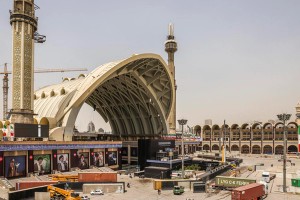
Images and videos from Tehran's prayer ground complex prompted widespread discussion among Iranians, with many saying attendance fell short despite an extensive state mobilization effort.

Messages sent to Iran International argued authorities relied on government employees, security forces, organized transportation, free meals and public holidays to maximize turnout, yet still failed to fill the designated venue.

For many, the relatively sparse gathering represented more than a logistical disappointment. They viewed it as evidence of a widening gap between the establishment and society, arguing the Islamic Republic could no longer convincingly stage large public displays of popular support.

Several citizens contrasted the official portrayal of the funeral as a demonstration of national unity with what they described as a subdued public response after nearly five decades of clerical rule.

Symbolism meets economic hardship

Many reactions focused on the economic contrast between the scale of the ceremony and the financial pressures facing ordinary Iranians.

Iranians questioned the use of public resources for an elaborate state funeral at a time when inflation, declining purchasing power and rising living costs continue to dominate daily life.

Several described households that have reduced or eliminated meat and other protein from their diets, arguing that spending on ceremonial events appeared disconnected from the country's economic realities.

Others said successive crises – including war, sanctions, regional isolation and economic decline – had not altered what they viewed as the system's priority of funding state institutions and political messaging ahead of public welfare.

Contradictory political messaging

Another frequently discussed issue involved videos circulating on social media showing participants symbolically pelting an image of US President Donald Trump with stones during the funeral events.

100%
Supreme Leader Ali Khamenei's funeral procession in Tehran on July 5, 2026.

Some citizens highlighted what they saw as a contradiction between anti-US demonstrations and expectations that Iranian and US officials could resume negotiations in the near future.

They argued that confrontational domestic messaging has repeatedly existed alongside diplomatic engagement, reflecting what they described as two parallel tracks in the Islamic Republic's foreign policy.

Questions over the cost

No official estimate has been released for the total cost of the funeral and burial ceremonies.

Nevertheless, many messages attempted to estimate the overall expenditure by citing security deployments, temporary infrastructure, transportation, accommodation, food distribution, ceremonial preparations and construction work carried out along the procession route.

Some suggested the total bill could approach $800 million, although no official evidence has been presented to support that figure.

The estimate prompted comparisons with recent funerals for other world leaders.

Several people pointed to the funeral of Elizabeth II in 2022, which the British government estimated cost around £162 million – roughly $200 million at contemporary exchange rates. The event included days of public lying-in-state, thousands of police and military personnel, extensive international participation and worldwide television coverage.

Others referred to the funerals of Omani Sultan Qaboos bin Said and Kuwaiti Emir Sabah Al-Ahmad Al-Jaber Al-Sabah, both of which followed Islamic tradition with relatively swift burial ceremonies. Although no comprehensive official costs were released, participants noted those events appeared considerably more modest despite taking place in wealthy Persian Gulf monarchies.

Debate over public priorities

Many also drew comparisons with the Islamic Republic's longstanding criticism of the lavish celebrations marking the 2,500th anniversary of the Persian Emire under the Pahlavi dynasty.

They questioned why authorities that had long condemned those celebrations as wasteful were now directing substantial public funds toward a funeral ceremony during a period of economic hardship.

100%
Supreme Leader Ali Khamenei's funeral procession in Tehran on July 5, 2026.

Several messages further said that the system has never devoted comparable financial and organizational resources to national celebrations such as Nowruz, Yalda Night or Chaharshanbe Suri, despite their broad cultural significance.

For many, the debate surrounding the funeral extended beyond attendance or cost. They said the ceremony reflected broader concerns about state priorities, economic management and political legitimacy.

Rather than reinforcing the image of a confident political system, citizens argued the funeral underscored the difficulties facing a regime confronting deep economic challenges and declining public trust, even as it sought to present the burial of its longtime leader as a demonstration of continuity and authority.

Most Viewed

Iran speaker says government overstepped on anti-terror finance rules
1

Iran speaker says government overstepped on anti-terror finance rules

2

Iran shipped jet fuel to Myanmar despite US blockade - Reuters

3

Armed suspect arrested over alleged plot to kill ex-minister, reformists say

4
ONE-ON-ONE

Iran’s rulers face a reckoning with their own people, former US envoy says

5
ANALYSIS

Iran touts economic resilience while households struggle to afford basics

Banner
Banner
Banner
Banner
Banner

Spotlight

  • Iran cultivated Houthis for years before opening new war front, Yemeni insider says
    PODCAST

    Iran cultivated Houthis for years before opening new war front, Yemeni insider says

  • After the killings, Iran turned on the families of the dead

    After the killings, Iran turned on the families of the dead

  • Iran’s rulers face a reckoning with their own people, former US envoy says
    ONE-ON-ONE

    Iran’s rulers face a reckoning with their own people, former US envoy says

  • Iran speaker says government overstepped on anti-terror finance rules

    Iran speaker says government overstepped on anti-terror finance rules

  • Ignore prices and economy is fine, Iran ex-minister says

    Ignore prices and economy is fine, Iran ex-minister says

  • Iran police killed brothers celebrating Khamenei’s death, source says

    Iran police killed brothers celebrating Khamenei’s death, source says

  • Nowhere else to go? The puzzle behind Iran’s stock rally
    INSIGHT

    Nowhere else to go? The puzzle behind Iran’s stock rally

  • Funeral expenses deepen anger over Ali Khamenei's week-long burial

    Funeral expenses deepen anger over Ali Khamenei's week-long burial

  • Behind the funeral: Khamenei’s coffin becomes stage for Iran’s wounded power

    Behind the funeral: Khamenei’s coffin becomes stage for Iran’s wounded power

•
•
•

More Stories

Khamenei to end Eje'i’s judiciary tenure after one term

Jun 30, 2026, 20:48 GMT+1
100%

Iran's Supreme Leader Mojtaba Khamenei plans to remove judiciary chief Gholam-Hossein Mohseni Eje'i at the end of his first five-year term and appoint a new figure to lead the judiciary, sources familiar with the matter told Iran International.

Sources inside Iran told Iran International that Khamenei does not intend to extend Eje'i’s term for another five years, breaking with a practice followed for nearly four decades in which judiciary chiefs have usually served two consecutive five-year terms.

The sources, who spoke on condition of anonymity, said the decision is not aimed at judicial reform but is part of a broader reshaping of power after the recent war.

They said the new supreme leader is seeking to replace key officials in major state institutions with figures more closely aligned with him.

Eje'i’s expected removal could mark one of the first major signs of Khamenei’s effort to rebuild control over the Islamic Republic’s judicial, security and political apparatus after the transfer of power.

Hardliners step up pressure on Eje'i

The decision comes amid growing criticism of Eje'i from hardline figures after the names of Supreme National Security Council members who voted in favor of a memorandum of understanding with the United States were disclosed.

Critics say Eje'i’s vote was at odds with Khamenei’s stated position, after the leader said in a letter that he had, in principle, held a different view on the memorandum of understanding.

Signs of dissatisfaction with Eje'i’s five-year record have also appeared in recent official and semi-official commentary close to the power structure.

In a message marking Judiciary Week, Khamenei did not clearly endorse Eje'i’s continuation in office. Instead, he addressed the judiciary as an institution and called for the “actualization” of demands previously made by former Supreme Leader Ali Khamenei.

The message repeated calls for the implementation of the judicial transformation document, fighting corruption inside the judiciary, reviving public rights, blocking the use of recommendations and lobbying, and improving communication with the public.

Eje'i seeks to defend his record

A day later, Eje'i published a letter to Khamenei in deferential language, defending the judiciary’s performance and pledging to continue the path of “judicial transformation.”

“I and all components of the judiciary consider ourselves obliged to carry out Your Excellency’s binding commands precisely, swiftly and without any reduction,” Eje'i wrote.

Media outlets and figures close to the establishment criticized Eje'i for not publishing such a letter before Khamenei’s message. Some also described the new leader’s renewed emphasis on his father’s demands as a negative assessment of Eje'i’s record, arguing that their repetition showed the judiciary had failed to deliver practical results under him.

Rival factions inside the establishment have also stepped up attacks on Eje'i, accusing him of distancing himself from the leadership’s demands.

Media close to Parliament Speaker Mohammad Bagher Ghalibaf and President Masoud Pezeshkian have described the attacks as part of an effort by the faction aligned with Saeed Jalili, a member of Iran’s Supreme National Security Council, and the Paydari Front to create divisions among senior officials and weaken the postwar political path.

Media close to the judiciary and Eje'i’s supporters have sought to portray his five-year record as successful, citing reduced imprisonment, electronic court proceedings, shorter trials, anti-corruption efforts and public outreach.

Rights groups point to record of repression

Human rights groups and activists say Eje'i is not a reformist figure but a long-standing part of the Islamic Republic’s repressive judicial and security apparatus.

They point to his record in the Special Clerical Court, the Ministry of Intelligence, and later as first deputy and head of the judiciary, saying his tenure has been marked by continued heavy sentences against protesters, political activists, journalists, prisoners of conscience and minorities.

Rights advocates say the judiciary under Eje'i has continued to act as the legal and executive arm of security institutions in political and security cases.

They also argue that replacing Eje'i alone would not bring meaningful change without structural reform, an end to security interference in judicial cases, guaranteed access to lawyers, a halt to forced confessions, the annulment of political verdicts and respect for fair trial standards.

Tehran’s 'Kneel Before Iran' statue rekindles debate over nationalist turn

Nov 9, 2025, 22:00 GMT+0
•
Maryam Sinaiee
100%
An illustration showing an ancient Iranian soldier and a Revolutionary Guard member holding a weapon together, displayed during a November 7 ceremony in Tehran where a statue of pre-Islamic Persian King Shapur I was unveiled.

Tehran’s unveiling of a towering statue depicting the Roman Emperor Valerian kneeling before pre-Islamic Persian King Shapur I has renewed criticism of the Islamic Republic’s appeal to nationalist sentiment following the June war with Israel.

For over forty years, the theocracy purged ancient Persian history from schoolbooks, replacing it with post-Islamic narratives. But after the 12-day conflict with Israel, officials have turned to the distant pre-Islamic past to rally a divided society.

From murals of ancient kings and soldiers to patriotic songs added to Shi’ite mourning ceremonies performed before Supreme Leader Ali Khamenei, Tehran now embraces imagery once deemed heretical by its own revolutionary ethos.

100%
The statue unveiled in Tehran's Revolution Square

'Kneel before Iran' campaign

Tehran’s Revolution (Enghelab) Square was the scene of an unusual spectacle on Friday as officials unveiled a massive bronze statue depicting Roman Emperor Valerian kneeling in submission before Sassanid King Shapur I, commemorating Iran’s victory at the Battle of Edessa (260 AD).

The event was held under the slogan “Kneel before Iran,” part of what authorities describe as a campaign to project “national unity and historical pride” following the June war with Israel.

Tehran Mayor Alireza Zakani, a staunch ultraconservative, said on X: “Enmity with Great Iran can only end in kneeling before this historic nation.”

Municipal official Davood Goodarzi said the installation would be accompanied by visual displays depicting “other victories of Iranians over foreign aggressors,” including the defeat of British forces by local commander Rais-Ali Delvari, Mirza Kuchak Khan’s resistance against Russian troops, and Surena’s triumph over Rome at the Battle of Carrhae in 53 BCE.

The goal, Goodarzi said, is “strengthening concepts such as national dignity, social unity, and Iranian identity.”

The statue, he said, would remain temporarily at Revolution Square before being moved to a city gateway “where it will stand as the first emblem of Iran before diplomats and foreign visitors.”

Unveiled women were allowed to attend the unveiling ceremony—an uncommon scene at events organized by Tehran’s ultra-hardline municipality.

The turn to the pre-Islamic past

The sharp reversal also recalls remarks once made by Khamenei. In a 2011 speech, he asserted that “all the great military victories of this nation came after Islam,” dismissing pre-Islamic accounts as “things that are not documented.”

In 1987, he had said that prophets triumphed over kings such as Cyrus and that “nothing remains of these monarchs in history but names remembered with derision.”

Nevertheless, pro-government social media accounts have now gone so far as to circulate posters equating Khamenei himself with Shapur, showing him standing with a staff as Benjamin Netanyahu and Donald Trump kneel before him. The caption reads: “You will kneel before Iran.”

100%
Image circulating by hardliners on social media

'Hypocrisy'

Pro-government figures have hailed the move as a patriotic success. Conservative political reporter Hossein Saremi posted: “Today’s grand Iranian gathering showed that people and the state share one essence: Iran itself. Nothing can take our homeland away.”

Others, however, called the spectacle “hypocrisy.” Journalist Gholamhossein Pashaei wrote on X: “Every year you close Pasargadae to stop people from celebrating Cyrus Day, yet you unveil Shapur’s statue in Enghelab Square with drums and fireworks during Fatimiyya (mourning period)!”

Dissident commentator Hamid Asafi called the ceremony “a perfect snapshot of the Islamic Republic’s contradictions.”

On Telegram he wrote: “A week ago they closed Cyrus’s tomb out of fear of the crowds, and now they glorify Shapur in the same breath. The Islamic Republic fears living history but poses for selfies with its corpse.”

He added: “They know people no longer respond to rosaries and sermons. That’s why they’ve brought history back to the stage—in a controlled costume. If they can’t erase the past, they’ll try to own it.”

The irony deepened as UNESCO formally recognized Cyrus’s Charter as one of the earliest human-rights documents.

President Masoud Pezeshkian wrote on X: “Iran, the cradle of dialogue, justice, and coexistence, can still inspire peace today.”

Users swiftly replied, questioning how such pride could coexist with a government that blocks access to Cyrus’s tomb each year to those wishing to visit it on his birthday.