IRGC deploys special forces to track ships on Oman-side Hormuz route
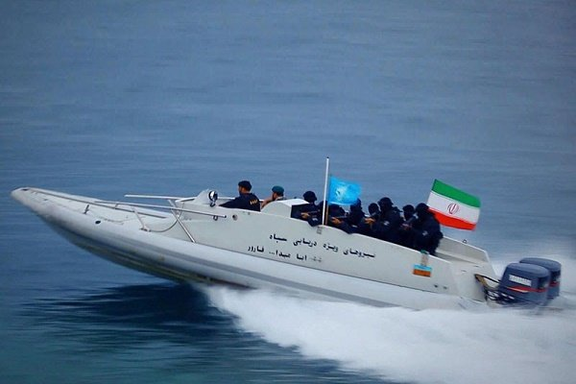
File photo shows IRGC Navy special forces in Iran's southern waters
The Islamic Revolutionary Guard Corps (IRGC) has deployed special forces along Iran’s Persian Gulf coast to identify in advance vessels using the Oman-side route through the Strait of Hormuz, sources familiar with the matter told Iran International.
The IRGC operatives are also seeking access, through Omani sources, to the schedules and coordination details of ships passing through the southern route of the Strait of Hormuz, the sources said.
The special forces deployed by the IRGC are equipped with various intelligence-gathering systems, including land-based observation posts, naval equipment and aerial systems, and have recently been tasked with identifying in advance any vessel intending to pass through the southern route and issuing warnings about it, the sources said.
The sources also say that IRGC operatives are extensively gathering information from Omani sources and agents to learn ahead of time about the coordination and schedules of ship movements through the southern route and receive related alerts.
The IRGC has said the only authorized routes through the Strait of Hormuz are those designated by the Islamic Republic. It has warned international vessels not to use the southern corridor, which passes through waters near Oman’s coast and has been recommended by Oman and the International Maritime Organization.
The deployment of the IRGC monitoring and identification network, and its attempt to access shipping information through Omani sources, comes as Washington and Tehran agreed on Sunday after several rounds of exchanges of fire, to a temporary one-week de-escalation in the Strait of Hormuz.
Talks between the two sides are expected to continue in Doha based on a new proposal put forward by Oman.
Sources say the Islamic Republic, while sitting at the negotiating table, is strengthening its identification and warning chain for vessels that do not use Tehran-approved routes — a route at the center of the current dispute between Tehran and Washington.
The attack on a Singapore-flagged vessel
The pattern of last week’s IRGC attack on a commercial vessel in the southern route is consistent with the new mission assigned to these forces.
IRGC forces on Thursday, June 25, targeted a Singapore-flagged cargo ship in the Strait of Hormuz near Oman’s coast. According to the United Kingdom Maritime Trade Operations, the attack damaged the vessel’s bridge but caused no casualties. It came only hours after the IRGC Navy warned against using unauthorized routes.
US warplanes on Friday, June 26, struck Iranian missile and drone depots as well as coastal radar sites. The IRGC Navy responded by attacking US positions in the region and, citing Clause 5 of the Islamabad memorandum of understanding, said arrangements for controlling traffic through the Strait of Hormuz were under the authority of the Islamic Republic.
Three rival routes in one waterway
According to reports, three different routes have now emerged for passage through the Strait of Hormuz: the southern route near Omani waters, the middle route used before the war, and the northern route under Iranian control.
Ships that choose non-Iranian routes risk being targeted, while those that pass through the Iranian route fear exposure to Western sanctions if the agreement collapses.
An analyst at the shipping intelligence firm Kpler told CNN that if the disputes are not resolved by mid-August, use of all three routes will become more chaotic and insecure.
Because of naval mines in the traditional traffic separation scheme designated by the International Maritime Organization in 1968, the middle route remains effectively closed, although Tehran has committed under the war-ending memorandum to clear the mines within 30 days.
Ship traffic is now moving through two routes: one near Oman’s coast and one near Iran’s coast. The Iranian Navy has also warned vessels to pass only south of Larak Island.
The dispute over Hormuz management
The IRGC’s attempt to access shipping information through Omani sources is especially significant because Muscat is both the coastal state for the southern route and the mediator and architect of the framework for the ongoing talks.
Mohammad Bagher Ghalibaf, the head of the Islamic Republic’s negotiating team, said in Oman on June 23 that management of the Strait of Hormuz would not return to the pre-war situation. He said Tehran, in talks with China and Egypt, had raised the idea of charging vessels a “service fee” modeled on the Dardanelles waterway.
But Omani Foreign Minister Badr al-Busaidi told Marco Rubio on June 25 that any possible mechanism for managing the Strait of Hormuz would not include tolls.
Officials of the Islamic Republic say Iran and Oman have joint sovereignty over the Strait and that after the 60-day deadline set in the memorandum expires, they will begin joint management and toll collection. The United States, however, regards the Strait of Hormuz as an international waterway and says any new mechanism there would require the approval of Persian Gulf countries.
Kazem Gharibabadi, Iran’s deputy foreign minister, has also previously said the safe passage of ships through the Strait of Hormuz cannot be guaranteed without coordination with Iran, warning that if such coordination does not take place, designated routes could be suspended.
A waterway far from normal
Two weeks after the signing of the 14-article Islamabad memorandum, which called for an end to the war on all fronts, the reopening of the Strait of Hormuz and the end of the US naval blockade, traffic through the Strait remains only a fraction of pre-war levels.
The number of vessel transits reached about 70 on June 24, the highest level since the start of the war. Before the war, an average of about 130 vessels passed through the waterway each day.
The secretary-general of the International Maritime Organization has said 14 seafarers have been killed since the start of the Strait of Hormuz crisis. The organization also temporarily suspended the evacuation of about 600 ships and 11,000 sailors stranded in the area after the attack on the Singapore-flagged vessel.
Tracking data nevertheless shows that ships are continuing to use the southern route despite Tehran’s warnings. The Joint Maritime Information Center, which operates under US Navy oversight, has also said the route near Oman’s coast is being expanded to allow two-way traffic.
Under these conditions, the IRGC’s deployment of special forces to identify vessels on the southern route in advance, and its efforts to obtain shipping information through Omani sources, show Tehran is preparing to exert control over the same corridor Washington and Muscat are working to expand.
A framed portrait of Iran's slain Supreme Leader Ali Khamenei is displayed beside lit candles during a mourning ceremony.
Dozens of messages sent to Iran International say Iranian authorities and state-linked institutions are pressuring workers, businesses and charities to take part in funeral ceremonies for slain Supreme Leader Ali Khamenei.
The accounts describe a broad campaign of workplace directives, business closures and logistical mobilization in the days leading up to Khamenei’s funeral and burial.
The Islamic Republic's second Supreme Leader was killed on the morning of February 28, in the opening hours of the war with Israel and the United States.
More than four months after Khamenei's death, authorities say he will be buried on July 9 following five days of ceremonies across Iran and Iraq. Officials have attributed the unusually long delay to wartime conditions and security concerns, a sign of the political sensitivity and logistical difficulty surrounding the former leader’s burial.
Several messages said that businesses had been warned to close during the ceremonies or face penalties if they remained open.
A portrait of Iran's Supreme Leader Ali Khamenei is displayed on a black-draped ceremonial stand adorned with a mourning banner.
"We received a text message from the real estate union saying we are not allowed to open our office during the funeral days and must attend the ceremonies," one Tehran resident wrote.
Another message from Tehran said members of the Basij visited shops and warned owners that businesses opening during the mourning period would be sealed.
"My parents are shopkeepers. Basij members told our shop and others nearby that if we open during the funeral days, the shop will be sealed," the citizen said.
Others described wider economic disruption linked to the ceremonies.
One Tehran gym owner wrote that officials had instructed fitness centers to close from Saturday through Wednesday.
Another message said Tehran's Grand Bazaar had been ordered shut until Thursday, adding that the prolonged closure would place further pressure on already struggling businesses.
Workers describe mandatory attendance
Several messages added that public-sector employees were ordered to attend official ceremonies.
One Tehran municipality employee said all leave had been canceled and staff across municipal bodies had been ordered to attend the ceremonies.
Another message referred to an audio recording attributed to the human resources director of Tehran Municipality's District 10, which instructed all employees, including parents with young children and workers with serious medical conditions, to attend.
The Hamshahri newspaper group, another citizen said, had instructed management to provide 200 employees for the ceremonies.
Workers at automaker Saipa also described disruptions, with one employee saying overtime had been canceled as company facilities were prepared to accommodate around 2,000 visitors from Iraq attending the funeral.
Charities, restaurants and residents pressured
Messages also pointed to pressure beyond government workplaces.
One message from Nahavand in Hamedan province said local officials summoned charities on Wednesday and demanded they contribute to the funeral, warning that their work could be disrupted if they refused.
Another said that police and Basij members visited restaurants in an industrial town near Tehran and warned owners they must prepare thousands of free meals for mourners or risk closure.
A Tehran resident also reported that text messages encouraged households to host visitors traveling to the capital for the ceremonies.
Extensive state mobilization
Official announcements indicate the authorities are preparing a large logistical operation for the funeral.
The Basij Organization for Guilds said 50 million loaves of bread were being prepared nationwide with the participation of bakers' unions, while 16 mobile bakeries would be deployed across Tehran and surrounding areas to prevent shortages.
Workers arrange decorations during funeral preparations for Iran's former Supreme Leader Ali Khamenei.
Several messages criticized the scale of those preparations, contrasting them with economic hardship and reductions in public support.
"Free trains and hotels are available for their leader's burial, but student food subsidies have been cut," one student wrote.
Another message said bread was being transported from Kerman for the ceremonies, adding that transport resources would face additional pressure.
Iran has announced that funeral processions will begin in Tehran on July 4 before continuing through Qom, Najaf and Karbala ahead of Khamenei's burial in Mashhad on July 9. Authorities have also announced heightened security measures, including temporary airspace restrictions over Tehran and Mashhad during the ceremonies.
File photo shows pedestrians walking along a shopping street in the Turkish city of Van, a popular destination for Iranian visitors.
Turkey’s tougher residency rules are leaving growing numbers of Iranians facing legal uncertainty, financial losses and difficult choices over whether they can remain in a country that was once among their most accessible migration destinations.
The Iranian newspaper Shargh reported on Thursday that many Iranians in Turkey have had residency renewals rejected, seen sudden changes to their legal status or, in some cases, been ordered to leave the country.
The report said some had rented homes, bought property or established businesses under rules that previously offered a relatively predictable path to renewing short-term residency permits.
Turkey became a major destination for Iranian migrants over the past decade because of its proximity, visa-free short visits and relatively accessible residency procedures.
Thousands of Iranians moved there for work, study, investment or family reasons, settling in cities such as Istanbul, Izmir, Antalya and Alanya.
According to Shargh, the situation began to change after the COVID-19 pandemic, as Ankara tightened migration policies affecting many categories of foreign residents.
One Iranian identified as Sina told the newspaper that immigration officials ordered him to leave Turkey for six months despite renting a home in Izmir for four years.
"I kept explaining that I had rented a house here and they couldn't do this," Sina said. "They behaved politely but kept repeating the same thing. In the end, they said if I objected, I should hire a lawyer."
Another Iranian, Reza, told Shargh he moved to Istanbul with his wife and daughter in 2021 after spending his family's savings on renting a home, furnishing it and registering a company.
When the family applied to renew their residency a year later, officials rejected the application without providing a detailed explanation despite what he described as complete documentation.
Maryam, a fashion designer who opened a small workshop in Antalya, said uncertainty over her residency prevented her from expanding her business or planning for the future.
Iranians make their way after crossing into Turkey in Van province, March 3, 2026.
Tougher enforcement
An immigration lawyer interviewed by Shargh said the changes largely reflect stricter implementation of existing rules rather than major amendments to Turkish immigration law.
The lawyer said short-term residency is not an automatic right and Turkish authorities have broad discretion to approve or reject applications after assessing individual circumstances.
Higher migration following the pandemic, pressure on the housing market, changing security and demographic priorities and restrictions on registering foreign residents in parts of major cities all contributed to tighter enforcement, the lawyer said.
The lawyer also cautioned that renting or purchasing property no longer guarantees residency and advised applicants seeking long-term stays to consider more stable legal pathways such as work permits, student visas or qualifying investment programs. Applicants whose requests are rejected generally retain the right to challenge the decisions before Turkey's administrative courts.
The experiences described by Shargh mirror accounts gathered by the Associated Press following months of conflict involving Iran, Israel and the United States, with many Iranians in Turkey describing growing uncertainty over both their legal status and finances.
"There are people who have lived on them for over 10 years," Sedat Albayrak of the Istanbul Bar Association's Refugee and Migrant Rights Center told AP in April, referring to Iranians relying on renewable short-term residence permits instead of obtaining more permanent legal status.
People walk on a small street that leads to the historical Galata Tower in Istanbul.
Nearly 100,000 Iranians lived in Turkey in 2025, according to the Turkish Statistical Institute.
The United Nations refugee agency says around 89,000 Iranians entered Turkey after the conflict began, while roughly 72,000 later departed, indicating that many crossed the border only temporarily or continued to third countries where they already held residency or citizenship.
Conflict compounds financial strain
For many Iranian residents, the recent conflict has intensified economic pressures already created by tighter immigration rules.
Nadr Rahim, who has lived in Turkey for 11 years, told AP his family depended on income from a motorcycle showroom in Iran because obtaining permission to work legally in Turkey remained difficult. Sales largely stopped after the fighting began, while internet disruptions complicated financial transfers.
"If the war continues, we will have no choice but to return," Rahim told AP. His children have grown up in Turkey and speak Persian only with difficulty, making the prospect of returning especially challenging.
Another Iranian woman, who requested anonymity, told AP she enrolled at a Turkish university mainly to secure a student visa while working long hours in service jobs to support relatives in Iran.
"I have a bad life in Turkey, and my parents have a bad life in Iran," she said. "I came to Turkey with so much hope, to support my parents and build a future. But now I feel hopeless."
AP also reported that some families have been separated because of residency complications. Bakery worker Sadri Haghshenas said her daughter returned to Tehran after the family missed a residency application deadline and feared deportation proceedings could jeopardize her chances of returning legally to Turkey.
Easy to visit, harder to stay
For Iranians hoping to settle in Turkey, obtaining or renewing residency has become increasingly difficult. Yet for many others, the country continues to serve as the nearest and most accessible destination outside Iran.
The Wall Street Journal reported on June 26 that traffic through the Kapikoy border crossing near Van has begun returning to prewar levels following the ceasefire, with Iranian visitors once again traveling to eastern Turkey for shopping, leisure and entertainment.
People shop at Grand Bazaar in Istanbul, Turkey, November 4, 2022.
Nightclub manager Hüseyin Aşan told the newspaper business at his venue, which caters largely to Iranian visitors, fell by about 70% during the conflict but has since begun recovering.
"We just came from a war, so we're going to have some fun," a visitor from Tehran told the newspaper after crossing into Turkey for a week's holiday.
Others remained uncertain about what awaited them at home. A 27-year-old medical laboratory technician returning to Iran after vacationing in Turkey told the Wall Street Journal: "I don't know who won the war, but the people lost."
IRGC commanders meeting Iran's late Supreme Leader ali Khamenei in September 2007
A state-TV commentator’s claim that factions want to dissolve the IRGC has revived debate over Iran’s dual military structure, the Guards’ expanding political and economic role, and whether the army-IRGC system remains an asset after a war that exposed its reach and costs.
Kharratian has often argued that Iran must preserve what he sees as its strategic leverage in any confrontation or negotiation with Washington, including its military and nuclear capabilities, control over pressure points such as the Strait of Hormuz, the impact of oil prices and political divisions inside the United States.
His latest remarks have triggered debate across Iranian media and social networks.
Some experts interviewed by Iran International said any restructuring of the IRGC would likely amount to little more than a rebranding exercise, preserving the Guards’ power while trying to shed some of their political and economic baggage.
Others see the debate as a sign that Iran’s leadership understands the country cannot emerge from the recent war unchanged.
Proposal predates the war
The discussion is not entirely new. Shortly before the outbreak of the recent war, the moderate daily Jomhouri-e Eslami proposed merging the IRGC into the regular army, arguing that Iran’s security and economic conditions required a review of the country’s military structure.
The newspaper said such a move could create a more coherent defense system. But its argument went beyond military organization.
The article also criticized the IRGC’s growing reach outside the battlefield, including its role in the economy, politics, media and parts of diplomacy.
It said that expansion had not produced greater national power or strategic cohesion, but had instead given the IRGC the image of a controversial, factional and multifaceted institution.
Domestically, the newspaper argued, the Guards had become a source of political dispute.
Abroad, it said, their expanded role had given Iran’s adversaries a pretext for pressure, sanctions and costly decisions against Iran’s national interests.
Hardline backlash
Jomhouri-e Eslami’s proposal drew an immediate backlash from conservative media.
The hardline newspaper Kayhan described the idea as “a project to eliminate the IRGC,” comparing it to what it called US and Israeli efforts to dismantle Iraq’s Popular Mobilization Forces.
It dismissed the proposal as “not an expert discussion,” but rather a continuation of foreign projects aimed at weakening what it called the Islamic Republic’s defensive arm.
Abdollah Ganji, the former managing director of the IRGC-affiliated newspaper Javan, also denounced Jomhouri-e Eslami on X, calling it “a polluted mouthpiece.”
He wrote that raising such an idea while the country faced the threat of war was, “even if it is not evidence of enemy infiltration, evidence of catastrophically flawed understanding.”
Arguments for restructuring
Not all commentary rejected the idea. The website Eghtesad 24 argued that, given the IRGC’s designation as a terrorist organization by the United States and the European Union, some analysts viewed a merger with the regular army as a possible way to reduce legal and diplomatic pressure on Iran.
The outlet wrote that “merging the army and the IRGC could, from the perspective of reducing legal and international pressure, be worthy of consideration,” adding that such a move could reduce some of the diplomatic costs created by those designations.
It also referred to an earlier claim by IRGC commander Hassan Kazemi that the United States had demanded the dissolution of the IRGC and its integration into the regular army.
Social media reflects sharp divisions
The issue has circulated on Iranian social media for months, where hardline users have recently accused senior officials involved in negotiations, including Parliament Speaker Mohammad Bagher Ghalibaf and members of President Masoud Pezeshkian’s administration, of trying to sideline revolutionary forces and even plotting a coup.
One X user wrote: “The final stage of the coup is dissolving the IRGC and merging the armed forces.”
Another said: “You’ll take the dream of dissolving the IRGC to your grave.”
A third argued that Kharratian’s remark alone was enough to show that “the coup plotters signed Iran’s destruction and partition long ago,” adding that dissolving the IRGC would mean disarming the Islamic Revolution and stripping it of legitimacy.
Others voiced a different concern. They argued that if a merger ever took place, it would not produce a more conventional national army, but would instead amount to the regular army being absorbed into the IRGC, turning the unified force into an ideological military organization.
A recurring debate
The idea of dissolving the IRGC or merging it with the regular army dates back to the early years of the Islamic Republic under Ruhollah Khomeini.
No merger took place. But in 1989, Iran merged the Ministry of Defense and the Ministry of the IRGC as part of an administrative, budgetary and logistical restructuring, while leaving the two forces institutionally separate.
The General Staff of the Armed Forces was also established to coordinate strategy, assign responsibilities and oversee the military.
Later that year, Iran’s new supreme leader, Ali Khamenei, emphasized that both the IRGC and the regular army should be preserved, and that neither should be sacrificed for the other.
Months later, he sought to settle the debate by defining the IRGC’s primary mission as defending the Islamic Revolution and the Islamic Republic, while assigning the regular army responsibility for defending Iran’s borders.
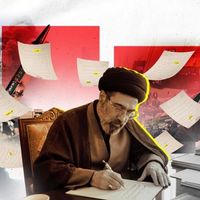
Iran's Supreme Leader Mojtaba Khamenei plans to remove judiciary chief Gholam-Hossein Mohseni Eje'i at the end of his first five-year term and appoint a new figure to lead the judiciary, sources familiar with the matter told Iran International.
Sources inside Iran told Iran International that Khamenei does not intend to extend Eje'i’s term for another five years, breaking with a practice followed for nearly four decades in which judiciary chiefs have usually served two consecutive five-year terms.
The sources, who spoke on condition of anonymity, said the decision is not aimed at judicial reform but is part of a broader reshaping of power after the recent war.
They said the new supreme leader is seeking to replace key officials in major state institutions with figures more closely aligned with him.
Eje'i’s expected removal could mark one of the first major signs of Khamenei’s effort to rebuild control over the Islamic Republic’s judicial, security and political apparatus after the transfer of power.
Hardliners step up pressure on Eje'i
The decision comes amid growing criticism of Eje'i from hardline figures after the names of Supreme National Security Council members who voted in favor of a memorandum of understanding with the United States were disclosed.
Critics say Eje'i’s vote was at odds with Khamenei’s stated position, after the leader said in a letter that he had, in principle, held a different view on the memorandum of understanding.
Signs of dissatisfaction with Eje'i’s five-year record have also appeared in recent official and semi-official commentary close to the power structure.
In a message marking Judiciary Week, Khamenei did not clearly endorse Eje'i’s continuation in office. Instead, he addressed the judiciary as an institution and called for the “actualization” of demands previously made by former Supreme Leader Ali Khamenei.
The message repeated calls for the implementation of the judicial transformation document, fighting corruption inside the judiciary, reviving public rights, blocking the use of recommendations and lobbying, and improving communication with the public.
Eje'i seeks to defend his record
A day later, Eje'i published a letter to Khamenei in deferential language, defending the judiciary’s performance and pledging to continue the path of “judicial transformation.”
“I and all components of the judiciary consider ourselves obliged to carry out Your Excellency’s binding commands precisely, swiftly and without any reduction,” Eje'i wrote.
Media outlets and figures close to the establishment criticized Eje'i for not publishing such a letter before Khamenei’s message. Some also described the new leader’s renewed emphasis on his father’s demands as a negative assessment of Eje'i’s record, arguing that their repetition showed the judiciary had failed to deliver practical results under him.
Rival factions inside the establishment have also stepped up attacks on Eje'i, accusing him of distancing himself from the leadership’s demands.
Media close to Parliament Speaker Mohammad Bagher Ghalibaf and President Masoud Pezeshkian have described the attacks as part of an effort by the faction aligned with Saeed Jalili, a member of Iran’s Supreme National Security Council, and the Paydari Front to create divisions among senior officials and weaken the postwar political path.
Media close to the judiciary and Eje'i’s supporters have sought to portray his five-year record as successful, citing reduced imprisonment, electronic court proceedings, shorter trials, anti-corruption efforts and public outreach.
Rights groups point to record of repression
Human rights groups and activists say Eje'i is not a reformist figure but a long-standing part of the Islamic Republic’s repressive judicial and security apparatus.
They point to his record in the Special Clerical Court, the Ministry of Intelligence, and later as first deputy and head of the judiciary, saying his tenure has been marked by continued heavy sentences against protesters, political activists, journalists, prisoners of conscience and minorities.
Rights advocates say the judiciary under Eje'i has continued to act as the legal and executive arm of security institutions in political and security cases.
They also argue that replacing Eje'i alone would not bring meaningful change without structural reform, an end to security interference in judicial cases, guaranteed access to lawyers, a halt to forced confessions, the annulment of political verdicts and respect for fair trial standards.
A confidential directive by Iran’s top security body urged media outlets to avoid spotlighting political disputes during slain Supreme Leader Ali Khamenei’s funeral and limit coverage of US talks and regional developments, according to a copy obtained by Iran International.
The directive by the Supreme National Security Council said that, with programs linked to what it called the “historic funeral procession of the martyred Leader of the Revolution” beginning Friday, media outlets should help preserve national cohesion and maintain a focused media narrative.
It recommended that issues related to follow-up on the Islamabad memorandum of understanding — including the “balanced implementation of commitments,” especially over Hormuz, developments inside Lebanon, what it called the destructive role of the Lebanese government, the need to end Israeli attacks and opposition to externally imposed solutions — be gradually removed from media priority over the next 48 hours.
Instead, the directive said media capacity should mainly be used to explain the “personal, intellectual, cultural, political, historical and national dimensions of Iran’s martyr,” reflect “the presence and solidarity of the people,” and provide the “most magnificent possible coverage” of the ceremonies.
It said that if any “transgression or aggression” by enemies occurred during the period, “the issue of continuing defense alongside the holding of extensive ceremonies related to the funeral procession will naturally receive attention.”
The directive also urged outlets to avoid amplifying “internal political disputes, factional disagreements, media controversies” and issues that could polarize public opinion or divert attention from what it called a “national and historic occasion.”
News and analysis related to “negotiations, the agreement and other political and regional developments” should be covered “only to the extent necessary,” it said, warning media outlets not to turn those issues into the main focus of coverage or reproduce and amplify “rival media narratives about Iran’s defeat or retreat.”