• العربية
  • فارسی
Brand
  • Iran Insight
  • Politics
  • Economy
  • Analysis
  • Special Report
  • Opinion
  • Podcast
  • Iran Insight
  • Politics
  • Economy
  • Analysis
  • Special Report
  • Opinion
  • Podcast
  • Theme
  • Language
    • العربية
    • فارسی
  • Iran Insight
  • Politics
  • Economy
  • Analysis
  • Special Report
  • Opinion
  • Podcast
All rights reserved for Volant Media UK Limited
volant media logo
INSIGHT

Unveiled in wartime, targeted in peacetime?

Maryam Sinaiee
Maryam Sinaiee

Iran International

Jun 25, 2026, 09:53 GMT+1
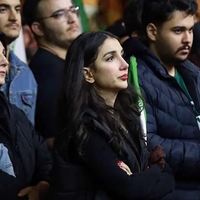
Unveiled woman at a pro-government wartime rally, March 2026

Many Iranians fear that a diplomatic opening with the United States could come at the cost of renewed social restrictions at home, as reports of stricter hijab enforcement begin circulating following the recent war.

Over recent days, social media users have voiced concern that a period of relative tolerance toward personal freedoms may be coming to an end.

With the immediate external crisis easing and further negotiations with Washington expected, many fear authorities could once again shift their focus to domestic social controls.

There has been no official announcement confirming the return of the morality police. But reports circulating online suggest increased scrutiny of hijab compliance in several cities, particularly the religious centers of Qom and Mashhad, although many of the incidents remain difficult to independently verify.

One widely shared video, which users say was filmed in the holy city of Qom, appears to show male and female officers attempting to persuade a young woman to enter a white van resembling those previously used by the so-called morality police.

In a separate video reportedly filmed in Mashhad, a police officer is seen confronting a young woman riding as a passenger on a motorcycle, telling her to buy a headscarf from a nearby shop before continuing her journey.

Another video from Tehran shows an argument between a young woman and several men. One tells her she has no right to appear without a head covering because it is against the law, while others threaten to call the police.

Optional, or is it?

Social media users have also reported visits by the Public Venues Supervision Office, the police body responsible for monitoring businesses, to inspect compliance with hijab regulations in companies, cafés and restaurants.

"They say hijab has become optional," one user wrote. "It's true that the way we dress has completely changed, both in the street and at work. But during these days of negotiations officials came to inspect our workplace over hijab.

"Imagine the anxiety in a company where most employees are women without hijab, fearing the business could be sealed because of them."

The legal rights group Dadban said reports from different parts of Iran suggested security, law enforcement and judicial institutions had once again increased their focus on domestic social control.

"Measures taken in recent weeks, from intensified street enforcement to growing pressure on citizens, point to the return of this approach," the group said.

"It appears that, following the reduction of external tensions, the responsible institutions have once again prioritized internal control and restricting individual and social freedoms."

Wartime tolerance, post-war uncertainty

During the war, state media and some officials openly welcomed the participation of unveiled women in pro-government gatherings. Images of women without head coverings were broadcast on state television, breaking with longstanding editorial practice.

At one gathering, organizers even projected a performance by a Lebanese female singer onto a large screen, challenging the state's longstanding ban on solo female singing.

Those departures from established norms unsettled many hardline supporters of the Islamic Republic. Now, with a memorandum signed with the United States and the prospect of further negotiations ahead, some Iranians fear authorities could seek to reassure conservative constituencies by tightening social controls once again.

Others worry that radical groups could feel emboldened to intervene directly under the principle of "enjoining good and forbidding wrong," a religious doctrine frequently invoked to justify policing perceived moral violations.

"After an agreement, what can their street forces do?" one social media user wrote. "Will they once again be unleashed on the public over hijab and other issues? A confrontation between society and the state lies ahead."

Another predicted authorities would intensify hijab enforcement and close cafés to appease conservatives opposed to rapprochement with Washington.

Political scientist Morteza Nemati urged caution over reports of the morality police's return but highlighted what he saw as an irony.

"I don't know how accurate the reports about relaunching the morality police are," he wrote on X. "But if you do bring them back, please be careful not to accidentally arrest the same unveiled women whose images you were showing at the nighttime rallies."

Most Viewed

Banking disruption hits services at eight Iranian banks
1

Banking disruption hits services at eight Iranian banks

2
VOICES FROM IRAN

Don’t feed us, free us: Iranians hit back at Vance over 'hunger' remarks

3

Israel smuggled tens of thousands of Starlink systems into Iran, former PM says

4

Tehran bread prices jump up to 100% in latest increase

5
EXCLUSIVE

Opium for survival: Inside a shift in Iran’s Zagros villages

Banner
Banner
Banner

Spotlight

  • Sources detail Ali Khamenei bunker with blast-resistant room
    EXCLUSIVE

    Sources detail Ali Khamenei bunker with blast-resistant room

  • Unveiled in wartime, targeted in peacetime?
    INSIGHT

    Unveiled in wartime, targeted in peacetime?

  • US sanctions waiver could bring Iran's oil trade out of the shadows
    ANALYSIS

    US sanctions waiver could bring Iran's oil trade out of the shadows

  • Hardline revolt targets Ghalibaf over US agreement
    INSIGHT

    Hardline revolt targets Ghalibaf over US agreement

  • IRGC personnel sheltered in Shiraz lodging complex were target of deadly strike
    EXCLUSIVE

    IRGC personnel sheltered in Shiraz lodging complex were target of deadly strike

  • Don’t feed us, free us: Iranians hit back at Vance over 'hunger' remarks
    VOICES FROM IRAN

    Don’t feed us, free us: Iranians hit back at Vance over 'hunger' remarks

  • Opium for survival: Inside a shift in Iran’s Zagros villages
    EXCLUSIVE

    Opium for survival: Inside a shift in Iran’s Zagros villages

•
•
•

More Stories

Hardline revolt targets Ghalibaf over US agreement

Jun 25, 2026, 02:46 GMT+1
•
Behrouz Turani
Hardline revolt targets Ghalibaf over US agreement
100%
Iran's parliament speaker and lead negotiator Mohamed Bagher Ghalibaf arrives in Zurich, Switzerland for talks with the United State, June 20, 2026

Resistance to Mohammad Bagher Ghalibaf's leadership, both as parliament speaker and chief negotiator, appears to be growing, though it remains confined to a small but vocal group of ultraconservative lawmakers.

Over recent days, at least four MPs—Hamid Rasai, Amir Hossein Sabeti, Abolfazl Aboutorabi and Kamran Ghazanfari—have publicly challenged Ghalibaf, accusing him of violating Supreme Leader Mojtaba Khamenei's red lines and keeping parliament closed to shield the government and negotiators from criticism.

Despite the attacks, Ghalibaf's position appears secure. A recent internal vote showed his supporters retain a comfortable majority, with fewer than 30 of the Majles' 290 members opposing his speakership.

All four leading critics belong to the ultraconservative Paydari (Steadfastness) Party, which has consistently opposed negotiations with the United States.

Even so, Ghazanfari has threatened that if parliament does not reopen before June 28, he and like-minded MPs will stage a sit-in outside the Majles. He argues the closure was never authorized by the Supreme National Security Council (SNSC), as Ghalibaf has maintained, and claims one man has effectively been making decisions on behalf of all 290 lawmakers.

Parliament was originally closed after the outbreak of the 40-day war with Israel and the United States because of security concerns.

Ghazanfari's assertion that "all MPs" want parliament reopened is not borne out by events. Over the past four months, only Rasai has publicly demanded its reopening. Ghazanfari nevertheless accuses Ghalibaf of unlawfully keeping the Majles shut because he fears lawmakers would oppose negotiations with Washington.

Ghalibaf has rejected the allegation, saying parliament remains operational and that sessions are being held online because of continuing security risks. He has also called on the Judiciary to investigate the claims against him.

According to ILNA, Ghazanfari has further accused Ghalibaf of violating the constitution and falsely claiming the SNSC ordered parliament's closure.

He also alleges Ghalibaf refused to show MPs the purported SNSC authorization and ignored what he described as a request from Mojtaba Khamenei to reopen parliament.

Hardline MP Abolfazl Aboutorabi told the Didban Iran website that Ghalibaf was preventing parliament from legislating on Iran's sovereignty over the Strait of Hormuz. He accused the speaker of "playing with words" by presenting the accord with the United States as an MoU rather than a binding agreement.

Aboutorabi said several MPs were preparing a legal complaint against Ghalibaf, arguing that any memorandum or agreement should require parliamentary approval.

Asked whether MPs planned to impeach President Masoud Pezeshkian over the MoU, he replied that impeachment was not currently under consideration, adding: "Maybe God helps and makes him a martyr."

The remark is among the most serious death-tinged comments directed at the president since a prominent eulogist earlier suggested Pezeshkian could be beheaded before later insisting the remark had been intended as an "internal discussion."

Aboutorabi also accused Ghalibaf of violating Khamenei's red lines on the Strait of Hormuz and nuclear negotiations.

Similar allegations have been made by other Paydari figures, including Mahmoud Nabavian and Amir Hossein Sabeti, who argue the agreement with Washington is being pursued against the Supreme Leader's wishes.

For now, however, there is little indication the campaign is gaining traction beyond a small faction. Ghalibaf's support within parliament remains strong, while his longstanding ties to the Revolutionary Guards and Khamenei's inner circle leave him well placed to withstand attacks from rivals with far less institutional backing.

President's economic reality check fuels Iran's US deal debate

Jun 25, 2026, 00:47 GMT+1
•
Maryam Sinaiee
President's economic reality check fuels Iran's US deal debate
100%
President Masoud Pezeshkian showing his copy of the MoU signed remotely with President Donald Trump. June 17, 2026

President Masoud Pezeshkian's unusually blunt remarks about Iran's economic crisis have intensified infighting over Supreme Leader Mojtaba Khamenei's position on the US-Iran agreement.

The dispute centers on a written message attributed to Khamenei outlining his position on the Memorandum of Understanding.

In the message, Khamenei wrote: "In principle, I had a different view, but because of the commitment that the President, as head of the Supreme National Security Council, gave on behalf of himself and the council members regarding safeguarding the rights of the Iranian nation and the Resistance Front, and because they explicitly accepted responsibility for it, I authorized it."

Hardliners, including parliamentarian Hamid Rasaei and former MP Kamran Ghazanfari, accused Pezeshkian, parliament speaker Mohammad Bagher Ghalibaf and their allies of effectively staging a "coup" against the Supreme Leader.

'A devastated economy'

The dispute spilled into public view when attendees at an official event shouted that Pezeshkian's government should adhere to the "principles" referenced by Khamenei.

"The principle is justice. The principle is serving the people. The principle is honesty," Pezeshkian responded.

"For 40 to 50 days, we could not export a single barrel of oil from the Persian Gulf," he said. "They have devastated our economy, and many young people have become unemployed. Our young people have no hope for the future. We have to pay benefits to the unemployed and we cannot collect taxes. You tell me, where is the money supposed to come from?"

Pezeshkian also revealed that the government had diverted $20 million in oil-export revenues that would normally have gone into the state budget to the IRGC Aerospace Force to procure military equipment.

"If we had not supported the IRGC, our armed forces would not have been able to fight."

He added that he was withholding further details in the interest of national unity, saying he had much more to say but preferred not to disclose it.

Institutional backing

Pezeshkian's remarks also suggested growing confidence that key power centers continue to back the agreement despite mounting criticism from hardliners.

According to the president, the memorandum was approved by the Supreme National Security Council (SNSC) with the backing of the country's most senior commanders from both the regular army and the Revolutionary Guards.

Further evidence emerged on Tuesday when Sobh-e Sadegh, the weekly publication of the IRGC's political office, reported that Saeed Jalili—an SNSC member and a longstanding opponent of talks with Washington—had sought to clarify the leader's position.

According to the report, Jalili said Khamenei's statement was not opposition to negotiations but to Tehran's negotiating approach and certain provisions of the memorandum. He reportedly also said those who voted for the agreement in the council could not be accused of acting against the leadership.

His remarks echoed those of IRGC political chief Yadollah Javani, who said on Monday that the negotiations had been conducted with Khamenei's permission and according to the conditions he had set.

"The interpretation by some that the phrase 'in principle' signifies opposition to negotiations with the United States is incorrect," Javani said.

Competing readings

Iranian newspapers have offered sharply different interpretations of the controversy.

The government newspaper Iran argued that the Supreme Leader's message emphasized "responsibility, commitment, effort, and concern" on the part of government officials.

"The Leader's message was about the government's responsibility," it wrote, "but in part of the political sphere it became a tool for intensifying attacks on the government."

The conservative Khorasan newspaper argued that the message sought to balance three principles: maintaining the Islamic Republic's stance toward US hostility, conditionally accepting the outcome of the official decision-making process and demanding accountability from those implementing the memorandum.

It added that, in political and jurisprudential reasoning, the phrase "in principle" refers to a general rule that can admit exceptions under special circumstances.

Not all conservative voices defended the government. In an editorial titled Mr. President, the Enemy Can Hear You Too, the conservative website Alef criticized Pezeshkian for repeatedly discussing Iran's economic difficulties in public.

One reader commented: "Saying that not even a single barrel of oil was exported because of the US blockade, or that all military officials supported the memorandum, does not send a good message to the enemy."

Debate spills onto social media

Social media reflected the same divide. Supporters praised Pezeshkian's candor, while critics renewed accusations that he was attempting to pressure the Supreme Leader into accepting the agreement.

One supporter wrote: "Pezeshkian is completely right. You cannot run a country without money. We have to face reality."

A critic responded on X: "Standing against the Leader and then blaming everything on the Leader and the system is not called courage."

The dispute increasingly appears to be less about the memorandum itself than about who gets to define Khamenei's position. As negotiations with Washington move forward, competing factions are seeking to claim the leader's authority either to legitimize the agreement or to constrain those implementing it.

IRGC personnel sheltered in Shiraz lodging complex were target of deadly strike

Jun 24, 2026, 21:14 GMT+1
•
Shahed Alavi
IRGC personnel sheltered in Shiraz lodging complex were target of deadly strike
100%
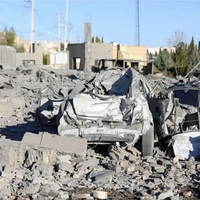
Aftermath of the March 2026 strike on the Zibashahr complex in Shiraz

IRGC personnel sheltering in a civilian lodging complex in Shiraz were the likely target of a strike that also killed nine civilians at a neighboring emergency center in the early days of the 2026 war, an Iran International investigation found.

The March 5 strike hit several buildings inside the Zibashahr emergency lodging complex, where members of the Islamic Revolutionary Guard Corps and affiliated forces had taken shelter during the war, according to images from the site, open-source data, Iranian media reports, witness accounts and an expert assessment reviewed by Iran International.

The evidence suggests the strike was not a simple miss aimed at a nearby IRGC facility, but an attack on the lodging complex itself.

The site sat inside a civilian area, beside a local ambulance station that is part of Iran’s 115 emergency medical service, as well as service buildings and residential homes.

No party has claimed responsibility for the strike.

Fars provincial authorities later said 20 people had been killed and 30 wounded. At an official memorial ceremony in Zibashahr, however, only 16 names and photographs were released: seven IRGC and Basij members and nine civilians.

The civilians included two emergency technicians, a health worker, municipal employees and contractors, and a local shopkeeper.

The strike destroyed the ambulance station, a neighboring building and a larger structure to the east that formed part of the municipal emergency lodging complex. Nearby residential buildings were also damaged.

Aftermath of the March 2026 strike on the Zibashahr complex in Shiraz
100%
Aftermath of the March 2026 strike on the Zibashahr complex in Shiraz

Why the lodging complex was hit

The large destroyed building inside the Zibashahr complex was not an empty passenger facility or an unidentified structure.

The Student News Agency, linked to the Student Basij, published a video report from the site after the attack and said missiles had hit “dormitory and administrative buildings” in the complex. It also reported that military personnel had been killed and wounded.

The agency said the personnel were there for “training courses for border protection.”

But public mapping services, including Google Maps and the Iranian app Neshan, identify the site as an emergency lodging complex, not a military training facility.

The entrance of the Zibashahr complex
100%
The entrance of the Zibashahr complex

Verified images and videos from the area also show the lodging complex sign at the entrance. Iran International found no publicly available evidence that the site had previously functioned as a military training center.

Less than 200 meters away, across the highway, sits a large IRGC Ground Forces training and military complex. Open-source mapping also links the area to the IRGC’s 19th Fajr Division and an IRGC Aerospace Force unit in Shiraz. One officer killed in the Zibashahr strike was linked to the 19th Fajr Division.

Yet post-strike imagery showed no sign that the nearby IRGC complex itself had been destroyed.

That pattern is central to the investigation. If the intended target had been the formal IRGC facility, a miss of about 200 meters across the highway would have to explain several impacts on separate buildings inside the civilian lodging complex.

Wes Bryant, a former head of a US Air Force special targeting team and former Pentagon civilian-casualty assessment official, reviewed visual evidence from the site.

He assessed that the strike involved about 1,350 kilograms of munitions, including a weapon comparable to a 900-kilogram bomb against the larger eastern building and smaller munitions, comparable to 220-kilogram bombs, against two western structures, including the ambulance station.

With modern precision-guided munitions, Bryant said, a 200-meter error across a highway would be highly unlikely, particularly in several separate impacts.

His assessment supports the conclusion drawn from the other evidence: the lodging complex itself, or specific buildings inside it, was the likely target.

Aftermath of the March 2026 strike on the Zibashahr complex in Shiraz
100%
Aftermath of the March 2026 strike on the Zibashahr complex in Shiraz

A target among civilians

The evidence reviewed by Iran International points to a strike on a civilian lodging complex after IRGC personnel moved into it during the war.

That may explain why the Zibashahr complex, rather than the nearby formal IRGC facility, was hit. But the same evidence also shows that the targeted buildings stood inside a civilian setting, beside an ambulance station and near residential homes.

That leaves responsibility on the Iranian side.

By moving or allowing military personnel to shelter in a civilian lodging complex, next to an emergency medical site and homes, Iranian authorities placed civilians and medical workers in the path of a foreseeable strike.

It is not necessary to prove that civilians were intentionally used as shields to establish the consequence: the risk of war was shifted from a military facility into a place used by civilians.

That responsibility does not remove the attacker’s obligations.

Even if the presence of IRGC personnel made part of the lodging complex a military target, it did not automatically strip the neighboring ambulance station, surrounding buildings or nearby homes of protection.

A medical site loses its special protection only if it is itself used for acts harmful to the enemy; Iran International found no evidence in the material reviewed that the ambulance station was used in that way.

The strike therefore leaves two central facts in tension.

IRGC personnel appear to have taken shelter among civilians, turning part of the complex into a target. But the attack also destroyed an ambulance station and killed civilians in an area whose medical and residential character was visible in public maps and imagery.

In Zibashahr, the war moved from a military complex into a lodging site, an ambulance station and people’s homes.

Don’t feed us, free us: Iranians hit back at Vance over 'hunger' remarks

Jun 24, 2026, 02:57 GMT+1
•
Saba Heidarkhani
Don’t feed us, free us: Iranians hit back at Vance over 'hunger' remarks
100%
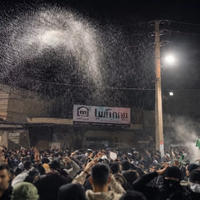
Protesters scatter rice into the air in Abdanan during the January 2026 uprising, a scene that later became a symbol of dignity and defiance for many Iranians.

After Donald Trump said Iran has “a hunger problem” and JD Vance said unfrozen Iranian assets could help “feed the Iranian people,” Iranians pushed back, saying the country’s real crisis is repression, corruption and the fight for freedom, not hunger.

Speaking in Switzerland on Monday, Vance said Washington could agree to release frozen Iranian funds for purchases of US agricultural products such as wheat, corn and soybeans.

"If Iranian assets are ever unfrozen, they're going to go to make American farmers richer and to feed the Iranian people," Vance said.

He said the United States and Qatar would oversee the process, though Iranian officials have disputed that characterization.

Trump made similar remarks on Tuesday, saying money taken out of Iran would go to American farmers to provide “corn, soybeans, wheat to Iran.”

“They have a hunger problem, they have a food problem, they have a medicine problem, they got a lot of problems,” Trump said, adding that inflation in Iran had “hit 300%.”

  • Will the Islamic Republic trade with the 'Great Satan'?

    Will the Islamic Republic trade with the 'Great Satan'?

The remarks sparked widespread reactions from Iran International's viewers, many of whom said the country's struggle cannot be reduced to hunger.

"American officials talk about hunger in Iran as if our problem is a lack of food. Everything exists here. Government policies have made food unaffordable. Sending grain won't solve our problems," one viewer told Iran International.

While many respondents acknowledged the country's worsening economic crisis, they argued that inflation, corruption and decades of mismanagement—not a shortage of food—have made life increasingly difficult.

Others said they have little faith that any economic relief provided to the Islamic Republic would ultimately benefit ordinary citizens.

"Right now the Islamic Republic is probably figuring out how to send that wheat to Lebanon and Iraq," one viewer wrote.

The comment was a reference to the Islamic Republic's long-standing support for regional militant allies and proxy groups. Many respondents argued that Tehran has repeatedly prioritized its regional strategy over the welfare of its own citizens.

Several viewers also objected to what they saw as a portrayal of Iranians as a population waiting to be fed.

"The people of Iran are not hungry. They sacrificed their lives and shed blood for freedom," one respondent said.

Many pointed to the nationwide protests of January 2026, arguing that the movement was driven by demands for freedom and political change rather than economic assistance.

Some referenced the symbolic scene in Abdanan, where protesters threw rice into the air during demonstrations. Videos from the western city showed protesters throwing rice into the air, a gesture many interpreted as a rejection of the idea that their uprising was driven by hunger.

"Mr. Vance, you were not there during those January nights in Abdanan when grains of rice fell from the sky like snow," one citizen wrote.

For many respondents, the image symbolized dignity and defiance. They argued that while many Iranians are struggling economically, the country's crisis is ultimately one of governance and freedom.

They did not deny the depth of economic hardship, but said reducing Iran’s crisis to hunger ignored the political nature of their struggle.

Others stressed that Iran is not a poor country lacking resources.

"Our problem with the Islamic Republic is not only economic. It is a government that opposes human dignity, personal freedoms and Iran's ancient national culture. It is governed by ideology and follows a path separate from the Iranian people," one viewer wrote.

Another respondent was blunter.

"Mr. Vance, Iran is a rich country. If you don't believe me, ask Hezbollah, Hamas, the Popular Mobilization Forces and the Houthis."

The reactions reveal deep skepticism among Iranians who wrote to Iran International toward any agreement that could provide financial relief to the Islamic Republic. For them, the issue is not hunger alone, but freedom, dignity and who ultimately benefits when money flows back into the hands of Tehran.

Opium for survival: Inside a shift in Iran’s Zagros villages

Jun 23, 2026, 22:00 GMT+1
•
Saman Rahmatian
Opium for survival: Inside a shift in Iran’s Zagros villages
100%

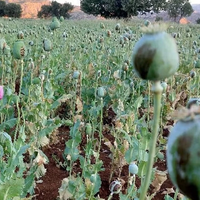
Opium poppy cultivation in some villages of the Zagros mountains in western Iran has evolved from a hidden, scattered practice into an essential part of the rural subsistence economy, an Iran International investigation found.

On the rugged slopes of the Zagros, amid rocky plots and felled oak trees, opium poppy is no longer merely an illegal crop. It has become a sign of the economic deadlock facing villages where wheat, chickpeas and lentils no longer cover the costs of farming and daily life.

A few kilometers from the road, deep in the Zagros mountains, a small plot of land emerges from among cut-down oaks. Access to it is difficult, and it is barely visible from the village. Its owner prefers to watch over it from a distance.

He told Iran International that if authorities find the plot, it would be difficult for them to prove who owns the land.

Opium poppy plants have grown quietly in the Zagros, a crop now seen more often than before in some villages across the region.

Lancing season on the Zagros slopes

It is now the season for lancing poppy capsules in the Zagros range. Before the sun grows harsh over the plains, farmers make cuts in the poppy bulbs.

Hours later, a white sap seeps from the wounds, a substance that turns into opium once dried.

Farmers say poppy is usually planted in the region in two seasons. Some fields are cultivated in the first month of autumn, around September and October, and others in the second month of winter, around January and February. Harvesting continues from mid- to late-spring, roughly from April to late May.

'Poppy is our only hope'

Iran International’s investigations show that poppy cultivation in the Zagros has been expanding for more than 10 years.

Most poppy growers prefer to plant the crop on mountain slopes and in hard-to-reach areas, where the risk of detection is lower.

One farmer said poppy is suited to the region’s climate and can be grown even on rain-fed and rocky land.

“Planting in the heart of the mountain is hard, but we have no other choice,” he said. “Poppy is our only hope.”

Wheat no longer covers the costs

For years, wheat, chickpeas and lentils formed the backbone of village economies in the Zagros. But farmers tell Iran International rising production costs, consecutive droughts, declining land productivity and delays in government payments have changed the farming equation.

“Wheat no longer covers the cost of the land,” one farmer said. “Costs have risen so much that in the end, nothing is left for us — and that is if the government pays for the wheat on time.”

Academic research and international studies in poppy-producing regions confirm that drought, falling agricultural income and the lack of alternative economic options are among the main factors pushing farmers toward poppy cultivation.

The United Nations Development Program has also stressed that combating poppy cultivation will be difficult without creating sustainable economic alternatives.

The opium economy: A more profitable crop

The value of the opium market has risen in recent years. Some Iranian media outlets reported in April that the retail price of each gram of opium was about 250,000 tomans, roughly $1.6.

According to data from the United Nations Office on Drugs and Crime, poppy fields in climates similar to Iran’s typically produce between 20 and 30 kilograms of pure opium per hectare. In some regions, the figure exceeds 50 kilograms.

A comparison between income from poppy and wheat, one of the main agricultural products of western Iran, helps explain why some farmers have turned to the crop.

With wheat priced at about 49,500 tomans per kilogram and average production of 3.5 tons per hectare, the value of wheat from 1 hectare is estimated at around 173 million tomans (almost $1,081).

By contrast, a hectare of poppy producing 20 to 30 kilograms of opium could generate an estimated 5 billion to 7.5 billion tomans, or roughly $31,000 to $47,000, based on the reported retail price.

In higher-yield areas, where output can exceed 50 kilograms per hectare, the value could rise to about 12.5 billion tomans, or roughly $78,000. That means the estimated value of opium from 1 hectare could be about 29 to 72 times higher than wheat grown on the same area.

Cultivated area grows more than threefold

Signs of the spread of poppy cultivation can even be seen in remarks by some officials.

According to Mohammad Jamalian, a member of parliament’s Health and Medical Commission, the area under poppy cultivation in Iran has reached about 32,000 hectares — a figure he said is more than 3 times higher than in previous years.

Accurately estimating the total area under cultivation is difficult, because many poppy fields are set up in remote lands and places outside public view.

However, a review of reports published in recent years shows that the names of Zagros provinces appear more often than other regions in news about the discovery and destruction of poppy fields. These are provinces that are simultaneously grappling with drought, unemployment and livelihood crises.

Afghanistan’s shadow over the regional market

The story of poppy does not end in the Zagros fields. Hundreds of kilometers away, in Afghanistan, an unprecedented decline in poppy cultivation following the Taliban’s return to power has altered the dynamics of the market across the region.

Iran’s Drug Control Headquarters has said the sharp fall in poppy cultivation in Afghanistan has led to a noticeable decline in the entry and seizures of opium in Iran, and has even created problems in supplying raw materials for some medicines.

The recent war has added to these pressures and worsened Iran’s medicine supply crisis, with health officials reporting shortages of nearly 1,000 types of medication across the country.

Meanwhile, Iran remains one of the world’s largest opium consumer markets.

According to Health Ministry officials, in addition to the hidden number of drug users, about 3 million people in Iran are officially registered as addicts, and opium remains their main drug of use.

Western Iran is also located near one of the region’s key routes for the trafficking of opiates, a route that passes through Iraq and the Kurdistan Region and continues toward Turkey and Europe.

Although there is no evidence that the crop produced by poppy farmers in the Zagros is exported, the existence of a consumer market and the region’s sensitive geography are among the factors that could create fertile ground for the phenomenon to expand.

The blade drawn today across poppy capsules on the slopes of the Zagros reveals the trace of a crisis that began with drought and rising costs — and has now changed the path of livelihood in some of Iran’s villages.