• العربية
  • فارسی
Brand
  • Iran Insight
  • Politics
  • Economy
  • Analysis
  • Special Report
  • Opinion
  • Podcast
  • Iran Insight
  • Politics
  • Economy
  • Analysis
  • Special Report
  • Opinion
  • Podcast
  • Theme
  • Language
    • العربية
    • فارسی
  • Iran Insight
  • Politics
  • Economy
  • Analysis
  • Special Report
  • Opinion
  • Podcast
All rights reserved for Volant Media UK Limited
volant media logo

Iran says technical talks end with agreement on future negotiations

Jun 23, 2026, 08:29 GMT+1Updated: 11:47 GMT+1

Iranian Deputy Foreign Minister Kazem Gharibabadi said on Tuesday that four-way technical talks had concluded in Switzerland and the parties agreed on arrangements and mechanisms for future negotiations.

Gharibabadi, who led Iran’s technical negotiating team, said the talks followed a high-level committee meeting on the implementation of the US memorandum of understanding, which began on Sunday and continued into early Monday.

He said future negotiations would be held under the supervision of the high-level committee, with the participation of Iranian parliament speaker and foreign minister as well as the US vice president, and the prime ministers of Pakistan and Qatar.


Most Viewed

Don’t feed us, free us: Iranians hit back at Vance over 'hunger' remarks
1
VOICES FROM IRAN

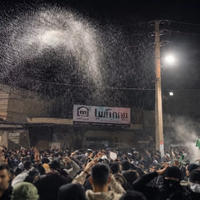
Don’t feed us, free us: Iranians hit back at Vance over 'hunger' remarks

2
EXCLUSIVE

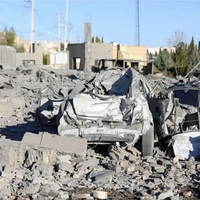
IRGC personnel sheltered in Shiraz lodging complex were target of deadly strike

3
EXCLUSIVE

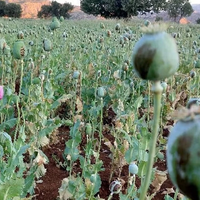
Opium for survival: Inside a shift in Iran’s Zagros villages

4

IAEA chief says inspectors will visit Iran enrichment sites under US-Iran MoU

5
INSIGHT

President's economic reality check fuels Iran's US deal debate

Banner
Banner
Banner

Spotlight

  • Sources detail Ali Khamenei bunker with blast-resistant room
    EXCLUSIVE

    Sources detail Ali Khamenei bunker with blast-resistant room

  • Unveiled in wartime, targeted in peacetime?
    INSIGHT

    Unveiled in wartime, targeted in peacetime?

  • US sanctions waiver could bring Iran's oil trade out of the shadows
    ANALYSIS

    US sanctions waiver could bring Iran's oil trade out of the shadows

  • Hardline revolt targets Ghalibaf over US agreement
    INSIGHT

    Hardline revolt targets Ghalibaf over US agreement

  • IRGC personnel sheltered in Shiraz lodging complex were target of deadly strike
    EXCLUSIVE

    IRGC personnel sheltered in Shiraz lodging complex were target of deadly strike

  • Don’t feed us, free us: Iranians hit back at Vance over 'hunger' remarks
    VOICES FROM IRAN

    Don’t feed us, free us: Iranians hit back at Vance over 'hunger' remarks

  • Opium for survival: Inside a shift in Iran’s Zagros villages
    EXCLUSIVE

    Opium for survival: Inside a shift in Iran’s Zagros villages

•
•
•

More Stories

Israel will not leave south Lebanon while Hezbollah exists, finance minister says

Jun 23, 2026, 08:11 GMT+1

Israeli Finance Minister Bezalel Smotrich said on Tuesday that Israel would not withdraw its forces from southern Lebanon as long as Iran-backed Hezbollah remained active there and the current Israeli government stayed in power.

“It simply will not happen,” Smotrich told Israeli Army Radio. “There will be no Israeli withdrawal from the security zone in Lebanon, including the Beaufort Ridge, as long as Hezbollah exists in Lebanon.”

Smotrich said Hezbollah must be dismantled, excluded from Lebanon’s government and stripped of any military ability to threaten Israel before new security arrangements could be discussed.

“Hezbollah is a terrorist organization. It must be dismantled, it must not be part of the Lebanese government, and it must not have any military force or ability to threaten the State of Israel. Only then will it be possible to discuss new security arrangements,” he said.

Muslim Arab states funded 12-day war on Iran, military official says

Jun 23, 2026, 07:52 GMT+1
Muslim Arab states funded 12-day war on Iran, military official says
100%

The head of the Iranian army’s center for studies and research said some Muslim Arab countries in the region helped create the conditions for the 12-day war by providing financial support to Israel and the United States.

“It is no exaggeration to say that one of the factors that helped lay the groundwork for the 12-day war was the request and financial support of some Arab and Muslim countries in the region,” Ahmadreza Pourdastan said.

He said the countries viewed the Islamic Republic as an active threat and wanted “a weakened and passive Iran” in their neighborhood.

He suggested that the war may have marked the start of an effort to remove Shiite Islam from the region.

“My personal view is that the 12-day war was the beginning of an effort to clear the region’s geography of the Shiite faith, and unfortunately, in this regard, some leaders of neighboring Muslim Arab countries covered a large part of the financial costs of this dishonorable act,” he said.

Pezeshkian says Iran-US talks depend on full commitment to obligations

Jun 23, 2026, 07:21 GMT+1

Iranian President Masoud Pezeshkian said on Tuesday that the effectiveness of talks depended on full commitment to agreed obligations and their precise implementation.

Progress would be measured by practical adherence to accepted responsibilities, Pezeshkian said in a post on X.

“Statements outside the agreed text do not help advance the negotiations,” he said.

Iran hardliners seek to stir unrest in parliament after US MOU, conservative activist says

Jun 23, 2026, 06:57 GMT+1

A conservative Iranian activist accused hardline lawmakers of pushing to reopen parliament to inflame tensions and use its platform for factional purposes following the MOU between Tehran and Washington.

Mohammad Mohajeri said members of the hardline Paydari Front wanted to use parliament’s podium for their own political interests, citing recent remarks by lawmaker Mahmoud Nabavian, who has criticized Iran’s negotiating team.

Continue reading

Iran hardliners seek to stir unrest in parliament after US MoU, activist says

Jun 23, 2026, 06:32 GMT+1
Iran hardliners seek to stir unrest in parliament after US MoU, activist says
100%

A conservative Iranian activist accused hardline lawmakers of pushing to reopen parliament to inflame tensions and use its platform for factional purposes following the MOU between Tehran and Washington.

Mohammad Mohajeri said members of the hardline Paydari Front wanted to use parliament’s podium for their own political interests, citing recent remarks by lawmaker Mahmoud Nabavian, who has criticized Iran’s negotiating team.

Mohajeri likened the hardliners to Colonel Vladimir Liakhov, a Tsarist Russian military officer who bombarded and shut down Iran’s parliament in 1908, saying they also “want to bombard parliament.”

He also criticized the current parliament, calling it “one of the most ineffective parliaments in terms of a positive record.”

“It has done nothing useful and has only pursued noise and controversy,” he said.

He made the comments after MP Kamran Ghazanfari announced plans for a protest outside parliament, saying a group of lawmakers will stage a sit-in if the legislature remained closed.

The head of parliament’s Health and Treatment Committee previously criticized the continued closure of parliament, saying lawmakers had been sidelined amid the Islamic Republic’s talks with the US.

“They closed parliament so they could sign whatever they wanted,” Hosseinali Shahriari said.