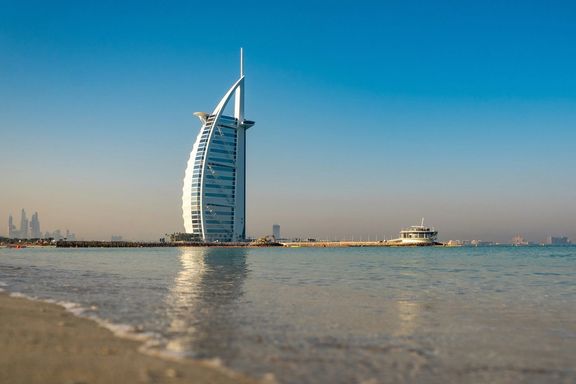
The war has pushed relations between Iran and the United Arab Emirates close to rupture, disrupting one of the region’s most important commercial relationships and leaving ordinary Iranians who built lives and businesses caught in the fallout.
Hundreds of thousands of Iranians who built lives and businesses in the UAE now face visa cancellations, frozen finances and mounting uncertainty as relations between Tehran and Abu Dhabi deteriorate.
According to several affected residents, Iranian nationals who left the UAE during the recent conflict—whether for Iran or third countries—are no longer being allowed to return, even to collect their belongings. In some cases, families still inside the Emirates have reportedly been given only weeks to leave.
Many Iranian residents say they have also been instructed to transfer funds abroad and are increasingly unable to use UAE bank accounts.
While properties and businesses have not formally been confiscated, some owners can no longer manage them directly and must rely on proxies or powers of attorney to sell assets.
Foreign companies operating in the UAE are also becoming increasingly reluctant to deal with Iranian individuals or firms, particularly those connected to trade with Iran. Many export orders involving Iran have reportedly been canceled.
“No one knows what tomorrow will bring”
Reza, a 40-year-old Iranian who has lived in Dubai with his wife for more than eight years, said Iranians still inside the UAE have not yet been deported but remain under constant pressure.
“For now, our residency status in Dubai has not changed,” he said. “But my friends say Sharjah, Abu Dhabi and other emirates are cancelling visas even for Iranians who are still inside the country.”
Reza said he and his wife, a physician, have effectively lost their livelihoods despite retaining residency permits. His wife’s hospital declined to renew her contract, while his own import-export business has ground to a halt.
“My situation is very unclear,” he said. “No one knows what tomorrow will bring.”
He added that although his company’s licence has not officially been revoked, it can no longer function because trade involving Iran has effectively stopped.
“With work permits cancelled, people can no longer use their own assets,” he said. “A food wholesaler’s store has been shut down and, because he no longer has a business licence, he cannot even sell the goods sitting in his warehouse.”
According to Reza, the pressure is even greater on intermediaries accused of helping Iran circumvent sanctions by selling oil or moving funds abroad. He said many have already been expelled from the UAE and had their bank accounts frozen.
A critical trade relationship disrupted
For years, Dubai, particularly Jebel Ali port, served as one of Iran’s most important commercial gateways, handling a large share of Iranian imports and transit trade. The UAE was often Iran’s largest or second-largest trading partner after China.
That trade route now appears severely disrupted amid rising regional tensions and what Iranian media describe as a tightening maritime blockade.
The UAE said Friday it had intercepted new missile and drone attacks allegedly launched from Iran, adding that three residents were injured.
Earlier this week, Iran’s Khatam al-Anbiya Central Headquarters denied carrying out attacks on the UAE but warned that any operation launched from Emirati territory against Iranian islands, ports or coastlines would receive a “crushing and regret-inducing response.”
Iranian media have meanwhile intensified criticism of Abu Dhabi. Jam-e Jam newspaper described the alleged seizure of Iranian assets as “modern-day robbery and open hostility,” while Abolfazl Khaki of Iran’s Chamber of Commerce accused the UAE of showing “maximum hostility” toward Iranian traders during the recent conflict.
“The recent experience showed that the UAE is no longer a safe place for Iranian investors,” Khaki said.
Iranian officials are now openly discussing alternative trade hubs. Nadir Pourparcham of Iran’s Chamber of Commerce said trade ties with the UAE “will never return to the way they were” and pointed to Qatar’s Hamad Port as a possible replacement. Iranian media have also promoted Pakistan’s ports as alternative corridors for Iranian trade.
The conservative outlet Mashregh News argued that Iran no longer needed “unreliable intermediaries” such as the UAE and said closer ties with China and Pakistan could help Tehran withstand economic pressure.
“It is time for Dubai to understand that Iran’s geography is not for sale,” the outlet wrote.
Families of protesting farmers sit on the dry bed of the Zayandeh Rud River in Iran’s Isfahan during a protest gathering in November 2021.
Iran’s water crisis is not only about scarcity or drought. It is also about where the Islamic Republic chooses to spend the country’s money, and what it leaves unfunded at home.
In a system where political and ideological objectives consistently outweigh environmental sustainability and public welfare, even severe and widely recognized crises fail to trigger meaningful correction.
In this sense, Iran’s water crisis is not a failure of resources, it is a consequence of deliberate choices. The impact of decades of misguided water engineering and policy decisions is already visible across Iran’s water systems.
Major lakes and wetlands such as Urmia Lake have shrunk. Groundwater has been depleted across more than half of the country’s plains, land subsidence is accelerating, and per capita water availability has fallen to near or below 1,000 cubic meters.
At the same time, access to reliable drinking water has become increasingly uncertain. Water quality is declining because of inadequate wastewater treatment and aging infrastructure, while policy still emphasizes large-scale agricultural self-sufficiency despite mounting environmental constraints.
It would be easy to assume that these failures could stem partially from financial limitations. But this is not a story of absolute constraint. Even under sanctions, Iran has continued to generate substantial revenues, particularly from oil exports, over the past decade.
The water crisis is not necessarily due to a lack of resources, but how those resources are allocated. Based on Iran’s FY1404 (2025-2026) public budget, significant funding is still directed toward religious and ideological institutions, amounting to roughly $750 to $860 million annually, depending on exchange rates.
At the same time, Iran’s regional activities, including support for groups such as Hezbollah, Hamas, Palestinian Islamic Jihad, the Houthis, and allied militias, are widely estimated, based on publicly reported figures, to cost an additional $1.1 to $1.5 billion each year.
These estimates reflect direct financial transfers and likely understate total support, which also includes substantial non-cash assistance such as weapons, equipment, and logistical backing.
In total, nearly $1.8 to $2.4 billion per year is allocated to priorities that do little to address Iran’s most urgent domestic challenges. Even redirecting a portion of these resources toward water management and infrastructure could support large-scale, practical solutions. Over a five-year period, such a shift would mobilize roughly $10 billion, enough to move beyond short-term fixes and begin addressing some of the structural drivers of Iran’s water crisis.
Based on order-of-magnitude cost benchmarks for standard water infrastructure projects, a reallocation of roughly $10 billion over five years could finance a coherent national water program. This would include a full-scale effort to reduce water losses in Tehran’s aging distribution network, where non-revenue water (NRW), water lost before it reaches consumers due to leaks, aging infrastructure, and inefficiencies is estimated at roughly 25 to 30 percent.
It could also support the deployment of potable reuse facilities across major urban centers such as Tehran, Mashhad, Isfahan, Shiraz, Yazd, and Ahvaz, helping relieve pressure on overstretched freshwater supplies.
In parallel, a targeted desalination and conveyance package could be implemented for Sistan and Baluchestan province, designed specifically to secure drinking water in a region facing chronic shortages, rather than to support inland agriculture.
Such an investment could also enable the construction of dozens of wastewater treatment plants nationwide, depending on facility size and treatment level, addressing both water quality degradation and reuse potential in regions struggling with untreated discharge.
Beyond urban infrastructure, even limited investments in agriculture could deliver measurable benefits. For example, modernizing irrigation in a single province such as Isfahan, where more efficient systems can reduce water use by roughly 30 to 60 percent, could significantly lower demand in one of Iran’s most water-stressed regions.
Even at the current economic development and growth, over a five-year period, roughly $10 billion directed toward ideological priorities could instead finance a nationwide water recovery program: upgrading Tehran’s water distribution system to reduce losses, building 10 potable reuse facilities for major cities, developing seven coastal desalination plants for southern Iran, and constructing a strategic water transfer system to Zahedan in Sistan and Baluchestan.
It could also fund eight large wastewater treatment plants, dozens of mid-size facilities across the country, and modernize irrigation in Isfahan. Instead, those resources are being directed elsewhere. Now imagine how the country’s water infrastructure can be overhauled if the regime is gone and Iran is back on the path to growth and prosperity, with access to the latest technologies the world has to offer, to tackle this issue.
These figures are illustrative, not precise. They highlight both Iran’s potential capacity to invest in water infrastructure and the scale of resources currently misallocated, without even accounting for additional spending on missile programs, and nuclear development, which further underscores the magnitude of available resources.
Ultimately, the constraint is neither technical nor financial: it is political. As long as the current regime remains in power, resources that could stabilize and modernize Iran’s water systems will continue to be diverted toward non-productive ideological ends.
Speaker Mohammad Bagher Ghalibaf chanting along anti-US slogans in Iran's parliament
Parliament Speaker Mohammad Bagher Ghalibaf appears to be trying to solidify his position inside Iran’s fractured post-war leadership after recent weeks exposed the limits of assumptions that he had effectively emerged as the country’s de facto ruler.
In an audio message published on May 6, Ghalibaf laid out five requests directed at Iranians at home and abroad, framing austerity, solidarity and public mobilization as essential to surviving what he described as one of the most critical periods in Iran’s contemporary history.
The intervention marked Ghalibaf’s clearest political re-emergence after a period in which hardline factions appeared to sideline him despite his elevated wartime profile.
Ghalibaf rose to prominence during the 12-day war with Israel and the United States in 2025, when he was widely seen as one of slain supreme leader Ali Khamenei’s most trusted political figures.
After Khamenei’s death, he headed Iran’s delegation in the Islamabad talks with the United States — perhaps the clearest sign yet of his standing within the new order.
Repeated remarks by President Donald Trump hinting at regime change in Iran and suggesting that a figure from inside the system could ultimately emerge reinforced speculation abroad that Ghalibaf might become the face of a post-Khamenei transition.
But his position soon appeared less secure. Hardline critics accused him of weakness in negotiations and insufficient resistance to Western pressure, and for a period he largely retreated from public view before gradually re-emerging.
In the May 6 message, Ghalibaf urged Iranians to recognize that the country was engaged in “one of the biggest wars in Iran’s contemporary history,” arguing that enduring hardship was necessary to secure a strategic victory.
His central appeal focused on austerity, with Ghalibaf calling saving and reduced consumption “the missile the people can fire at the heart of the enemy.”
He also called for reviving mutual-aid networks similar to those formed during the COVID-19 pandemic and urged the Basij militia to return to what he described as its historic role as a neighborhood-based problem-solving force helping citizens navigate daily hardships.
The appeal contrasted sharply with the Basij’s prominent role in suppressing protests during the 2022 Women, Life, Freedom movement and the unrest of January 2026.
Ghalibaf’s final request targeted Iranians professionals and experts abroad, whom he urged to contribute ideas and resources to help manage wartime economic pressures. He encouraged expatriates not to wait for official outreach but to “force officials” to use their capabilities.
The appeal quickly drew criticism from some Iranians overseas, with users on social media arguing authorities could not simultaneously seek help from expatriates while hardliners continued threatening confiscation of assets and punitive measures against critics abroad.
Ghalibaf’s remarks came amid broader calls from establishment figures for the government to repair its relationship with the public after months of unrest, war and economic pressure.
Former government spokesman Ali Rabiei and centrist politician Mohammad Atrianfar, both former intelligence officials, have argued in recent days that the state must first reconcile with its own citizens before it can stabilize the country externally.
In an interview with Khabar Online, Atrianfar warned that failing to respond seriously to public demands risked further erosion of public trust and legitimacy, pointing specifically to internet restrictions and communication controls as symbols of the widening gap between the state and society.
The comments reflect growing concern within parts of Iran’s political establishment that war, economic hardship and repeated crackdowns have deepened public alienation, forcing even longtime insiders to speak increasingly openly about the system’s legitimacy crisis.
A billboard with Iranian centrifuges illustrations and portraits of nuclear scientists killed in Israeli strikes is displayed on a street in Tehran, Iran August 29, 2025
At least six Iranian nuclear sites were attacked in recent US and Israeli strikes, with most confirmed or suspected targets tied to work needed to build a nuclear weapon, a new satellite-imagery analysis by the Institute for Science and International Security shows.
The Washington-based Institute said three other attacked sites could also be nuclear-related, but there was not enough information to be certain. In total, it said six to nine recently attacked sites were nuclear-related.
The most consequential finding is that four to seven of those sites were directly, or possibly, connected to nuclear weaponization – the process of turning nuclear material into an actual bomb.
Iran’s nuclear program has two main parts. One is producing enriched uranium, the material that can be used as fuel for civilian reactors or, at much higher levels, in a nuclear weapon. The other is weaponization: designing, testing and producing the components needed to make a working bomb.
The Institute’s report suggests the latest strikes focused heavily on the second part.
It said the recent phase of the war appeared aimed less at Iran’s already damaged enrichment infrastructure and more at degrading its ability to make the weapon itself. Some of the sites hit in this phase had not previously been publicly identified, the report said, offering new insight into what it described as the extent of Iran’s nuclear weapons-related work.
Across both phases of the war – the 12-day conflict in June 2025 and the renewed fighting from February 28 until a ceasefire on April 7/8, 2026 – the Institute said nine to 12 sites involved in developing and building nuclear weapons were targeted.
The report said Iran’s major enrichment facilities remained severely damaged from the June 2025 war. It said there was no significant new damage to facilities directly associated with uranium enrichment because they had already been destroyed, and that no reconstruction or renewed enrichment had been detected.
But the Institute said the latest strikes added another layer of damage by targeting places linked to the practical work of making a bomb.
Min-Zadayi is a previously unknown site suspected to play a key role in Iran’s attempt to reconstitute nuclear weapons capabilities post-June 2025. A close up of the hillside crater and smaller craters on a nearby concrete surface, apparently a roof for a partially buried area. (Photo by the Institute for Science and International Security)
One of the most important sites was Min-Zadayi (also Minzadehei), a previously unknown complex east of Tehran.
Israel described it as a secret nuclear compound where scientists were working on a key component of a nuclear weapons system. The Institute said later reporting suggested the site may have been involved in metallurgy – likely work connected to producing the uranium metal core of a nuclear weapon.
In simple terms, that would be one of the most sensitive stages of bomb-making: taking nuclear material and preparing it in the physical form needed for a weapon.
Satellite imagery showed three large above-ground buildings destroyed at Min-Zadayi, as well as craters near hillside and possibly partially buried structures, the report said.
Another major target was Taleghan 2, inside the Parchin military complex. The site has long been associated with Iran’s past nuclear weapons work under the Amad Plan, a program believed to have been halted in its original form in 2003 but followed by later, more concealed work.
The Institute said Iran had rebuilt and heavily fortified Taleghan 2 before it was hit in March. Satellite imagery showed earth-penetrating weapons struck the facility directly. The report said the site may have contained high-explosive containment equipment.
That is significant because high explosives are central to the design of many nuclear weapons. They are used to compress nuclear material rapidly and evenly, a crucial step in producing a nuclear explosion.
The two newly targeted buildings are close to the previously targeted (June 2025) SPND Mojdeh site and connected by footpaths. All three are involved in nuclear weapons development, according to David Albright (Photo by the Institute for Science and International Security)
The report also mentioned strikes near the Mojdeh site, also known as Lavisan 2, and at Malek Ashtar University. Both have been linked in the report to Iran’s nuclear weapons research network.
A newly built engineering-laboratory building near Mojdeh was destroyed, while a building at Malek Ashtar was described by Israel as a research and development site used to develop components for nuclear weapons production.
Other targets included the Shahid Chamran Group complex, which the Institute connected to nuclear-related research, and a building at Imam Hussein University that Israel labeled as a physics center used for Iran’s nuclear program.
The strikes also hit two sites tied to Iran’s broader nuclear fuel cycle. The Arak heavy water production plant was destroyed more thoroughly than during the June war, the Institute said. Heavy water can be used in certain types of reactors that can produce plutonium, another possible route to a nuclear weapon.
The Ardakan Yellowcake Production Plant was also rendered inoperable. Yellowcake is an early processed form of uranium. It is not bomb material, but it is a starting point for later nuclear work, including enrichment.
Despite the damage, the report does not suggest Iran’s nuclear challenge has been eliminated.
The most important unresolved issue is Iran’s enriched uranium stockpile. The Institute said tunnel complexes at Esfahan and near Natanz were not directly attacked in this phase and are believed to hold most of Iran’s enriched uranium, including about 440 kilograms of uranium enriched to 60 percent.
That level is below weapons-grade, but far above what is typically needed for civilian nuclear power and much closer to the level needed for a bomb.
The Institute said Iran had sealed some tunnel entrances before the latest war and that much of the enriched uranium appears “bottled up” in places where movement would be easier to detect. But without international inspection, the exact status of the material remains unclear.
The report also said additional nuclear scientists were killed, including senior figures linked to SPND, the military research organization associated with Iran’s nuclear weapons-related work. The Institute drew a distinction between knowledge, which cannot be destroyed, and practical know-how, which can be much harder to replace in a secret weapons program.
The overall picture is therefore one of severe damage, but not finality as Iran may still possess a large stockpile of enriched uranium, and underground sites remain a central uncertainty.
The Institute’s assessment is that the attacks have increased both the time Iran would need to build a nuclear weapon and the chance that an attempt could fail. Its argument is not simply that buildings were destroyed, but that Iran lost facilities, equipment and people connected to the difficult final steps of making a usable weapon.
Rising fertilizer prices and shortages of basic work equipment are squeezing Iranian farmers, laborers and small business owners as inflation, unemployment and falling purchasing power deepen during the fragile ceasefire.
Information received by Iran International points to growing financial pressure across sectors including agriculture, fishing, retail and manufacturing after weeks of disruption linked to conflict, internet shutdowns and trade uncertainty.
The price of potassium fertilizer for a 50-kilogram sack has increased tenfold compared to last year, reaching about 70 million rials (around $40), one farmer told Iran International.
Rice farmers typically require around six sacks of fertilizer per hectare, sharply increasing cultivation costs at a time when many already struggle with falling incomes.
The farmer added that urea fertilizer prices have also risen severalfold in recent months.
Mehdi Hosseinizadeh, head of Iran’s Association of Pesticide and Fertilizer Importers, linked the increase in fertilizer prices on Thursday to damage suffered by some petrochemical facilities during the war and shipping disruptions through the Strait of Hormuz.
Hosseinizadeh also cited rising import costs, shortages in global fertilizer markets, difficulties securing supplies from China and India, and problems related to currency allocation and import registration.
Another farmer had earlier told Iran International that the price of drip irrigation tape rose from 4 million rials ($2.25) to 30 million ($17), while fertilizer costs climbed from 8 million rials ($4.5) to more than 100 million ($57).
Drip irrigation tape is a thin polymer tube used in irrigation systems to deliver water gradually to plant roots and reduce water consumption in row crops.
Workers report layoffs and business closures
Citizens from several provinces described worsening conditions for workers and tradespeople during the ceasefire period following the conflict.
A fisherman from Qeshm island said he had been unemployed for several months and that falling prices for export fish had increased pressure on local fishermen.
Another resident from Sarbandar, Khuzestan province, described rising unemployment among port workers and shrinking household incomes.
“Everything I earn goes toward rent, transportation and a small amount of food,” the resident said.
Several citizens had previously told Iran International they were selling household goods, work tools and personal belongings to cover food and basic living expenses after losing jobs and income.
One former worker from Tehran said he had been unemployed for nearly three months after beginning work in the electrical equipment market.
“My financial situation has deteriorated sharply and daily life has become difficult to endure,” he said.
A florist from Arak said the prices of supplies including paper, glue, ribbons, boxes and floral foam had quadrupled over the past two months.
Residents in Kashan also described carpet factories shutting down and laying off workers.
Shopkeepers in several parts of Tehran, also reported widespread business closures.
Tugboats guide the crude oil tanker Odessa, carrying UAE crude after passing through the Strait of Hormuz with its Automatic Identification System transponder turned off, navigates the waters at Daesan port, where it is expected to discharge crude oil, in Seosan, South Korea, May 8, 2026.
The US-Israel war with Iran has delivered bumper profits for major oil, banking and defense companies, even as the conflict and Iran’s effective closure of the Strait of Hormuz drive up costs for households, governments and businesses worldwide, the BBC reported.
The largest gains have come in energy markets, where disruption to shipments through the Strait of Hormuz, a route for about a fifth of the world’s oil and gas, has sent prices swinging sharply.
European oil majors have benefited most because of their large trading arms, which profit from volatility.
BP’s first-quarter profits more than doubled to $3.2 billion after what it called an “exceptional” performance in trading, while Shell reported profits of $6.92 billion and TotalEnergies posted a nearly one-third rise to $5.4 billion.
US oil giants ExxonMobil and Chevron reported lower earnings than a year earlier because of supply disruptions from the Middle East, but both still beat analysts’ forecasts and expect stronger profits as oil prices remain well above prewar levels.
Major banks have also gained from market turbulence caused by the Iran war.
JP Morgan’s trading arm reported a record $11.6 billion in revenue in the first quarter, helping deliver the bank’s second-biggest quarterly profit. Across the six largest US banks, profits reached $47.7 billion in the first three months of 2026.
Defense companies have also benefited as the war pushes governments to restock weapons and expand investment in air defense, missile defense, counter-drone systems and other military hardware.
BAE Systems – a major British supplier of fighter jet components, naval systems and military technology – said it expects strong sales and profit growth this year, citing rising global security threats and increased defense spending. Lockheed Martin, Boeing and Northrop Grumman each reported record order backlogs at the end of the first quarter.
The war has also boosted parts of the renewable energy sector, as higher fuel prices and energy insecurity accelerate interest in alternatives.
NextEra Energy shares have risen 17% this year, while Vestas and Orsted reported stronger profits. In the UK, Octopus Energy said solar panel sales had risen 50% since the end of February.