• العربية
  • فارسی
Brand
  • Iran Insight
  • Politics
  • Economy
  • Analysis
  • Special Report
  • Opinion
  • Podcast
  • Iran Insight
  • Politics
  • Economy
  • Analysis
  • Special Report
  • Opinion
  • Podcast
  • Theme
  • Language
    • العربية
    • فارسی
  • Iran Insight
  • Politics
  • Economy
  • Analysis
  • Special Report
  • Opinion
  • Podcast
All rights reserved for Volant Media UK Limited
volant media logo
VOICES FROM IRAN

Drug shortages, price surge hit patients across Iran

Apr 14, 2026, 11:18 GMT+1

Iranians face a severe shortage of essential medicines and a spike in prices, according to reports sent by citizens to Iran International, as the country struggles with a deepening healthcare crisis.

The shortages affect both life-saving treatments for cancer and heart disease as well as common over-the-counter painkillers. Despite the public struggle, earlier this month, Vice President Mohammad Reza Aref said current strategic reserves are in good condition and the government ordered urgent imports.

Price increases for critical drugs have left many patients unable to afford treatment. Citizens told Iran International that the price of Xgeva, a drug used for bone cancer, rose from 15,000,000 rials ($9.38) to 420,000,000 rials ($262.50) in two months. The treatment requires an injection every two months.

In the city of Karaj, the price of Lantus insulin rose from 1,770,000 rials ($1.11) to 7,100,000 rials ($4.44). Other residents said some types of insulin now cost more than 70,000,000 rials ($43.75) following recent regional conflicts.

Cancer patients told the broadcaster that a 30-day supply of Aromasin, which previously cost 5,000,000 rials ($3.13) with insurance, now sells for 44,000,000 rials ($27.50) when available. Many patients said they cannot find imported versions and that local substitutes are not effective.

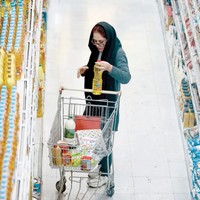
The shortages extend to basic items. Residents in Tehran said pharmacies now ration common pills like GeloFen, while elderly patients in Mashhad reported they cannot find basic antidepressants like Amitriptyline.

Medical supplies such as disposable gloves are also difficult to find in many pharmacies. Patients said they are forced to delay treatment or face financial ruin to buy medicine.

Most Viewed

Iran negotiators ordered to return after internal rift over Islamabad talks
1
EXCLUSIVE

Iran negotiators ordered to return after internal rift over Islamabad talks

2
INSIGHT

What the US naval blockade would mean for Iran’s economy

3
EXCLUSIVE

Iran’s central bank warns economy may take 12 years to rebuild after war

4
INSIGHT

Iran's digital economy battered by prolonged blackout

5
ANALYSIS

US blockade enters murky phase as tankers spoof signals and buyers hesitate

Banner
Banner

Spotlight

  • War damage amounts to $3,000 per Iranian, with blockade set to add to losses
    INSIGHT

    War damage amounts to $3,000 per Iranian, with blockade set to add to losses

  • Why the $100 billion Hormuz toll revenue is a myth
    ANALYSIS

    Why the $100 billion Hormuz toll revenue is a myth

  • US blockade targets Iran oil boom amid regional disruption
    ANALYSIS

    US blockade targets Iran oil boom amid regional disruption

  • Iran's digital economy battered by prolonged blackout
    INSIGHT

    Iran's digital economy battered by prolonged blackout

  • Iran-US ceasefire nudges sidelined Arab states toward Israel, expert says
    PODCAST

    Iran-US ceasefire nudges sidelined Arab states toward Israel, expert says

  • What the US naval blockade would mean for Iran’s economy
    INSIGHT

    What the US naval blockade would mean for Iran’s economy

•
•
•

More Stories

Iran's digital economy battered by prolonged blackout

Apr 14, 2026, 03:41 GMT+1
•
Maryam Sinaiee

More than 1,000 hours of internet shutdown in Iran is crippling small businesses and startups, with officials estimating losses of at least $35 million per day.

The disruption has cut off companies that depend on global connectivity, from e-commerce retailers to freelance service providers.

With access largely limited to domestic platforms, many users cannot reach essential global tools such as search engines, email services and widely used social media networks.

Iran’s digital economy accounts for an estimated 5% to 6% of the country’s gross domestic product, underscoring the scale of the impact.

According to Communications Minister Sattar Hashemi, the shutdown is costing more than $35 million per day—roughly $1.5 billion since the start of the conflict.

Independent estimates suggest the losses may be even higher. Afshin Kolahi, a representative of Iran’s Chamber of Commerce, has said the total daily economic damage, including indirect effects, could reach $80 million.

Officials say the restrictions are necessary to counter cyberattacks targeting government infrastructure. Many Iranians, however, believe the shutdown is also intended to make it harder for protests to spread.

‘Completely bankrupt’

Many small businesses have shut down or are close to collapse, while millions of workers have been partially or entirely pushed out of the economic cycle.

Entrepreneurs who once relied on platforms such as Instagram, Telegram and WhatsApp to reach customers have been cut off for more than six weeks. For many, rebuilding on domestic platforms feels like starting from scratch.

The challenge is particularly severe for businesses whose websites are hosted abroad. With only domestic domains widely accessible, many companies have lost access not only to customers but also to backend systems and data.

The disruption has also hit home-based producers, many of them women, who rely heavily on social media to market their products. Many had already lost customers during the 12-day war in June and the unrest earlier this year.

Some entrepreneurs say the shutdown has wiped out their income.

Amir, a YouTube podcaster, wrote that his income from YouTube, Instagram and other platforms had dropped to zero.

“I am completely bankrupt,” he said. “I can’t pay my loan installments and have to sell my equipment.”

Another user who runs an embroidery workshop said the shutdown forced layoffs.

“Until forty-something days ago, I had 37 employees. Now I’ve only been able to keep five.”

Costly workarounds

In response to mounting pressure, authorities have introduced a limited system known as “professional internet”.

Under the program, business owners can apply for unfiltered internet access via their SIM cards by submitting documentation and paying a higher fee. The access, however, applies only to the individual subscriber and does not extend to customers.

Critics say the measure does little to help businesses whose clients remain offline.

“They still don’t understand that for these businesses to function, their customers also need internet access,” one user wrote.

Some rely on VPNs, satellite services such as Starlink, or roaming through foreign SIM cards. These workarounds often come at a high cost, forcing households to reprioritize spending.

“I cut down on everything else just to stay connected,” one user wrote on social media, describing internet access as essential not only for business but also for staying informed.

Enforcement against attempts to bypass restrictions has intensified. Text messages sent to users warn that unauthorized access to the international internet—through VPNs or proxy services—violates cybercrime laws and could lead to prosecution.

An underground market for VPN services has flourished on domestic platforms, often with high prices tied to data usage. Reports of fraud are also common, with users saying they paid for access that never worked.

Access has been selectively granted through a “whitelist” system covering certain media outlets, companies and universities, creating uneven levels of connectivity across sectors.

Authorities have also stepped up efforts to confiscate satellite equipment used to access services such as Starlink, further narrowing the few remaining pathways to the global internet.

Iran’s central bank warns economy may take 12 years to rebuild after war

Apr 14, 2026, 00:30 GMT+1

Iran’s central bank has warned President Masoud Pezeshkian that rebuilding the country’s war-damaged economy could take more than a decade, sources familiar with internal deliberations told Iran International.

In a stark assessment delivered to the president in recent days, senior economic officials said the damage inflicted during the 40-day war with the United States and Israel—combined with Iran’s already fragile economic situation—could take up to 12 years to repair.

Several major airports were damaged during the conflict, while strikes also targeted oil facilities, refineries and petrochemical installations that are central to Iran’s export revenues and industrial supply chains.

Officials involved in the discussions warned that the destruction of production capacity could trigger a sharp surge in inflation in the coming months. According to the assessment presented to the president, inflation could reach as high as 180% if shortages of industrial inputs persist.

The same projections estimate that unemployment could rise by around two million people as factories, service providers and small businesses struggle to resume operations.

According to sources familiar with the discussions, central bank governor Abdolnaser Hemmati has been urging Pezeshkian to take urgent steps to stabilize the economy, including restoring full internet access and pursuing an agreement with the United States.

Tehran and Washington appear to be exploring the possibility of further talks following the one in Pakistan last weekend. Iranian economists have long argued that a diplomatic thaw and easing of sanctions could be the best path toward economic stabilization.

Iran has maintained a nationwide internet shutdown for weeks during the conflict, a move officials say was intended to counter cyber threats but which has also severely disrupted businesses that rely on global connectivity.

Iran’s digital economy accounts for roughly 5–6% of the country’s GDP, and the shutdown has cut off millions of entrepreneurs from customers, payment systems and online platforms.

Small businesses, freelancers and startup founders have been among the hardest hit. Many rely on services such as Instagram, messaging apps and foreign-hosted websites to reach clients.

Economists inside the government warn that prolonged restrictions could deepen the downturn and slow recovery even further.

The bleak economic projections have heightened concerns among members of Pezeshkian’s team, according to the sources.

Some officials fear that if the economic crisis worsens or the state faces financial collapse, powerful figures within the Islamic Revolutionary Guard Corps could seek to shift blame onto the president, they said.

Iran entered the war already under heavy economic strain from years of sanctions, high inflation and currency instability.

Iran-US ceasefire nudges sidelined Arab states toward Israel, expert says

Apr 13, 2026, 20:15 GMT+1
•
Negar Mojtahedi

Arab states hit hardest by Iran’s strikes may be emerging from the US-Iran ceasefire feeling sidelined, a shift that could push them closer to Israel as they rethink who can truly guarantee their security, Middle East scholar Dalia Ziada told Eye for Iran.

The pause in fighting has forced capitals across the Persian Gulf into a difficult reassessment.

For years, governments in cities like Doha, Dubai, Abu Dhabi and Manama believed their wealth, diplomacy and security ties with Washington insulated them from the region’s wars.

The latest conflict shattered that assumption.

Now, Persian Gulf Arab countries are facing damaged infrastructure, economic uncertainty, renewed fears over the Strait of Hormuz and a deeper strategic question: whether the United States remains enough.

The current arrangement is better understood as a tactical break than a durable ceasefire, one that gave both Washington and Tehran space to regroup while allowing each side to project strength at home and abroad, Ziada said.

More significantly, the countries most directly affected by Iranian strikes were largely left outside the diplomatic frame.

“They are very concerned especially [Persian] Gulf Arab countries who are thinking that they have been sidelined from this agreement for this short break or so-called ceasefire although they have been the ones most affected by this war," Ziada told the Eye for Iran podcast.

That sense of exclusion may accelerate a quiet but significant regional shift already underway.

Getting closer to Israel

“Ironically, all the signs tell us that Arab states are getting closer and closer to Israel,” she said.

The logic is increasingly practical. For many Persian Gulf Arab countries, the war exposed the limits of relying solely on American military guarantees while hosting US assets that can themselves become targets.

At the same time, Israel’s military posture and its willingness to directly confront Iran and its regional network is increasingly being viewed in some Persian Gulf capitals as a more immediate deterrent.

Many Arab states now appear to align more closely with Israel’s long-term regional objective: not destroying Iran as a nation but weakening the Islamic Republic and creating conditions for a future Iran capable of peaceful coexistence with its neighbors, Ziada said.

That growing overlap in strategic vision comes as frustration builds with other traditional regional actors.

In September 2025, Saudi Arabia signed the Strategic Mutual Defense Agreement (SMDA) with Pakistan, a comprehensive security pact that mandates that any aggression against one country is considered an attack on both, enabling joint defense, intelligence sharing, and military cooperation.

However, the pact did not prevent Iran's airstrikes targeting Saudi energy facilities during the war.

Disappointment with Pakistan and also Egypt, both long viewed by some Persian Gulf Arab countries as fallback security partners, has deepened the sense among Arab leaders that they may need to diversify security relationships after both failed to meet expectations during the conflict, Ziada said.

The result could be a gradual move by more Arab states toward Israel not only diplomatically, but in intelligence-sharing, missile defense and broader regional deterrence.

The implications extend well beyond the ceasefire itself.

Iran’s leverage can no longer be measured only by what happens inside Tehran. Its real regional power now lies in the network it has built through Hezbollah in Lebanon, the Houthis in Yemen and aligned political and militia structures in Iraq, Ziada said.

That means Persian Gulf security calculations are no longer centered solely on the Islamic Republic’s territory, but on its ability to project force through multiple Arab fronts.

Rather than lowering tensions, the ceasefire may harden Arab states views that Iran remains the region’s central long-term threat even in a weakened state.

For Persian Gulf Arab countries, that raises urgent questions about how to protect shipping lanes, desalination infrastructure, airports, energy exports and financial hubs if conflict resumes.

The answer may increasingly point toward a broader regional security architecture in which Israel plays a larger role, one of the most consequential geopolitical outcomes of the war so far, she said.

“We are really seeing a huge change in the Middle East right now. The Middle East will not be the same anymore.”

What the US naval blockade would mean for Iran’s economy

Apr 13, 2026, 17:40 GMT+1
•
Miad Maleki

The US naval blockade of Iran, which started on Monday, could rapidly cripple the country’s economy, cutting off most of its trade, halting oil exports and triggering inflation and currency pressure within days.

The blockade, targeting Iranian ports and imposing partial restrictions in the Strait of Hormuz, took effect at 10 a.m. Eastern Time.

Iran’s heavy reliance on southern shipping lanes leaves its economy exposed to maritime disruption, with more than 90% of its $109.7 billion annual trade passing through the Strait of Hormuz.

The blockade is expected to cut off nearly all of Iran’s seaborne trade, wiping out an estimated $435 million in daily economic activity and forcing oil field shutdowns within weeks.

A blockade would effectively zero out Iran’s export revenues within days and trigger cascading effects across its financial system.

Oil exports would be hit first

Crude oil shipments would be the first and most severe casualty. Iran has been exporting roughly 1.5 million barrels per day, generating about $139 million daily based on wartime pricing assumptions.

  • Iran keeps oil flowing to China as Hormuz pressure forces reserve release

    Iran keeps oil flowing to China as Hormuz pressure forces reserve release

Nearly all of that volume departs via Kharg Island, which handles over 90% of crude exports and lacks viable alternative routes outside the Persian Gulf.

A blockade would eliminate these flows almost immediately, cutting off the Islamic Republic’s primary source of foreign currency earnings.

Petrochemicals and non-oil trade

Petrochemical exports, valued at roughly $54 million per day based on recent trade data, would also be halted. Facilities at Assaluyeh, Imam Khomeini, and Shahid Rajaei ports all sit within the Persian Gulf and depend on uninterrupted maritime access.

Non-oil exports – including minerals and metals – would see similar disruption. Of approximately $88 million in daily shipments, around 90% would be blocked, removing another $79 million a day in revenue.

Ports play a central role in this vulnerability. Shahid Rajaei alone handles more than half of Iran’s cargo operations, while Imam Khomeini is a key entry point for basic goods imports.

Bushehr ports handled about 57 million tons of cargo last year, underscoring how deeply Iran’s trade is concentrated in southern waters.

Limited alternatives beyond the region

Efforts to develop alternative export routes appear insufficient to offset losses.

The Jask terminal, designed as a bypass to Hormuz, operates far below its intended capacity, with effective throughput estimated at around 70,000 barrels per day.

Chabahar port and Caspian Sea facilities handle only a fraction of the volumes moved through Persian Gulf ports.

Combined, these routes could replace less than 10% of current volumes.

Imports and inflation pressures intensify

On the import side, Iran brings in about $159 million in goods daily, including industrial inputs, machinery, and food.

Disruptions to these flows would likely accelerate inflation, which has already surged. Food prices have risen sharply, with staple items such as rice increasing up to sevenfold in recent months.

Any interruption to imports would deepen supply shortages and place further strain on household purchasing power.

Storage limits create shutdown risk

A critical constraint lies in Iran’s oil storage capacity.

Iran has approximately 50–55 million barrels of onshore oil storage capacity, about 60% of which is already filled. Spare capacity stands at around 20 million barrels.

  • Iran shields its oil exports as Hormuz flows falter

    Iran shields its oil exports as Hormuz flows falter

With surplus production of 1.5 million barrels per day that is normally exported, this capacity would be filled in about 13 days. After that, Iran would be forced to shut in oil wells.

This is highly significant because when mature oil wells are shut, water from below can intrude into the reservoir – a process known as “water coning.”

In this situation, some of the oil becomes permanently trapped within rock pores and can no longer be recovered. Iran’s oil fields are already declining at a rate of 5–8% per year.

Forced shutdowns could permanently eliminate 300,000 to 500,000 barrels per day of production capacity – equivalent to $9–15 billion in annual revenue lost forever.

Currency faces renewed pressure

The loss of export revenues would also affect Iran’s currency markets.

The rial has already weakened sharply, trading near 1.6 million per dollar in unofficial markets, with inflation running close to 50%.

  • Dollar-pegged pizza in Tehran points to a different kind of regime change

    Dollar-pegged pizza in Tehran points to a different kind of regime change

A halt in foreign exchange inflows would likely intensify depreciation, further limit access to cash, and could push the currency toward hyperinflation.

Banks have already imposed withdrawal limits, reflecting existing financial strain.

Economic pressure builds rapidly

Taken together, the figures suggest a blockade would impose roughly $13 billion in monthly economic damage, combining export losses and disrupted imports.

Iran’s economic structure, heavily dependent on the Persian Gulf transit routes and energy exports, makes continued resistance economically impossible under the US naval blockade.

The figures show how quickly pressure could build if shipping lanes are closed, with immediate fiscal impacts followed by longer-term damage to production capacity and financial stability.

Tehran sends tough message but keeps diplomacy door open

Apr 13, 2026, 03:43 GMT+1
•
Maryam Sinaiee

Reactions in Tehran to the collapse of the Islamabad talks suggest Iran’s leadership is settling on a dual message: defiance toward Washington’s pressure while still leaving the door to diplomacy open.

Across Iran’s political spectrum—from senior officials to hardline lawmakers—the failure of the 21-hour negotiations has been framed not as the end of talks but as a moment to test leverage, particularly around the Strait of Hormuz and Washington’s newly announced naval blockade.

Speaker Mohammad-Bagher Ghalibaf, who was part of the Iranian delegation in Islamabad, placed responsibility for the breakdown squarely on Washington while leaving room for further engagement.

In a post on X, he wrote that distrust toward the United States stems from “the experiences of the previous two wars,” adding that Washington failed to convince Tehran while leaving open whether the Americans could “earn our trust.”

President Masoud Pezeshkian struck a softer tone, signaling conditional openness to diplomacy.

“If the American government abandons its totalitarianism and respects the rights of the Iranian nation, ways to reach an agreement will certainly be found,” he wrote on X.

All about Hormuz

The Strait of Hormuz—through which roughly a fifth of global oil flows—has rapidly emerged as both a bargaining chip and a symbolic red line in Tehran’s messaging.

President Donald Trump announced a US naval blockade aimed at preventing vessels from entering or leaving Iranian ports and intercepting ships that pay transit fees to Tehran.

US Central Command said the blockade would begin Monday and apply to vessels of all nations calling at Iranian ports.

Iran’s Islamic Revolutionary Guard Corps Navy warned that any escalation in the waterway could have severe consequences, cautioning that “any miscalculation will trap the enemy in deadly whirlpools in the strait.”

Hardline voices have increasingly framed control of the waterway as a source of revenue and national prestige.

“From now on… we will have a third source of income called the Strait of Hormuz,” lawmaker Amir-Hossein Sabeti said at a pro-government rally.

University professor and commentator Foad Izadi suggested in a post on X that future confrontation could transform the strait into Iran’s “most important source of income,” while hinting that alternative export routes could become targets.

‘Taboo broken’

Some Iranian analysts warn that the US blockade risks pushing both sides closer to military confrontation.

Political analyst Ruhollah Rahimpour described the move as “beating the drums of war,” arguing that Washington is effectively testing Iran’s economic lifeline.

“Iran’s economy is locked into the chokepoint of Hormuz, and now Trump has decided to test this lock with a hammer,” he said. “In such a situation, either the lock opens, or the whole door will be torn off.”

Reformist voices, however, emphasized the historic nature of the talks themselves.

Former lawmaker Mahmoud Sadeghi described the direct engagement as “a major taboo-breaking moment,” noting the significance of Iranian and American officials meeting at such a level after nearly half a century.

Journalist Ahmad Zeidabadi similarly argued that failure in Islamabad “does not mean a definite failure of diplomacy,” warning that a return to full-scale war would produce an “irreversible catastrophe for all parties.”

Former Vice President Mohammad-Ali Abtahi also struck a cautious tone, writing that “47 years of open hostility cannot be resolved in a few hours.