The issue has emerged as a major sticking point in the Islamabad talks, where disagreements over control of the waterway have contributed to a negotiating deadlock, according to media reports.
"The Strait of Hormuz is one of the issues under serious dispute," the IRGC-affiliated Tasnim News reported after the first round of talks in Pakistan, saying the negotiations were stalled by Washington’s “excessive demands.”
CNN also cited a Pakistani source as saying that a key dispute over control of the strait remains unresolved.
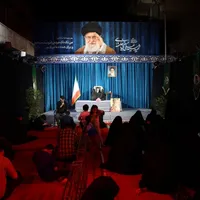
Iran's new supreme leader, Mojtaba Khamenei, in a written message on Thursday to mark the 40th day after his father's killing, briefly referred to plans for the strait.
"We will certainly usher the management of the Strait of Hormuz into a new phase," he wrote.
Iran has exercised de facto control over the passage since February 28, requiring vessels to coordinate directly with the Revolutionary Guards (IRGC). Commercial shipping has been rerouted through Iranian territorial waters, and transit fees have been imposed on the small number of vessels that are allowed to pass—reportedly averaging $2 million per tanker, payable in Chinese yuan or cryptocurrencies.
According to Bloomberg, shipowners must disclose cargo details, destination, and ownership through intermediaries linked to the IRGC. Iran then levies a “toll” of at least $1 per barrel, with higher rates depending on political considerations. Once approved, IRGC vessels escort ships through what has effectively become a controlled corridor.
A brief, Pakistani-mediated reopening on Wednesday highlighted the volatility of the situation. Tehran announced a two-week window for “safe passage,” albeit under strict coordination and “technical limitations.” Yet the opening proved short-lived. The IRGC halted tanker transit again, shortly after Israeli strikes in Lebanon.
The rapid reversal underscored how control over the strait remains central to both military calculations and diplomatic bargaining in Islamabad.
Hundreds of oil tankers are currently waiting inside the Persian Gulf. Since the announcement of the ceasefire and as of Thursday, fewer than a dozen ships have transited, according to tracking data from Kpler, Lloyd’s List Intelligence, and Signal Ocean—none of them standard commercial crude oil tankers.
In a statement, the IRGC warned that “any ship passing through the Strait of Hormuz without authorization would be targeted and destroyed.” The navy later cited “wartime conditions” and the possible presence of “anti-ship mines along the main transit route,” adding that alternative pathways had been designated.
US Central Command said on Saturday its forces have started setting conditions to clear sea mines in the Strait of Hormuz, with two Navy destroyers operating in the waterway as part of efforts to restore safe maritime transit.
Washington has tied de-escalation directly to maritime access. The US president said any pause in fighting depends on reopening the strait, framing it as essential to global stability.
Asked whether Iran could charge transit fees, Donald Trump told ABC News: “We’re thinking of doing it as a joint venture… It’s a way of securing it — also securing it from lots of other people.” He added: “It’s a beautiful thing.”
Strait as leverage
Iranian officials and media portray the strategy as a calculated use of geography. Nour News, an outlet close to security institutions, described the strait as “an unparalleled lever of power,” adding that Tehran had demonstrated “undeniable influence in international security and the global economy equations.”
The outlet emphasized that, regardless of negotiation outcomes, Iran has achieved “strategic success” by leveraging “native variables” to expand its influence.
Similarly, the conservative site Fararu called the strait “the point that changed the equation,” arguing that Tehran entered negotiations “not after defeat but from a position of resilience.”
Former diplomat Kourosh Ahmadi has suggested that restricting traffic could also serve as a deterrent against future attacks, arguing that “political guarantees are unreliable,” citing Ukraine’s post-1994 experience after relinquishing nuclear weapons.
Hossein Alaei, a former IRGC commander, has gone further, proposing a new legal framework for the strait. “Given that Iran’s control over the Strait of Hormuz was one of the most important factors in compelling Trump to agree to a ceasefire,” he wrote, Tehran should institutionalize a system in which it receives compensation for providing security—turning current practice into an internationally accepted norm.
Legal dispute
Iran’s actions have drawn scrutiny under the United Nations Convention on the Law of the Sea (UNCLOS), which guarantees transit passage through international straits. Critics argue that imposing tolls and restricting access violates these provisions.
However, some analysts contend that extraordinary circumstances justify extraordinary measures.
Ahmadi argues that external aggression allows Tehran to suspend normal legal regimes, including UNCLOS provisions and domestic maritime laws, framing current actions as defensive.
Lawmakers in Tehran are now reportedly drafting legislation to formalize Iran’s sovereignty claims over the strait and potentially institutionalize it as a regulated toll corridor.
The proposed law may be named after Alireza Tangsiri, the IRGC Navy commander recently killed in an Israeli attack—an indication of how military developments are shaping legal and political responses.