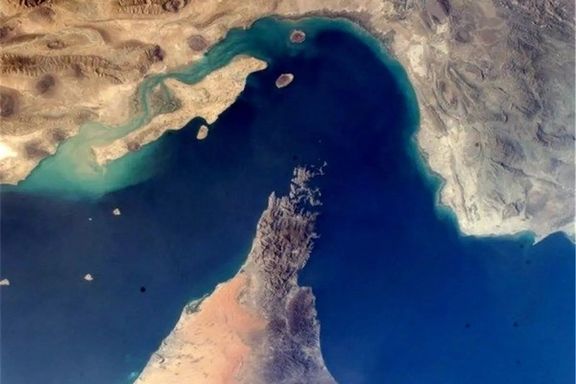
Control of the Strait of Hormuz has become Tehran’s most powerful bargaining chip as it seeks maximum leverage in the ongoing peace talks with the United States in Islamabad.
The issue has emerged as a major sticking point in the Islamabad talks, where disagreements over control of the waterway have contributed to a negotiating deadlock, according to media reports.
"The Strait of Hormuz is one of the issues under serious dispute," the IRGC-affiliated Tasnim News reported after the first round of talks in Pakistan, saying the negotiations were stalled by Washington’s “excessive demands.”
CNN also cited a Pakistani source as saying that a key dispute over control of the strait remains unresolved.
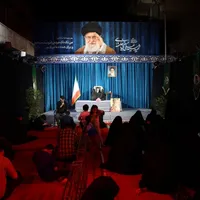
Iran's new supreme leader, Mojtaba Khamenei, in a written message on Thursday to mark the 40th day after his father's killing, briefly referred to plans for the strait.
"We will certainly usher the management of the Strait of Hormuz into a new phase," he wrote.
Iran has exercised de facto control over the passage since February 28, requiring vessels to coordinate directly with the Revolutionary Guards (IRGC). Commercial shipping has been rerouted through Iranian territorial waters, and transit fees have been imposed on the small number of vessels that are allowed to pass—reportedly averaging $2 million per tanker, payable in Chinese yuan or cryptocurrencies.
According to Bloomberg, shipowners must disclose cargo details, destination, and ownership through intermediaries linked to the IRGC. Iran then levies a “toll” of at least $1 per barrel, with higher rates depending on political considerations. Once approved, IRGC vessels escort ships through what has effectively become a controlled corridor.
A brief, Pakistani-mediated reopening on Wednesday highlighted the volatility of the situation. Tehran announced a two-week window for “safe passage,” albeit under strict coordination and “technical limitations.” Yet the opening proved short-lived. The IRGC halted tanker transit again, shortly after Israeli strikes in Lebanon.
The rapid reversal underscored how control over the strait remains central to both military calculations and diplomatic bargaining in Islamabad.
Hundreds of oil tankers are currently waiting inside the Persian Gulf. Since the announcement of the ceasefire and as of Thursday, fewer than a dozen ships have transited, according to tracking data from Kpler, Lloyd’s List Intelligence, and Signal Ocean—none of them standard commercial crude oil tankers.
In a statement, the IRGC warned that “any ship passing through the Strait of Hormuz without authorization would be targeted and destroyed.” The navy later cited “wartime conditions” and the possible presence of “anti-ship mines along the main transit route,” adding that alternative pathways had been designated.
US Central Command said on Saturday its forces have started setting conditions to clear sea mines in the Strait of Hormuz, with two Navy destroyers operating in the waterway as part of efforts to restore safe maritime transit.
Washington has tied de-escalation directly to maritime access. The US president said any pause in fighting depends on reopening the strait, framing it as essential to global stability.
Asked whether Iran could charge transit fees, Donald Trump told ABC News: “We’re thinking of doing it as a joint venture… It’s a way of securing it — also securing it from lots of other people.” He added: “It’s a beautiful thing.”
Strait as leverage
Iranian officials and media portray the strategy as a calculated use of geography. Nour News, an outlet close to security institutions, described the strait as “an unparalleled lever of power,” adding that Tehran had demonstrated “undeniable influence in international security and the global economy equations.”
The outlet emphasized that, regardless of negotiation outcomes, Iran has achieved “strategic success” by leveraging “native variables” to expand its influence.
Similarly, the conservative site Fararu called the strait “the point that changed the equation,” arguing that Tehran entered negotiations “not after defeat but from a position of resilience.”
Former diplomat Kourosh Ahmadi has suggested that restricting traffic could also serve as a deterrent against future attacks, arguing that “political guarantees are unreliable,” citing Ukraine’s post-1994 experience after relinquishing nuclear weapons.
Hossein Alaei, a former IRGC commander, has gone further, proposing a new legal framework for the strait. “Given that Iran’s control over the Strait of Hormuz was one of the most important factors in compelling Trump to agree to a ceasefire,” he wrote, Tehran should institutionalize a system in which it receives compensation for providing security—turning current practice into an internationally accepted norm.
Legal dispute
Iran’s actions have drawn scrutiny under the United Nations Convention on the Law of the Sea (UNCLOS), which guarantees transit passage through international straits. Critics argue that imposing tolls and restricting access violates these provisions.
However, some analysts contend that extraordinary circumstances justify extraordinary measures.
Ahmadi argues that external aggression allows Tehran to suspend normal legal regimes, including UNCLOS provisions and domestic maritime laws, framing current actions as defensive.
Lawmakers in Tehran are now reportedly drafting legislation to formalize Iran’s sovereignty claims over the strait and potentially institutionalize it as a regulated toll corridor.
The proposed law may be named after Alireza Tangsiri, the IRGC Navy commander recently killed in an Israeli attack—an indication of how military developments are shaping legal and political responses.
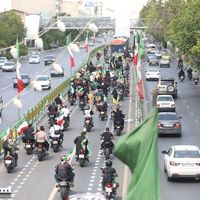
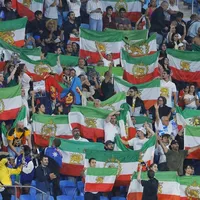
Supporters of Iran’s government wave national flags during a rally in Tehran after authorities announced a two-week ceasefire in the war with the United States and Israel, April 8, 2026
Iran’s political establishment has largely rallied behind the decision by the Supreme National Security Council to accept a two-week ceasefire mediated by Pakistan, while critics warn the pause in fighting could harm prospects for political change.
President Massoud Pezeshkian described the truce as “the fruit of the blood of the martyred great leader Khamenei and the achievement of the presence of all people on the scene,” referring to Supreme Leader Ali Khamenei, who was killed earlier in the conflict.
Several lawmakers framed the development as a strategic success. Ebrahim Azizi, head of parliament’s National Security and Foreign Policy Committee, said the ceasefire reflected the “victory of the Islamic Republic” and the “surrender of the enemy.”
Skepticism toward the United States also remains strong among lawmakers.
Malek Shariati warned that Washington is “untrustworthy,” noting that despite accepting Iran’s 10-point proposal as a basis for talks, “given the record of US bad faith, we are highly pessimistic about the outcome of peace negotiations.”
Fazlollah Ranjbar said Iran should not trust the United States unless it fully accepts Iran’s conditions and pays compensation. However, he added that he supports the ceasefire because it was approved by the Supreme National Security Council and endorsed by Iran’s leadership.
‘Exhaustive war’
Meanwhile, the Islamic Propagation Coordination Council urged media and activists to avoid “any divisive remarks, spreading doubt or despair regarding the system’s high-level decisions, and giving a pass to enemy media narratives.”
Reformist figures have broadly welcomed the ceasefire while calling for domestic political change.
Esmail Gerami-Moghaddam, vice-chair of the Etemad-e Melli Party, said all branches of government and society should unite behind the decision. He criticized opposition groups for “appropriating” past protests and accused them of contributing to the outbreak of war.
Prominent commentator Ahmad Zeidabadi wrote: “Whatever negative judgments we may have about the officials of the Islamic Republic… it cannot be denied that in this exhausting war they acted boldly, fearlessly, and effectively.”
Praising diplomatic efforts, he added: “Without a doubt, this is a brilliant political victory for Iran,” predicting that opportunities for reform could expand while “the method of regime change will fade into the background.”
Podcaster Pouria Bakhtiari wrote sarcastically: “For God’s sake, now that you’ve made a ceasefire and negotiated with a 47-year enemy, try once to make a ceasefire and negotiate with your own people.”
‘Regime change’
Many opposition figures argue the ceasefire undermines momentum for political change and could embolden repression.
Saeed Ghasseminejad, an adviser to Prince Reza Pahlavi, criticized the truce, writing: “Regime change is still the best outcome for the US, Israel, and the Iranian people.”
Some social media users echoed that view. One wrote in Persian: “This level of happiness over a two-week ceasefire is not about saving lives or infrastructure—it is about hope for the survival of the clerical regime or the defeat of the Lion and Sun revolution.”
Others warned of possible consequences during the ceasefire period. One user argued that if executions continue, responsibility would lie with those who opposed the war and called for its end to protect infrastructure.
Rubble is seen inside a heavily damaged building in Tabriz with an Iranian flag hanging from the structure after an airstrike during the Iran war, March 23, 2026
As the newly announced ceasefire struggles to hold, Tehran is entering a contradictory moment marked by official celebrations, delayed funerals and renewed political infighting.
By Wednesday morning, several senior figures were already positioning themselves as the architects of the truce, and their competition quickly spilled into the Iranian media.
The pro-government ISNA news agency reported that parliamentary Speaker Mohammad Bagher Ghalibaf would lead Iran’s delegation to the talks scheduled to begin Friday in Islamabad, Pakistan. Within half an hour, the IRGC-linked Tasnim News Agency contradicted the report, saying the composition of the delegation had not yet been finalized by the “relevant institutions.”
The conflicting reports highlighted uncertainty over who would lead the delegation and underscored the rivalries that often shape decision-making in Tehran.
The first official statement on the ceasefire came from Foreign Minister Abbas Araghchi, a longtime diplomat with close ties to Iran’s security establishment.
In a post on X, he emphasized that he was speaking “on behalf of the Supreme National Security Council of the Islamic Republic of Iran,” and thanked Pakistani officials “on behalf of the Islamic Republic of Iran,” language that appeared to project broad institutional authority.
President Massoud Pezeshkian, who cannot join the negotiating team for protocol reasons, issued a largely symbolic statement—seemingly intended to remind the public that the country still has a president expected to lead the government. Like several other officials who had advocated a ceasefire from the outset, Pezeshkian framed the temporary truce as a “victory for Iran.”
Moments after Iran signaled its reluctant acceptance of the ceasefire, Nasim Online, an outlet close to the IRGC, published a statement from the Secretariat of the Supreme National Security Council.
The statement suggested that Security Chief Mohammad Bagher Zolghadr was also seeking to frame the agreement as a decisive achievement. It declared that “the enemy… has suffered an undeniable, historic, and crushing defeat,” and repeatedly urged the public to “celebrate the victory.”
Yet within minutes of the statement, Israel and Jordan reported intercepting Iranian missiles. Later on Wednesday, Kuwait came under drone and missile attack. The incidents highlighted the fragile nature of the ceasefire and the difficulty of enforcing it across multiple actors involved in the conflict.
Israel’s heavy strikes on Beirut later that day further underscored the instability of the truce. US Vice President JD Vance publicly described the ceasefire as “fragile.”
In the early hours of Wednesday, Iranian-aligned groups in Iraq initially appeared unwilling to honor the ceasefire. But when they released a female US journalist they had taken hostage earlier in the week, the move suggested Tehran still retains influence over some allied militias and could signal a willingness to ease tensions.
From the tone of several officials in Tehran, particularly those aligned with more pragmatic political currents, it appears that many believe President Trump has concluded the conflict has reached its limit and that he does not want further escalation.
Tehran appears to share that assessment. Both sides have claimed victory, a framing some politicians describe as a “win-win agreement.”
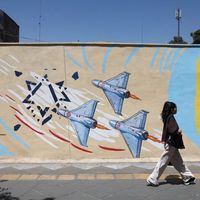
Pedestrians cross a street in Tehran beneath a giant state-sponsored billboard depicting Iranian forces hauling drones from the sea, April 5, 2026
A temporary ceasefire between the United States and Iran has triggered anger and cautious hope among Iranians who sent messages to Iran International, with many describing a sense of abandonment by President Donald Trump.
The two-week ceasefire was announced after weeks of fighting that began on February 28 when the United States and Israel launched strikes on Iran while negotiations were still underway.
President Trump said on Wednesday that Washington would work closely with Iran following what he described as a “productive regime change,” adding there would be no uranium enrichment.
But messages from across Iran suggested the pause in fighting has stirred mixed and often painful reactions. Some described the truce as a missed opportunity for political change.
“We asked you for help to free Iran, but not only did you not free it, you handed us a much worse country and trampled the blood of 45,000 martyrs,” one citizen wrote in a message addressed to Trump, referring to protesters killed during past nationwide unrest.
Others expressed deep despair about the country’s future.
“When I heard the news of the ceasefire, it felt like the world collapsed on my head,” a resident of Tehran said.
“We were miserable and now we will become more miserable. We no longer have any hope,” another message said.
Despite the truce, a weeks-long internet blackout across Iran has persisted, limiting communication and access to outside information.
Some urged patience, however, suggesting the ceasefire could be part of a broader strategy.
“Trump knows what he is doing. If he intended to accept the conditions, he would not have entered the war at all. Perhaps more surprises will occur in the coming days,” one citizen wrote.
Another message called on Iranians not to lose hope.
“Do not be so hopeless. Regime change is possible. This ceasefire may be another surprise. You have the right to be tired, but you must remain patient,” a citizen from Kerman wrote in a message addressed to fellow Iranians.
Pakistan’s Prime Minister Shehbaz Sharif said on Wednesday that US and Iranian delegations would arrive in Pakistan on Friday for talks, raising the prospect that the ceasefire could open the way for negotiations.
Some also warned that the pause in fighting could allow the authorities to intensify domestic repression.
“With this ceasefire, the killing machine will be activated faster and more young people will be at risk,” one message said.
Iran has carried out executions during the war, raising fears among activists that the authorities may use the ceasefire period to tighten control.
Others reflected on the uncertainty surrounding the fragile truce.
“I feel like a patient whose surgeon, in the middle of surgery, says let us wait a bit and see if it heals on its own,” one citizen wrote.
The details are still incomplete, but the positions Tehran and Washington have publicly tied to the ceasefire suggest not a shared settlement so much as a temporary halt layered over unresolved hostilities.
The precise texts are still only partly visible. The White House never publicly confirmed the full contents of the US 15-point proposal, saying only that some reporting had “elements of truth” but was “not entirely factual,” while Iranian state and semi-official media published a far more detailed public account of Tehran’s own terms.
Still, enough has emerged to show how far apart the two sides remain.
Public reporting on the US proposal described a plan centered on rolling back Iran’s nuclear and missile capabilities, curbing support for allied armed groups and reopening the Strait of Hormuz.
Iran’s 10-point plan pointed in the opposite direction. It sought recognition of enrichment, sweeping sanctions relief, compensation, continued influence over Hormuz, US military withdrawal from the region and an end to attacks on Iran and its allies.
That distinction matters because a ceasefire can stop the shooting without answering the political question of what comes next.
On the American side, the administration’s stated war aims remained consistent through March and April: destroy Iran’s missile arsenal and production capability, sever support for what Washington calls terrorist proxies, and ensure Iran never acquires a nuclear weapon.
Tehran’s public plan, by contrast, treated the ceasefire as the start of an arrangement that would preserve core elements of Iranian power rather than dismantle them.
In March, that divide was already visible. Time, citing reporting from Israeli Channel 12 and other outlets, said the US proposal called for dismantling Iran’s nuclear capabilities, ending uranium enrichment on Iranian soil, decommissioning Natanz, Isfahan and Fordow, limiting missile activity, ending support for proxy groups and keeping Hormuz open.
Iran rejected the proposal and, even before its fuller 10-point plan appeared publicly, made clear it was seeking a permanent end to the war rather than a simple pause.
Enrichment: rollback versus recognition
No issue illustrates the contradiction more clearly than uranium enrichment.
The publicly reported US plan sought to end enrichment inside Iran and dismantle the country’s main nuclear facilities. Tehran’s published plan did the reverse.
Iranian media versions of the 10-point framework explicitly demanded acceptance of enrichment, and some outlets reported that the phrase appeared in the Farsi version even though it was omitted from some English versions shared publicly by Iranian media.
That is not a minor drafting dispute. It is a disagreement over first principles. Washington’s reported position was that Iran’s nuclear program should be rolled back at its core. Tehran’s position was that enrichment should survive in principle, with any later discussion focused on scope rather than existence.
So long as those remain the baseline positions, the ceasefire may limit violence while leaving one of the central causes of the conflict unresolved.
A man holds a photo of Iran's Supreme Leader, Mojtaba Khamenei, while the flags of the US and Israel are burnt, as people gather after a two-week ceasefire in the Iran war was announced, in Tehran, Iran, April 8, 2026.
Allied militias: disarmament versus protection
The same gap runs through the issue of Iran’s regional allies.
The Trump administration said one of its central objectives was to sever Iran’s support for proxies. Reporting on the 15-point proposal likewise said Washington wanted Tehran to stop financing and arming those groups.
Iran’s public plan moved the other way. It called for an end to attacks not only on Iran but on its allies, and its 10-point version included a halt to war on all fronts, including Lebanon.
That contradiction was not theoretical. It surfaced almost immediately after the ceasefire announcement.
AP reported that Israel backed the US ceasefire with Iran but said it would continue operations against Hezbollah in Lebanon, directly undercutting mediation claims that Lebanon was covered.
In a statement on X on Wednesday, Israeli Prime Minister Benjamin Netanyahu’s office said Israel backed Trump’s efforts to ensure “Iran no longer poses a nuclear, missile and terror threat to America, Israel, Iran’s Arab neighbors and the world”. But the two-week ceasefire “does not include Lebanon”, he said.
If one side treats allied militias as part of the problem to be dismantled and the other treats them as part of the ceasefire to be protected, the truce does not settle this regional dimension of the war.
The White House is seen through Iran's flag during a protest against military action in Iran after US President Donald Trump said that he had agreed to a two-week ceasefire with Iran, less than two hours before his deadline for Tehran to reopen the Strait of Hormuz or face widespread attacks on its civilian infrastructure, outside the White House in Washington, DC, US, April 7, 2026.
Hormuz, sanctions and US forces
The Strait of Hormuz offers another example of rival end states disguised as one ceasefire.
For Washington, reopening the strait was a condition of de-escalation. For Tehran, public versions of the 10-point plan framed continued Iranian control over Hormuz as part of the postwar order itself.
The Guardian and AP as well as IRGC media reported that the ceasefire allowed passage under Iranian military oversight, while AP also said Iran and Oman could charge transit fees under the arrangement.
That may have eased an immediate crisis in shipping, but it did not mean the two sides agreed on the underlying principle.
Later on Wednesday, Oman said it had signed agreements that prohibit charging ships passing through the waterway.
The same is true of sanctions and troop presence.
US reporting suggested sanctions relief would come in exchange for major Iranian concessions on enrichment, missiles and proxy activity. Tehran’s public plan demanded the lifting of primary and secondary sanctions, an end to UN and IAEA measures, compensation, and the withdrawal of US combat forces from the region.
Those are not different routes to the same destination. They reflect different answers to the basic question of who is supposed to come out of this war constrained and who is supposed to come out vindicated.
A ceasefire with competing narratives
The public record supports saying Trump at one stage described Iran’s 10-point proposal as a workable basis for negotiations. It does not support saying Washington accepted Tehran’s terms as stated.
The White House explicitly declined to confirm the full contents of the US proposal, and AP reported that key details of the ceasefire remained unclear even after the announcement.
The safer conclusion is narrower: Tehran published its expectations in unusually concrete form, while Washington left more of its own position in the realm of reported outlines and official war aims.
Trump added a partial public clue on Wednesday, writing on Truth Social that “many of the 15 points have already been agreed to” and that sanctions and tariff relief would be discussed, while also insisting there would be no uranium enrichment.
That leaves both sides room to claim success. Washington says military pressure forced Tehran toward talks. Tehran says resistance forced Washington to step back from a wider assault and negotiate from a different starting point.
But the announced expectations still clash on enrichment, allied militias, sanctions, US troop presence and control of Hormuz.
On the evidence now in public, this looks less like a settled peace than a pause built on incompatible definitions of what peace would mean.
If the ceasefire is to become something more durable, talks slated for Friday in Pakistan would have to narrow those gaps rather than merely postpone them, with the first day of the truce already marked by an attack on Iran’s Lavan refinery and reports of drone activity from Kuwait.
For now, both governments are presenting the pause as proof that force worked.
The unanswered question, especially for Iranians living with the consequences of both war and state power, is whether this truce can produce anything beyond a temporary reduction in fire – and whether any real change in Iran lies somewhere beyond the victory narratives now being claimed on both sides.
Donald Trump's threats to target Iran’s power plants and bridges in case of Tehran's failure to reopen the Strait of Hormuz by Tuesday night have triggered anxiety among many Iranians, even as some say the regime's survival poses a greater threat.
Eyewitnesses talking to Iran International say they are deeply concerned about the consequences of disruptions to electricity and water, warning of immediate risks to daily life and vulnerable populations.
“We are worried about attacks on energy infrastructure; power and water cuts will make already difficult living conditions even worse,” one Tehran resident said.
Others highlighted the potential human cost, especially for patients. “Please just bring down the regime itself; cutting electricity would endanger many sick people,” another message said.
Some also warned that targeting power facilities could play into the hands of authorities. “I ask the US and Israel not to strike power plants, because the Revolutionary Guards would be even more pleased to see people suffer,” one person wrote.
Reports have also emerged of officials urging civilians to gather near sensitive sites, including power plants, effectively forming human shields—raising further alarm among residents.
Trump sharply criticized Tehran’s reported call for civilians to act as human shields around power plants amid his threat to bomb the facilities, NBC News reported, citing a brief phone call with him. “Totally illegal,” he said. “They’re not allowed to do that.”
At the same time, a number of citizens said that despite these fears, they view the survival of the Islamic Republic as the greater danger.
“We are afraid of attacks on infrastructure, but we are more afraid of the regime staying,” one message read. “If they remain, we will certainly face more executions and repression. We endure this once and for all.”
Another said: “Power and water cuts are extremely frightening—but the continuation of the Islamic Republic is even more terrifying.”
Widespread strikes on infrastructure
Recent days have seen reports of extensive attacks on Iran’s economic infrastructure. Electricity and utility facilities linked to steel and petrochemical industries in cities such as Shiraz and Asaluyeh have repeatedly been hit.
Even the Bushehr nuclear power plant—monitored by the International Atomic Energy Agency and used for civilian electricity production—has been targeted. No serious damage has been reported, but locals are said to be seriously concerned about possible radiation exposure.
Health authorities in Bushehr have distributed 180,000 iodine tablets among residents as part of a crisis preparedness plan.
Several universities and research institutions, including the Pasteur Institute of Iran, which produces vaccines, have also come under attack.
For many, such strikes are seen not as blows to the government but to national assets and the future of ordinary citizens.
Fear of power plant destruction
Among all threats, the possibility of attacks on power plants has generated the most anxiety.
Critics warn that destroying electricity infrastructure could cripple hospitals, water systems, and food supply chains, while triggering mass unemployment.
“If the power goes out, thousands of people in ICUs, newborns, and patients in operating rooms will die,” one user wrote, pointing to the cascading impact on medicine storage, water pumps, fuel distribution, and banking systems.
Others stressed the psychological toll. “Even imagining a complete blackout causes severe anxiety,” one message said, adding that prolonged outages would deepen an already strained situation.
At the same time, some residents argued that years of mismanagement had already left infrastructure unreliable.
“Did we really have stable water and electricity with this government?” one person asked. “We will endure hardship until they are gone.”
Islamic Republic is to blame
Some opposition voices say responsibility for the crisis ultimately lies with Iran’s leadership and its policies.
They argue that while strikes on infrastructure are damaging, the current system poses a longer-term threat to the country’s future.
“For me, what matters is the removal of the Islamic Republic,” one message read. “Our real infrastructure was our young people, and they were taken from us.”
Others framed the choice in stark terms, saying they would accept years of hardship if it meant a decisive end to the current system.