Iran Guards say ready to respond to any new attack
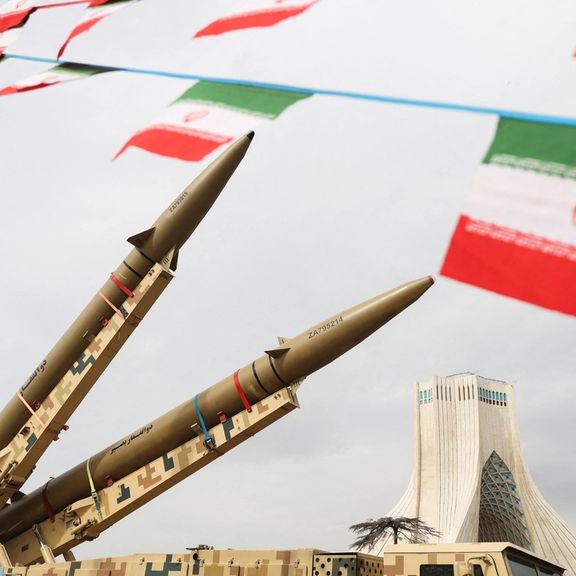
Iran’s Revolutionary Guards said on Wednesday they were ready to respond to any new attack and warned regional partners of the United States against cooperation.
The Islamic Revolutionary Guard Corps said its forces had their “hands on the trigger” and were prepared to act if what it called enemy miscalculations were repeated.
“We have no trust in the enemy’s promises,” it said, adding that “any aggression will be met with a higher level of response.”
It also warned regional partners, saying they had “seen the inability” of the United States and Israel and should “take lessons and end cooperation.”
The comments come after the ceasefire, with incidents continuing across the region, including an attack on Iran’s Lavan refinery and drone strikes causing damage in Kuwait, while the United Arab Emirates said its air defenses were responding to a missile threat.



The details are still incomplete, but the positions Tehran and Washington have publicly tied to the ceasefire suggest not a shared settlement so much as a temporary halt layered over unresolved hostilities.
The precise texts are still only partly visible. The White House never publicly confirmed the full contents of the US 15-point proposal, saying only that some reporting had “elements of truth” but was “not entirely factual,” while Iranian state and semi-official media published a far more detailed public account of Tehran’s own terms.
Still, enough has emerged to show how far apart the two sides remain.
Public reporting on the US proposal described a plan centered on rolling back Iran’s nuclear and missile capabilities, curbing support for allied armed groups and reopening the Strait of Hormuz.
Iran’s 10-point plan pointed in the opposite direction. It sought recognition of enrichment, sweeping sanctions relief, compensation, continued influence over Hormuz, US military withdrawal from the region and an end to attacks on Iran and its allies.
That distinction matters because a ceasefire can stop the shooting without answering the political question of what comes next.
On the American side, the administration’s stated war aims remained consistent through March and April: destroy Iran’s missile arsenal and production capability, sever support for what Washington calls terrorist proxies, and ensure Iran never acquires a nuclear weapon.
Tehran’s public plan, by contrast, treated the ceasefire as the start of an arrangement that would preserve core elements of Iranian power rather than dismantle them.
In March, that divide was already visible. Time, citing reporting from Israeli Channel 12 and other outlets, said the US proposal called for dismantling Iran’s nuclear capabilities, ending uranium enrichment on Iranian soil, decommissioning Natanz, Isfahan and Fordow, limiting missile activity, ending support for proxy groups and keeping Hormuz open.
Iran rejected the proposal and, even before its fuller 10-point plan appeared publicly, made clear it was seeking a permanent end to the war rather than a simple pause.
Enrichment: rollback versus recognition
No issue illustrates the contradiction more clearly than uranium enrichment.
The publicly reported US plan sought to end enrichment inside Iran and dismantle the country’s main nuclear facilities. Tehran’s published plan did the reverse.
Iranian media versions of the 10-point framework explicitly demanded acceptance of enrichment, and some outlets reported that the phrase appeared in the Farsi version even though it was omitted from some English versions shared publicly by Iranian media.
That is not a minor drafting dispute. It is a disagreement over first principles. Washington’s reported position was that Iran’s nuclear program should be rolled back at its core. Tehran’s position was that enrichment should survive in principle, with any later discussion focused on scope rather than existence.
So long as those remain the baseline positions, the ceasefire may limit violence while leaving one of the central causes of the conflict unresolved.
Allied militias: disarmament versus protection
The same gap runs through the issue of Iran’s regional allies.
The Trump administration said one of its central objectives was to sever Iran’s support for proxies. Reporting on the 15-point proposal likewise said Washington wanted Tehran to stop financing and arming those groups.
Iran’s public plan moved the other way. It called for an end to attacks not only on Iran but on its allies, and its 10-point version included a halt to war on all fronts, including Lebanon.
That contradiction was not theoretical. It surfaced almost immediately after the ceasefire announcement.
AP reported that Israel backed the US ceasefire with Iran but said it would continue operations against Hezbollah in Lebanon, directly undercutting mediation claims that Lebanon was covered.
In a statement on X on Wednesday, Israeli Prime Minister Benjamin Netanyahu’s office said Israel backed Trump’s efforts to ensure “Iran no longer poses a nuclear, missile and terror threat to America, Israel, Iran’s Arab neighbors and the world”. But the two-week ceasefire “does not include Lebanon”, he said.
If one side treats allied militias as part of the problem to be dismantled and the other treats them as part of the ceasefire to be protected, the truce does not settle this regional dimension of the war.
Hormuz, sanctions and US forces
The Strait of Hormuz offers another example of rival end states disguised as one ceasefire.
For Washington, reopening the strait was a condition of de-escalation. For Tehran, public versions of the 10-point plan framed continued Iranian control over Hormuz as part of the postwar order itself.
The Guardian and AP as well as IRGC media reported that the ceasefire allowed passage under Iranian military oversight, while AP also said Iran and Oman could charge transit fees under the arrangement.
That may have eased an immediate crisis in shipping, but it did not mean the two sides agreed on the underlying principle.
Later on Wednesday, Oman said it had signed agreements that prohibit charging ships passing through the waterway.
The same is true of sanctions and troop presence.
US reporting suggested sanctions relief would come in exchange for major Iranian concessions on enrichment, missiles and proxy activity. Tehran’s public plan demanded the lifting of primary and secondary sanctions, an end to UN and IAEA measures, compensation, and the withdrawal of US combat forces from the region.
Those are not different routes to the same destination. They reflect different answers to the basic question of who is supposed to come out of this war constrained and who is supposed to come out vindicated.
A ceasefire with competing narratives
The public record supports saying Trump at one stage described Iran’s 10-point proposal as a workable basis for negotiations. It does not support saying Washington accepted Tehran’s terms as stated.
The White House explicitly declined to confirm the full contents of the US proposal, and AP reported that key details of the ceasefire remained unclear even after the announcement.
The safer conclusion is narrower: Tehran published its expectations in unusually concrete form, while Washington left more of its own position in the realm of reported outlines and official war aims.
Trump added a partial public clue on Wednesday, writing on Truth Social that “many of the 15 points have already been agreed to” and that sanctions and tariff relief would be discussed, while also insisting there would be no uranium enrichment.
That leaves both sides room to claim success. Washington says military pressure forced Tehran toward talks. Tehran says resistance forced Washington to step back from a wider assault and negotiate from a different starting point.
But the announced expectations still clash on enrichment, allied militias, sanctions, US troop presence and control of Hormuz.
On the evidence now in public, this looks less like a settled peace than a pause built on incompatible definitions of what peace would mean.
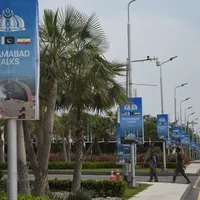
If the ceasefire is to become something more durable, talks slated for Friday in Pakistan would have to narrow those gaps rather than merely postpone them, with the first day of the truce already marked by an attack on Iran’s Lavan refinery and reports of drone activity from Kuwait.
For now, both governments are presenting the pause as proof that force worked.
The unanswered question, especially for Iranians living with the consequences of both war and state power, is whether this truce can produce anything beyond a temporary reduction in fire – and whether any real change in Iran lies somewhere beyond the victory narratives now being claimed on both sides.
If Iran negotiates in good faith with the United States, an agreement to end the conflict is possible, Vice President JD Vance said on Wednesday, citing what he called a “fragile truce.”
“The President of the United States has told me … go and work in good faith to come to an agreement,” Vance said during a visit to Hungary.
“If the Iranians are willing in good faith to work with us, I think we can make an agreement,” he added.
Vance said the United States and its allies had agreed to stop attacks on Iran, forming the basis of a truce, and that Tehran had agreed to reopen the Strait of Hormuz.
He said Donald Trump was impatient to make progress and had instructed negotiators to pursue a deal.
Masoud Pezeshkian said a ceasefire was reached based on principles accepted by Iran and vowed the country would remain united.
“The ceasefire, with acceptance of Iran’s general principles, is the result of the blood of our martyred leader … and the presence of all the people,” he said in a post on X.
“From today, we will remain together … in diplomacy, in defense, in the streets and in service,” he added.
Oman’s transport minister said the country would not impose fees on ships transiting the Strait of Hormuz, after reports that Iran and Oman could charge vessels during a ceasefire period.
The minister said Oman had signed agreements that prohibit charging ships passing through the waterway.
Under the two-week ceasefire plan, both Iran and Oman could be allowed to charge fees on ships transiting the strait, according to a regional official, with Iran expected to use the funds for reconstruction, while the strait has historically been treated as an international waterway without transit fees.
Ukrainian President Volodymyr Zelenskyy voiced support for the ceasefire in the Middle East on Wednesday, calling for a ceasefire in Russia’s war on Ukraine.
“Ukraine has always called for a ceasefire in the war waged by Russia here in Europe against our state and our people,” he wrote on X.
Zelenskyy said the United States had taken an important diplomatic step and added that Ukrainian military expert teams would continue working in the region to help strengthen security capabilities.
The Ukrainian president said a ceasefire saves lives, halts the destruction of cities and villages, and allows power plants and other infrastructure to function normally.