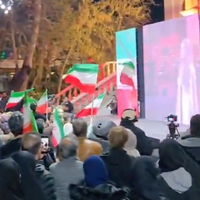
They ignite fierce controversy, yet they also summon an unexpected surge of public approval across Iran. Civilians dispatch streams of video clips to Iran International. The clips capture Iranians who voice heartfelt gratitude to President Trump and Israeli Prime Minister Netanyahu for striking at the very sinews of the regime’s repressive machine. These voices of thanks now confront a sterner question: Can the free world justify blows against targets that the regime has cunningly woven into the fabric of civilian life, without exacting a price too heavy for the Iranian people to bear?
For decades, the Islamic Republic has masterfully blurred the frontier between civilian and military domains and has woven them into a single, sinister tapestry. Nowhere does this fusion reveal itself more starkly than at the Pasteur Institute. Long before the present strikes, foreign governments sounded the alarm on proliferation dangers. Japan designated the institute an entity of concern for biological and chemical weapons capabilities in 2007. Britain followed in 2008. U.S. Department of Justice records from 2014 expose illicit transfers of sensitive equipment linked to covert programmes. Research has shown how the regime, by the early 1990s, quietly transplanted elements of its biological weapons research into civilian cover at the Pasteur and Razi Institutes, masquerading under the noble guise of vaccine development and medical science. Open sources may yield no final smoking gun of active weaponisation on the day of the strikes, yet the entrenched pattern of state-directed dual-use work demands unflinching scrutiny of these sites.
The regime carries this dark art far beyond the laboratory walls. In late 2022 and early 2023, the regime unleashed chemical assaults on girls’ schools spanning 91 institutions across 20 provinces, mere months after the Woman, Life, Freedom protests erupted. These attacks poisoned over 1,200 students with toxic gas and sent them to hospitals in agony. UN experts and Amnesty International branded the campaign deliberate. The regime singled out high school teenagers—the very cohort, together with university students, that will form the backbone of any future uprising against tyranny. Its feeble response and contemptuous dismissal of the victims’ suffering as mere “hysteria” only fuel the gravest suspicions of complicity. Such a damning record forbids any illusion that sites like the Pasteur Institute stand as pure civilian sanctuaries. It warns, moreover, that once the present storm passes, the regime may unleash similar horrors against ever wider ranks of Iran’s youth.
Academic halls face the same grim reckoning. Probing investigations by The Globe and Mail and The Guardian unmask how researchers from Sharif University of Technology, Amir Kabir University of Technology, and Isfahan University of Technology—often tied to IRGC channels—pursued advanced training and partnerships at Western seats of learning: the University of Waterloo in Canada, leading Australian institutions, and Britain’s finest, including Southampton, Imperial College London, and Cambridge. Their work has zeroed in on microwave engineering, radio frequency systems, missile guidance, and drone propulsion. When the regime systematically bends scholarly pursuit toward the engines of war, strikes on facilities at Shahid Beheshti University strike not at innocent learning, but at the regime’s own ruthless decision to militarise the academy. The April 3 strike on the university’s Laser and Plasma Research Institute targeted a node long flagged in sanctions and proliferation reporting as part of Iran’s military-relevant nuclear research base. Although open sources do not prove formal subordination to the regime’s weaponisation ecosystem, the overlap of sanctioned infrastructure, dual-use research, and personnel tied to that ecosystem leaves no doubt the site served as a scientific-military enabler.
The regime chooses its infrastructure with the same cold calculation. Steel complexes at Mobarakeh and Khuzestan form vital chokepoints that feed materials straight into missile casings and drone airframes. Fuel depots permit sharper, more discriminating pressure than sweeping assaults on power stations, which risk widespread yet reversible blackouts that weigh heavily on civilian spirits—while many regime strongholds simply switch to backup diesel generators. Reckless blows against the electrical grid would crush the hopes of the very citizens who now cheer these targeted strikes and drive them to doubt whether Trump and Netanyahu truly stand with them in the struggle to cast off their oppressors. History and bitter experience confirm that simply hitting generators or broad power plants fails to deliver decisive results; such strikes prove reversible, psychologically burdensome, and ultimately counterproductive when the goal is to sustain civilian support.
The regime adapts with relentless speed and raises the stakes for every strike. Senior government meetings and high-ranking state and IRGC sessions now convene in hospital basements. Checkpoints wind beneath bridges and into civilian tunnels. Ammunition piles up inside schools and apartment blocks across Tehran and beyond. Repressive units park motorcycles amid playgrounds and stash weapons and gear within residential buildings. These cynical manoeuvres transform everyday civilian spaces into living shields. The IRGC even disguises missile launchers as ordinary civilian trucks and trailers, a tactic analysts long warned would turn legitimate civilian transport into legitimate targets once war begins. In the coming three weeks, special forces may well prove essential to root out these embedded elements from populated zones and restore the precision that air power alone can no longer guarantee—lest the forces choking Iran’s people escape justice.
The regime’s reply comes as no surprise: its chieftains pledge fiercer crackdowns, denser checkpoints, and deadly force against all who dare celebrate the strikes or whisper dissent once the operations ebb. This wave of vengeance may yet merge with Iraqi proxy militias and the chemical agents the regime has already tested—turned once more against the youth who could ignite the final revolt. More than two dozen top architects of repression and proxy warfare still walk free, even as President Trump holds open the door to talks with factions of this same leadership.
No honest appraisal can ignore the stern limits of air power. Strikes may shatter production lines and fracture command chains, yet they rarely succeed in uprooting deeply entrenched machines of control on their own. Today the IRGC rules the Islamic Republic outright and maintains a symbiotic relationship with the Friday prayer imams who stir ideological fire while the Guards command the apparatus of intelligence and terror. The regime forged that machinery under Qassem Soleimani. It hardened the apparatus through the convulsions of 2018 and 2019 and redoubled its grip after the recent 12-day war with Israel. Its leaders have drawn a bleak conclusion: in any grave external assault, survival demands an ISIS-like creed—sacrificing the nation’s wealth as fuel for endurance, clinging to power through illicit petrochemical sales, and coldly converting schools, hospitals, and mosques into human shields for protection and resupply. The clerical-military edifice stands engineered to endure distant strikes; air power alone appears unlikely to bring it down.
History provides a relevant, if imperfect, frame. In Nazi-occupied Europe—across France, the Netherlands, Belgium, and Norway—Allied strikes imposed hardship on civilian populations. These societies contained significant collaborator elements, yet large portions of the population endured such costs because they identified the occupying power as the principal source of oppression. The analogy does not map perfectly onto present conditions; it clarifies a central dynamic: external pressure can align with internal sentiment when a regime loses its claim to represent the nation. Recent heavy US airstrikes on Hashd al-Shaabicolumns at the Shalamcheh border crossing confirm the pattern: entire battalions of Iraqi proxies, already inside Iranian customs zones and awaiting clearance, suffered devastating explosions while attempting to reinforce the regime’s repressive machine. The current outpouring of Iranian gratitude stands out for its clarity and courage; it imposes a sacred duty to strike with the precision that honours this trust and avoids any needless shadow on the cause of liberty.
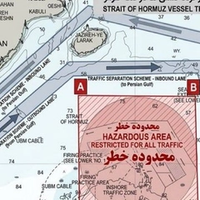
By its reckless actions and heavy reliance on foreign proxies, the Islamic Republic has already invited the decisive intervention now underway by Israel and the United States on both domestic and international fronts. The allies press forward in this ongoing campaign. Should momentum falter, the regime may survive in a weakened, hollowed-out form — a theocratic shell that operates much like the ISIS caliphate in its final days: sustained by illicit petrochemical sales and extortion, while ruthlessly exploiting civilian sites as human shields and treating national resources as expendable fuel for its own perpetuation. Such a remnant would endanger regional stability. It would threaten energy security through the Strait of Hormuz. It would undermine President Trump’s repeated assurances that help is on the way for the Iranian people’s liberation. And it would imperil the preservation and expansion of the Abraham Accords.
History and hard experience—from other cases in the region and beyond—demonstrate that the only viable course is sustained, precise pressure on the regime’s dual-use infrastructure and proxy networks. Broad, indiscriminate attacks on electrical grids or power plants have repeatedly proven insufficient and often counterproductive; they risk alienating the very population whose confidence history shows must remain intact if the regime is ever to fall. A key measure of risk mitigation lies in keeping the native Iranian population firmly on board. The regime, sensing its grip slipping, now exhibits features of a system that sustains itself in a manner comparable to late-stage insurgent entities. It relies on illicit resource flows, uses civilian infrastructure as cover, and depends on foreign proxy forces. This hollowed yet resilient structure resembles, in operational terms, the final phases of ISIS control, where survival overrides governance and civilian life becomes instrumentalised as protection. The regime stands ready to turn the country into scorched earth—sacrificing national resources and civilian infrastructure—to tighten its hold. If checkpoints, urban choke points, proxy formations, and the remaining senior IRGC command structure continue to function, they will retain the capacity to suppress any renewed anti-regime mobilisation. Only when the regime has significantly degraded or neutralised these instruments of control can the balance between state power and societal action shift meaningfully. The Iranian people themselves, who have largely welcomed these measured strikes, hold the ultimate power to shape their nation’s future. Decades of half-measures have sustained this system. Only sustained clarity and disciplined resolve that preserves their confidence can open a realistic path to genuine change.