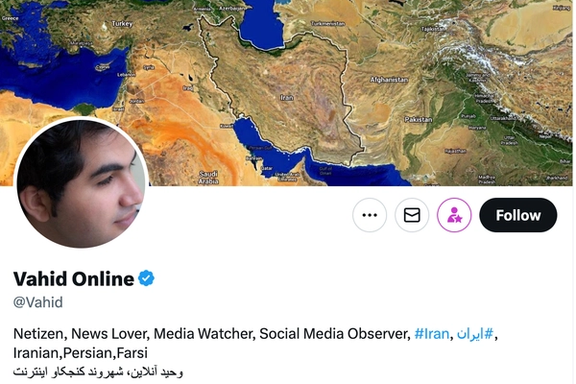
For more than a decade, the anonymous operator behind Vahid Online built a vast following by aggregating videos, images and reports from inside Iran—often capturing events that state-controlled media ignore or suppress.
During the January protests, he was among the first to publish images from inside a Tehran morgue showing people searching for missing loved ones among rows of body bags.
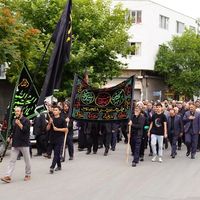
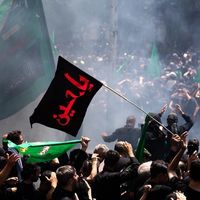
During the 2022 Woman, Life, Freedom movement, many of the most iconic images—of both defiance and repression—first appeared on his channels.
Now, as the current conflict drives demand for real-time, uncensored information, his channels have once again surged in prominence.
Videos of strikes, damaged buildings and their aftermath are sent directly to him, along with a steady flow of messages from across Iran reporting explosions, air defense activity or fighter jets passing overhead—often with timestamps and locations attached.
The messages Vahid shares not only serve as a lifeline during the information blackout, but can also literally save lives, as evidenced by a recent case in which a user said two lives were saved thanks to a warning he had shared.
What sets the platform apart is not just speed, but trust. Over years of steady, often relentless posting, Vahid Online has built a reputation that prompts people inside Iran to send material directly—text messages, photos, audio and video.
“I rely on direct, independent material sent to me,” he wrote during the January protests. “If I were just reposting what’s already out there, there would be no point—many accounts are already doing that.”
That relationship often carries a distinctly personal tone. Messages frequently begin simply: “Vahid, this happened,” or “Vahid, please publish this.” The exchange resembles less a tip line than a direct appeal to a trusted intermediary—someone anonymous, yet familiar.
That approach—prioritizing original submissions over viral content—has shaped both his influence and its limits. It means he is sometimes slower in the early stages of unrest, when little verified material is available, and more visible once footage begins to flow from the ground.
The volume and intensity of that material come at a cost. He has written at times about the strain of constant monitoring, sleepless nights and exposure to graphic or distressing images—an emotional and physical toll that has, on occasion, affected his health.
The figure behind the account had long remained elusive. Describing himself only as a “curious netizen” based in the US state of Maryland, he has consistently avoided interviews or public exposure.
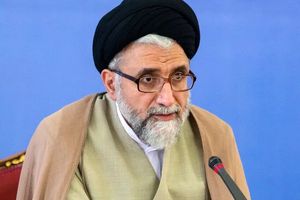
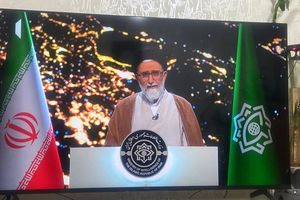
Iranian state media recently claimed—without independent verification—to have uncovered his identity, publishing what they said were personal details alongside an AI-generated image. In response, he said some details were accurate but dismissed the image as not resembling him.
"The Islamic Republic has known my official identity for years. The day just finally came when they decided to reveal it and pretend they had obtained it in some special way," Vahid said in a post on his Telegram channel on March 17.
"The information they cited from my identity documents appears to be correct," he said.
Three days later, he officially signed off his Nowruz message on X with the name released by Iranian state media: Mir-Vahid Hassantabar.
For many Iranians—inside the country and across the diaspora—Vahid Online functions as a kind of real-time window onto events that might otherwise go unseen. Admirers sometimes describe him as a “one-man army.”
Vahid operates primarily on Telegram—where he has 1.2 million subscribers—and to a lesser extent on X, where he has about 700,000 followers.
His rise dates back to the aftermath of Iran’s disputed 2009 presidential election, when protests erupted following the reelection of Mahmoud Ahmadinejad.
Then a blogger, he gained attention by publishing mobile phone footage of a raid on the campaign headquarters of opposition leader Mir-Hossein Mousavi. As repression intensified, he left Iran—reportedly via Turkey—and later sought asylum in the United States.
Since then, Vahid Online has become a central node in the circulation of information about Iran, particularly during waves of unrest. Major international outlets have at times drawn on such material.
Supporters credit the platform with helping bridge an information gap created by censorship, pointing to practices such as blurring faces, withholding identifying details and selectively posting material to protect sources. The operator himself has described his role more modestly—as an “audience member” highlighting what others might miss or suppress.
Iranian state media accuse the platform of foreign backing or links to intelligence services—claims made without publicly verifiable evidence. Vahid has dismissed such allegations as routine smear tactics, writing recently: “I am an ordinary citizen with no links to anyone.”
As conflict deepens and information becomes another battleground, Vahid Online is far more than an ordinary citizen. His platform is no longer peripheral, but part of the story—one that may, in time, be written with material he helped bring to light.
In his March 17 statement, he said now that the Islamic Republic has exposed his identity and "this barrier had been removed," he has been pushed into "a new phase of life."
"Now I’m not sure what new things I might want to do that I couldn’t before because of these limitations."