• Iran Insight
  • Politics
  • Economy
  • Analysis
  • Special Report
  • Opinion
  • Podcast
All rights reserved for Volant Media UK Limited
volant media logo
  • العربية
  • فارسی
Brand
  • Iran Insight
  • Politics
  • Economy
  • Analysis
  • Special Report
  • Opinion
  • Podcast
  • Iran Insight
  • Politics
  • Economy
  • Analysis
  • Special Report
  • Opinion
  • Podcast
  • Theme
  • Language
    • العربية
    • فارسی

Larijani rebukes UAE, other Islamic states for not backing Iran during war

Mar 16, 2026, 15:02 GMT
Iran's top security official Ali Larijani

Iran’s top security official Ali Larijani on Monday accused Islamic countries of abandoning Iran during the war with the United States and Israel, singling out the United Arab Emirates for describing Tehran as an enemy after attacks on Emirati targets.

In a statement addressed to Muslims across the world and to the governments of Islamic countries, Larijani slammed the response of Muslim governments to the US-Israeli attacks which began in late February, regretting that "no Islamic government stood alongside the people of Iran except in rare cases and limited to political positions."

“Is the position of some Islamic governments not in contradiction with the words of the Prophet of Islam who said: ‘Whoever hears the cry for help of a Muslim and does not respond is not a Muslim’?” he said. “So what kind of Islam is this?”

In an apparent reference to the United Arab Emirates, Larijani said some governments had gone further by calling Iran an enemy because it targeted what he called "American bases and US and Israeli interests on their soil."

“Is Iran expected to sit idly by while American bases in your countries are used to attack it?” Larijani asked. “These are weak excuses.”

On March 7, UAE President Mohammed bin Zayed Al Nahyan issued a thinly veiled warning to Iran, saying his country is “not easy prey” and referring to Tehran as “the enemy” — a notable departure from the language the UAE has traditionally used toward its northern neighbor.

Larijani urged Muslim countries to reconsider their positions, saying the confrontation today was between “the United States and Israel on one side and Muslim Iran and the forces of resistance on the other.”

“Which side of this battle do you stand on?” he asked.

Call for Muslim unity

Larijani warned that the region’s future depends on greater unity among Muslim states.

“You know that America is not loyal and that Israel is your enemy,” Larijani said. “Pause for a moment and reflect on yourselves and on the future of the region. Iran wishes you well and does not seek domination over you.”

He added that “the unity of the Islamic ummah, if realized with full strength, can guarantee security, progress and independence for all Islamic countries.”

“Iran continues on the path of resistance against the ‘Great Satan’ and the ‘Little Satan,’ meaning the United States and Israel,” he said.

Most Viewed

Iran shields its oil exports as Hormuz flows falter
1
ANALYSIS

Iran shields its oil exports as Hormuz flows falter

2

UN report says Iran crushed protests with force, arrests and digital curbs

3

Iran does not seek ceasefire but war must end, FM says

4

Trump plays down Iran talks, leans on allies over Hormuz

5

Leader’s aircraft and Guards transport fleet destroyed in Mehrabad strike

Banner
Banner

Spotlight

  • Grief crossed the border: How Iranians abroad lived the January massacre
    INSIGHT

    Grief crossed the border: How Iranians abroad lived the January massacre

  • Iran shields its oil exports as Hormuz flows falter
    ANALYSIS

    Iran shields its oil exports as Hormuz flows falter

  • Iran’s security agents gang rape two nurses detained for aiding protesters
    EXCLUSIVE

    Iran’s security agents gang rape two nurses detained for aiding protesters

  • Iran pressuring women footballers who defected in Australia to return
    EXCLUSIVE

    Iran pressuring women footballers who defected in Australia to return

  • Iranians catalog tragedies blamed on the regime to counter antiwar narrative
    INSIGHT

    Iranians catalog tragedies blamed on the regime to counter antiwar narrative

  • Iran raises ‘human shield’ fears by rallying supporters to the streets
    ANALYSIS

    Iran raises ‘human shield’ fears by rallying supporters to the streets

•
•
•

More Stories

Grief crossed the border: How Iranians abroad lived the January massacre

Mar 16, 2026, 14:55 GMT
•
Arash Sohrabi

The killings of protesters in January did not end when the shooting stopped. For many Iranians living thousands of kilometers from the streets where the bullets fell, the event did not remain on their screens.

It entered their bodies – in sleepless nights, stomach illness, obsessive counting of the dead, and a persistent sense that something in their relationship to Iran had been permanently altered.

Now, two months later, as the United States and Israel wage war against the Islamic Republic and another far stricter internet blackout grips the country, that earlier rupture is returning with renewed force.

Images of death, the disappearance of communication, and the uncertainty surrounding Iran’s future have reopened a wound many in the diaspora say never fully closed.

A new qualitative study by researcher Nazanin Shahbazi, a PhD student at the University of Manchester, helps explain why.

Based on eight in-depth interviews with politically engaged members of the Iranian diaspora conducted shortly after the January killings and end of internet shutdown, the research explores how people far from the violence nevertheless experienced the uprising and massacre as a personal rupture – one that reshaped their bodies, their sense of time, and even what it meant to say “I am Iranian.”

“The protests, the killings, the internet blackout and the blocked funerals were not separate chapters,” Shahbazi told Iran International. “For the people I spoke with they formed one continuous shock that reorganized their lives.”

Human rights organizations have documented the repression in detail – the shootings, the arrests, the intimidation of families and the pressure placed on relatives of the dead. What those reports cannot capture is how such violence lives on in those who witness it from afar.

“They can tell us what was done to people and roughly how many were killed,” Shahbazi said. “But they can’t show what it feels like to live with that in your body, your sleep, your relationships and your sense of future.”

  • Iranians catalog tragedies blamed on the regime to counter antiwar narrative

    Iranians catalog tragedies blamed on the regime to counter antiwar narrative

  • Iran’s security agents gang rape two nurses detained for aiding protesters

    Iran’s security agents gang rape two nurses detained for aiding protesters

Body keeps the score

One of the most striking patterns in the interviews is how often the experience of the massacre appeared in the body.

Participants described vomiting after seeing images of burned bodies, sudden weight gain, eczema, IBS flare-ups, breathlessness, grinding teeth and persistent insomnia. Some lost their appetite entirely. Others said their ordinary routines collapsed into constant monitoring of news from Iran.

“When words ran out, people kept returning to their bodies,” Shahbazi said. “Sudden vomiting, weight gained in twenty days, neck spasms or grinding teeth were how they registered what they could not yet fully think or articulate.”

The body, in this sense, became both witness and container.

Political violence was not simply something they analyzed or debated. It was something that settled into digestion, sleep, muscles and skin.

Shahbazi believes those reactions reveal dimensions of suffering that familiar categories like trauma or PTSD sometimes fail to capture.

“Diagnostic labels can flatten experience into symptom lists,” she said. “What people described were very concrete bodily dramas tied to images and events in Iran.”

  • Dancing for the dead: How protest massacre is rewriting Iran’s mourning rituals

    Dancing for the dead: How protest massacre is rewriting Iran’s mourning rituals

  • Pay for bullets: How Iran pressures families after killing protesters

    Pay for bullets: How Iran pressures families after killing protesters

Safe but summoned

Another recurring theme was the strange moral position created by exile.

The interviewees were physically safe – living in UK, Europe, North America or elsewhere outside Iran – yet many said they did not experience themselves as distant observers.

“I would describe their condition as safe but summoned,” Shahbazi said. “They lived outside the field of bullets but inside a field of responsibility.”

Again and again participants returned to a painful question: why am I here while others were killed?

Exile did not reduce the emotional weight of the uprising. In many cases it intensified it.

“Safety, mobility and an intact body were experienced not simply as privileges,” Shahbazi said. “They were felt as a kind of unpaid debt to those who stayed and faced lethal risk.”

That sense of symbolic debt helps explain why many interviewees described weeks in which work, sleep and daily routines collapsed into constant monitoring of events in Iran.

Some called friends inside the country repeatedly. Others spent hours tracking death tolls or watching newly emerging videos.

They were not simply following the news. They were trying to answer a moral demand they felt placed upon them.

  • Over 36,500 killed in Iran's deadliest massacre, documents reveal

    Over 36,500 killed in Iran's deadliest massacre, documents reveal

  • 36,500 deaths in context: How Iran’s toll compares with wars and crackdowns

    36,500 deaths in context: How Iran’s toll compares with wars and crackdowns

Language at its limit

The scale of the violence also strained language itself. Participants repeatedly reached for extreme words – “catastrophe,” “slaughter,” or “something like a Holocaust” – because ordinary vocabulary seemed incapable of holding what they had seen.

“Everyday language felt too small,” Shahbazi said. “So people borrowed the biggest words they could find.”

Even those words felt insufficient.

Many interviewees hesitated as they spoke, qualifying their descriptions with phrases like “something like” or “nothing else really covers it.”

Numbers became another way of trying to grasp the event.

Several participants described compulsively tracking death tolls or attempting rough calculations of how many people might have been killed.

“Counting was a way of making the killings halfway thinkable,” Shahbazi said.

A different Iranian-ness

Despite the suffering described in the interviews, the research also uncovered something unexpected. Several participants said the uprising had changed how they understood their own identity.

For years, many had associated being Iranian internationally with embarrassment tied to the Islamic Republic’s image abroad. After the protests, that feeling began to shift.

Shahbazi said several participants described a “partial lifting of shame” when saying they were Iranian.

“In its place they spoke about pride in the courage and sacrifices of protesters,” she said.

Some described renewed attachment to Iranian culture, language and land. Others spoke about admiration for the mothers who stood at the forefront of demonstrations.

Shahbazi believes this shift may have political consequences as well.

“It recenters being Iranian around equality, justice and shared humanity,” she said, “rather than around the state’s ideology.”

That transformation remains fragile.

The war now unfolding and the renewed blackout mean that images of violence are again entering Iranian homes and diaspora communities alike.

But if the interviews reveal anything, it is that the event did not remain confined to the streets where it began.

As Shahbazi put it: “For many Iranians in the diaspora, the massacre did not stay on their screens; it cut into their bodies, their sense of time, and even the way they dare to say, ‘I am Iranian.’”
Iran does not seek ceasefire but war must end, FM says

Mar 16, 2026, 11:23 GMT

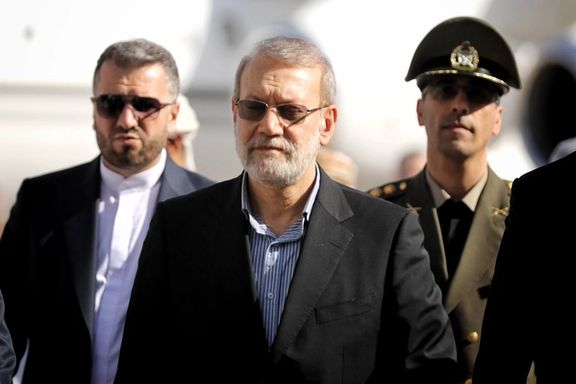
Iran is not seeking a ceasefire but war with the United States and Israel must end, the country’s foreign minister said on Monday, adding that the Islamic Republic will continue fighting until future attacks are prevented.

He made the comments during the foreign ministry’s final press conference of the Iranian calendar year, also attended by ministry spokesman Esmail Baghaei.

“We don’t ask for ceasefire, but this war must end, in a way that our enemies never again think about repeating such attacks,” Araghchi said, adding that Iran was prepared to continue the fight as long as necessary.

He said Iran had endured a difficult year but had resisted what he described as attempts by its adversaries to force Tehran into an unconditional surrender.

“They now understand what kind of nation they are dealing with,” Araghchi said, adding that Iran was ready to “take the war wherever necessary.”

‘Strait of Hormuz is open but under Iran’s control’

Foreign ministry spokesman Esmail Baghaei said the Strait of Hormuz had not been closed despite tensions, but Iran was controlling ship movements through the strategic waterway.

“Ships from some countries passed through the Strait of Hormuz in coordination with the Islamic Republic of Iran,” he said.

He added that Iran has “always been the guardian of the Strait of Hormuz and the safe passage of ships.”

The spokesman said heightened security measures in the strait were a response to what he described as a war imposed on Iran.

‘US assets in region could be targeted’

Baghaei also warned that Iran could strike US military assets located in regional countries if those facilities were used for attacks against Iran.

He said Tehran had warned regional states months earlier not to allow their territory to be used for military operations against Iran.

“We have no hostility toward regional countries,” Baghaei said. “What we target are American bases and assets.”

Since the war began, Iran has launched missiles and drones against targets across much of the Middle East, striking or threatening sites in countries including Saudi Arabia, the United Arab Emirates, Kuwait, Jordan, Oman and Iraq.

‘Iran never trusted US’

Baghaei said Iran had never trusted the United States during diplomatic negotiations and had conducted talks in what he described as an atmosphere of “absolute distrust.”

Iran entered the negotiations with “open eyes,” he said, accusing Washington of ultimately undermining diplomacy.

Tehran had engaged in talks in part to demonstrate to the international community that it was not responsible for the conflict, he added.

‘EU calls to end war are ridiculous’

Baghaei also rejected calls from European leaders for Iran to end the conflict, saying it was unreasonable to ask a country under attack to halt the war.

“Asking a country that has been attacked militarily to end the war is ridiculous,” he said. “Iran did not start this war.”

He made the comments in response to German Chancellor Friedrich Merz, who said on Friday that Berlin was pursuing diplomatic efforts to end the conflict with Iran, warning that a prolonged war poses serious risks to European security and economic interests.

‘False flag ops in California’

The Iranian spokesman also suggested that claims by US officials that Iranian drones could reach the US West Coast might be laying the groundwork for a “false flag” operation.

He said Iranian drones did not have the range to travel from the Persian Gulf to California and accused Washington and Israel of previously using such tactics.

Iran’s armed forces openly acknowledge the targets they strike, he said, and do not claim attacks they did not carry out.

The FBI warned police departments in California recently that Iran could retaliate for US strikes by launching drones at the US West Coast, ABC News reported, citing an alert sent to law enforcement agencies.

‘US not capable of hosting the World Cup’

Baghaei also raised doubts about whether the United States could ensure security for major international events, including the FIFA World Cup 2026, in which the Iranian national team is taking part.

He said international football authorities would need to address concerns about the country’s ability to provide adequate security.

Iran is scheduled to play in Group G of the 2026 FIFA World Cup against New Zealand, Belgium and Egypt, with its group-stage matches set to take place in Los Angeles and Seattle in the United States.

Sports Minister Ahmad Donyamali said on Wednesday that Iran would not take part in the tourney following airstrikes by the US and Israel.

Leader’s aircraft and Guards transport fleet destroyed in Mehrabad strike

Mar 16, 2026, 08:56 GMT

Israel’s military said on Monday that its air force had destroyed an aircraft used by Iran’s supreme leader during an overnight strike on Tehran’s Mehrabad Airport, as the conflict between Israel and Iran continues to escalate.

In a statement, the Israel Defense Forces (IDF) said the aircraft was dismantled in what it described as a “precise strike” carried out overnight. The plane was used by Iran’s former Supreme Leader Ali Khamenei as well as other senior officials and Iranian military personnel, the IDF said.

According to the Israeli military, the aircraft was used to facilitate military procurement and coordinate with what it described as Iran’s regional partners through both domestic and international flights.

“The dismantling of the aircraft disrupts the Iranian regime leadership’s coordination capabilities with axis countries, its military force build-up efforts and its ability to rehabilitate its capabilities,” the statement said, adding that the strike had degraded another strategic asset of the Iranian leadership.

The IDF said it would continue operations aimed at degrading what it called the military capabilities of Iran’s armed forces across the country.

Separately, information received by Iran International indicated that Mehrabad Airport was among several sensitive military and government-related sites targeted in a new wave of airstrikes on the Iranian capital overnight.

According to those reports, a large portion of the Revolutionary Guards’ transport fleet was destroyed during the operation, along with a ceremonial aircraft used by senior officials of the Islamic Republic.

Mehrabad Airport, located in western Tehran, is used primarily for domestic flights but also hosts military and government aviation facilities.

Trump seeks 'Hormuz coalition' as US weighs move on Kharg Island

Mar 16, 2026, 08:04 GMT

US President Donald Trump is working to assemble a multinational coalition to reopen the Strait of Hormuz as Iran’s blockade of the strategic waterway continues to disrupt global energy flows, according to a report by Axios.

Citing four sources familiar with the effort, Axios reported that Trump hopes to announce the coalition later this week and is pressing several allies to join what the White House is calling a potential “Hormuz coalition.”

The initiative comes as oil and gas prices rise amid the prolonged disruption of shipping through the narrow strait, through which roughly a fifth of the world’s oil supply normally passes.

According to Axios, US officials are also weighing the possibility of seizing Iran’s key oil export terminal on Kharg Island if tanker traffic remains restricted in the Persian Gulf. Such a move would require American troops on the ground and could mark a major escalation in the conflict.

Kharg Island, located about 15 miles off Iran’s coast, handles roughly 90% of the country’s crude oil exports and has been the focus of recent US strikes on nearby military installations.

In a post on Truth Social, Trump said the United States and several other countries could send warships to the Persian Gulf to reopen commercial shipping routes and urged China, France, Japan, South Korea and the United Kingdom to participate.

“We are talking to other countries about policing the straits. It will be nice to have other countries policing with us. We will help. We are getting a good response,” Trump told reporters aboard Air Force One on Sunday.

He added that the United States is in talks with seven countries about the effort and argued that nations dependent on Persian Gulf oil should contribute to securing the waterway.

“Most of this oil isn’t our oil – it goes to other countries. So if they want it and they want the price to come down, they need to help out,” a senior administration official told Axios.

Trump also warned that NATO allies could face consequences if they declined to assist the effort, telling the Financial Times that a lack of support could be “very bad for the future of NATO.”

Behind the scenes, Trump and senior officials spent the weekend speaking with leaders in Europe, Asia and the Persian Gulf to build political support for the initiative, Axios reported.

The primary focus for now is securing commitments from allies, with decisions about which countries would send warships, drones or other military assets to be worked out later.

Asian market

Trump is expected to discuss the issue with Japanese Prime Minister Sanae Takaichi during her visit to the White House on Thursday and is also pressing China to take part before a planned summit with President Xi Jinping later this month.

China’s foreign ministry said on Monday that they are in contact with all sides of the conflict about the situation in the Strait of Hormuz.

"We are in communication with all parties on the current situation and are committed to promoting the easing and cooling down of the situation," ministry spokesperson Lin Jian told reporters.

The US-Israeli war with Iran has entered its third week amid escalating tensions around the Strait of Hormuz, where Tehran has largely restricted tanker traffic while allowing ships carrying Iranian crude to continue operating.

While the United States has already carried out strikes on Iranian military facilities linked to Kharg Island, the White House has said no decision has been made about seizing the oil terminal itself.

“The president has made no decisions on Kharg Island,” a senior White House official told Axios. “But that could change if the effort to clear the strait drags on.”

EU mulling Black Sea model

EU foreign policy chief Kaja Kallas said she had discussed with UN Secretary-General Antonio Guterres whether a wartime arrangement similar to the Black Sea grain deal could help reopen oil and gas transport through the Strait of Hormuz.

Kallas said the closure of Hormuz was “really dangerous” not only for Asian energy supplies but also for fertilizer production, and added that EU ministers would discuss whether the bloc’s Aspides naval mission could play a role, though any change would require member-state backing.

Arriving at a meeting of EU foreign ministers in Brussels, Kallas said, "It is in our interest to keep the Strait of Hormuz open and that's why we are also discussing what we can do in this regard from the European side."

Trump plays down Iran talks, leans on allies over Hormuz

Mar 16, 2026, 01:23 GMT

President Donald Trump said the United States remains in contact with Iran but voiced doubt that Tehran is ready for serious negotiations.

Speaking to reporters aboard Air Force One on Sunday, Trump hinted that there were talks but said that “I don’t think they are ready.”

"I think they will negotiate at some point," he added. "We are doing very well with respect to the whole situation in Iran."

Earlier on Sunday, Iran’s foreign minister Abbas Araghchi dismissed suggestions Tehran was seeking talks. “

We never asked for a ceasefire, and we have never asked even for negotiation,” he told CBS. “We are ready to defend ourselves as long as it takes.”

As the US-Israeli war with Iran entered its third week, tensions around the Strait of Hormuz continued to roil global energy markets.

Trump said his administration was in talks with seven countries about helping to secure the strait and called on them to protect shipping through the vital waterway that Tehran has largely blocked to tanker traffic.

“I’m demanding that these countries come in and protect their own territory, because it is their territory,” Trump told reporters aboard Air Force One while traveling from Florida to Washington on Sunday.

He did not say which countries he meant. Australia has already said it will not send naval ships to help reopen the strait.

He also told the Financial Times that NATO allies faced a “very bad future” if they failed to do more to support US efforts against Iran.

Oil giants concerned

The chief executives of ExxonMobil, Chevron and ConocoPhillips warned Trump administration officials that disruption to flows through the Strait of Hormuz is likely to worsen the global energy crisis, according to The Wall Street Journal.

The executives cautioned that prolonged instability around the strategic waterway could sustain volatility, tighten supplies and risk shortages of refined products.

In a separate social media post, Trump accused Iran of using artificial intelligence and sympathetic news outlets to spread false battlefield claims.

He rejected reports of damage to US aircraft and ships and said media organizations that carried such accounts could face legal consequences, suggesting some should be charged with treason.