Iran’s Revolutionary Guards say they launched “extensive missile and drone” attacks targeting US military bases and Israeli sites across the region.
In a statement Sunday morning, the IRGC said the strikes targeted 27 US bases as well as Israeli facilities including the Tel Nof Airbase, the Israeli army’s command headquarters at HaKirya in Tel Aviv and a major defense industrial complex in the city.
Tehran will take “a different and harsh step of revenge with successive, regrettable slaps,” the statement warned.


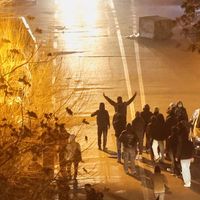
Iraqi protesters clashed with security forces near Baghdad’s heavily fortified Green Zone as demonstrations erupted following the killing of Iran’s Supreme Leader Ali Khamenei.
According to a video posted on X and verified by Al Jazeera’s Sanad fact-checking unit, protesters appeared to be mobilizing toward the US embassy amid anger over Khamenei’s death.
Footage showed demonstrators waving flags and chanting slogans while mourning the Iranian leader. Iraqi security forces moved to block the crowds as tensions rose around the diplomatic district.
Iranian President Masoud Pezeshkian has condemned the killing of Supreme Leader Ali Khamenei as “a great crime” and vowed that those responsible would face consequences, according to a statement from his office.
“This great crime will never remain unanswered and will turn a new page in the history of the Islamic world and Shiism,” the statement said'
Pezeshkian said Iran would respond with “all our strength and determination,” warning that the perpetrators and commanders of the attack would come to regret it.
President Donald Trump said Saturday that diplomacy with Iran is now “much easier” following US and Israeli strikes that killed Supreme Leader Ali Khamenei.
Speaking to CBS News in a phone interview, Trump said the military operation had weakened Iran’s position and could open the door to negotiations.
“Much easier now than it was a day ago, obviously,” he said when asked about the prospects for a diplomatic solution. “Because they are getting beat up badly.”
Trump also praised the operation’s outcome, calling Saturday’s strikes “a great day for this country, a great day for the world.”
US President Donald Trump ordered sweeping attacks on Iran despite US intelligence assessments that Tehran was unlikely to pose a direct threat to the US mainland within the next decade, The Washington Post reported, citing four people familiar with the matter.
According to the report, the decision followed weeks of lobbying by two key US allies in the Middle East—Israel and Saudi Arabia.
Israeli Prime Minister Benjamin Netanyahu continued his longstanding push for US strikes against Iran, while Saudi Crown Prince Mohammed bin Salman made multiple private calls to Trump over the past month advocating military action, despite publicly supporting diplomacy.
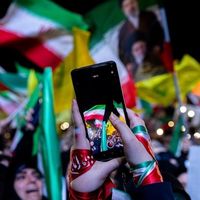
Celebration and stunned disbelief swept across parts of Iran on Saturday evening after US and Israeli officials announced that Supreme Leader Ali Khamenei had been killed.
Across social media and in accounts from residents inside Iran, the news triggered an eruption of emotion—joy, shock and disbelief in equal measure.
One user wrote on X: “I’m crying, laughing, screaming and experiencing every feeling in the world in three seconds.”
According to sources in Tehran who were still able to communicate with the outside world through Starlink satellite internet, residents leaned out of windows or gathered on rooftops soon after the announcement, shouting in celebration.
Farzad, a Tehran resident, said the sound of whistling and honking motorcycles and cars quickly filled the air. “It just erupted all at once,” he said.
Despite severe internet disruptions, videos appearing to show people dancing and celebrating circulated online from cities including Karaj, Qazvin, Shiraz, Kermanshah, Isfahan and Sanandaj.
State media coverage appeared largely unchanged for hours after the reports. It was only in the early hours of Sunday that state television confirmed the news, declaring 40 days of national mourning and a week-long public holiday.
Meanwhile Iranian forces continued missile and drone attacks on Israel and other regional countries, including the United Arab Emirates.
Prince Reza Pahlavi addressed Iranians in a message saying that with Khamenei’s death the Islamic Republic had effectively reached its end and would soon be consigned to “the dustbin of history.”
“Any attempt by the remnants of the regime to appoint a successor to Khamenei is doomed to fail from the outset,” he said. “Whoever they place in his stead will have neither legitimacy nor longevity.”
Iranian authorities are expected to convene the 88 clerical members of the Assembly of Experts—some of whom may currently be outside Tehran—to determine a successor, though doing so could prove difficult under wartime conditions.
Across social media, many diaspora users and some Iranians with internet access described Khamenei as the killer of their dreams and loved ones.
One user posted a video appearing to show young people dancing in the streets of Abdanan, in Fars province—a city where protesters were killed in large numbers less than two months ago.
“You riddled the people of Abdanan with bullets, but today it’s the people of Abdanan dancing on your corpse, criminal Khamenei,” the user wrote.
Others expressed disbelief and demanded proof.
“Khamenei’s death feels so surreal to me that I won’t believe it until I see his body,” one user wrote.
Some said they regretted that he may have died too quickly to answer for decades of repression.
Yet even amid celebration, grief lingered for lives lost under the Islamic Republic.
“If the news is true, how did everything end so suddenly, as if he never existed?” one user posted on X. “Regret for the dear lives lost, regret for years wasted in prisons, regret for lives destroyed.”