• العربية
  • فارسی
Brand
  • Iran Insight
  • Politics
  • Economy
  • Analysis
  • Special Report
  • Opinion
  • Podcast
  • Iran Insight
  • Politics
  • Economy
  • Analysis
  • Special Report
  • Opinion
  • Podcast
  • Theme
  • Language
    • العربية
    • فارسی
  • Iran Insight
  • Politics
  • Economy
  • Analysis
  • Special Report
  • Opinion
  • Podcast
All rights reserved for Volant Media UK Limited
volant media logo

Iran authorities signal conciliation and threats as protests continue

Maryam Sinaiee
Maryam Sinaiee

Iran International

Dec 31, 2025, 21:55 GMT+0Updated: 22:27 GMT+0
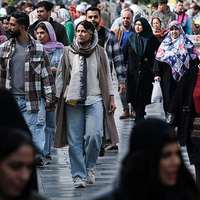
People walk past stores as the value of the Iranian Rial drops, in Tehran, Iran, December 30, 2025.

As protests over economic and political conditions enter a fourth day, Iran’s authorities appear to be pursuing a dual strategy—offering dialogue and limited concessions while issuing firm warnings to deter escalation.

Unlike previous waves of unrest, the government has so far refrained from cutting nationwide internet access. Officials also appear keen to avoid an immediate crackdown that could further inflame public anger and broaden demonstrations.

Authorities have instead announced a series of closures under the pretext of “cold weather and energy saving.” Government offices were shut down in 26 of Iran’s 31 provinces on Wednesday, and several major universities in Tehran moved classes online until further notice under the same pretext.

Recognition of the right to protest, in words

On the third day of protests, President Masoud Pezeshkian said his government recognizes the public’s right to protest and has tasked the interior minister with holding talks with representatives of Tehran’s bazaar merchants.

Ali Ahmadnia, head of the government’s information office, also said on Wednesday that the administration had formally accepted the protests and would listen to criticism. The government, he said, “will sit down and listen to all critics and will not engage in any violent behavior—indeed, it strongly opposes it.”

The comments were met with skepticism on social media. One X user wrote: “If the government respected the people and had heard their protests, it would have resigned on the first day and stood with the public. Instead, despite all its inefficiency, it keeps making empty promises—showing it still doesn’t understand what is happening.”

Warnings from other power centers

Conciliatory language from the government was accompanied by firm warnings from other power centers.

Iran’s prosecutor general, Mohammad Movahedi-Azad, described “peaceful livelihood protests” as part of social realities but warned that “any attempt to turn economic protests into tools of insecurity, destruction of public property, or the execution of externally designed scenarios” would be met with a response from authorities.

The Islamic Revolutionary Guard Corps (IRGC) also issued a statement on Monday marking the anniversary of the 2009 protest crackdown. It warned it would confront “any sedition, unrest, cognitive warfare, or security threat,” accusing what it called the enemies of the Islamic Revolution of attempting to recreate unrest through “psychological operations and narrative warfare.”

Hossein Shariatmadari, editor of the hardline Kayhan newspaper, claimed protesters were few in number and accused them of exploiting economic grievances to create unrest. He also alleged that shopkeepers had distanced themselves from protesters because of slogans he described as “dictated by the Zionist regime.”

Partial retreat toward bazaar merchants, cash aid promises

Meeting with representatives of trade guilds, President Pezeshkian said the government and parliament had agreed to suspend certain tax requirements, including penalties, for up to one year.

The move may not be sufficient to calm unrest among merchants, whose survival depends less on tax relief than on consumers’ rapidly shrinking purchasing power amid high inflation. At the same time, such concessions risk angering salaried workers who cannot avoid paying taxes.

One user wrote on X: “That’s not even the issue. When sales are close to zero, making taxes zero changes nothing. When income doesn’t cover high rent, even cash handouts don’t help.”

The government has also sought to ease public pressure by reiterating its promise to pay a monthly cash subsidy of 7,000,000,000 rials (about $5.17) per person.

Officials present the measure as targeted support for households struggling with rising prices, but critics say the amount has been eroded by inflation and is unlikely to offset the sharp decline in purchasing power or calm growing public anger.

Limited use of force—so far

Social media reports indicate that an unspecified number of protesters have been detained in recent days, though arrests appear more limited than in comparable protests in past years.

In Tehran—where demonstrations quickly spread across markets, streets, and universities on Monday and Tuesday—there have so far been no confirmed reports of security forces firing on protesters, unlike previous unrest. However, on Wednesday, security forces opened fire in the towns of Fasa, in southern Fars province, and Kouhdasht, in Lorestan province, as protesters attempted to enter governorate buildings.

Online reports initially claimed that an 18-year-old had been killed in Fasa, but a video later surfaced showing the young man alive and saying he was unharmed.

Campus controls and university shake-ups

Protests reached several universities on Tuesday, where students chanted anti-government slogans.

Following confrontations, the heads of campus security at Alzahra, Sharif, and Iran University of Science and Technology were dismissed for “a record of misconduct and failure to properly handle recent student protests.”

Also, six of at least seven detained students in Tehran were later released.

Reformist figures welcomed the unprecedented dismissals. Azar Mansouri, head of Iran’s Reformist Front, called the move “a rational response,” saying it signaled recognition that security and stability cannot be achieved by ignoring protesters’ concerns.

Most Viewed

Iran negotiators ordered to return after internal rift over Islamabad talks
1
EXCLUSIVE

Iran negotiators ordered to return after internal rift over Islamabad talks

2
EXCLUSIVE

Iran’s central bank warns economy may take 12 years to rebuild after war

3
INSIGHT

Iran's digital economy battered by prolonged blackout

4
ANALYSIS

US blockade enters murky phase as tankers spoof signals and buyers hesitate

5
ANALYSIS

Why the $100 billion Hormuz toll revenue is a myth

Banner
Banner

Spotlight

  • Hardliners push Hormuz ‘red line’ as US blockade tests Iran’s leverage
    INSIGHT

    Hardliners push Hormuz ‘red line’ as US blockade tests Iran’s leverage

  • Ideology may be fading in Iran, but not in Kashmir's ‘Mini Iran'
    INSIGHT

    Ideology may be fading in Iran, but not in Kashmir's ‘Mini Iran'

  • War damage amounts to $3,000 per Iranian, with blockade set to add to losses
    INSIGHT

    War damage amounts to $3,000 per Iranian, with blockade set to add to losses

  • Why the $100 billion Hormuz toll revenue is a myth
    ANALYSIS

    Why the $100 billion Hormuz toll revenue is a myth

  • US blockade targets Iran oil boom amid regional disruption
    ANALYSIS

    US blockade targets Iran oil boom amid regional disruption

  • Iran's digital economy battered by prolonged blackout
    INSIGHT

    Iran's digital economy battered by prolonged blackout

•
•
•

More Stories

From Tehran’s Bazaar to the middle class, anger outpaces government

Dec 31, 2025, 10:55 GMT+0
•
Maryam Sinaiee

Iran’s bazaar strike, sparked by currency chaos and collapsing purchasing power, is widening beyond traders and shopkeepers – pulling in students and salaried workers as the anger is spreading across Iran’s squeezed middle and low-income households.

President Masoud Pezeshkian’s administration says it recognizes the public’s right to protest, but it has neither the financial resources to placate the deepening public anger nor the political leverage to confront hardliners who place the blame squarely on the government.

Pezeshkian addressed the situation on social media on Tuesday, writing that people’s livelihoods are his daily concern and that fundamental reforms of the monetary and banking system are on the agenda to protect purchasing power. He also said he had tasked the interior minister with speaking to representatives of the protesters.

The message failed to convince most Iranians, including many of Pezeshkian’s own supporters.

Morteza Nemati Zargaran, a university professor, reminded Pezeshkian in a post on X that recognizing public protests carries no practical guarantees as long as he lacks the necessary authority.

“What action can you take if the protesters’ representatives challenge the country’s overarching policies – policies to which you have repeatedly declared your loyalty? And what will you do if … they are arrested by power centers beyond your government?”

'Closed is cheaper than open'

The economic strain has been especially visible in Tehran’s Grand Bazaar.

Morteza, a 45-year-old former wholesale shoe merchant who recently closed his shop after failing to pay rent, told Iran International that nearly all his fellow traders have joined the ongoing bazaar strike.

“They tell me I’m lucky I shut my shop and left,” he said. “They say they lose less money if they keep their shops closed now than if sell their goods – because it’s impossible to replace the stock at the same price.”

The stagnation has become so severe that some shops have recently advertised installment plans for clothing and shoes – an unprecedented practice in Iran and a sign of sharply declining purchasing power.

Morteza added: “The economic situation is so dire that the government no longer dares to deny it. When someone earning 400 million rials a month (around $280) – still a dream salary for many – is below the poverty line in Tehran, it means almost no worker or employee can endure the pressure anymore. Everyone has reached their limit, in every sense.”

Cautious nod from state media

Concerns over further escalation appear to be growing within official circles.

On Monday, state television – controlled by hardliners opposed to President Masoud Pezeshkian – briefly covered the bazaar protests for the first time.

Cameras were taken into shops, airing interviews in which merchants emphasized that their protests were economic in nature and driven by currency volatility rather than politics.

At the same time, videos circulating on social media showed protesters chanting anti-government slogans in several locations.

According to Morteza, while the protests so far have had a strong economic dimension, they cannot be reduced to bread-and-butter issues alone.

“Livelihood is not the only reason for people’s anger. This time, the government cannot calm society with small handouts, superficial concessions or a crackdown.”

Fear at the bottom, strain in the middle

Iran’s deteriorating economy has devastated low-income households while also eroding the lives of salaried middle-class families who once enjoyed relative stability.

Even by official figures, inflation surpassed 50 percent last month. Yet the government’s proposed budget for next year includes only a 20 percent increase in salaries for civil servants and retirees, deepening concerns over an unbridgeable gap between incomes and living costs.

Middle-class families may still live in reasonably maintained homes, but a burst pipe, a broken car, or a medical emergency can wipe out most of a month’s income, according to widespread accounts on social media.

Downsizing, once a coping strategy, now offers little relief. Iran’s housing market – particularly in Tehran – is experiencing an unprecedented slump, limiting families’ ability to sell or relocate to offset rising costs of food and utilities.

Journalist Mohammad Parsi wrote on X: “In this country… first buying a home became a dream, then a car, a phone, travel – and now even essential goods are disappearing from daily life, just like that, in one of the richest countries in the world.”

Another user, Arian Bahmani, described even buying basic snacks as a financial calculation, calling it “a frightening collapse of living standards.”

“The disaster is not that we can’t buy a house or a car – they’ve been dreams for years,” he wrote. “The disaster is that ‘500,000-rial (about 35 cents) treats are luxury purchases. When buying snacks becomes a financial risk, we are no longer citizens – we are hostages.”

Third day of Iran protests marked by multiple arrests, attack on students

Dec 31, 2025, 00:21 GMT+0

Demonstrations across Iran, initially sparked by economic hardship and the sharp fall of the national currency, continued for a third day on Tuesday, drawing in university students as authorities deployed force and made multiple arrests.

Protests spread across Iran on Tuesday, with universities and commercial districts emerging as key hubs amid a widening strike by shopkeepers in Tehran and other cities.

Human rights and student groups said at least 11 protesters were arrested near Tehran’s Shoush Square.

Five students were also detained at universities in the capital, four of whom were later released.

Student outlets reported that one student at Tehran’s Amirkabir University was severely injured during a campus crackdown after members of the Basij militia of the Islamic Revolutionary Guard Corps attacked their gathering.

Videos circulating on social media showed students chanting anti-government slogans, dismantling signs linked to the office of the Supreme Leader’s representatives and confronting security forces at campus gates.

In some clips, officers appeared to retreat as crowds advanced; in others, security forces were seen firing tear gas and, in several locations, shooting toward demonstrators.

The protests coincided with the government’s announcement that public offices would close in nearly 25 provinces, including the capital on Wednesday - a move officials said was necessary to conserve energy amid a severe cold snap. However, online weather data showed no significant drop in temperatures.

The unrest began Sunday after shopkeepers in several Tehran malls and later the Grand Bazaar launched a strike in response to the rial hitting a record low against the US dollar.

Since then, videos verified by Iran International have documented protests in Tehran, Karaj, Qeshm Island, Isfahan, Kermanshah, Shiraz, Yazd, Kerman and several other cities.

Government spokeswoman Fatemeh Mohajerani acknowledged widespread frustration, saying the protests reflected “intense economic pressure” and that peaceful assembly is recognized under Iran’s constitution.

President Masoud Pezeshkian said he instructed the interior minister to engage in dialogue with representatives of the demonstrators to hear their “legitimate” demands. He later attended a meeting with a handpicked group of trade officials on Tuesday.

Heavy security deployments were reported in Tehran, Mashhad, and Kermanshah, with residents describing checkpoints, constant patrols, and the presence of both uniformed and plainclothes officers.

In Hamadan, footage appeared to show security forces opening fire toward protesters, while riot police in Tehran and the nearby city of Malard used tear gas to disperse crowds.

Demonstrations were held on Tuesday night in several parts of Iran, and are expected to continue into a fourth day, with more Iranian businesses announcing on social media that they will close in solidarity with the movement.

The bazaar finally breaks with the Islamic Republic

Dec 30, 2025, 18:55 GMT+0
•
Mohamad Machine-Chian

Three days after merchants ignited strikes across Iran, the country’s bazaar is now openly defying the Islamic Republic, marking a historic break between conservative traders and a state accused of sacrificing livelihoods to missiles and security spending.

Historically, in Iran, religious institutions and conservative merchants—the Bazaaris—were inseparable allies. It was the Bazaaris who bankrolled the anti-state revolution of 1979, famously chartering the plane that carried Ayatollah Khomeini back to Tehran.

Yet, 46 years later, the Islamic Republic has managed to alienate its oldest and most critical constituency. For the Iranian merchant today, that alliance is dead, and commerce has become a losing game.

Despite having no hand in inflation, merchants are often blamed as price gougers. If they reject state-mandated pricing, they are accused of hoarding and tampering with the market; if they comply, they may not be able to afford to restock their inventory, selling their way into bankruptcy.

Simultaneously, the centralized allocation of foreign currency for imports drags on for months, while exporters are forced to sell their hard-earned foreign currency at losses due to state pressure.

  • Stealth austerity: Tehran seeks fuel price hike without a reckoning

    Stealth austerity: Tehran seeks fuel price hike without a reckoning

The atmosphere grew more volatile last week with the announcement of a new gasoline pricing policy, which exacerbated existing anxieties about the economy.

The release of the next year’s budget was the last straw. With oil revenues projected to cover a mere 5% of administrative costs, the government wants the public to foot the bill through deficit spending and significant tax increases.

The trade-off is stark: while every subsidy has been stripped from the ledger, the budget for security and defense has increased. By prioritizing the military and security over public welfare, the state has effectively transferred the entire burden onto the people’s dinner tables.

The market is rejecting this pressure. Merchants argue that they are being suffocated to fund the state's regional ambitions. Facing chronic 60% inflation and the weight of sanctions, business owners can no longer survive, let alone profit.

The message from the bazaar is clear: the economy cannot sustain the vows to rebuild the missile arsenal.

The state’s response to the protests has been predictable: a photo-op meeting with a handpicked group of supportive businessmen and the scapegoating of the Central Bank Governor.

The dismissal of Mohammad-Reza Farzin had been on the table for months, held in reserve as a sacrificial offering. Now, with protests spreading throughout the country, the administration offers his firing as a promise of change.

But the Iranian people see through this theater. They know the Central Bank Governor is not an independent policymaker, but a mere functionary. Replacing him with Abdolnaser Hemmati—a recycled official previously fired from the same post over rial's devaluation—signals continuity, not reform.

Public slogans reveal that the bazaar and the street are now speaking with one voice. The grievances have moved beyond daily economics; they challenge the specific governing priorities that drive this decline. The public understands that their economic distress is not an accident of mismanagement, but the calculated cost of the state's strategic choices.

This leaves the Islamic Republic with a binary choice: abandon regional ambitions and missile proliferation to return to the negotiating table, or double down on repression.

As evidenced by the direct fire opened on protesters yesterday, the regime has chosen the path of force. The market’s message is unmistakable: the people want fundamental change. The government’s answer is not reform, but bullets.

Iran president orders dialogue with protesters as chants target Khamenei

Dec 29, 2025, 22:13 GMT+0

Iran’s President Masoud Pezeshkian on Monday issued his first official response to the latest protests over worsening economic conditions, saying he has instructed his interior minister to hold talks with demonstrators.

In a post on X, Pezeshkian said he had ordered Interior Minister Ahmad Vahidi to “listen to the legitimate demands of protesters” and help the government “respond responsibly.”

Pezeshkian said improving people’s livelihoods remains his “daily concern,” and that reforms to the banking and monetary system are on the agenda.

But it remains unclear how the dialogue he has proposed will work or whether it can contain protests that are increasingly political in tone.

The unrest began with anger over the surging price of the US dollar and the collapse of the rial but quickly broadened.

Strikes and demonstrations spread nationwide on Monday, turning violent in several cities as nighttime crowds chanted against the ruling system and bazaar merchants vowed to continue their shutdowns.

In Tehran, large parts of the Grand Bazaar were shuttered, while clashes were reported in central streets.

While the slogans were mainly focused on economic issues on the first day, the second day's chants underscored a transition from economic frustration to more explicit political dissent.

Chants in several cities targeted Iran's political authority, with crowds shouting slogans such as "death to the dictator" and "Seyyed Ali (Khamenei) will be toppled this year".

The turmoil has been fueled by a currency crisis that pushed the dollar to roughly 144,000 tomans over the weekend. The head of Iran’s central bank resigned amid the turmoil, and Pezeshkian appointed former chief Abdolnaser Hemmati in a move seen as aimed at calming markets.

Trump slams Iran for ‘shooting people’ to crush protests

Dec 29, 2025, 22:00 GMT+0

US President Donald Trump on Monday criticized the Islamic Republic’s violent crackdown on protests but stopped short of calling for regime change, hours after demonstrators demanded a new ruling system in nationwide protests.

Speaking on Monday in Florida alongside Israeli Prime Minister Benjamin Netanyahu, Trump said Iranian authorities routinely open fire on demonstrators.

“They kill people,” Trump said at Mar-a-Lago. “Every time they have a riot, or somebody forms a group, little or big, they start shooting people.”

Massive nationwide protests erupted across Iran over the weekend, with merchants vowing to continue their shutdowns into a third day on Tuesday.

What began as anger over the soaring price of the US dollar and the collapse of the rial has widened into a broader wave of unrest, spreading beyond market corridors into streets, squares and university campuses across several provinces.

While the slogans were mainly focused on economic issues on the first day, the second day's chants underscored a transition from economic frustration to more explicit political dissent.

Chants in several cities targeted Iran's political authority, with crowds shouting slogans such as 'death to the dictator" and "Seyyed Ali (Khamenei) will be toppled this year".

When asked about regime change in Iran on Monday, the US president drew a line.

“I’m not going to talk about overthrow of a regime,” Trump said, adding that Iran’s leadership already faces severe internal pressure.

“They’ve got a lot of problems. They have tremendous inflation. Their economy is bust. And I know that people aren’t so happy.”

He told reporters Monday that Iranians are increasingly discontented with their rulers. “There’s tremendous discontent. They form 100,000, 200,000 people. All of a sudden, people start getting shot, and that group disbands pretty quickly,” he said.

Long history of brutal crackdowns

Violence against protesters is not new in the Islamic Republic.

Amnesty International has documented past crackdowns in which security forces fired live ammunition at largely peaceful crowds.

During the 2022 Woman Life Freedom movement, sparked by the in-custody death of Mahsa Jina Amini, security forces fired on and killed protesters in cities across Iran, with many victims reportedly targeted in the eyes, according to human rights groups and the UN Fact-Finding Mission on Iran.

The November 2019 demonstrations, known as “Bloody November,” are also widely considered one of the deadliest crackdowns in recent decades, with security forces shooting directly at protesters and killing hundreds.