Iran has sentenced a former researcher of the International Atomic Energy Agency (IAEA), identified as Amirreza Jalilian, to 10 years in prison after convicting him of spying for the UK, his wife told Iran International.
Jalilian, who held a senior scientific role in the nuclear medicines field and had previously worked for the IAEA for about nine years, was arrested in August 2024.
His wife, Saeedeh Varesteh, said that he was convicted without access to a lawyer of his choosing and denied family contact for months.
“The court found him guilty of espionage for Britain and imposed a 10-year sentence,” Varesteh told Iran International.
Over the years, Jalilian made several trips to Iran to visit his family and attend scientific conferences, but “each time, he was summoned and interrogated by security agents at undisclosed locations, including some hotels in Tehran,” his wife said.
According to his wife, Jalilian attended a meeting just days before his arrest with Amirhossein Faghihi, then head of Iran’s Nuclear Science and Technology Research Institute, who was later killed in Israeli strikes during the 12-day war in June.
Varesteh said her husband told her he was “under intense pressure from security forces” in the days leading up to his arrest, though she did not specify what that pressure involved.
On August 7, 2024, five agents accompanied him to his mother’s home and seized his belongings. “After that, we had no information about where Amirreza was being held,” she said.
The family sought help from several senior officials, including Mohammad Eslami, head of the Atomic Energy Organization of Iran, and his predecessor, Ali Akbar Salehi. “All we were told,” Varesteh said, “was to wait and pray.”
According to her, Jalilian’s family also reached out to Rafael Grossi, Director General of the International Atomic Energy Agency, and other senior officials within the organization to seek his release, but their efforts have so far yielded no results.
Even the United Nations representative in Tehran twice requested permission to meet with Jalilian, but both requests were denied by Iranian judicial and security authorities, she added.
“He is a scientist, not a spy,” his wife said.
Jalilian began his career working in radiopharmaceutical development at Iran’s nuclear research institute before being selected in 2014 for a role at the IAEA in Vienna, where he published several papers.
No public comment has been made by Iranian authorities about the case.
The case comes amid an intensifying crackdown by Iranian security services on scientists, dual-citizens and other professionals accused of espionage.
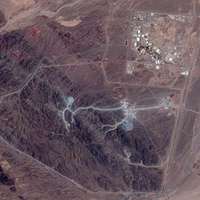
An Iranian nuclear engineer employed at the Natanz nuclear facilities was executed in Qom last week after being convicted of spying for Israel, according to the Hengaw Organization for Human Rights.
Hengaw said Javad Naeimi, a resident of Qom and a specialist working at the Natanz site, was hanged at dawn on October 18 in Qom Central Prison “under conditions of total secrecy.”
Iranian state media had earlier reported the execution of an unnamed man for espionage for Israel but did not identify him.
Photo of Javad Naeimi published by Hengaw
The rights group said Naeimi had been arrested by security forces in February 2024 and sentenced to death after what it described as an opaque judicial process.
It said he was subjected to torture and coerced confessions during interrogation, citing a pattern of forced admissions in Iranian espionage cases.
Iran’s judiciary has not commented publicly on the latest claims.
Earlier reports by the judiciary-linked Mizan news agency said the executed man had “admitted to communicating with Israeli intelligence for personal and professional reasons.”
Hengaw said Naeimi’s burial took place under heavy security at Qom’s Behesht-e Masoumeh cemetery on October 21, and that his family had been warned not to speak publicly about the case.
The execution comes amid an intensified crackdown on alleged Israeli-linked espionage cases following Israel’s June strikes on Iranian nuclear sites.
In August, Tehran executed another scientist, Rouzbeh Vadi, for allegedly passing classified information to Mossad, while in September and October several other men were hanged on similar charges.
Last month, the UN special rapporteur on human rights in Iran said the country had executed 11 individuals on espionage charges this year, with at least nine carried out after Israel's military strike on Iran on June 13. Saturday's execution brings the total to at least 12.
Rights groups, including Amnesty International and Iran Human Rights, have condemned the surge in executions, saying trials for alleged espionage often fail to meet international standards of due process.
Tehran maintains that it is acting within its laws to counter what it calls “organized intelligence infiltration” targeting its nuclear and defense programs.
Hooshmand Ramezanipour bears severe burns and scars from the attack he survived in Serbia after being targeted for supporting Israel.
Hooshmand Ramezanipour spoke softly from a refugee camp in Serbia, his voice low and cautious. “There are smugglers here,” he said. “To be honest, I have died and been resurrected many times — both inside Iran and here.”
The 39-year-old Iranian political activist said he was tortured and nearly killed by other migrants after being recognized for wearing a T-shirt with the Israeli flag and advocating for a pro-Israel rally while living in refugee camp in Northern Greece.
“I curse myself a thousand times a day,” he said. “I wish I hadn’t run away and died right then and there so I wouldn’t have to endure all this pain now.”
Ramezanipour said the refugees, whose nationality he withheld to guard against reprisals, shot him in the leg and held him down as they dripped molten plastic on his stomach.
A mechanic by trade, he fled Iran in 2016 after years of activism alongside reformist figures such as Mohammad Nourizad and later volunteered for a Persian-language Israeli radio outlet in Turkey.
'Admirer of Israel'
Ramezanipour spoke to Iran International from hiding, saying he still fears his attackers could find him.
His ordeal, he said, began after he fled Turkey in 2023, where members of the ultra-nationalist Grey Wolves group which opposes migration had threatened him.
Transferred to the Kavala refugee camp in northern Greece, he said he saw anti-Israel slogans scrawled on the walls and campaigns in the city supporting Hamas for several months recently.
Ramezanipour said he has long admired the arch-foe of the Iranian theocratic rulers he had fled, saying many in the region had been "brainwashed" against Israel.
The devastating Israeli ground incursion into Gaza which local medics say killed over 67,000 people after Hamas attacks on Israel killed over 1,200 Israelis and captured over 200 others has stoked sharp criticism of Israel, especially in the Muslim world.
“I decided to get an Israeli flag and enter the camp with it,” he recalled. “At first no one bothered me, but when the camp director saw me, he ordered the security guards to take it away. I refused.”
The next day, he was summoned and forced to hand it over. “The director even threatened me, saying that either I would leave the camp or he would — that there wasn’t room for both of us,” he said.
Tens of thousands of asylum seekers languish in semi-lawless camps in and around Europe hoping to achieve safety and prosperity outside their homelands.
Western immigration authorities typically favor asylum applicants who are able to demonstrate they face plausible harm for their ethnicity, religion, sexual orientation, political views or activism.
Pro-Israel rally bid in Greek refugee camp
Iran International has reviewed the paperwork Ramezanipour filed to local Greek authorities requesting official permission to hold a public rally near the refugee camp in late July. The rally never materialized.
The network has also examined medical documents confirming that he sustained second- and third-degree burns with severe infection risk and signs of torture, as well as a Serbian police report showing that misdemeanor charges against him for illegal residency were dropped due to his cooperation with authorities and the circumstances of his case.
The documents did not elaborate on the alleged attack, perpetrators or potential motives.
Iran International has additionally seen photos and videos provided by Ramezanipour showing his current condition and the poor state of the camp where he is living.
As threats against him intensified inside the camp, Ramezanipour decided to leave. He said unknown men had begun following him after his failed attempt to organize the rally.
“One night around two in the morning, a car stopped in front of me,” he recalled about the early hours of September 28. “A man claimed to be a police officer and asked for my ID. Then someone shouted, ‘Don’t let this bastard escape—catch him!’”
Fearing for his life, he fled Greece with the help of smugglers and crossed into Serbia. “I thought I was finally safe,” he said. But in the Serbian border town of Loznica, he was taken to an abandoned factory filled with other migrants.
'The same bastard'
Inside, one of the men pulled out a phone, looked at a photo, then at him. “It was the picture of me wearing the Israeli flag T-shirt,” he said. “He compared it to my face and told the others, ‘This is the same bastard.’”
“They tied my hands behind my back and stuffed a cloth into my mouth,” he said. “They melted plastic and poured it on my body. They shot me in the thigh."
Ramezanipour eventually got help from local villagers who called the police.
“The police were kind” he said.
Ramezanipour said he identified four of the fifteen men who attacked him. Police told him the suspects had fled to Bosnia, but one officer later confided that Serbian and Bosnian police “don’t have good relations,” making arrests unlikely.
Mahshid Nazemi, an advocate with the refugee network Iran House, said Ramezanipour reached out to her through refugee contacts seeking help.
“Many of them find us when they have nowhere else to turn,” she said. “His wounds are infected and he’s in constant pain. He can’t walk without help, and he lives in fear they’ll find him again," Nazemi told Iran International.
She said his story is one of many that show the dangers refugees face in Europe. “Refugees are beaten, raped and pushed back across borders,” she said. “When they drown, Turkey blames Greece and Greece blames Turkey. No one takes responsibility.”
From his camp in Serbia, Ramezanipour says he still wakes at night, reliving the pain and fearing his attackers will find him again.
Iranian ex-security chief Ali Shamkhani, center, appears in this file photo.
Prominent Iranian American academic Mehrzad Boroujerdi has accused ex-security chief Ali Shamkhani of involvement in his father’s killing while a member of a militia group during the 1979 revolution.
Shamkhani, a senior advisor to Supreme Leader Ali Khamenei, has recently come under public scrutiny in Iran after a leaked video showed his daughter’s lavish wedding featuring unveiled women, Western-style celebrations and his daughter the bride.
“You are the same person who, in January 1979 in Ahvaz, along with your accomplice Mohsen Rezaei, assassinated Malek Mohammad Boroujerdi, my father,” Boroujerdi wrote on Instagram on Monday, addressing Shamkhani.
Professor Mehrzad Boroujerdi (left) and Ali Shamkhani (right)
Boroujerdi appeared on Iran International on Tuesday, elaborating on his accusations against senior Iranian officials, including Shamkhani and former Islamic Revolutionary Guard Corps (IRGC) commander Mohsen Rezaei.
“The Mansouron Group, formed in 1975 by figures such as Mohsen Rezaei, Shamkhani and others created a terrorist cell that carried out assassinations in Khuzestan province, including my father’s killing in the city of Ahvaz,” Boroujerdi said.
Mansouroun was one of seven Islamist groups active before the 1979 revolution that later joined together to form the core of Iran’s Revolutionary Guards. The group, led by figures including Mohsen Rezai, united with six others — Towhidi Saf, Towhidi Badr, Falagh, Ommat-e Vahida, Saheban-e Safa, and Mo’tahedin-e Eslam — to establish the force that became the Islamic Revolutionary Guard Corps.
“Ayatollah Khomeini had urged oil company employees to strike, aiming to cripple the Shah’s oil-dependent economy. My father opposed this strategy for toppling the Shah’s government," he added.
"As a member of oil company management, he and others were placed on an assassination list circulated in Ahvaz mosques and executed in January."
Mehrzad Boroujerdi is a professor of political science at the Missouri University of Science and Technology and the author of the book ‘Iranian Intellectuals and the West.’
Shamkhani, a former secretary of Iran’s Supreme National Security Council and now a member of the Expediency Council, has long been a key figure in Iran’s security establishment. He also serves as the Supreme Leader’s representative on the National Defense Council.
He and his family have come under intense criticism by dissidents for their apparent wealth and influence as many Iranians struggle with costs of living wrought by corruption, mismanagement and sanctions from Western foes of Tehran's policies.
Hossein, his son, has been described in a series of reports by Bloomberg as a key overseer of Iran's efforts to circumvent sanctions, enriching himself in the process. Shamkhani the younger has insisted he is a legitimate businessman.
“Over the past 45 years, most senior military and security positions in the Islamic Republic have been held by members of the Mansouron Group including Shamkhani, Rezaei, and Gholam Ali Rashid (who was killed in an Israeli attack),” Boroujerdi said.
The Mansouron Group was an Iranian guerrilla organization active in the 1960s and 1970s, primarily in Khuzestan province, opposing the Pahlavi regime through armed struggle and political activism.
Formed around 1969, it later merged with other militant groups and played a role in the 1979 Islamic Revolution in Iran.
Shamir Medical Center (Assaf Harofeh), Be'er Ya'akov, Israel, January 30, 2025.
Israel said Iran was behind a cyberattack on a hospital in central Israel earlier this month that led to a leak of patient data, the National Cyber Directorate said, describing it as part of a broader wave of Iran-backed operations targeting Israeli institutions.
The attack took place on October 2, the Jewish Day of Atonement known as Yom Kippur, when much of the country was shut down for the holiday.
“Among the bodies that were attacked in the wave of Iranian attacks were Shamir Medical Center (Assaf Harofeh), where the attackers tried to interfere with hospital operations, without success,” said Yosi Karadi, head of the directorate in a statement.
“In the case of Shamir Medical Center, beyond the data leak, the very attempt to damage an Israeli hospital means a red line has been crossed, which could have led to an attack on human life,” Karadi added.
The hospital is a government-run medical complex in Be’er Yaakov, southeast of Tel Aviv, and one of Israel’s largest, serving patients from across the central region.
Karadi said the incident was contained “quickly and efficiently” thanks to coordination among government agencies.
The directorate said the breach was part of a broader pattern of Iranian cyber activity aimed at Israeli government bodies and private companies. It said hackers used stolen usernames and passwords to gain access to systems.
The agency said there had been at least 10 such cyberattacks.
“Over the course of recent weeks, the National Cyber Directorate has identified a trend of a wave of cyberattacks against companies that offer computer services to many companies in the economy,” the statement added.
Israeli authorities had initially blamed a Russian-speaking hacker group called Qilin, which reportedly demanded a $700,000 ransom, before investigators said they traced the operation to Iranian sources.
Earlier this year, Israel’s deputy cyber defense chief said cyberattacks against the country had tripled since the country's war with Hamas began on October 7, 2023, with Iran and its allied groups, including Hezbollah, intensifying their hacking efforts.
Since the ceasefire between Iran and Israel in June that ended the 12-day war, nearly 450 cyberattacks have targeted Israeli institutions, many traced to hacker groups aligned with Iran, cybersecurity experts told Iran International in early July.
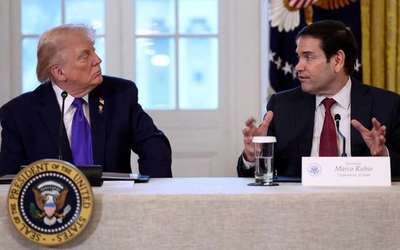
Iranian intelligence minister said on Wednesday that the US President Donald Trump's so-called peace through strength policy seeks to pressure Iran into submission, marking another defiant comment leveled at Tehran's perceived nemesis in recent days.
“Enemies have replaced ‘peace through strength’ with ‘surrender through crime,’ creating conditions through spectacle and propaganda to manipulate public opinion against us,” Esmaeil Khatib told officials at a gathering in the town of Shahrekord.
Trump’s peace through strength is a foreign policy doctrine emphasizing military buildup, deterrence and sanctions to avoid wars in a revival of an approach the Reagan administration deployed with the Soviet Union in its latter days.
“The phrase ‘peace through strength’ reflects the very crimes they committed in Gaza, in Syria and Lebanon, and in our own country, where they martyred more than a thousand people,” Khatib said, according to state media.
On June 22, the United States carried out airstrikes on Iran’s key nuclear sites at Fordow, Natanz and Isfahan. The attacks capped a surprise 12-day Israeli military campaign on Iran which badly weakened its Mideast foe.
After the attacks, Iran suspended cooperation with the International Atomic Energy Agency (IAEA), prompting three European countries - Germany, France and the UK - to trigger the resumption of UN sanctions on Tehran last month.
The new measures will pile pressure on Iran's already teetering economy, but officials insist Iran will not alter their stance opposed to the Israel and the United States.
Trump said on Monday that Iran could not withstand the sanctions but would likely return to negotiations, in his latest conciliatory remarks amid signs of diplomatic progress on Gaza.
Iran's Supreme Leader Ali Khamenei appeared to reject Trump's peace overture and said US offers of diplomacy demanded Iran relinquish defense capabilities in an approach the 86-year-old theocrat decried as "bullying."
Iran’s Foreign Ministry on Tuesday criticized US President Donald Trump’s call for dialogue with Tehran, saying his remarks about peace were inconsistent with Washington’s record of sanctions, military strikes and support for Israel.