• العربية
  • فارسی
Brand
  • Iran Insight
  • Politics
  • Economy
  • Analysis
  • Special Report
  • Opinion
  • Podcast
  • Iran Insight
  • Politics
  • Economy
  • Analysis
  • Special Report
  • Opinion
  • Podcast
  • Theme
  • Language
    • العربية
    • فارسی
  • Iran Insight
  • Politics
  • Economy
  • Analysis
  • Special Report
  • Opinion
  • Podcast
All rights reserved for Volant Media UK Limited
volant media logo

US Senator welcomes snapback, urges full UN sanctions enforcement

Aug 29, 2025, 07:38 GMT+1

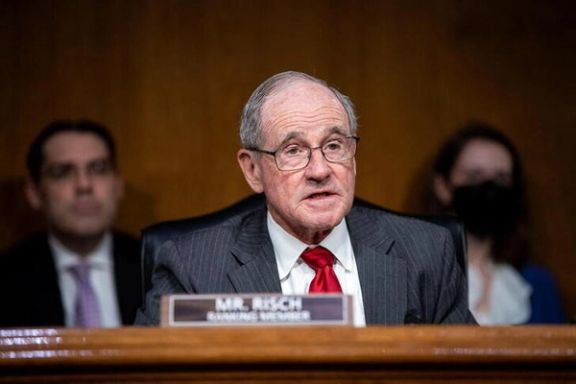
Senator Jim Risch, the top Republican on the Senate Foreign Relations Committee, welcomed the move by Britain, France and Germany to trigger the snapback of UN sanctions on Iran, calling it a necessary response to Tehran’s “nuclear extortion and terrorism.”

In a statement on Thursday, Risch said the Security Council must now “reject the Islamic Republic of Iran’s continued threats and deceptions” and enforce a full return of sanctions, including the arms embargo and restrictions on Iran’s nuclear scientists.

“The Security Council has an opportunity in earnest to reclaim some of its legitimacy,” Risch said. “This is a good step, but now the hard work begins.”

He added that he looks forward to working with the Trump administration to ensure compliance and hold violators accountable.

Most Viewed

100 days after carnage: Iran economy reels from war, inflation, unemployment
1
INSIGHT

100 days after carnage: Iran economy reels from war, inflation, unemployment

2
EXCLUSIVE

Iranian assaulted in London amid concern over threats to regime critics

3

IRGC fires at Indian vessel in Hormuz

4
INSIGHT

A nation in limbo: 100 days after the massacre, has the world moved on?

5
ANALYSIS

From instability to influence: Pakistan’s pivotal role in US-Iran diplomacy

Banner
Banner

Spotlight

  • 100 days on: why Iran’s January protests spread across social classes
    ANALYSIS

    100 days on: why Iran’s January protests spread across social classes

  • Ghalibaf defends Iran-US talks amid hardline backlash
    INSIGHT

    Ghalibaf defends Iran-US talks amid hardline backlash

  • From instability to influence: Pakistan’s pivotal role in US-Iran diplomacy
    ANALYSIS

    From instability to influence: Pakistan’s pivotal role in US-Iran diplomacy

  • A nation in limbo: 100 days after the massacre, has the world moved on?
    INSIGHT

    A nation in limbo: 100 days after the massacre, has the world moved on?

  • The Hormuz get out of jail card turned to a grave
    OPINION

    The Hormuz get out of jail card turned to a grave

  • Iran blackout cripples freelancer, small business incomes
    VOICES FROM IRAN

    Iran blackout cripples freelancer, small business incomes

•
•
•

More Stories

Sanctions move could impact nuclear site access talks with Iran, IAEA chief says

Aug 29, 2025, 07:33 GMT+1

UN nuclear watchdog chief Rafael Grossi warned on Thursday that the snapback process initiated by European powers could affect negotiations with Iran over restoring access to key nuclear sites.

Asked by CNN whether the sanctions push would impact talks between the IAEA and Tehran, Grossi said, “Everything is interconnected and it's the same people at different tables… so we cannot say that there is no impact.”

Grossi urged all sides to use the 30-day window before UN sanctions are reinstated to find a solution. “If within this 30-day period we can, together with Iran, the IAEA can establish a good mechanism to return to the places and especially to verify or to check what happened with the material, with the 60% high-enriched uranium, I think there will be positive elements on the table that perhaps could help avert this possibility of this wide-ranging sanctions,” he said.

While acknowledging that the snapback move is political, Grossi described the discussions with Iran as “a very straightforward, technical conversation,” centered on the IAEA’s need to inspect certain locations.

Iranian MP advances motion to exit Non-Proliferation Treaty

Aug 28, 2025, 22:09 GMT+1

An Iranian member of parliament on Thursday said he was urgently drafting legislation to pull Tehran from the Nuclear Non-Proliferation Treaty (NPT) as retaliation for a move by European states to reimpose UN sanctions.

The plan, MP Hossein Ali Haji-Deligani told the Tasnim news agency, could be approved by parliament as early as next week.

The NPT, which Iran ratified in 1970, allows countries to acquire civilian nuclear power but bars the pursuit of atomic weapons and mandates cooperation with the UN nuclear watchdog the International Atomic Energy Agency.

"Other measures that are regrettable for the key countries of the snapback will also be taken," he added without elaborating.

"There is no one in Iran who does not believe that negotiations with these countries are useless, so we must stop all our negotiations with them until they stop this duplicitous behavior."

100%

Ex-nuclear negotiator Zarif says European snapback aims to protect Israel

Aug 28, 2025, 21:46 GMT+1

"Will Europe live in a safer world if they use this dispute resolution mechanism in bad faith in order to go back to Security Council resolutions that we all decided to stop? What are they trying to gain? They try to support Israel," former top nuclear negotiator Mohammad-Javad Zarif told Foreign Policy in an interview.

Speaking before the Germany, Britain and France triggered a mechanism from the 2015 international nuclear deal the Joint Comprehensive Plan of Action to reimpose UN sanctions, Zarif said the troika was abusing that agreement.

"I don’t know what audacity they have in order to try to use the dispute resolution mechanism. It’s not called snapback in the JCPOA or the (United Nations) Security Council. It’s called 'dispute resolution mechanism.'"

The relative moderate added that the snapback move was part of an Israeli-Western strategy to confront Iran and thwart diplomacy.

"They use war, and then they use diplomacy, and then they use mechanisms to resolve disputes. This is indicative of bad faith."

100%

Sanctions snapback augurs deeper pain for Iran's ailing economy

Aug 28, 2025, 21:37 GMT+1

Iran could face fresh shocks to its already deeply rattled currency, costs of living and growth prospects if UN sanctions lifted by a 2015 nuclear deal are reimposed.

Activation of the snapback mechanism would reinstate comprehensive UN sanctions which would include travel bans, asset freezes, UN inspections of Iranian shipments and arms trade prohibitions—but notably exclude direct sanctions on oil exports or the Central Bank of Iran.

Renewed UN sanctions would indirectly reduce oil revenues, constrain access to foreign currency and place heavy pressure on the rial.

Read more ...

Sanctions stir hardliners to call out enemies foreign and domestic

Aug 28, 2025, 21:30 GMT+1
•
Behrouz Turani

Hardliners in Iran feel vindicated by a European move on Thursday to reimpose international sanctions, seeing it as proof of both implacable foreign hostility and the failure of hapless home front moderates.

Outspoken conservatives had for over a decade seethed at the diplomacy which clinched the 2015 international nuclear deal the Joint Comprehensive Plan of Action as a surrender of Iran's sovereignty to hostile outside powers.

"The JCPOA, the imposition of the trigger mechanism, the US withdrawal from the JCPOA and the 12-day war were all pieces of an American and Israeli plan," fulminated Mahmoud Nabavian, the deputy chairman of the Iranian parliament's national security and foreign policy committee.

"The authors the JCPOA's imposition and the trigger mechanism on the nation, some of whom are now brazenly seeking to make concessions to the enemy, must be tried," he added on X, apparently referring to Iranian moderates.

Britain, France and Germany on Thursday triggered a 30-day process - the so-called "snapback" mechanism - to reimpose UN sanctions on Iran over its nuclear program in a formal letter sent the UN Security Council.

Iran condemned the European sanctions move as malicious and illegal but stopped short of mentioning specific consequences and instead warned of an "appropriate response."

Just before the European move, another ultraconservative member of the parliamentary committee Alaeddin Boroujerdi mooted blocking the energy exports of its Arab neighbors if sanctions choked off its own flows.

"If Iran cannot export its oil, certainly something will happen that will stop the exporting of others’ oil," Tehran’s leading economic daily Donya-ye Eghtesad quoted him as saying. "We won’t sit and watch the compromising of all of our interests."

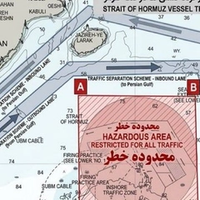
The threat has been repeatedly voiced by various Iranian politicians, including former presidents Akbar Hashemi Rafsanjani and Hassan Rouhani, since the mid-1980s when Iran first attempted to close the Strait of Hormuz.

That move prompted a swift US military response which promptly decimated Iran’s naval forces in the Persian Gulf and destroyed two major oil platforms.

Kayhan on closing off commerce

The Kayhan newspaper, closely linked to Supreme Leader Ali Khamenei’s office, warned against caving to Western demands to negotiate and advocated strength.

"The response to the West’s threat should be a threat rather than negotiating and taking a passive approach," it wrote a commentary.

"The West’s repetitive scenario leaves no room for optimism and expectations. Our experience shows that the West understands only the language of force," it added. "Iran should take strict decisions, from exiting the Non-Proliferation Treaty (NPT) to limiting access to the Strait of Hormuz, and show that the enemy’s threats will not remain unanswered."

For decades, Kayhan has advocated for closing the Strait of Hormuz so fervently that one social media user joked, “Let’s close the strait at least for 10 minutes only to do a favor to Kayhan’s editor!”

"Negotiating with the United States and Europe will lead to nothing other than humiliation, deceit, and wasting time," it said in another article.

Meanwhile, Kayhan dismissed any connection between the trigger mechanism and UN Security Council Resolution 2231, which the three European powers are invoking to reinstate pre-2015 sanctions on Iran.

Amid the radical reactions, one relatively moderate voice emerged from Ahmad Bakhshayesh Ardestani, a conservative MP and yet another member of the National Security and Foreign Relations Committee.

Iran, he said, still had one month to respond to European demands and a boon could come in the form of Russia taking over the presidency of the UN Security Council in October.

Still, the European troika's move appeared designed to forestall that possibility with the 30-day process to restore international sanctions likely to be complete before the periodic change in the Security Council's leadership.