Iranians among top asylum seekers in UK in 2024

Iranian nationals were among the leading groups seeking asylum in the UK in 2024 and their number hit a new record, according to Home Office immigration data.
Iran International

Iranian nationals were among the leading groups seeking asylum in the UK in 2024 and their number hit a new record, according to Home Office immigration data.
A total of 108,138 people claimed asylum, marking an 18% increase from the previous year and surpassing a record set in 2002.
Iranian nationals ranked third in asylum claims in the UK in 2024 with 8,099 claims. Pakistan had the highest number of claims with 10,542, followed by Afghanistan with 8,508.
A further analysis of the data suggests a notable increase in asylum applications from Iranians, particularly in 2022, with the highest surge occurring in Q4 of that year, with 3,686 applications.

The spike likely may reflect growing migration pressures driven by the nationwide protests and state repression on demonstrations following the death in morality police custody of Mahsa Amini in September 2022.
The nationwide protest movement dubbed the Woman Life Freedom movement was met with increasingly violent government crackdowns, prompting many Iranians to seek asylum abroad.
During the protests, security forces killed at least 550 protesters, including children, and imprisoned over 20,000 people.
From Q1 2023 onwards, while there was some fluctuation but asylum applications remained relatively high at consistently above 1,500 per quarter for non-unaccompanied asylum-seeking children (UASC) and over 100 for UASC.
The continued upward trend through Q3 and Q4 of 2024 shows sustained asylum-seeking activity, though the surge in Q4 2022 remains the most significant increase in recent years.
However, despite the rise in applications, the number of decisions granting protection has not kept pace. Of 3,686 applications made by Iranians in Q2 2024, only 1,324 were granted protection.

The highest number of grants occurred in Q3 of 2023, when 4,647 Iranians were granted protection.
This disparity between grants of protection compared to applications suggests the lengthy immigration processing times are contributing to a backlog.
Iran and Brazil have agreed to explore the use of their national currencies in bilateral trade, aiming to boost economic cooperation.
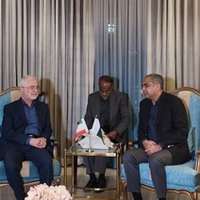
ISNA reported that Iran and Brazil reached the agreement during a meeting between Deputy Central Bank Governor Asghar Abolhasani and Tatiana Rosito, Brazil's Secretary for International Affairs at the Ministry of Finance, held at a BRICS meeting in South Africa.
The nature of the agreement, whether written or a memorandum of understanding, was not specified.
Both sides highlighted the potential for increased trade and pointed to the need for leveraging BRICS mechanisms to enhance banking and financial ties.
Iran also held separate talks with Russia, India, South Africa, and the UAE, advocating for expanded financial collaboration within the BRICS bloc.
Last January, Iran officially became a member of the China-led BRICS economic organization, as it seeks to overcome the impact of US sanctions and overcome it isolation.

Masoud Pezeshkian's government is facing criticism for failing to support a motion that would have allowed limited ethnic literature courses in secondary schools. The Parliament rejected the motion on Wednesday.
President Pezeshkian speaks both Torki (a Turkic language spoken in northwestern Iran and several other provinces) and Kurdish, his parents' native languages. He has been one of the few officials to advocate for granting official status to ethnic languages under Article 15 of the Constitution. In 2016, he was elected chairman of a parliamentary faction consisting of Torki-speaking lawmakers, with approximately 100 of the 290 members of Parliament joining the group at the time.
However, during Wednesday's debate, Pezeshkian's government representative, Kazem Delkhosh, sided with lawmakers opposing the motion. Delkhosh argued that the proposed plan would create challenges for the educational system, including hiring specialized teachers, and could spark disputes in ethnically diverse regions.
The motion, put forward by the Parliament’s Education Committee, sought to introduce two hours of ethnic literature studies in secondary schools on an optional basis. The proposal was rejected by 130 lawmakers, with 104 voting in favor and five abstaining.
Supporters of the motion cited the Iranian Constitution, which designates Persian as the official language but also guarantees the right to use regional and tribal languages in the media and to teach literature in schools. However, opponents expressed concerns about national unity. Mohammad-Mehdi Shahriari, one of the lawmakers who spoke against the motion, warned that it could "threaten the country’s territorial integrity and national unity.”
Conversely, Alireza Novin, a lawmaker from Tabriz—the capital of East Azerbaijan Province and a majority-Torki-speaking city—strongly criticized the notion that promoting ethnic languages could deepen divisions or endanger national security. During a fiery speech in Parliament, he denounced the argument as baseless.
In an interview with the local news outlet Asr-e Tabriz, Novin further accused presidential candidates of making empty promises regarding the constitutional recognition of ethnic languages. He argued that Pezeshkian's administration, at the very least, should have refrained from opposing the motion.
Amir Karimzad, the managing director of another local media outlet, also took to X (formerly Twitter) to criticize the stance expressed by the government's representative in the Parliament. He claimed that Parliament's rejection of the plan reflected "extremists' fear of the power of ethnic groups."
The decision sparked widespread outrage on social media, with many non-Persian speakers and advocates for mother-tongue education expressing frustration over Parliament's refusal to allow even a limited form of ethnic literature instruction in schools.
The debate over the motion took place just days after the UN-designated International Mother Language Day. On February 21, activists in several Torki- and Kurdish-speaking cities marked the occasion by distributing children’s books and leaflets to raise awareness of the importance of native-language education.
Meanwhile, some others have reported the arrest of Mohammad Asadi in Maragheh for handing out books written in Torki to children. Reports also surfaced that security forces summoned the administrators of a private school in Tabriz after they organized a children’s musical performance featuring songs in Torki at a shopping mall on February 21. Social media users reported that authorities had warned the school against such activities.
Ethnic language activists in Iran are frequently accused of promoting separatism and often face prosecution or imprisonment. Advocates argue that the exclusive use of Persian in education erodes cultural heritage and disadvantages children who do not speak Persian fluently or at all when they begin school.
There are no official statistics on the number of speakers of ethnic languages in Iran. However, languages such as Torki, Kurdish, and Balochi are spoken by millions across the country.

A five-year-old was killed and his mother lost her unborn child when Iran's security forces opened fire on the family's vehicle in the country's turbulent province of Sistan and Baluchestan.
Halvash, a local news website, reported that the child, Yousef Shahli-Bar, who had sustained five gunshot wounds, died after a prolonged wait for medical attention due to the absence of a surgeon.
The mother, Maryam Shahli-Bar, remains in the Intensive Care Unit (ICU) at Khatam al-Anbiya Hospital in Iranshahr.
Halvash reported that after firing on the vehicle, tactical unit forces transported the injured to a hospital before leaving the scene.
The driver of the vehicle, Ramin Shahli-Bar, was arrested by security forces in plain clothes and taken to an undisclosed location, the report added.
No official explanation has been provided regarding the reason for the shooting.
Security forces in Iran have previously been accused of unjustified shootings at vehicles. According to statistics compiled by the Human Rights Activists News Agency (HRANA), 484 civilians were shot by military personnel in Iran in 2024, with 163 killed and 321 injured.
HRANA reported that in 2023, 402 civilians were targeted, and in 2022, the number was 845.
The shooting comes amid heightened tensions in the Sistan and Baluchestan region following armed clashes between Iranian military forces and Jaish al-Adl, a militant group operating in the region.
A video showing drones flying over Jakigour, a district in Rask County, caused concern among residents.
In Chabahar port, Iranian security forces on Tuesday launched a raid on a residential building using light and semi-heavy weapons, including rocket propelled grenade.
According to Halvash, the house was completely destroyed, and surrounding buildings were damaged. Iranian authorities confirmed that two members of Jaish al-Adl were killed and six arrested. However, in a statement, Jaish al-Adl disputed this, saying no members were detained.
The recent escalation follows a series of attacks attributed to the group. On Saturday, a sound bomb explosion damaged the Chabahar Rural Development Organization headquarters.
In a separate incident, gunmen attacked the Housing Foundation of Sistan and Baluchestan, injuring one staff member. Jaish al-Adl claimed responsibility, saying the attacks were in response to government actions against Baloch communities. The minority group is among the most persecuted in Iran, according to rights groups.
The 2025 report from Human Rights Watch said: "The Iranian government also discriminates against some religious minorities, including Sunni Muslims, and restricts cultural and political activities among the country’s Azeri, Kurdish, Arab, and Baluch ethnic minorities.
Jaish al-Adl has been designated as a terrorist organization by both the Iranian government and the United States.
The group has carried out multiple attacks against Iranian security forces in Sistan and Baluchestan in recent years, the region a hotbed of clashes.
Countries such as the UK sanctioned individuals and entities in Iran following the violent crackdown on protests in the 2022 uprising, including in Sistan and Baluchestan, where in one day, over 80 people were killed by security forces in Zahedan.

Iran's President Masoud Pezeshkian said Tehran is committed to boosting ties with Moscow in a meeting with Russian Foreign Minister Sergei Lavrov on Tuesday, as both powers weigh how to deal with new US President Donald Trump.
"Iran and Russia have appropriate capacities to strengthen cooperation with each other, and we are determined to strengthen the interactions between Tehran and Moscow," Pezeshkian said.
"Iran and Russia have similar views on regional issues and seek to strengthen their regional and international cooperation", he added.
Moscow was dealt a boost this month as Washington under Trump emphasized the swift ending of the war Ukraine and restoration of bilateral ties.
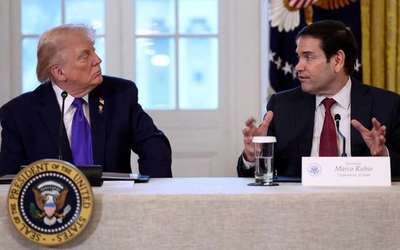
Tehran, mired in economic malaise, faces a trickier choice dealing with Trump, who has ruled out allowing Iran acquiring a nuclear bomb and said he wants a deal which Iran's Supreme Leader Ali Khamenei has ruled out.
Pezeshkian also urged for expediting the implementation of agreements, especially a Comprehensive Strategic Agreement between the two countries.
Tehran and Moscow signed a long-term agreement in March 2001 which was initially set for a ten-year term but was extended twice, each time for five years. Despite prior discussions, similar promises to finalize a renewed treaty have remained unfulfilled.
Lavrov, who conveyed Russian President Vladimir Putin’s greetings to Pezeshkian, said: “Iran and Russia have many common interests in continuing effective regional cooperation with each other.”
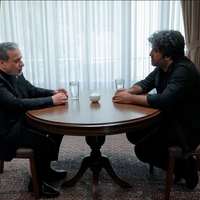
In a press conference following separate discussions with Lavrov, Iranian Foreign Minister Abbas Araghchi ruled out direct negotiations with the United States over the country’s nuclear program.
"Regarding Iran's nuclear issue, we will move forward and coordinate our positions in cooperation with our friends in Russia and China," Araghchi said.
"Iran's position in the nuclear talks is completely clear, and we will not negotiate under pressure and sanctions. There is no possibility of direct negotiations between us and the US as long as maximum pressure is being applied in this manner," he added.
Tehran’s envoy to Moscow, Kazem Jalali, also said the discussions specifically covered the nuclear issue and joint approaches in the field.

An Iranian cleric has accused a group of seminarians of wielding knives and machetes against protesters during the 2022 nationwide uprising, alleging they clashed with demonstrators before returning in bloodied clothes and changing into clerical robes.
“These people claimed to be seminarians, but after Mahsa Amini’s case, they poured into the streets armed with knives and machetes, confronting the people,” Mohammad Ashrafi Esfahani told the Tehran-based Didban News website.
“They would return in bloodied clothes and then dress as clerics again," he added in the Tuesday interview.
Ashrafi Esfahani said individuals linked to prominent cleric Alireza Panahian were involved in violent crackdowns on protesters.

“Has there ever been a precedent in Shia history for a seminarian to wield a machete and attack people? Yet, Panahian’s group did exactly that,” he said of the violence following the death in police custody of Mahsa Amini.
The young woman died at the custody of morality police, sparking the national Woman, Life, Freedom movement.
His comments come amid a broader power struggle between clerical factions, with Ashrafi Esfahani accusing Panahian’s followers of attempting to seize control of religious institutions for financial and political gain.
“We filed a complaint and reported this to the authorities,” he said. “But it is still unclear who is supporting these individuals.”