• العربية
  • فارسی
BrandBrand
  • Iran Insight
  • Politics
  • Economy
  • Analysis
  • Special Report
  • Opinion
  • Podcast
  • Live TV
  • Iran Insight
  • Politics
  • Economy
  • Analysis
  • Special Report
  • Opinion
  • Podcast
  • Live TV
  • Theme
  • Language
    • العربية
    • فارسی
  • Iran Insight
  • Politics
  • Economy
  • Analysis
  • Special Report
  • Opinion
  • Podcast
  • Live TV
All rights reserved for Volant Media UK Limited
volant media logo

Report Blames President For Internet Censorship In Iran

Maryam Sinaiee
Maryam Sinaiee

Iran International

Jan 17, 2024, 15:40 GMT+0Updated: 11:12 GMT+0
Iran's President Ebrahim Raisi (right) and Mohammad Mahdi Esmaeili, the minister of culture and Islamic guidance, during a meeting on January 16, 2024

President Ebrahim Raisi has a significant role in Internet censorship by blocking websites and apps, a recent report by Tehran E-commerce Association has alleged.
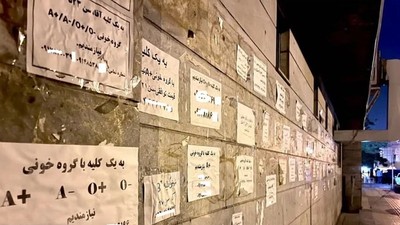

Although all three branches of government are directly involved in the process of censorship, by appointing half of the members of the committee that decides which sites should be filtered, the President should be held accountable for the problems Iranians face in free access to the Internet, the association’s report published Monday said.

Raisi has repeatedly said his government will provide fast internet services to Iranians at low costs, but the government recently allowed providers to increase their tariffs by about 34 percent and the speed has deteriorated so much that even some government officials including the President himself have admitted it.

“Iran's internet situation is very similar to poor and underdeveloped countries, internet access quality indices show, but the main difference [with those countries] is that in Iran's case these conditions are self-inflicted,” the report said.

Self-inflicted, the report says, means that a significant part of the country's internet access problems, from filtering to speed that affects loading times as well as widespread disruptions, arise from policies, management and laws rather than problems in infrastructure development such as fiber optic expansion which the government insists is the solution to the problem.

100%
Restrictions on social networks in several countries in 2023

Tehran E-Commerce Association was founded in 2019 by several major ecommerce and online services companies including Digikala e-commerce platform, Snapp vehicle for hire, Cafe Bazar app store for the Android operating systems, and Divar classified ads and e-commerce platform and has so far published two detailed reports.

According to the recent report, there has been relative improvement in latency and bandwidth and access to restricted sites since July when the first report was released, but the improvement has made very little difference in ease of access to the internet because Iranians are still forced to use anti-filtering software (VPNs) which costs families lot of money amid an annual inflation rate of 50 percent and affects the quality of their access.

The report shows that filtering at IP level causes collateral damage and restricts access to many websites without reason and forces users to use anti-filtering software at all times.

Iran not only filters a vast array of websites including all major social media platforms and international platforms such as Google Play but has also employs a reverse filtering procedure called Iran Access to block the access of users outside the country to many Iranian websites including the websites of government organizations as well as banks and other financial entities. This is apparently to reduce the risk of foreign hacking, which has been occurring frequently, targeting government organizations.

The use of anti-filtering software makes users’ equipment more vulnerable to cyber threats and exposes online businesses to greater risks of user data leaks, the report added.

Hackers have targeted online businesses many times in recent years to steal personal information and sensitive data. Only last week Snapp Food, the largest online food delivery platform in Iran, was hacked by an Iranian hacking group that claimed it had accessed the personal details of over 20 million users.

Most Viewed

Workers in Iran sell organs to pay debts and cover living costs
1

Workers in Iran sell organs to pay debts and cover living costs

2
VOICES FROM IRAN

Missile city unveiling sparks anger over poverty, lack of shelters

3
INSIGHT

Trump wants to keep Iran blockade. Can the Persian Gulf sustain the standoff?

4
VOICES FROM IRAN

Students shiver in classrooms as Iran government warns of gas cuts

5
ANALYSIS

US targets Iran's land trade routes, but Tehran may hold firm

Banner
Banner
Banner
Banner
Banner
Banner
Banner

Spotlight

  • Iran state TV panelists urge tougher action against US blockade

    Iran state TV panelists urge tougher action against US blockade

  • France's cyberattack allegations against Iran should wake up Europe
    OPINION

    France's cyberattack allegations against Iran should wake up Europe

  • Trump wants to keep Iran blockade. Can the Persian Gulf sustain the standoff?
    INSIGHT

    Trump wants to keep Iran blockade. Can the Persian Gulf sustain the standoff?

  • Iran state TV debate signals cautious openness to nuclear talks

    Iran state TV debate signals cautious openness to nuclear talks

  • The price Iranians paid for 47 years of revolutionary promises
    ANALYSIS

    The price Iranians paid for 47 years of revolutionary promises

  • Trump’s Iran diplomacy faces a test: Can both sides claim victory?
    ANALYSIS

    Trump’s Iran diplomacy faces a test: Can both sides claim victory?

  • Food, medicine, hope: what Iran's economic crisis is costing its people
    VOICES FROM IRAN

    Food, medicine, hope: what Iran's economic crisis is costing its people