Iranian Wrestler Withdraws From Competition To Avoid Israelis

Iran's 86-kilogram national wrestler, Hadi Vafaeipour, has withdrawn from a wrestling competition in Croatia, reportedly to avoid facing an Israeli rival in the upcoming stage.
Iran's 86-kilogram national wrestler, Hadi Vafaeipour, has withdrawn from a wrestling competition in Croatia, reportedly to avoid facing an Israeli rival in the upcoming stage.
Vafaeipour's decision was influenced by the presence of two Israeli wrestlers in the tournament, claiming a failure to meet the weight requirement as the reason for his withdrawal. Instead of confronting a Swiss wrestler, Vafaeipour strategically opted out, foreseeing potential matchups against Israeli opponents in the subsequent stages.
The persistent issue of Iranian athletes not competing against Israelis, as a government policy, has long sparked protests from influential figures in Iranian sports. Government attempts to prevent such matchups have led to significant consequences, including the resignation of Olympic wrestling champion Rasoul Khadem from key positions within the Wrestling Federation and the National Olympic Committee.
The incident adds to a history of Iranian athletes avoiding Israeli competitors through various tactics, such as intentional losses and strategic withdrawals. The consequences of such actions were underscored by the four-year suspension of the Iranian Judo Federation following Saeed Mollaei's deliberate defeat.
Mollaei, a former world judo champion and member of the Iranian national judo team, revealed in 2019 that Iranian officials had instructed him to intentionally lose against an opponent to circumvent facing an Israeli athlete.
In a recent meeting with athletes during the Asian Games, the Supreme Leader of the Islamic Republic, Ali Khamenei, reiterated the directive to avoid direct competition between Iranian and Israeli athletes.



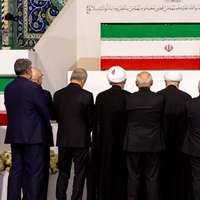
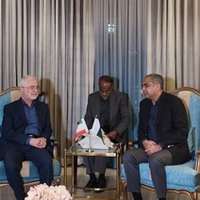
Iran’s judiciary is prosecuting tens of citizens for “posting false and offensive statements…against the regime” on social media about week’s bombings in Kerman.
Tehran Prosecutor Ali Salehi said Monday that these individuals, including seven well-known public figures have been indicted. “Those who attempt to endanger the society’s psychological security by spreading false and offensive content [on social media] will be dealt with decisively, quickly and according to the law,” he said.
HRANA, the website of the US-based Human Rights Activists, reported Tuesday that at least 76 social media users have been arrested across Iran since the bombing in Kerman, and 108 others have been summoned by security and judicial organizations. HRANA said nearly 500 social media accounts have been suspended and two businesses were shut down in this relation.
Nearly one hundred were killed and dozens of others were injured on January 3 in the twin bombings on the road leading to Golzar-e Shohada (Martyrs Garden) cemetery of Kerman where Soleimani is buried.
The ISIS of Afghanistan (The Islamic State – Khorasan Province or ISIS--K) has taken responsibility for what it claimed were suicide bombings, but some Iranian social media users continue to accuse Iran's own security and intelligence agencies of being behind the attacks to buy sympathy for the regime. The media and some political figures criticized the regime for concentrating their efforts on suppression of dissent instead of preventing terror.
One of the seven "well-known figures" indicted for their comments on the Kerman bombing is the prominent political commentator Sadegh Zibakalam. He has been indicted by the Tehran Public and Revolutionary Prosecutor for his remarks. During an interview with the Voice of America's Persian television, Zibakalam stated that Israel, which authorities continue to accuse of involvement in the bombing, should not be held responsible because it targets specific individuals in its operations and "does not attack innocent people."
Like other branches of the Islamic State in the Middle East, the Daesh of Khorasan has conducted many terrorist attacks including suicide bombings in Afghanistan and Pakistan.
The Kerman bombing is the first attack in Iran that the Daesh of Khorasan has taken responsibility for.
Some social media users also said they were happy that that regime supporters who were participating in Soleimani’s death anniversary ceremony were killed in the attack.
Relatively independent media in Tehran have also demanded the resignation of the interior minister Ahmad Vahidi. “What other disaster should happen now for a government official to resign from his post?” an editorial in Jahan-e Sanat newspaper Tuesday asked. “What else should happen for a government official to apologize to the nation?”
In response to government criticism over its failure to provide security at Soleimani's death anniversary ceremony, Supreme Leader Ali Khamenei defended the performance of security agencies on Tuesday. He stated that the rate of neutralizing threats is tens of times higher than those threats that materialize.
“We are not adamant in accusing this or that [country or group] but insist on identifying the real culprits who are behind the scenes and on crushing them,” he told a group of visitors from Qom in a speech in which he alleged that Iran's enemies have been trying to harm the Islamic Republic by instilling disillusionment in people and discouraging them from supporting the regime.
“Making fun of the Shiite Arbaeen procession”, “insinuating doubt” about Iranians’ respect for Soleimani, questioning the “magnificence of people’s participation” in religious celebrations such as the birthday of the twelfth Imam, Mahdi, “are examples of the enemy's strategic policy” of enticing the Iranian people to cease support for the Islamic Republic, he said.
Canada will forward the case concerning Iran's Revolutionary Guard's missile strike on a Ukrainian plane to the International Civil Aviation Organization (ICAO).
Rob Oliphant, Parliamentary Secretary to Canada’s Minister of Foreign Affairs, shared the information in an interview with Iran International, bemoaning Iran's lack of accountability.
The incident occurred on January 8, 2020, when Ukraine International Airlines Flight PS752 was shot down by two air-defense missiles fired by the Islamic Revolutionary Guard Corps (IRGC) shortly after departing from Tehran's Imam Khomeini International Airport.
Hamed Esmaeilion, a board member of the association of Flight PS752, has been in discussions with the Canadian government to file a case against Iran at the ICAO.
Oliphant emphasized the importance of having all evidence and documents to ensure the implementation of justice, saying that filing a complaint with the ICAO is seen as a crucial step towards providing relief to the families affected by the incident.
In May, four nations—Britain, Canada, Sweden, and Ukraine—officially lodged complaints against Iran at the International Court of Justice, accusing the Islamic Republic of intentionally shooting down the plane.
Despite acknowledging the prolonged process and the challenges posed by Iran's lack of cooperation, Oliphant clarified that Canada remains committed to seeking justice for the victims and their families. He expressed concerns about Iran's unwillingness to provide answers and highlighted the difficulty of dealing with a partner lacking goodwill.
"The reality is we're dealing with the Iranian regime. This is not dealing with a good faith partner. We're dealing with a regime that we can't get answers from," said Oliphant. However, he made it clear that the extended process does not signal a withdrawal from the pursuit of justice.
Iran's already significant winter gas shortage has been exacerbated by Turkmenistan's decision to halt gas deliveries to Iran, including gas swaps with Azerbaijan this year.
This has created a challenging situation for Iran, which is struggling with a severe gas shortage during the winter months. The breakdown of these gas-related agreements underscores the urgent need to address Iran's energy crisis.
Turkmenistan's decision to suspend gas exports to Iran dates to January 2017 when it cited Iran's long-term delays in paying off gas debts. An International Court of Justice ruling required Iran to pay $2 billion to Turkmenistan. Iran's Oil Minister Javad Owji stated that Iran had settled its principal debt to Turkmenistan until July 2022, and limited gas imports from Turkmenistan had resumed.
According to statistics from the National Gas Company of the Islamic Republic, Iran has purchased on average 775 million cubic meters of gas from Turkmenistan during the first 4 months of the current Iranian fiscal year, which started on March 22.
The initial resumption of natural gas imports from Turkmenistan provided a much-needed reprieve for Iran, which was able to reduce its daily consumption of dirty fuels such as mazut and diesel in the industrial sector and power plants.
Over the past two years, Iran has faced gas shortages not only in the fall and winter but also in the spring and summer, burning 20 million liters of mazut daily in industries and particularly power plants even during the warm seasons. In winters, Iran's gas shortage is so severe that not only the delivery of gas to petrochemical plants is restricted but also the daily consumption of mazut in the country's power plants and industries reaches over 45 million liters. This blankets most urban areas in a thick fog of smug, further angering a disgruntled population.
Each cubic meter of gas can replace about one liter of mazut or diesel. In recent months, Iran has negotiated with Turkmenistan to revive the previous agreement for the daily import of 30 million cubic meters of gas. Additionally, discussions have taken place regarding a daily swap of 25 million cubic meters of Turkmenistan's gas to Iraq. The arrangement would entail Turkmenistan delivering gas to northeastern Iran, while Iran would deliver gas to Iraq in the southwest.
Amidst the silence of the Ashgabat government in recent days, Iranian officials and institutions have announced the cessation of gas deliveries from Turkmenistan. They state that both the gas swap from Turkmenistan to Azerbaijan via Iran and the direct sale of gas to Iran have been halted.
The Republic of Azerbaijan, however, has not yet reacted to the news.
Iran receives a 15% fee from the gas swap operations between Turkmenistan and Azerbaijan. Official statistics from Azerbaijan show that in 2023, approximately 1.5 billion cubic meters of Turkmen gas was received through Iran. Therefore, from the gas swap deal, Iran extracted around 250 million cubic meters of gas as a swap fee, although these are relatively small figures, given Iran’s daily consumption of around 800 million cubic meters.
For Azerbaijan, gas swap becomes beneficial when there is a significant price difference between Turkmenistan's gas and the European market. However, the current price in European markets is around $350 per 1,000 cubic meters, or one-third of previous winter’s rates.
As a result, Azerbaijan no longer desires to continue receiving gas from Turkmenistan through Iran and re-exporting to Europe. Moreover, last summer, Azerbaijan inaugurated the first phase of the Absheron gas field, adding 1.5 billion cubic meters annually to its export capacity. All this gas will be directed to European markets.
Thus, the government in Baku practically has surplus gas and needs to capture new European markets and no longer needs Turkmenistan's gas.
Iran insists on a 15% swap fee, while, for instance, Georgia and Turkey receive only a 5% transit fee from Azerbaijan.
Turkmenistan initiated talks on gas exports to Turkey last December, and the focus of these negotiations was likely on the gas swap with Iran. In this scenario, Ashgabat would deliver its gas to northeastern regions of Iran and, in return, Iran would provide its gas to Iraq and Turkey, earning swap fees.
However, as mentioned, Iran is adamant about extracting a 15% swap fee because, according to Iran, Iraq, Turkmenistan, and even Turkey and Azerbaijan have no choice but to accept Iran's conditions.
Azerbaijan, which opposes excessive fee demands by Iran, has also promptly compensated for the cessation of Iranian gas exports to Turkey in the winter seasons over the past two years and solidified its position in the Turkish market. Azerbaijan's gas exports to Turkey experienced a 23% growth, reaching 8.7 billion cubic meters, making Azerbaijan the second-largest gas supplier to Turkey after Russia.
Although Iranian Oil Minister Javad Owji announced the payment of Iran's ‘principal debt' to Turkmenistan, he did not specify how much of the $2 billion debt, accumulated since the presidency of Mahmoud Ahmadinejad, has been paid and how much remains.
Iran also insists on paying Turkmenistan in goods and services instead of US dollars due to the American sanctions. This choice takes away Ashgabat's incentive to export gas to Iran and makes Turkmenistan less willing to be involved in Iran's sanction-related problems.
In 2022, Turkmenistan had over $10 billion in gas exports to China, and in the 11 months of 2023, it reached almost $9 billion. Although Turkmenistan still has a significant surplus of gas for export, the country prefers to sell it in exchange for US dollars, not Iranian goods.
Meanwhile, Iran's total exports to Turkmenistan were less than half a billion dollars last year. Yet, the value of daily gas exports of 30 million cubic meters from Turkmenistan to Iran is at least $3 billion a year.
If Turkmenistan continues to halt gas exports to Iran in the winter, Iran will be forced to significantly increase Mazut consumption in power plants and industries. Moreover, there is a likelihood of further disruption in Iran's gas exports to Iraq and Turkey.
Rockets launched by Iran's Revolutionary Guards during the Great Prophet 18 war games malfunctioned, crashing into a petrochemical plant in Chabahar, southeast Iran.
Videos shared on social media captured the moments when workers fled as the rockets descended.
Earlier reports revealed images of missile launches from the Oman Sea towards Sistan and Baluchestan province, with one missile impacting the Chabahar Petrochemical complex. The Mehr News Agency attributed the sounds and videos of air defense activation to naval exercises conducted by the Revolutionary Guards. The news agency claimed investigations are underway.
Videos released by the Halvash website, covering developments in Sistan and Baluchestan Province, showed multiple missile launches from the sea towards Chabahar, resulting in devastating explosions and thick smoke.
Eyewitnesses told Halvash that more than five rockets were fired from the eastern side of the city. Two rockets exploded mid-air, while approximately three hit the internal section and one struck the external part of the Chabahar Petrochemical complex. There were no reported casualties.
Chabahar's governor attributed the observed smoke in the sky to the Revolutionary Guards' maneuver, urging the public “not to worry.”
Local sources revealed that the explosions were audible throughout Chabahar, causing fear and panic among residents.
In a separate incident earlier on Wednesday, an attack on a police station in the Rask county of Sistan and Baluchestan province resulted in the death of a police officer. The militant group Jaish al-Adl claimed responsibility for the attack.
Manouchehr Bakhtiari, the father of protester Pouya Bakhtiari who was killed during the November 2019 demonstrations, has been sentenced to 18 years in prison.
According to a report by the US-based Human Rights Activists News Agency (HRANA) on Tuesday, Bakhtiari was also handed a sentence of 74 lashes as a result of a case opened against him during his detention.
The sentencing is the latest in a string of cases which has seen Iranians handed punishments such as finger amputation and lashings, amidst a nationwide crackdown on dissent.
The charges against Bakhtiari include "conspiracy and collusion with the intent to commit crimes against national security," "formation and management of a group in cyberspace with the aim of undermining national security," "spreading lies," "anti-establishment propaganda," and "disturbing public minds."
Bakhtiari’s son, Pouya, aged 27, sustained a gunshot wound to the head in Karaj amid the November 2019 protests. The family attributes his death to security forces and has openly advocated for holding the authorities responsible not only for his son's death but also for the alleged deaths of hundreds of others at the hands of security forces.
The trial for his father's charges took place through a video conference on December 24, reflecting the challenges faced in ensuring a fair legal process.
Earlier this year, Branch 1 of the Revolutionary Court in Karaj had imposed an additional sentence of six months in prison on Bakhtiari on the charge of "insulting the leader" based on a separate case.
Bakhtiari was first arrested on April 28, 2021, when security forces used excessive force during the apprehension at his residence in Tehran. Subsequently, the Revolutionary Court convicted him to three years and six months in prison, two years and six months in exile, and a two-year travel ban.