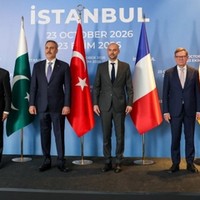
Pakistan and Qatar urged Tehran and Washington on Monday to halt hostilities and resume implementation of a previously signed memorandum of understanding.
Iranian Interior Minister Eskandar Momeni traveled to Islamabad on Monday carrying a message from President Masoud Pezeshkian as part of the mediation effort. Regional media reported he was also expected to meet Pakistan's army chief, Field Marshal Asim Munir.
According to Israel's Channel 14, Qatar proposed that the United States suspend further military strikes while Iran reopens both the northern and southern shipping lanes through the Strait of Hormuz for a 10-day period. The proposal has not been independently verified.
Tehran confirms new proposals
Foreign Ministry spokesman Esmail Baghaei confirmed during his weekly press briefing that Iran had received new proposals from mediators aimed at ending the confrontation, although he did not disclose their contents.
His remarks marked Tehran's first public acknowledgment that fresh diplomatic initiatives were under consideration following the latest escalation.
President Masoud Pezeshkian also defended both the memorandum of understanding and the prospect of diplomacy during remarks to the Supreme Judicial Council, rejecting accusations that Iran had compromised its national interests.
"Not only was no concession made against the country's interests, but Iran achieved major gains, and there is not a single provision that creates a one-sided benefit for the United States," he said.
"If economic pressure leads to growing social discontent, the tremendous social capital that people have created in support of the system could be damaged."
Political analyst Hossein Ghatib argued that diplomacy should remain an option despite the fighting, but warned against any temporary ceasefire that merely postponed another round of conflict.
"The next agreement should not be based on concessions before guarantees," he wrote on X. "Instead, it should rest on the principles of guarantees before concessions, verification before trust, and concrete action before the next step."
Fighting continues
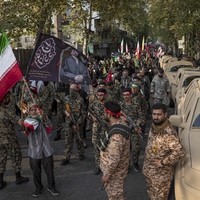
The diplomatic activity unfolded against a widening military campaign across Iran and the Gulf.
Iran launched additional missile and drone attacks targeting Kuwait and Bahrain, while a Greek shipping company said two tankers under its management had been struck by unidentified projectiles while transiting Omani coastal waters.
Iranian media also reported attacks in East Azerbaijan, West Azerbaijan and Bushehr provinces, followed later in the day by a strike on the Shiraz Electronics Industries complex.
Iranian Army spokesman Mohammad Akraminia said "reason dictates that the war continue until it creates complete deterrence for Iran."
He also warned that "any country cooperating with the Americans will certainly face problems for its ships passing through the Strait of Hormuz."
Parliament Presidium member Rouhollah Motefakker-Azad similarly warned that if the conflict continued, "the Islamic Republic will respond even more aggressively, and then the Americans should think more seriously and more quickly about leaving the region."
‘Pointless domestic divide’
Iranian hardliners nevertheless continued to oppose any return to negotiations.
Conservative political analyst Majid Shakeri argued that Washington should first publicly recommit to the memorandum of understanding and fulfill its obligations under the agreement before any new talks could begin.
Commenters on the conservative Tabnak website likewise dismissed renewed diplomacy, with one describing the situation as a "vicious cycle of war, negotiations, war, negotiations."
The IRGC-affiliated Javan newspaper, however, argued that Iran should remain prepared for either outcome.
"Going to the negotiating table to consolidate the gains achieved in the war and secure lasting security, or continuing to fight for the same objective, should not create a pointless domestic divide."
On the US side, President Donald Trump reposted a Truth Social poll showing majority support among respondents for a peace agreement with Iran while insisting Washington had responded forcefully to the killing of American personnel.
Secretary of State Marco Rubio also reiterated that the United States remained committed to a diplomatic solution despite the ongoing fighting.
"They continue sending signals that they want talks and negotiations," Rubio said. "But we respond to their actions, and their actions are firing missiles and drones at ships."