US Navy Says It Stopped Iran From Seizing Tankers In The Persian Gulf

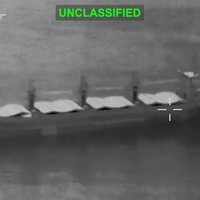
The US Navy said it prevented Iran from seizing two tankers in the Persian Gulf Wednesday in the latest in a series of seizures or attacks on ships in the area since 2019.
The US Navy said it prevented Iran from seizing two tankers in the Persian Gulf Wednesday in the latest in a series of seizures or attacks on ships in the area since 2019.
Chevron CVX.N said one incident involved the Richmond Voyager, a very large crude carrier managed by the US oil company, and that crew onboard were safe.
An Iranian navy vessel fired shots during the second seizure attempt, Navy Fifth Fleet spokesperson Timothy Hawkins said.
Both incidents took place in the Persian Gulf in waters between Iran and Oman.
Hawkins did not say how the US Navy prevented their seizure. Details regarding the second vessel involved in the incident were not immediately clear.
Since 2019, there have been a series of attacks on shipping in the strategic Persian Gulf waters at times of tension between the United States and Iran.
Iran seized two oil tankers in a week just over a month ago, the US Navy said.
In May, the United States announced that it was bolstering its presence in the Persian Gulf to counter destabilizing actions by Iran against commercial shipping.
“[The] United States will not allow foreign or regional powers to jeopardize freedom of navigation through the Middle East waterways, including the Strait of Hormuz,” National Security Council Coordinator for Strategic Communications John Kirby told reporters May 12. The US Navy in early June said that Iran had interfered with or attacked 15 internationally flagged merchant ships over the past two years.
Iran’s provocative actions come as attempts to restrict its uranium enrichment and reaching a nuclear agreement have remained unsuccessful since President Joe Biden assumed office in January 2021. Since then, Iran has expanded military cooperation with Russia, supplying hundreds of kamikaze drones that are being used in Ukraine against civilian and military targets.
About a fifth of the world's supply of crude oil and oil products passes through the Strait of Hormuz, a choke point between Iran and Oman, according to data from analytics firm Vortexa.
Refinitiv ship tracking data shows the Richmond Voyager previously docked in Ras Tannoura in eastern Saudi Arabia before Wednesday's incident in the Persian Gulf.
A Chevon spokesperson said "there is no loss of life, injury, or loss of containment" aboard the Richmond Voyager.
"The vessel is operating normally. The safety of our crew is our top priority," the spokesperson said in a statement.
In early June Iran claimed that it was forming an alliance with Saudi Arabia and other Persian Gulf states, as well as India and Pakistan.
"The countries of the region have today realized that only cooperation with each other brings security to the area," Iranian army's navy commander Shahram Irani was quoted as saying June 3.
The US reacted quickly saying it “defies reason” for the Islamic Republic to be part of a regional naval alliance while it is the main reason for maritime insecurity in the Persian Gulf region.
US 5th Fleet and Combined Maritime Forces spokesperson Cmdr. Tim Hawkins told Breaking Defense, a digital news outlet on global military, “It defies reason that Iran, the number one cause of regional instability, claims it wants to form a naval security alliance to protect the very waters it threatens.”
With reporting by Reuters