• العربية
  • فارسی
BrandBrand
  • Iran Insight
  • Politics
  • Economy
  • Analysis
  • Special Report
  • Opinion
  • Podcast
  • Live TV
  • Iran Insight
  • Politics
  • Economy
  • Analysis
  • Special Report
  • Opinion
  • Podcast
  • Live TV
  • Theme
  • Language
    • العربية
    • فارسی
  • Iran Insight
  • Politics
  • Economy
  • Analysis
  • Special Report
  • Opinion
  • Podcast
  • Live TV
All rights reserved for Volant Media UK Limited
volant media logo

UK PM warns Iran against attacks on journalists and military bases

Nov 16, 2026, 23:37 GMT+0
Britain's Prime Minister Andy Burnham takes a drink during a toast as he attends the annual Lord Mayor's Banquet at the Guildhall in London, Britain, November 16, 2026. REUTERS/Toby Melville

British Prime Minister Andy Burnham warned Monday that Britain would respond to Iranian-sponsored attacks on journalists, Jewish communities and military airbases, amid concerns over operations linked to the Islamic Revolutionary Guard Corps (IRGC).

Speaking at the Lord Mayor's Banquet in London, Burnham said: “Nor will we allow them to sponsor attacks on journalists, our Jewish communities here in Britain and airbases without response.”

His warning came days after two Iranian men, Mostafa Sepahvand, 41, and Farhad Javadi Manesh, 46, were convicted at London's Woolwich Crown Court on November 12 of assisting a foreign intelligence service.

The court heard that the men conducted surveillance targeting Iran International journalists Mojtaba Pourmohsen and Kambiz Hosseini, as well as British lawyer Jonathan Turner, on behalf of Iranian intelligence.

Sepahvand was also convicted of preparing to commit serious violence against a person in Britain. Prosecutors said he had been promised up to £150,000, approximately $200,000, for carrying out an attack.

Both men are scheduled to be sentenced on December 17. A third defendant was acquitted.

In a separate case, British and US authorities have brought charges over a suspected IRGC-linked plot targeting RAF Fairford, a British airbase used by US bombers during the war with Iran.

On November 10, US prosecutors announced charges against three men in connection with the September plot, including a suspect who prosecutors said coordinated activities through coded telephone calls while detained in a New York jail.

Two other men have been charged in Britain in connection with the suspected plot. US B-1 bombers were withdrawn from RAF Fairford shortly afterward.

Burnham told Parliament on October 12 that British authorities assessed the suspected Fairford plot as highly likely to have been coordinated in Iran and almost certainly directed by the IRGC.

Iranian Foreign Minister Abbas Araghchi rejected Britain's accusations in a September 30 post on X, pointing to the release on bail of suspects arrested in connection with the Fairford incident.

“I can confirm Iran's belief that releasing supposed terrorists working for foreign states really says it all,” Araghchi wrote, adding: “You're barking up the wrong tree.”

Most Viewed

Third US carrier joins Iran blockade, Bessent warns of economic collapse
1

Third US carrier joins Iran blockade, Bessent warns of economic collapse

2

Iran facing one of fastest economic collapses ever, Bessent says

3

Blair's sister-in-law attended Iran conference linked to IRGC spy recruitment - Telegraph

4
VOICES FROM IRAN

Toxic air chokes Iranian cities, residents report health problems

5

UK PM warns Iran against attacks on journalists and military bases

Banner
Banner
Banner
Banner
Banner
Banner
Banner

Spotlight

  • Iraq’s move on militia stronghold may do little to curb Iran’s influence
    ANALYSIS

    Iraq’s move on militia stronghold may do little to curb Iran’s influence

  • 'Our turn to play': Iran hardliners call for breaking US blockade

    'Our turn to play': Iran hardliners call for breaking US blockade

  • Head full of pellets: protester recalls ordeal on Iran holiday island
    EXCLUSIVE

    Head full of pellets: protester recalls ordeal on Iran holiday island

  • Israeli opposition to Islamic Republic transcends party lines
    ONE-ON-ONE

    Israeli opposition to Islamic Republic transcends party lines

  • 2019 crackdown failed to break cycle of Iran street protests
    ANALYSIS

    2019 crackdown failed to break cycle of Iran street protests

  • Toxic air chokes Iranian cities, residents report health problems
    VOICES FROM IRAN

    Toxic air chokes Iranian cities, residents report health problems

  • Can higher fuel prices curb Iran’s smuggling problem?
    ANALYSIS

    Can higher fuel prices curb Iran’s smuggling problem?

  • Iran’s Janfada campaign gives Basij recruitment a patriotic banner
    ANALYSIS

    Iran’s Janfada campaign gives Basij recruitment a patriotic banner

•
•
•

More Stories

Blair's sister-in-law attended Iran conference linked to IRGC spy recruitment - Telegraph

Nov 15, 2026, 16:27 GMT+0
100%

Former British Prime Minister Tony Blair's sister-in-law attended a conference in Iran that US authorities later identified as a platform for intelligence recruitment by the Islamic Revolutionary Guard Corps (IRGC), The Telegraph reported on Sunday.

Lauren Booth, the half-sister of Blair's wife Cherie, was a guest speaker at the New Horizon conference in Mashhad in 2018, a year before Washington sanctioned its organizers over alleged intelligence-gathering activities.

The Telegraph identified several British activists who had attended conferences organized by New Horizon, an Iranian organization that US authorities say helped the IRGC's Quds Force recruit foreign nationals and collect intelligence.

The newspaper stressed that there was no suggestion Booth or the other British attendees had been recruited as spies or worked with Iranian intelligence.

US sanctioned conference organizers over intelligence recruitment

The US Treasury sanctioned the New Horizon Organization and four associated individuals in February 2019, saying its international conferences had provided Iranian intelligence officers opportunities to recruit attendees.

The Treasury said the events served "as a platform for the IRGC-QF to recruit and collect intelligence from attendees."

It also said organizers had facilitated contact between the Revolutionary Guards and American citizens, while promoting antisemitism and Holocaust denial.

Among those sanctioned was Nader Talebzadeh, the organization's chairman and a prominent Iranian filmmaker who helped organize the conferences.

The events were also linked to the recruitment of Monica Witt, a former US Air Force counterintelligence specialist who defected to Iran in 2013 after attending New Horizon conferences.

US prosecutors subsequently charged Witt with espionage-related offenses, alleging that she disclosed classified information and assisted Iranian intelligence operations.

A 2025 report by Britain's parliamentary Intelligence and Security Committee concluded that the IRGC had almost certainly used New Horizon conferences to gain access to and recruit foreign nationals.

100%

British activists attended Iranian conferences

The Telegraph reported that Booth was among several British figures who participated in New Horizon events.

Others included former Church of England vicar Stephen Sizer, who attended a conference in 2014, and Rabbi Ahron Cohen, a member of the anti-Zionist Neturei Karta movement, who attended in 2012.

In a 2018 blog post, Booth described the Mashhad gathering as a "rare opportunity" for journalists, former diplomats, politicians and activists to discuss geopolitical issues.

The newspaper also examined connections between conference attendees and Abrar House, a charity-owned building in London's Marylebone district that has hosted talks by several of the individuals.

Roger Macmillan, a former security director at Iran International, told The Telegraph that Western figures promoting Tehran's positions were a "gift horse" to the Islamic Republic because they could repeat the government's messaging to foreign audiences.

100%

Jonathan Hackett, a former US intelligence agent, said Iran sought Western voices who could influence audiences more effectively than Iranian officials.

"These people can be completely unwitting and can still be just as useful to the regime," he said.

Booth rejects criticism as UK charity regulator examines concerns

Booth rejected criticism of her participation and accused The Telegraph of promoting Israeli government narratives.

She called the newspaper a "mindless mouthpiece" for Israel, challenging its characterization of Western conference attendees as unwitting promoters of Iranian propaganda.

The Abrar Islamic Foundation, which owns Abrar House, rejected suggestions that it had provided a platform for antisemitism or extremism.

It said it had no connection to the New Horizon conferences and that Booth and Cohen had spoken at events organized by third parties.

The foundation also stressed that the individuals had attended New Horizon conferences before the organization was sanctioned by Washington.

Britain's Charity Commission confirmed that it had an active regulatory compliance case involving the foundation and was examining additional information to determine whether further concerns had arisen.

The Telegraph reported that the commission had received a dossier concerning speakers and events hosted at Abrar House.

The regulator has not announced findings of wrongdoing in connection with the latest information.

UK police reveal how men spying for Iran tracked Iran International journalists

Nov 13, 2026, 14:28 GMT+0
100%

The men convicted of spying on Iran International journalists in London worked from files sent from Iran that listed their targets’ photos, workplaces, cars and even the names of their pets, some of it gathered with ChatGPT, British counterterrorism police said.

Deputy Assistant Commissioner Vicki Evans, Britain’s senior national coordinator for counterterrorism policing, set out the evidence at a briefing held before Thursday’s verdicts and embargoed until them.

Mostafa Sepahvand, 41, and Farhad Javadi Manesh, 46, were convicted at Woolwich Crown Court of assisting a foreign intelligence service. A third man, Shapoor Qalehali Khani Noori, 57, was acquitted.

“The investigation also highlights the continuing and increasing threat to the UK from Iran,” Evans said. It was the fourth time police had prosecuted people who targeted Iran International staff or offices in London, she said.

The files

The three men were arrested at their homes in west London on May 3, 2025, and held for two weeks, the maximum the National Security Act allows. Officers went through 534 gigabytes of data from their phones and devices, much of it in Persian.

Among it were the tasking documents. Their targets were two Iran International journalists, a lawyer linked to the group UK Lawyers for Israel, and a media production professional.

“The briefing documents were extraordinarily detailed,” Evans said. They included photographs of the targets, their workplace addresses, the makes and colors of their cars and, in some cases, the names of their pets. Some of the background on the targets’ careers and social media had been gathered with ChatGPT, police said.

  • Iran has money to kill journalists but not for bread, Nobel laureate Ebadi says

    Iran has money to kill journalists but not for bread, Nobel laureate Ebadi says

  • Iran International spy verdicts don’t end threat to exiled Iranian journalists - CPJ

    Iran International spy verdicts don’t end threat to exiled Iranian journalists - CPJ

  • Two men convicted in London of helping Iran target Iran International journalists

    Two men convicted in London of helping Iran target Iran International journalists

The files reached Sepahvand from Iranian phone numbers belonging to people police say were Revolutionary Guards members or intermediaries for Iranian intelligence.

One contact, saved in his phone as Mostafa Ghorbani and believed to be an old school friend, was asked at one point to find out how much influence a man called “Haji” had and whether he worked for Iranian intelligence. Another, saved as “Mostafa’s friend, Amin,” was also linked to the Guards, police said.

The surveillance

Sepahvand led the operation, passed on instructions to the other two men and drove them around London in his Mercedes, police said.

In December 2024, the men went to a block of flats where they believed an Iran International journalist lived, and to homes they linked to a second journalist, filming at each. They returned several times that month.

In February 2025, Sepahvand was told to watch two business premises believed to be linked to Iran International, and the men filmed them in early March. They later deleted data from their phones, which may have included more footage.

‘An intention to cause serious harm’

Sepahvand’s motive was money and help clearing a theft conviction in Iran, police said. One message referred to a promise to resolve his case there and pay him £150,000, about $200,000, for completing the job. He demanded at least £10,000 upfront, and another message appeared to tie the full payment to finding the target and attacking them.

In voice notes to Ghorbani, he complained that he had not been paid for the surveillance. “Often, they receive very little of what they were promised,” Evans said, describing a pattern seen in other cases.

Sepahvand told the court he acted under duress. Police believe the attack he contemplated would have used a relatively unsophisticated weapon, possibly a knife.

Asked whether the aim was to kill, Evans said: “We would certainly say that there was an intention to cause serious harm.”

A change in Tehran’s methods

All three men are Iranian nationals who reached Britain between 2016 and 2022, claimed asylum and were granted temporary leave to remain, police said. They were not a sleeper cell, Evans said. They met through the Iranian community in west London and had no criminal record in Britain.

That marked a shift, she said, from foreign criminal proxies flown in and out of the country to Iranians already living in Britain and directed from abroad. British nationals were also being recruited.

“Those directing the activity seek to remain several steps removed from the people performing it,” she said.

The earlier cases against people targeting Iran International include an Austrian man jailed for three and a half years after he was caught surveilling the channel’s then offices in Chiswick, west London, in 2023, and two Romanian men jailed this year for a combined 20 years for the 2024 stabbing of presenter Pouria Zeraati outside his London home. Three people were charged in April over an arson attack on Iran International’s new offices.

Iran-linked operations had led to more than 50 arrests in Britain in the past year, Evans said, citing MI5 chief Ken McCallum.

Iran International spy verdicts don’t end threat to exiled Iranian journalists - CPJ

Nov 13, 2026, 12:00 GMT+0
100%

Exiled Iranian journalists remain at risk despite the conviction of two men in London for targeting Iran International staff on behalf of Iranian intelligence, the New York-based Committee to Protect Journalists warned on Friday.

Mostafa Sepahvand, 41, and Farhad Javadi Manesh, 46, were found guilty on Thursday at London’s Woolwich Crown Court of assisting a foreign intelligence service.

Sepahvand was also convicted of conducting surveillance and reconnaissance with intent to commit serious violence against a person in Britain. Javadi Manesh was acquitted of a separate charge of surveillance intended to help others commit serious violence, and a third defendant, Shapoor Qalehali Khani Noori, 57, was acquitted of all charges. The two men will be sentenced on December 17.

“The Woolwich trial has ended, but today’s verdicts don’t make the lives of our journalists any safer so long as the Islamic Republic of Iran continues its campaign of death threats and violence against them,” Iran International spokesman Adam Baillie said.

“Kambiz Hosseini and Mojtaba Pourmohsen and others remain under threat. We are thankful for the continued vigilance of the British police in protecting not only us but the many other Iranians targeted by Iran,” he said.

“Iran will no doubt continue its use of agents and proxies abroad in its campaign to terrorize its critics.”

CPJ calls for those behind operation to face justice

The six-week trial showed that Iran’s Revolutionary Guards had tasked the defendants with monitoring targets including the Iran International journalists Hosseini and Pourmohsen, a lawyer and a media production professional, CPJ said.

“The shocking evidence presented in this trial once again shows the lengths Iran is prepared to go to in order to silence journalists, wherever they are in the world,” said Fiona O’Brien, CPJ’s regional director for Europe and Central Asia.

“While it’s encouraging to see the perpetrators of crimes against them being held accountable, those who paid and instructed them must also be brought to justice,” she said.

Videos, photographs and messages showed Sepahvand watching his targets’ homes and workplaces while coordinating with contacts in Iran, according to Britain’s Crown Prosecution Service.

  • Two men convicted in London of helping Iran target Iran International journalists

    Two men convicted in London of helping Iran target Iran International journalists

  • Seven-man Iran-linked network helped orchestrate wave of attacks across Europe - ITV

    Seven-man Iran-linked network helped orchestrate wave of attacks across Europe - ITV

  • France probes blood freezer hack after blaming Iran for similar attacks

    France probes blood freezer hack after blaming Iran for similar attacks

The men had been promised large payments for information, prosecutors said. In one message, Sepahvand asked for £150,000, about $200,000, to “finish [the target] off” once he had found them.

“This was a calculated operation to spy on those critical of the Iranian regime,” said Frank Ferguson, head of the CPS Special Crime and Counter Terrorism Division.

Sepahvand had shown he was willing to go beyond surveillance to serious violence, Ferguson said, but the men were stopped before any attack.

Convictions follow series of attacks on Iranian journalists

CPJ said the convictions followed several other cases of threats and attacks against Iran International journalists in Britain.

Earlier this year, two Romanian men were sentenced to 12 and eight years in prison for their part in the 2024 stabbing of Iran International presenter Pouria Zeraati outside his London home.

A Greek national has been charged with surveilling an Iran International journalist, and court proceedings over an arson attack on the broadcaster’s premises are under way.

Exiled Iranian journalists continue to face physical threats, online harassment and intimidation of their families in Iran, CPJ said.

Tehran has denied targeting journalists working for Iran International and BBC Persian.

France probes blood freezer hack after blaming Iran for similar attacks

Nov 13, 2026, 09:49 GMT+0
100%

France is investigating a cyberattack on freezers that store blood for hospital patients, its national blood service told Iran International, weeks after Paris blamed Iran’s Revolutionary Guards for hacking the freezers of hundreds of French supermarkets.

The service, the Établissement français du sang (EFS), said in a written reply that a judicial investigation was under way and that it could not comment on it or give details.

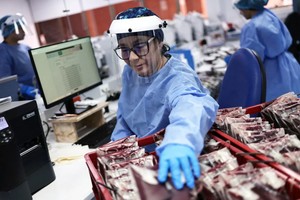
The attack took place on the night of November 1 to 2. Hackers took over the control systems of cold rooms at three regional centers and changed their temperature and defrost settings, the EFS said earlier.

Some units were reset from about minus 30 degrees Celsius to 110 degrees, the French weekly Le Canard enchaîné reported. That was the setting, not the temperature the blood products reached.

  • France's cyberattack allegations against Iran should wake up Europe

    France's cyberattack allegations against Iran should wake up Europe

  • France warns Iran of retaliation over IRGC hack of supermarket freezers

    France warns Iran of retaliation over IRGC hack of supermarket freezers

Alarms and an on-call technician caught the problem, and the products were moved to other sites or otherwise secured, the EFS said. No samples or blood products were lost. The service has not said when the attack was detected, how long the transfer took, or how the stocks were moved.

The attack came the same night that supermarkets in at least nine European countries, including Belgium and Luxembourg, reported suspected cyberattacks that sent fridge and freezer temperatures soaring.

The Paris prosecutor’s office has not yet linked the attack on the blood service to the supermarket cases and said its investigation is continuing, Agence France-Presse reported.

The supermarket attacks

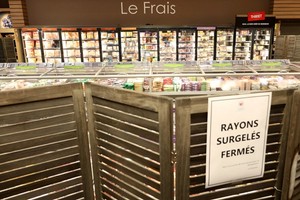
On October 11 and 12, hackers took control of refrigeration systems at about 700 supermarkets and other businesses across France, letting fridges and freezers warm up. Some stores had to throw out their entire stock of fresh and frozen food, and officials said the attacks caused heavy losses and, at some sites, fires.

A joint report by French intelligence and cybersecurity agencies named Shahid Kaveh, an offensive cyber unit of the Revolutionary Guards, as responsible, and said it worked behind front groups posing as independent hacker collectives. Paris prosecutors have requested international arrest warrants for suspects.

Foreign Minister Jean-Noël Barrot summoned Iran’s ambassador and said France would seek European Union sanctions against those responsible. France was weighing further measures, he said, including some it might never make public.

Two men convicted in London of helping Iran target Iran International journalists

Nov 12, 2026, 11:33 GMT+0
100%
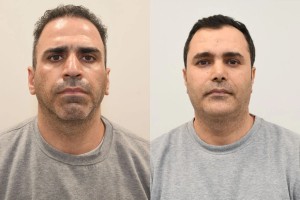
Mostafa Sepahvand, 41, (left) and Farhad Javadi Manesh, 46, were unanimously convicted on Nov. 12, 2026 of engaging in conduct likely to assist a foreign intelligence service under Britain’s National Security Act.

Two Iranian men were found guilty on Thursday of assisting Iranian intelligence operations targeting Iran International journalists in Britain, following a six-week trial at London’s Woolwich Crown Court.

Mostafa Sepahvand, 41, and Farhad Javadi Manesh, 46, were unanimously convicted of engaging in conduct likely to assist a foreign intelligence service under Britain’s National Security Act.

A third defendant, Shapoor Qalehali Khani Noori, 57, was acquitted of all charges and discharged by the court.

Sepahvand was also unanimously convicted of conducting surveillance and reconnaissance with the intention of committing serious violence against a person in Britain.

Javadi Manesh was acquitted of a separate charge alleging that he conducted surveillance intending to facilitate serious violence by others. Noori was also acquitted of that charge.

The judge had told jurors that the court would accept majority verdicts of 10 or 11 out of 12, although they should continue striving for unanimity. The guilty verdicts were unanimous.

Sepahvand and Javadi Manesh are scheduled to be sentenced at London’s Old Bailey on December 17.

Iran International journalists among targets

Prosecutors said the men conducted surveillance on behalf of Iranian intelligence between August 2024 and early 2025, gathering information about individuals in Britain whom Tehran regarded as opponents.

The targets included Iran International journalists Kambiz Hosseini and Mojtaba Pourmohsen, as well as British barrister Jonathan Turner.

  • Three men helped IRGC prepare attacks on journalists, UK prosecutor says

    Three men helped IRGC prepare attacks on journalists, UK prosecutor says

  • Prosecutor says defendants filmed journalists' addresses to plan attacks

    Prosecutor says defendants filmed journalists' addresses to plan attacks

  • Iran plot suspect says he discussed journalists at London embassy

    Iran plot suspect says he discussed journalists at London embassy

During the trial, prosecutor Bill Emlyn Jones told jurors that the defendants visited addresses, photographed buildings and vehicles, and recorded videos to help Iran’s Revolutionary Guards identify potential targets.

The prosecution said Sepahvand was expected to carry out an attack and recruited the other two men to assist in locating and monitoring the individuals.

The court heard evidence of communications with contacts in Iran, including discussions about surveillance, payments and Sepahvand’s efforts to resolve a criminal case against him in Iran.

Defendants disputed knowledge and intent

Sepahvand acknowledged conducting surveillance but said he acted under threats against himself and his family and deliberately tried to frustrate the operation.

Prosecutors challenged that account, arguing that his repeated demands for more accurate information about the targets showed he was actively trying to help locate them.

Javadi Manesh denied knowing that his activities were assisting Iranian intelligence. He did not give evidence during the trial.

Noori also denied knowing that his actions were connected to Iranian intelligence operations.

The convictions come as concern grows in Britain over suspected Iranian intelligence activity targeting dissidents and journalists.

British authorities have repeatedly warned of threats against Iran International staff, while Tehran has previously denied involvement in plots targeting critics overseas.