Repression, Prison Have Left No Independent Media In Iran, Experts Say

Grim commentaries this week marked the 21st anniversary of Etemad, one of the few reformist papers left in Iran, as dozens of journalists were jailed in recent months.
Grim commentaries this week marked the 21st anniversary of Etemad, one of the few reformist papers left in Iran, as dozens of journalists were jailed in recent months.
The daily's managing editor Elias Hazrati, its leading columnist Abbas Abdi and former government spokesman Ali Rabiei wrote their accounts of the difficult situation facing the media in the newspaper's anniversary edition.
Hazrati, a former reformist lawmaker, wrote that he launched the paper at the end of his parliamentary career as "a media outlet for the majority of Iranians." He added that during the past 21 years he kept his promise of giving voice to both the older and younger generations of Iranian journalists.
Etemad has been banned several times since its launch and its journalists came under pressure by the authoritarian government particularly under conservative presidents.
that the government presumes newspapers that reflect society's problems are portraying a disparaging image of the country. Statesmen in Iran do not know that problems will not be solved if they are not discussed by the media.
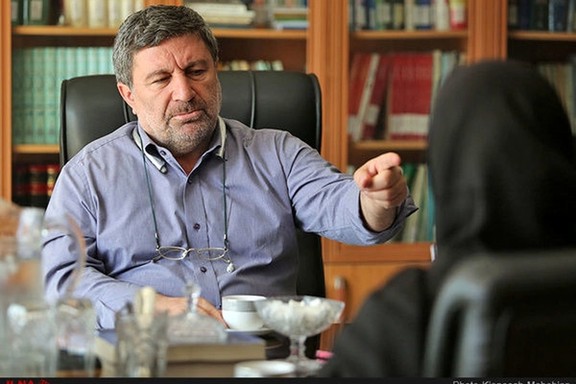
Abdi said: "Newspapers act like medical examination reports. If nobody pays attention to what they highlight, problems will lead to serious abnormal situations." He further complained that the Iranian government has never taken the newspapers seriously and this is part of the crisis of media in Iran.
Abdi added: "The government constantly insists that newspapers should not publish "negative news" and "disparaging accounts." They don’t see that the people are living in the society and see for themselves what is going on.
"The crisis of the media in Iran has roots in different narratives and the government's reliance on its own narrative. As long as the narratives rather than realities drive the government's policies, the media cannot have their true status," Abdi said.
According to Abdi, Etemad and a few other newspapers have refused to play the role of trumpets that voice the government's views and propaganda. The fact that this newspaper has survived for 21 years, so far is in itself a success. What makes this effort worthwhile is the daily's commitment to reflect the truth.
Abdi was pointing out the fact that reformist newspapers in Iran are short-lived as governments have a pretty low threshold for tolerating criticism. At times, like 2001, tens of newspapers and other publications were closed down overnight without any explanation. At least one reformist newspaper, Mellat, was banned before the day it hit newsstands for the first time.
However, Etemad and a few other relatively critical newspapers are not free of daily censorship and self-censorship, as their reporting has to somewhat accommodate the regime’s ideology and rhetoric. For example, they cannot criticize the Supreme Leader, who should be mentioned as “the esteemed Leader.”
Meanwhile, in an article in Etemad, former government spokesman, Ali Rabiei wrote that what makes the media situation different in Iran is the negative impact “of arresting and imprisoning independent Iranian journalists."
What Rabiei said also referred to the emigration of hundreds of Iranian journalists to other countries, including Britain and the United States where key foreign-based Iranian media operate from.
Rabiei pointed out that the Iranian government does not allow independent media to be active in Iran and arrests and jails journalists working on investigative reporting. But the emigration of independent journalist has gradually turned into a security threat for the Iranian government.
Iranian officials on a daily basis complain about investigative reports by foreign-based media that disclose corruption and inefficiency in the government and among its officials. Nonetheless, as Rabiei observed, the government perceives even the existing toothless media as a threat.