• العربية
  • فارسی
BrandBrand
  • Iran Insight
  • Politics
  • Economy
  • Analysis
  • Special Report
  • Opinion
  • Podcast
  • Live TV
  • Iran Insight
  • Politics
  • Economy
  • Analysis
  • Special Report
  • Opinion
  • Podcast
  • Live TV
  • Theme
  • Language
    • العربية
    • فارسی
  • Iran Insight
  • Politics
  • Economy
  • Analysis
  • Special Report
  • Opinion
  • Podcast
  • Live TV
All rights reserved for Volant Media UK Limited
volant media logo

Referendum For ‘Secular Republic’ Iran’s Only Hope, Dissident Says

Maryam Sinaiee
Maryam Sinaiee

Iran International

May 5, 2023, 10:31 GMT+1Updated: 18:00 GMT+1
Prominent lawyer and rights defendant Nasrin Sotoudeh

Prominent lawyer and rights defendant Nasrin Sotoudeh called for a referendum in Iran as the only path to establishing a secular democracy in the country. 
“At the moment the Iranian nation has no other way than a referendum to establish a secular republic,” Sotoudeh said in a message read at the recent congress of Amnesty International’s Norway chapter on April 29. 

This could prevent religious governments to dictate their own rules regarding women’s bodies, she said in her message a copy of which was exclusively provided to Radio Farda. 

Sotoudeh stressed that the recent protest movement in Iran is focused on the issue of compulsory hijab and women’s right over their own bodies and their movement wants “to go back to the year 1979 when the Islamist government ordered women to wear hijab to work or face expulsion.” 

Sotoudeh is currently on medical furlough from prison in Tehran where she is serving a long sentence for her human rights advocacy.

Supreme Leader Ali Khamenei in a speech at a meeting with students on April 18 strongly objected to suggestions to allow people decide about crucial matters through a referendum.

100%
Iran's Supreme Leader Ali Khamenei

“[Who says] the country’s various issues can be put to referendum? Where in the world do they do that? [Who says] all the people participating in a referendum have the faculty of analyzing that matter? What kind of demand is that?” he said.

Former President Hassan Rouhani and others, mainly reformist politicians, have repeatedly suggested holding referendums on “important issues” in domestic and foreign policy. 

At a meeting with the senior officials of his government, former lawmakers, journalists and politicians on April 5, Rouhani reiterated that the answer to people’s demands in the areas of foreign and domestic policies and the economy could be found by holding referendums as envisaged by the Constitution of the Islamic Republic.

In February, former Prime Minister (1981-1989) and leader of the 2009 Green Movement Mir-Hossein Mousavi, who was a reformist presidential candidate in 2009 and has been under house arrest since 2011, said in a statement dubbed “To Save Iran” that there was no hope of reforms and demanded a free and untainted referendum about the necessity for a new constitution. 

Such a referendum could potentially put an end to Velayat-e Faghih (rule of the Islamic jurist) which gives a cleric such as Ali Khamenei extraordinary powers including the power to overrule all elected bodies and officials and hence, people’s choice.

If the necessity of change is approved by the first referendum, Mousavi said, a constitutional assembly should be elected by the people followed by a second referendum to approve the draft constitution to establish a regime based on rule of law. 

Article 59 of the current constitution, which was approved by a referendum after the Islamic Revolution of 1979, stipulates that in extremely important economic, political, social, and cultural matters, the functions of the legislature may be exercised through direct recourse to popular vote by holding a national referendum.

Any request for such direct recourse to public opinion must be approved by two-thirds of the members of parliament according the Constitution. This condition practically obstructs any chances of a referendum as the parliament is dominated by hardliners and Khamenei loyalists. 

Sotoudeh who has been called “Iran’s Nelson Mandela” will receive the 2023 Brown Democracy Medal from the McCourtney Institute for Democracy, IAPL Monitoring Committee on Attacks on Lawyers reported Monday. She will not be able to travel to receive her medal in person as she is serving a term and is only out on medical furlough. 

Most Viewed

Iran’s dams may have been built to support missile bases - NYT
1

Iran’s dams may have been built to support missile bases - NYT

2

US Army seeks 17 bunkers in Israel, Saudi, Lebanon amid Iran threats - report

3

UK PM warns Iran against attacks on journalists and military bases

4

Senior Guards commander admits deep Israeli intelligence infiltration

5

Iran’s daily hardships find a voice in IRGC-linked media

Banner
Banner
Banner
Banner
Banner
Banner
Banner

Spotlight

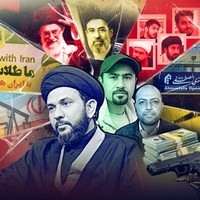
  • How Thai clerics in Iran were recruited to attack Israeli embassy in Bangkok
    EXCLUSIVE

    How Thai clerics in Iran were recruited to attack Israeli embassy in Bangkok

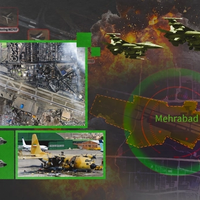
  • Mapping aircraft losses from US-Israeli strikes on Tehran airport
    SPECIAL REPORT

    Mapping aircraft losses from US-Israeli strikes on Tehran airport

  • Iraq’s move on militia stronghold may do little to curb Iran’s influence
    ANALYSIS

    Iraq’s move on militia stronghold may do little to curb Iran’s influence

  • 'Our turn to play': Iran hardliners call for breaking US blockade

    'Our turn to play': Iran hardliners call for breaking US blockade

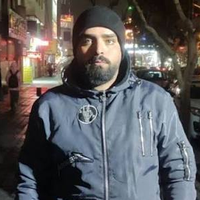
  • Head full of pellets: protester recalls ordeal on Iran holiday island
    EXCLUSIVE

    Head full of pellets: protester recalls ordeal on Iran holiday island

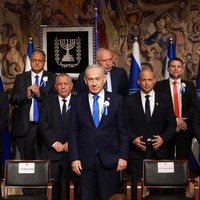
  • Israeli opposition to Islamic Republic transcends party lines
    ONE-ON-ONE

    Israeli opposition to Islamic Republic transcends party lines

  • 2019 crackdown failed to break cycle of Iran street protests
    ANALYSIS

    2019 crackdown failed to break cycle of Iran street protests